Changes to salaries of political appointment holders and MPs explained解释政治任命官员和议员薪资调整事宜
The House will debate the matter on Sept 10. Read more at straitstimes.com.
新闻视频
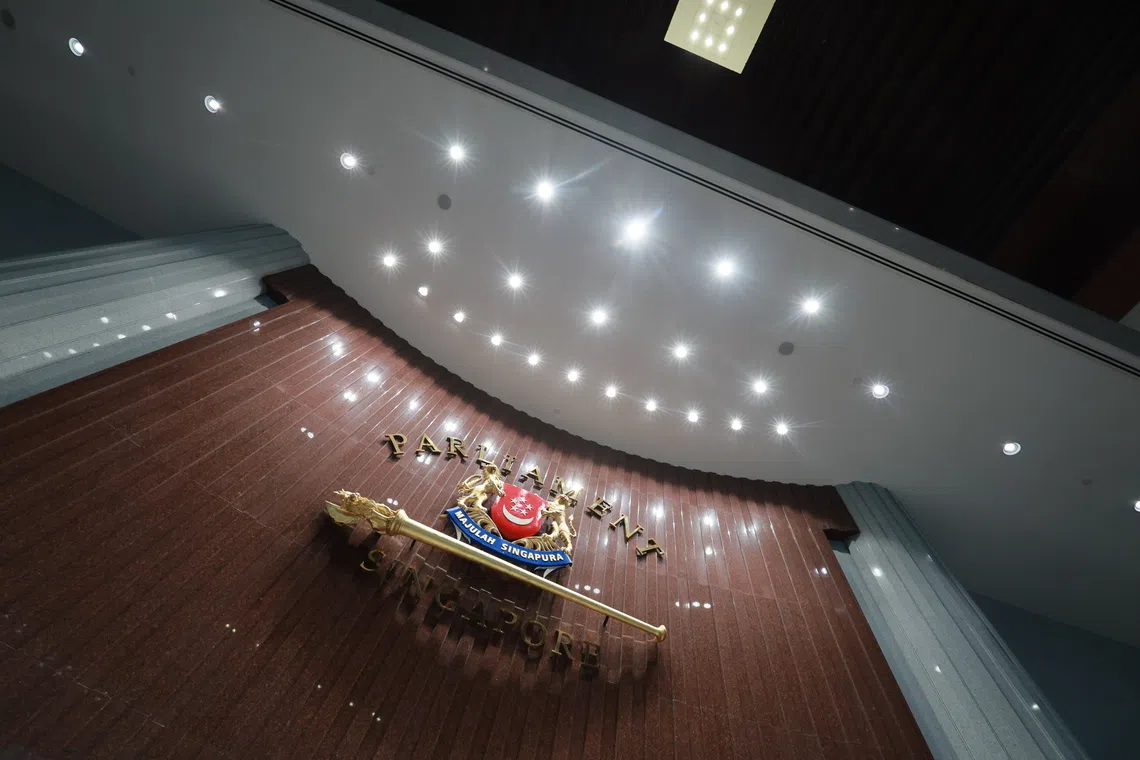
ST20260210_202606800587 Gavin Foo/ Singapore Parliament House/. The Parliament House, photographed on Feb 10, 2026. Can be used for stories on: Budget, finance, financial, business, money, general election, members of Parliament,
Published Sep 08, 2026, 05:15 PM
Updated Sep 08, 2026, 05:15 PM
Follow our live coverage here.
SINGAPORE - The Government will adopt the recommendations of an independent review committee to adjust political salaries, including those of ministers .
Prime Minister Lawrence Wong and Coordinating Minister for Public Services Chan Chun Sing provided the Government’s response to the recommendations in Parliament on Sept 8. The House will debate the matter on Sept 10.
Chin Soo Fang explains the key salary revisions, how they are determined, and what they mean for political office-holders.
1. What are the key changes to political salaries?
Existing political appointment holders will receive a one-off adjustment of up to 9 per cent from Oct 15, depending on individual circumstances including performance. Any subsequent changes will be based on individual performance and responsibilities.
The committee has recommended updating the entry-level Ministerial Grade 4 (MR4) benchmark from $1.1 million to $1.8 million.
While the Government accepts the committee’s recommendation to update the reference salary for the MR4 benchmark, PM Wong has decided not to move existing political appointment holders immediately to the updated benchmark.
Instead, existing political appointment holders will receive a one-off adjustment of up to 9 per cent from Oct 15, depending on individual circumstances, including performance.
This means a Minister receiving a $1.1 million annual salary may receive an increment of almost $100,000, bringing his annual salary to around $1.2 million. Beyond this one-off adjustment, any subsequent changes will be based on individual performance and responsibilities.
The revised MR4 benchmark of $1.8 million is not a target salary that every Minister must eventually reach as he or she can be paid above or below the benchmark, within a prescribed range.
PM Wong expects most ministers who remain at MR4 to be at the lower end of the new salary range – about $1.35 million – by the end of this term of government, which began in 2025. Each term typically lasts about five years.
At present, 10 out of 16 ministers are at MR4. The other six are at higher grades, reflecting their seniority and heavier responsibilities, including those serving as Coordinating Ministers.
Chan said that the adjustment works out to be about 3.6 per cent per year. This is because the MR4 reference has not been updated for 15 years.
The Government also accepts the committee’s recommendation to widen the monthly salary range for each grade.
For Ministers, the salary range will be 75 to 125 per cent of the reference salary at each grade. This is in line with market practice, where ranges are generally wider. It also gives greater room to cater for people joining political service from different backgrounds and at different stages of their careers.
The committee has also recommended combining the MR2 and MR3 grades. This means there will be three ministerial grades instead of four. The salary range for each grade will also be widened to plus or minus 25 per cent.
The grades for Mayors, Senior Parliamentary Secretaries and Parliamentary Secretaries will also be merged for simplicity. The salary range will be wider, at 70 to 130 per cent of the reference salary at the merged grade.
Prime Minister, Deputy Prime Minister, President, Speaker and Deputy Speaker:
PM’s salary is set at twice the MR4 benchmark. His pay will increase from $2.2m to $3.6m. PM Wong has decided that for the next five years, he will donate the full increase in his salary - amounting to some $1.4m yearly - arising from this adjustment.
The Deputy PM’s pay will increase from about $1.8m to $3m.
The President’s monthly salary will be raised from about $1.5m to $2.5m.
The Speaker’s salary will also continue to be pegged at 50 per cent of the MR4 Minister reference salary. It will go up from $550,000 to $900,000 annually.
The Deputy Speaker’s annual package will remain pegged at 15 per cent of the Speaker’s salary. It will be raised from $82,500 to $135,000 yearly.
Beyond this adjustment, the committee had recommended to study the peg for Speaker and Deputy Speaker, taking into account how their roles and responsibilities may have evolved over time.
MPs, NCMPs and NMPs:
The monthly allowances for MPs will increase from $13,750 to $18,500 to account for inflation.
The allowance of Non-Constituency MPs (NCMP) will be increased from 15 per cent of an MP’s annual allowance, to 30 per cent. This translates to $5,550 monthly. This takes into account full voting rights for NCMPs since 2017, and brings the allowance into better alignment with their parliamentary responsibilities.
Nominated MPs’ allowances will continue to be pegged at 15 per cent of the MP’s allowance, which is an updated annual allowance of $38,900.
2. Who reviews the political salaries?
The Government appointed an independent committee to review the political salary framework in December 2025.
The eight-person committee tasked with the current review is chaired by Gan Seow Kee, chairman of the Singapore LNG Corporation and an alternate member of the Council of Presidential Advisers. It comprises seven other members from across the private and people sectors.
The committee also engaged Mercer, a leading global HR consultant, for technical expertise and to provide additional information on pay practices and levels.
It has affirmed that the framework remains sound, while updating its parameters and recommending some refinements.
3. How are political salaries calculated?
Ministerial salaries are benchmarked to the median income of the top 1,000 earners who are Singapore citizens, with a 40 per cent discount to reflect the ethos of public service.
The top 1,000 earners include those in senior management positions such as chief executives, chief operating officers and chief financial officers; people working in the financial services; and professionals like lawyers, doctors and accountants.
The salary paid to political appointment holders comprises both fixed and variable pay components. About 65 per cent of the annual MR4 reference salary is fixed and the remaining 35 per cent is variable.
The variable pay components, which form part of the total annual salary, are paid depending on both individual performance, as well as national outcomes achieved based on a National Bonus framework.
The National Bonus is based on four equally-weighted socio-economic indicators: The real median income growth rate of the average Singaporean, the real income growth rate of the lowest 20th percentile of Singaporean income earners, the unemployment rate of Singaporeans and the real gross domestic product (GDP) growth rate.
The Government has accepted the committee’s recommendations to update the targets for the national bonus indicators to tighten focus on Singapore’s socioeconomic priorities and reflect Singapore’s maturing economy. The updated targets will be effected on Jan 1, 2027.
It has also agreed to explore the inclusion of a robust Quality of Life measure in the National Bonus framework when this becomes available, as the committee had suggested.
4. What are the core principles of the salary framework?
These are calibre, commitment and a clean wage.
The first ensures that the salary framework takes reference from market benchmarks, and individuals of the right calibre are not deterred from stepping forward to lead the country.
Commitment is reflected in the discount (now pegged at 40 per cent) relative to market benchmarks to reflect the ethos of political service.
A clean wage means no hidden perks, as transparency and integrity in remuneration remain fundamental to maintaining public trust.
In addition, the Government affirms that salaries should be clearly linked to both individual and collective performance, based on outcomes that matter to Singaporeans and reflect socioeconomic progress.
5. How much will multiple appointment holders earn?
All political appointment holders will only get one salary package, even if they hold two or more appointments or portfolios.
Said Chan, who is also Defence Minister: “The principle is simple – one person, one salary. Holding more portfolios does not mean receiving more pay.”
6. How much will these recommended changes cost the Government?
It will cost about $5m more annually, if the maximum of 9 per cent is applied to all the political appointment holders, and about $6.6m more annually for the MPs.
7. When were the ministerial salaries last adjusted?
The structure of political salaries has been frozen for 15 years.
The current salary framework was established in 2012, when the Government accepted the recommendations of the committee led by Gerard Ee. The recommendations were implemented retrospectively from May 2011, when the Government of the day took office.
Since then, the political reference salaries have not been updated. In 2017, the Government decided not to proceed with adjustments after an independent review because of prevailing economic circumstances.
It further held back a review in 2023 , citing more pressing issues that it had to deal with. These included a more uncertain geopolitical situation with conflicts in the Middle East and Ukraine, heightened political contestation, and significant uncertainties in the global economy.
8. Why is there a need for the salary revision now?
The revision will give the Government a strong chance to secure capable and committed political leadership to meet the long-term needs of Singapore.
PM Wong said good leadership is even more crucial as Singapore navigates a more uncertain and troubled world.
The salary revision will give him more room to differentiate pay according to performance, and importantly, to bring in people with substantial experience from outside Government, especially those already earning significantly more in the private sector, he said.
“We will still expect them to make a meaningful sacrifice to enter political service. But we should not make that gap larger than it needs to be,” he added.
He noted that ministerial salaries have fallen behind as salaries elsewhere have been adjusted.
“The gap is most obvious when compared with the private sector. But even in the public service, some senior Permanent Secretaries earn more than Ministers.”
Chan said the review is fundamentally about giving Singapore a better chance to build a first-rate team to serve Singapore and Singaporeans.
“So we want to be able to say to capable Singaporeans, “Singapore needs you, and while political service involves sacrifice, it will not come at an unreasonable cost to you and your family”.
Chin Soo Fang is senior correspondent at The Straits Times, covering a wide range of topics including community, politics, social issues, consumer, culture and heritage.
Singapore Parliament
Singapore politicians
Members of Parliament
ST20260210_202606800587 Gavin Foo/新加坡国会大厦/。国会大厦,摄于2026年2月10日。可用于以下主题的报道:预算、财政、金融、商业、金钱、大选、国会议员。
发布于 2026 年 9 月 8 日下午 5:15
更新于2026年9月8日下午5:15
请点击此处关注我们的实时报道。
新加坡——政府将采纳独立审查委员会的建议,调整政治人物的薪酬,包括部长们的薪酬。
9月8日,总理黄循财和公共服务统筹部长陈振声在国会就这些建议作出了政府的回应。国会将于9月10日就此事进行辩论。
陈秀芳解释了主要的薪资调整、调整方式以及对政治官员的意义。
1. 政治人物薪酬的主要变化有哪些?
现有政治任命人员将从10月15日起获得一次性调整,调整幅度最高可达9%,具体调整幅度取决于个人情况,包括绩效表现。任何后续调整都将基于个人绩效和职责。
委员会建议将入门级部长级 4 级 (MR4) 的基准薪资从 110 万美元提高到 180 万美元。
虽然政府接受了委员会关于更新 MR4 基准参考薪金的建议,但黄循财总理决定暂不将现有政治任命持有者立即调整到更新后的基准。
相反,现有政治任命人员将从 10 月 15 日起获得一次性调整,调整幅度最高可达 9%,具体调整幅度取决于个人情况,包括绩效。
这意味着一位年薪110万美元的部长可能会获得近10万美元的增幅,使其年薪达到约120万美元。除此次一次性调整外,任何后续的薪资变动都将基于个人绩效和职责。
修订后的 MR4 基准薪资为 180 万美元,但这并不是每位部长最终必须达到的目标薪资,因为部长的薪资可以在规定的范围内高于或低于该基准薪资。
黄总理预计,到本届政府任期结束时(2025年开始),大多数留在第四任部长级(MR4)的部长薪酬将处于新薪酬范围的较低水平,约为135万新元。每个任期通常持续约五年。
目前,16 位部长中有 10 位是 MR4 级。其余 6 位级别更高,反映了他们的资历和更重的责任,其中包括担任协调部长的部长。
陈先生表示,调整幅度约为每年3.6%。这是因为MR4参考值已经15年没有更新了。
政府也接受了委员会的建议,扩大各职级的月薪范围。
对于部长级官员,薪资范围为各级别参考薪资的75%至125%。这符合市场惯例,通常情况下,薪资范围会更宽泛。此举也为来自不同背景、处于职业生涯不同阶段的政界人士提供了更大的发展空间。
委员会还建议合并MR2和MR3职级。这意味着部长级职级将由四个减少到三个。每个职级的薪资范围也将扩大到正负25%。
为简化起见,市长、高级议会秘书和议会秘书的职级也将合并。合并后的职级薪资范围将扩大,为原职级参考薪资的70%至130%。
总理、副总理、总统、议长和副议长:
总理的薪酬设定为MR4基准的两倍。他的薪酬将从220万新元增加到360万新元。黄英贤总理决定,在未来五年内,他将把此次薪酬调整所带来的全部增幅——每年约140万新元——全部捐赠出去。
副总理的薪酬将从约180万美元增加到300万美元。
总统的月薪将从约150万美元提高到250万美元。
议长的薪酬也将继续维持在MR4部长参考薪酬的50%。年薪将从55万美元增加到90万美元。
副议长的年度薪酬将继续维持在议长薪酬的15%,并从每年82,500美元提高到135,000美元。
除了这项调整之外,委员会还建议研究议长和副议长的薪酬标准,并考虑到他们的角色和职责可能随着时间推移而发生的变化。
国会议员、非选区国会议员和非选区国会议员:
为应对通货膨胀,议员的月津贴将从 13,750 美元增加到 18,500 美元。
非选区议员(NCMP)的津贴将从议员年度津贴的15%提高到30%,相当于每月5,550新元。此举考虑到了非选区议员自2017年起享有的完全投票权,并使津贴与其议会职责更加匹配。
委任议员的津贴将继续按议员津贴的 15% 计算,议员津贴的更新后的年度津贴为 38,900 美元。
2. 谁来审核政治人物的薪酬?
政府于 2025 年 12 月任命了一个独立委员会来审查政治薪酬框架。
负责此次审查的八人委员会由新加坡液化天然气公司主席、总统顾问委员会候补委员颜绍基担任主席,其他七名成员分别来自私营部门和公共部门。
委员会还聘请了全球领先的人力资源咨询公司美世(Mercer)提供技术专长,并提供有关薪酬制度和水平的更多信息。
它确认该框架仍然健全,同时更新了其参数并提出了一些改进建议。
3. 政治人物的薪水是如何计算的?
部长薪酬以新加坡公民收入最高的 1000 人的收入中位数为基准,并打 40% 的折扣,以体现公共服务的精神。
收入最高的 1000 人包括首席执行官、首席运营官和首席财务官等高级管理人员;金融服务从业人员;以及律师、医生和会计师等专业人士。
政治任命人员的薪酬包括固定薪酬和浮动薪酬两部分。年度MR4参考薪酬中约65%为固定薪酬,其余35%为浮动薪酬。
浮动薪酬部分是年度总薪酬的一部分,根据个人绩效以及基于国家奖金框架所取得的国家业绩而支付。
国民奖金基于四个权重相同的社会经济指标:新加坡普通民众的实际收入中位数增长率、新加坡收入最低的 20% 人群的实际收入增长率、新加坡失业率和实际国内生产总值 (GDP) 增长率。
政府已接受委员会的建议,更新国家奖励指标的目标,以更加聚焦新加坡的社会经济优先事项,并反映新加坡经济的日趋成熟。更新后的目标将于2027年1月1日生效。
委员会还同意,一旦国家奖金框架可用,将探讨纳入一项健全的生活质量衡量指标。
4. 薪酬体系的核心原则是什么?
这些包括能力、敬业精神和公平的薪酬。
第一,确保薪酬体系参照市场基准,并且不会阻止有才之士挺身而出领导国家。
为了体现政治服务的精神,折扣(目前设定为相对于市场基准的 40%)也体现了这种承诺。
透明的工资意味着没有隐藏的福利,因为薪酬的透明度和诚信对于维护公众信任至关重要。
此外,政府重申,薪酬应与个人和集体的绩效明确挂钩,以对新加坡人重要的成果和反映社会经济进步为依据。
5. 多位任职者分别能赚多少钱?
所有政治任命人员都只能获得一份薪酬方案,即使他们身兼两个或多个职务或职位。
兼任国防部长的陈茂波表示:“原则很简单——一人一份薪水。身兼多职并不意味着薪水更高。”
6. 这些建议的改革措施将给政府带来多少成本?
如果对所有政治任命人员适用 9% 的最高税率,每年将增加约 500 万美元的成本;对国会议员适用 9% 的最高税率,每年将增加约 660 万美元的成本。
7. 部长级薪酬上次调整是什么时候?
政治人物的薪酬结构已经冻结了15年。
现行薪酬体系于2012年建立,当时政府接受了由余嘉德领导的委员会的建议。这些建议追溯至2011年5月,即当时的政府上台之时起实施。
此后,政治参考薪酬一直未作调整。2017年,政府经独立审查后,鉴于当时的经济形势,决定不再进行调整。
该机构进一步推迟了2023年的审查,理由是需要处理更为紧迫的问题。这些问题包括中东和乌克兰冲突导致地缘政治局势更加不明朗、政治对抗加剧以及全球经济存在重大不确定性。
8. 为什么现在需要调整薪资?
此次修订将使政府有充分的机会确保选拔出有能力、有担当的政治领导人,以满足新加坡的长期需求。
黄循财总理表示,在新加坡面临更加不确定和动荡的世界局势之际,良好的领导力显得尤为重要。
他表示,此次薪资调整将使他有更大的空间根据绩效来区分薪酬,更重要的是,还能从政府以外引进具有丰富经验的人才,特别是那些已经在私营部门获得更高收入的人才。
“我们仍然希望他们为投身政治事业做出切实牺牲。但我们不应该让这种差距过大,”他补充道。
他指出,由于其他部门的薪资已经调整,部长级官员的薪资却相应下降了。
“与私营部门相比,这种差距最为明显。但即使在公共部门内部,一些高级常务秘书的收入也高于部长。”
陈先生表示,此次审查的根本目的是为了让新加坡有更好的机会组建一支一流的团队,为新加坡和新加坡人民服务。
“所以我们希望能够对有能力的的新加坡人说:‘新加坡需要你们,虽然从政需要做出牺牲,但这不会给你们和你们的家庭带来过高的代价。’”
Chin Soo Fang 是《海峡时报》的资深记者,报道范围广泛,包括社区、政治、社会问题、消费者、文化和遗产等话题。
新加坡国会
新加坡政治家
国会议员