Good government requires good leadership: PM Wong on ministerial pay黄循财总理谈部长薪酬:好政府需要好领导
This is why it is important to attract people of integrity and competence Read more at straitstimes.com.
新闻视频
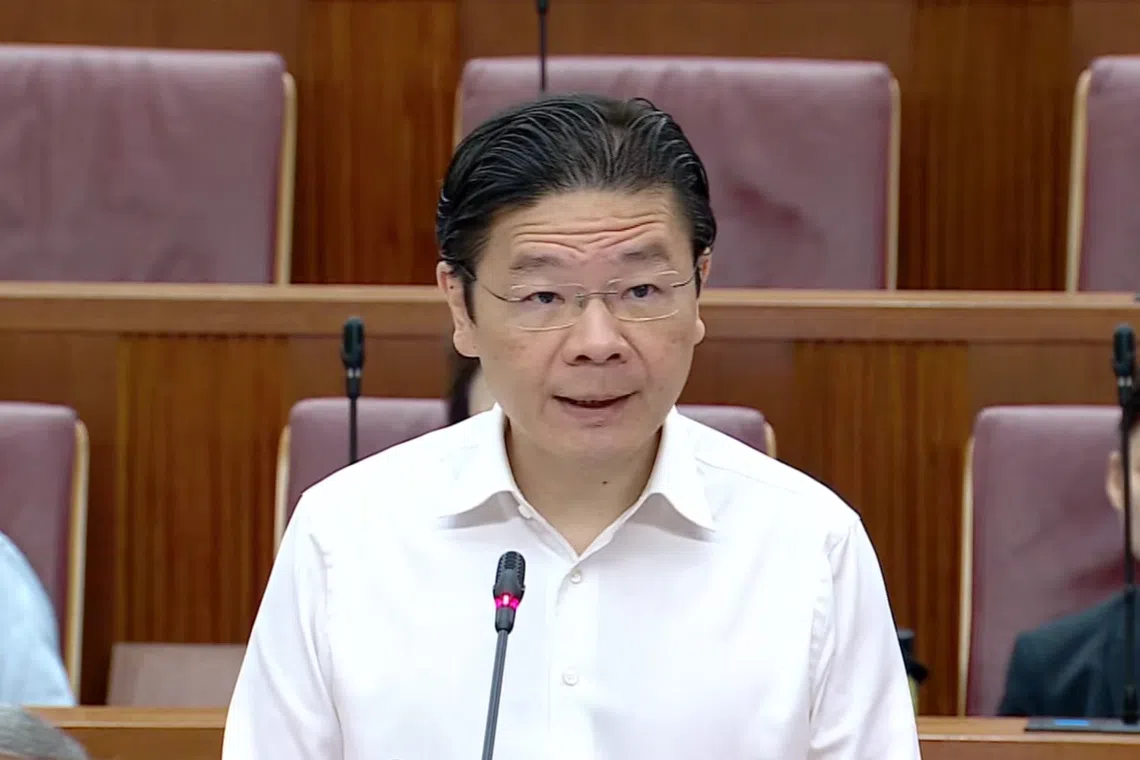
Prime Minister Lawrence Wong said Singapore’s record of good government is achieved through deliberate choices, including about political remuneration.
Published Sep 08, 2026, 06:15 PM
Updated Sep 08, 2026, 06:15 PM
PM Lawrence Wong emphasises that good government relies on strong leadership with integrity and competence.
The government accepts the salary review recommendations to ensure political officeholders are fairly remunerated, helping to attract capable individuals to public service.
Singapore’s transparent and competitive political pay system supports sustained political renewal, maintaining high standards of governance and accountability for the country’s future.
Follow our live coverage here.
SINGAPORE - Good government depends on good leadership because institutions are only as effective as the people who lead them, said Prime Minister Lawrence Wong.
This is why it is important to attract people of integrity and competence so that they can set the direction, decide the priorities, and make the strategic calls for Singapore, he said.
To do this, it is important to acknowledge that remuneration is a factor, the Prime Minister said.
While politics must remain a calling to serve, “if the personal and financial sacrifices become too large, many capable people will simply choose to do something else”, he added.
He was speaking in Parliament on Sep 8 on the Government’s response to a long-deferred review of salaries for political appointment holders and Members of Parliament.
The review, which has been postponed several times since 2023, was completed this year, with PM Wong saying that the Government will accept the recommendations.
He said: “If we want our political system to remain effective, we cannot allow its basic terms of service to drift further and further away from reality.That applies to MPs’ allowances. It applies even more importantly to political officeholder salaries.”
In explaining the Government’s decision, he said building and renewing a strong political team takes sustained effort, and the review of salaries helps to ensure that Singapore’s system continues to give future Prime Ministers the best possible chance of assembling a good team.
This is important because the quality of leadership makes a decisive difference to organisations, he said.
Good Ministers are needed to set the direction for their ministries, decide the priorities, and make the strategic calls, he said.
If these calls are wrong, even the best civil servants will struggle to deliver good outcomes, he added.
Addressing the notion that Singapore’s civil service can keep the system running even without good ministers, which opposition parties have brought up in the past, PM Wong said: “The idea that we can have less capable ministers sitting above a first-rate Civil Service, and everything will somehow continue to work, is a fantasy.”
A strong civil service is no substitute for effective political leaders, who have to make decisions that involve choices about priorities, interests and values, he said.
Over time, the quality of political leadership also affects the quality of the civil service itself, said PM Wong.
This has happened elsewhere, with countries once known for highly capable governments suffering a deterioration in their civil services when political leadership at the top weakened, he said.
Capable public officers want to work for leaders they respect and can learn from, who can understand the issues, ask the right questions, make sound judgments and take responsibility for decisions, he said.
“If Ministers consistently fall short, good officers will become frustrated. Many will leave. Some may stay on, but they will be less willing to contribute their best ideas, or take on the toughest assignments,” he warned.
Why remuneration is important
In this regard, remuneration becomes relevant, said PM Wong.
It does not determine who is capable but it affects whether enough capable people are prepared to step forward to take on the job, he said.
Emphasising that character is a very important “veto factor” in determining if someone can be a Minister, he said: “If someone does not have the integrity, values and commitment to serve, then however capable he or she may be, that person should not be a minister”
But character alone is not enough, and ministers also need the competence to have the judgment, ability and leadership to do the job well.
The PM noted that the job of a minister is demanding, even if some may think it is straightforward.
It is not simply about doing what is popular today, but to make judgments about what will leave Singapore in a stronger position tomorrow, he added.
While it is often politically convenient to postpone difficult reforms, promise more benefits without being clear about who will pay for them, and avoid decisions that upset particular groups, the consequences of doing so will eventually catch up with citizens bearing the cost.
This is happening in many countries where government leaders know what needs to be done, but defer the decisions, he said.
As a tiny country, Singapore has less room than most countries to govern this way and cannot afford to let major problems fester for years before acting, he said.
He added that he was not suggesting that Ministers always got every decision right.
“Ministers do make mistakes. Some will be stronger in certain areas than others. And when we fall short, we have to learn, improve, and be accountable,” he said.
“But taken as a whole, I believe we have a strong team – as Singapore has had over successive generations. Our Ministers are able to master their briefs, exercise judgement, hold their own, and earn the confidence and trust of Singaporeans. And where necessary, represent Singapore well on the international stage.”
Noting that it is not easy to find people who are up to the job, and to have enough of them who are willing to step forward, PM Wong said the challenge is not unique to Singapore.
Recounting an anecdote he heard from Senior Minister Lee Hsien Loong, he said a visiting foreign prime minister had been impressed with the quality of Singapore’s leaders and had told SM Lee about the challenge of recruiting people of the right calibre for his Cabinet.
The foreign prime minister himself has come from the private sector and knew of the quality of people available outside politics, and how difficult it was to persuade the right people to step forward, said PM Wong.
Different countries have tried to manage the challenge in different ways, he noted.
Some have kept political salaries low as it is a highly sensitive issue, but allow substantial benefits and privileges to accumulate around office, while others have allowed politicians to supplement their incomes through outside interests.
“So the headline salary may look modest. But the overall picture is much more complicated,” he said.
Even then, many countries still struggle to attract the people they need, and this is with much larger populations and talent pools to draw from, he added.
Singapore, which consistently ranks among the leading countries in the world for government effectiveness, integrity and the quality of our public institutions, has been an exception, said PM Wong.
He said: “I meet many people around the world who study governments and public policy. Again and again, they point to Singapore as a model of effective government, and an inspiration for others.”
While these standards have been sustained for so long that they feel normal to Singaporeans, they are not guaranteed, he said.
In fact, this record of good government is possible because of the deliberate choices made over many decades, such as by dealing with political remuneration openly, he said.
This includes paying political officeholders competitive salaries, but with a substantial discount to reflect political service, and making sure the remuneration is transparent with no hidden components or perks outside the published framework.
In return, Singaporeans rightly expect high standards of integrity, conduct, competence, as well as responsibility and accountability at the ballot box from their political leaders, he said.
He added that the same broad consideration applies to MPs, who get a substantial allowance because they carry substantial responsibilities in Parliament and in their constituencies.
Providing a proper allowance has enabled both People’s Action Party and Workers’ Party to recruit and field strong candidates, he added, noting that MPs in the House have a wide range of backgrounds and experience and bring different perspectives to our debates.
“We have to keep bringing in capable Singaporeans from different backgrounds, election after election,” he said.
“Enough of them must be prepared to step forward, contest elections, and take responsibility for the future of our country.”
Tham Yuen-C is senior political correspondent at The Straits Times, where she covers news about local politics.
Singapore Parliament
新加坡总理黄循财表示,新加坡良好的政府治理记录是通过深思熟虑的选择实现的,包括政治报酬方面的选择。
发布于 2026 年 9 月 8 日下午 6:15
更新于2026年9月8日下午6:15
黄循财总理强调,良好的政府依赖于正直、有能力的强有力领导。
政府接受薪酬审查建议,以确保政治官员获得公平的报酬,从而吸引有能力的人才投身公共服务。
新加坡透明且具有竞争力的政治薪酬制度支持政治的持续更新,为国家的未来保持高标准的治理和问责制。
请点击此处关注我们的实时报道。
新加坡——总理黄循财表示,良好的政府取决于良好的领导,因为机构的有效性取决于领导机构的人的有效性。
他说,正因如此,吸引正直且有能力的人才至关重要,这样他们才能为新加坡指明方向、决定优先事项并做出战略决策。
首相表示,要做到这一点,必须承认薪酬是一个因素。
他补充说,虽然政治必须继续是一种服务于民的使命,“但如果个人和经济上的牺牲太大,许多有能力的人就会选择去做其他事情”。
9月8日,他在议会就政府对政治任命官员和国会议员薪酬长期推迟审查的回应发表了讲话。
这项自 2023 年以来多次推迟的审查工作于今年完成,黄之锋总理表示政府将接受这些建议。
他说:“如果我们希望政治体制保持有效,就不能允许其基本服务条款越来越脱离现实。这不仅适用于议员津贴,更重要的是,也适用于政治官员的薪酬。”
在解释政府的决定时,他表示,建立和更新一支强大的政治团队需要持续的努力,而薪酬审查有助于确保新加坡的制度继续为未来的总理提供组建优秀团队的最佳机会。
他说,这一点很重要,因为领导力的素质对组织有着决定性的影响。
他表示,各部委需要优秀的部长来指明方向、决定优先事项并做出战略决策。
他补充说,如果这些判断是错误的,即使是最优秀的公务员也很难取得好的结果。
针对反对党过去曾提出的“即使没有优秀的部长,新加坡的公务员制度也能维持运转”的说法,黄英贤总理表示:“认为我们可以让能力较弱的部长坐在一个一流的公务员队伍之上,而一切还能继续运转,这是一种幻想。”
他表示,强大的公务员队伍并不能取代高效的政治领导人,后者必须做出涉及优先事项、利益和价值观的选择的决定。
黄循财总理表示,随着时间的推移,政治领导层的素质也会影响公务员队伍本身的素质。
他说,这种情况在其他地方也发生过,一些曾经以政府能力强而闻名的国家,在最高政治领导力减弱后,其公务员队伍也出现了衰落。
他说,有能力的公职人员希望为他们尊重和可以学习的领导者工作,这些领导者能够理解问题,提出正确的问题,做出合理的判断,并对决策负责。
他警告说:“如果部长们持续失职,优秀的官员们会感到沮丧。许多人会离开。有些人可能会留下,但他们将不太愿意贡献自己最好的想法,或者承担最艰巨的任务。”
为什么薪酬很重要
黄总理表示,在这方面,薪酬就显得尤为重要。
他说,这并不能决定谁有能力,但它会影响是否有足够多有能力的人愿意站出来承担这项工作。
他强调,品格是决定某人能否担任部长的一个非常重要的“否决因素”,并表示:“如果一个人没有正直的品格、价值观和奉献精神来为人民服务,那么无论他或她多么有能力,都不应该担任部长。”
但光有品格是不够的,牧师还需要具备胜任能力,拥有判断力、才干和领导才能,才能把工作做好。
首相指出,部长的工作虽然看似简单,但实际上却充满挑战。
他补充说,这不仅仅是做今天流行的事情,而是要判断什么会让新加坡明天处于更强大的地位。
虽然推迟艰难的改革、承诺更多好处却不明确谁来买单、避免做出会惹恼特定群体的决定在政治上往往很方便,但这样做的后果最终会由公民承担代价。
他说,这种情况在许多国家都在发生,政府领导人明明知道应该做什么,却一再推迟决定。
他说,新加坡作为一个小国,治理空间比大多数国家都要小,不能让重大问题恶化多年才采取行动。
他还补充说,他并不是说部长们做的每一个决定都是正确的。
他说:“部长们确实会犯错。有些人在某些领域比其他部长更擅长。当我们做得不够好时,我们必须从中吸取教训,改进工作,并承担责任。”
“但总的来说,我相信我们拥有一支强大的团队——就像新加坡历代以来一直拥有的那样。我们的部长们能够胜任各自的职责,做出明智的判断,坚持原则,赢得新加坡人民的信任和支持。并在必要时,在国际舞台上出色地代表新加坡。”
黄总理指出,找到能够胜任这项工作的人并不容易,而且要找到足够多的愿意挺身而出的人也不容易,他表示,这一挑战并非新加坡独有。
他讲述了从李显龙高级部长那里听到的一个轶事:一位来访的外国总理对新加坡领导人的素质印象深刻,并告诉李显龙,为他的内阁招募合适人才是一项挑战。
黄总理表示,这位外国总理本人来自私营部门,了解政界之外的人才素质,也知道要说服合适的人站出来有多么困难。
他指出,不同国家尝试用不同的方式应对这一挑战。
有些人因为政治薪酬是一个高度敏感的问题,所以将政治薪酬控制在较低水平,但允许政治人物通过职务之便积累大量福利和特权;而另一些人则允许政治人物通过外部利益来补充收入。
“所以,表面上的薪酬可能看起来很一般,但实际情况要复杂得多,”他说。
他补充说,即便如此,许多国家仍然难以吸引到所需的人才,而这些国家拥有的人口和人才库要庞大得多。
黄循财总理表示,新加坡在政府效率、廉洁性和公共机构质量方面一直位居世界领先国家之列,是个例外。
他说:“我遇到过世界各地许多研究政府和公共政策的人。他们一次又一次地指出,新加坡是高效政府的典范,也是其他国家的榜样。”
他说,虽然这些标准已经维持了这么久,以至于新加坡人觉得很正常,但它们并不能得到保证。
他表示,事实上,之所以能够取得如此良好的政府治理记录,是因为几十年来做出了深思熟虑的选择,例如公开处理政治报酬问题。
这包括向政治官员支付有竞争力的薪酬,但要大幅折扣以体现其政治服务,并确保薪酬透明,没有隐藏部分或公布框架之外的额外福利。
他表示,作为回报,新加坡人民理所当然地期望他们的政治领导人具备高标准的诚信、行为、能力,以及在投票箱前承担责任和接受问责。
他还补充说,同样的考量也适用于议员,他们因为在议会和选区承担重大责任而获得相当可观的津贴。
他补充说,提供适当的津贴使人民行动党和工人党能够招募和推出优秀的候选人,并指出,国会议员拥有广泛的背景和经验,为我们的辩论带来了不同的视角。
他说:“我们必须在一次又一次的选举中,不断引进来自不同背景的优秀新加坡人。”
“他们当中必须有足够多的人做好准备,站出来参加选举,为我们国家的未来承担责任。”
Tham Yuen-C 是《海峡时报》的资深政治记者,主要报道本地政治新闻。
新加坡国会