Higher ministerial pay may ease recruitment hurdle, but other deterrents remain: Analysts分析人士指出,提高部长薪酬或许能缓解招聘难题,但其他阻碍因素依然存在。
Non-monetary factors such as loss of privacy are bigger deterrents to entering political life, say experts after the government's first ministerial pay revision since 2011.
Non-monetary factors such as loss of privacy are bigger deterrents to entering political life, say experts after the government's first ministerial pay revision since 2011.
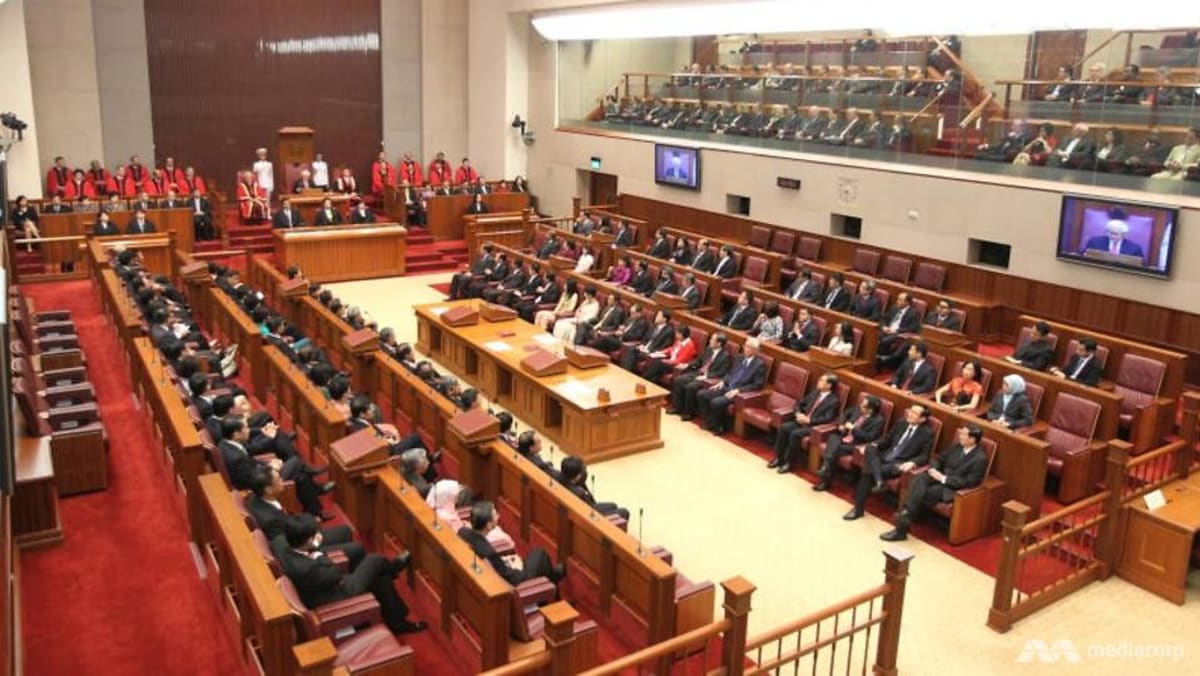
The Singapore parliament in session. (File photo: TODAY)
This audio is generated by an AI tool.
SINGAPORE: Raising ministerial salaries may make it easier to attract candidates from the private sector, but the move is unlikely to significantly widen the pool of people willing to enter politics, analysts said.
Non-monetary considerations, such as scrutiny of politicians and their families and the uncertainty of a political career, are likely to weigh more heavily on potential candidates, they added.
Even though the individual is the one who decides to enter politics, their families, who are private citizens, come under greater attention and scrutiny by extension, said Dr Teo Kay Key, senior research fellow at the National University of Singapore's (NUS) Institute of Policy Studies.
"That aspect of privacy might be something that people would not want to give up, regardless of compensation amount. This is especially the case in the current age of social media," she said.
Prime Minister Lawrence Wong announced on Tuesday (Sep 8) that Singapore’s political office holders will get a salary increase of up to 9 per cent, taking the annual sum drawn by a minister in the lowest grade to about S$1.2 million.
The salary revision, the first since 2011, takes effect on Oct 15.
Mr Wong said before the last General Election, he had spoken to several permanent secretaries as well as CEOs and senior business leaders earning several times a minister's salary, but none were prepared to make the move.
Even with the salary adjustments, private-sector candidates are unlikely to make a beeline for politics, said Singapore Management University (SMU) associate professor of law Eugene Tan.
He said the changes are more an attempt to ensure remuneration does not become a bigger hindrance than it already is to capable individuals considering politics.
While salaries are an important consideration, non-monetary factors such as the uncertainty of a political career, loss of personal and family privacy, and stepping outside one's professional comfort zone are more likely to affect their decisions, Assoc Prof Tan said, adding that no pay formula can fully address the non-financial concerns that deter people from entering politics.
He pointed to Mr Wong's comments on how people weigh the team they may join, what it stands for and whether they want to serve alongside its members.
“In short, how the government governs and how it engages with people, especially the private sector, matters immensely. In other words, is how the government governing a deterrent in itself? We will have to wait and see what is being done on this front,” said Assoc Prof Tan.
NUS assistant professor of political science Elvin Ong agreed that potential candidates may also be concerned about which political party they join, calling this a difficult problem to solve.
He noted that the Workers' Party has drawn some "good calibre" people who might otherwise have been strong candidates for the People's Action Party.
"This suggests that the market for a limited pool of good candidates is competitive among political parties," Asst Prof Ong said.
CNA Games Guess Word Crack the word, one row at a time Buzzword Create words using the given letters Mini Sudoku Tiny puzzle, mighty brain teaser Mini Crossword Small grid, big challenge Word Search Spot as many words as you can Show More Show Less
RECRUITING FROM THE PRIVATE SECTOR
Mr Wong also said on Tuesday that the government is not trying to match private sector pay, but it cannot pretend the opportunity cost does not exist.
Dr Teo agreed, saying a high salary should not be the main draw for any candidate, as this would suggest a focus on monetary benefit rather than public service.
Given that senior private-sector executives already draw competitive pay, she said, the adjustments may be better aimed at narrowing the change in lifestyle candidates would face on entering politics. Setting out how the public service component factors into the salaries also helps candidates understand what is expected of them even if they take a pay cut, she added.
A one-off increase of up to 9 per cent to the lowest grade benchmark, unchanged for 15 years, works out to less than 1 per cent a year, said Asst Prof Ong, adding that given inflation over that period, there may be no real wage increase.
The revised framework prevents political salaries from becoming increasingly disconnected from the broader market, said Mr Aslam Sardar, CEO of the Institute for Human Resource Professionals.
The changes make the framework more relevant rather than helping it compete on headline pay, he said, noting that the substantial discount reflecting public service was retained.
“From an HR perspective, that is a sensible distinction. Competitiveness does not necessarily mean matching the highest-paying alternative. It means ensuring that the overall proposition is credible for the talent and responsibilities involved,” he added.
Mr Aslam noted that private sector pay varies widely: in 2025, the CEO of CapitaLand Investment was paid about S$5.08 million, Singapore Airlines' CEO S$7 million, and DBS' CEO S$9.64 million.
This, he said, is why the changes should be seen as restoring market relevance to political salaries rather than closing a simple gap with private-sector leaders.
Experts said publishing the figures in detail helps the public understand how politicians are paid and evaluated.
Ministerial responsibilities are difficult to compare with most other jobs, and the explanations provide context for how the new benchmark was set, Dr Teo said.
However, being transparent about the figures will inevitably invite comparisons with ordinary Singaporeans' own pay, she said.
“With finances and cost of living being something that is typically top of people’s lists of concerns, it will be hard to stop people from making comparisons to their own personal situations,” she added.
There could be a political cost if the measures go further than the public can accept, said Assoc Prof Tan, describing the headline figures as "mindboggling" to the average Singaporean.
“Given the economic uncertainty and the imminent technological disruptions at workplaces, today’s announcement could come across as being tone-deaf or even self-serving,” he said.
While the issue is unlikely to win votes, he added, the government cannot shy away from it if it wants to sustain and strengthen Singapore's system.
It is important for political leadership to show that Singapore needs capable and committed leaders – a vital ingredient to the country's success that may have been taken for granted, he said.
“This in turn requires the ruling party and prime minister to demand high standards of political office holders and to be rigorous in ensuring that quality of leadership is not only maintained but enhanced.”
Get our pick of top stories and thought-provoking articles in your inbox
Stay updated with notifications for breaking news and our best stories
Join our channel for the top reads for the day on your preferred chat app
专家表示,在政府自 2011 年以来首次调整部长薪酬后,隐私丧失等非金钱因素才是人们投身政治生活的更大阻碍。
新加坡国会正在开会。(资料照片:TODAY)
这段音频由人工智能工具生成。
新加坡:分析人士表示,提高部长薪酬或许更容易吸引私营部门的候选人,但此举不太可能大幅扩大愿意从政的人员范围。
他们补充说,非金钱因素,例如对政治人物及其家人的审查以及政治生涯的不确定性,可能会对潜在候选人产生更大的影响。
新加坡国立大学政策研究所高级研究员张启基博士表示,虽然是个人决定进入政坛,但他们的家人作为普通公民,也会因此受到更多的关注和审查。
“无论补偿金额多少,人们可能都不愿意放弃隐私权。在如今社交媒体时代,这种情况尤为如此,”她说道。
新加坡总理黄循财周二(9月8日)宣布,新加坡政治官员的薪水将上涨至多9%,最低级别部长的年薪将达到约120万新元。
此次薪资调整是自 2011 年以来的首次调整,将于 10 月 15 日生效。
黄先生表示,在上届大选前,他曾与几位常任秘书以及一些首席执行官和高级商业领袖谈过,他们的薪水是部长薪水的数倍,但没有人愿意做出这样的改变。
新加坡管理大学 (SMU) 法学副教授陈永健表示,即使薪资有所调整,私营部门的候选人也不太可能急于投身政界。
他表示,这些改变更多是为了确保薪酬不会对那些有能力从政的人来说造成比现在更大的阻碍。
陈副教授表示,虽然薪酬是一个重要的考虑因素,但政治生涯的不确定性、个人和家庭隐私的丧失以及走出职业舒适区等非金钱因素更有可能影响他们的决定。他还补充说,没有任何薪酬方案能够完全解决阻碍人们进入政坛的非经济方面的担忧。
他指出黄先生曾说过,人们会权衡他们可能加入的团队、团队的立场以及他们是否愿意与团队成员一起服务。
“简而言之,政府的治理方式以及与民众,特别是私营部门的互动方式至关重要。换句话说,政府的治理方式本身是否就是一种威慑?我们还需要拭目以待,看看这方面正在采取哪些措施,”陈副教授说道。
新加坡国立大学政治学助理教授王艾文也认为,潜在的候选人可能也会关心他们加入哪个政党,他称这是一个难以解决的问题。
他指出,工人党吸引了一些“优秀人才”,这些人原本可能是人民行动党的有力候选人。
“这表明,对于数量有限的优秀候选人来说,各政党之间的竞争非常激烈,”翁助理教授说。
CNA游戏 猜词游戏 逐行破解单词 流行词游戏 用给定的字母组成单词 迷你数独 小小谜题,挑战你的大脑 迷你填字游戏 小方格,大挑战 单词搜索 尽可能多地找出单词 显示更多 显示更少
从私营部门招聘
黄先生周二还表示,政府并非试图与私营部门的薪酬持平,但也不能假装机会成本不存在。
张医生对此表示赞同,并指出高薪不应成为任何候选人的主要吸引力,因为这表明候选人更注重金钱利益而非公共服务。
她表示,鉴于私营企业高管的薪酬已经相当可观,这些调整或许更应该着重于缩小候选人进入政坛后生活方式的改变。她补充说,明确公共服务部分在薪酬中的占比,也有助于候选人了解即使接受降薪,他们仍需承担哪些职责。
王助理教授表示,一次性将最低等级基准工资提高至多 9%,且 15 年来保持不变,这相当于每年不到 1% 的涨幅。他还补充说,考虑到这段时间的通货膨胀,实际工资可能不会上涨。
人力资源专业人士协会首席执行官阿斯拉姆·萨达尔先生表示,修订后的框架可以防止政治薪酬与更广泛的市场日益脱节。
他表示,这些变化使薪酬框架更具相关性,而不是帮助其在名义薪酬方面更具竞争力,并指出反映公共服务的大幅折扣得以保留。
“从人力资源的角度来看,这是一个合理的区分。竞争力并不一定意味着要与薪酬最高的职位持平,而是要确保整体方案与所涉及的人才和职责相匹配,”他补充道。
阿斯拉姆先生指出,私营部门的薪酬差异很大:2025年,凯德集团首席执行官的薪酬约为508万新元,新加坡航空公司首席执行官的薪酬约为700万新元,星展银行首席执行官的薪酬约为964万新元。
他表示,正因如此,这些改革应该被视为恢复政治薪酬的市场相关性,而不是简单地缩小与私营部门领导人之间的差距。
专家表示,详细公布这些数据有助于公众了解政治人物的薪酬和考核方式。
张医生表示,部长级职责很难与其他大多数工作相提并论,这些解释为新基准的设定提供了背景。
她表示,但公开这些数据必然会引发人们将其与新加坡普通民众的工资进行比较。
她补充说:“由于财务状况和生活成本通常是人们最关心的问题,因此很难阻止人们将这种情况与自己的个人情况进行比较。”
陈副教授表示,如果这些措施超出公众的接受范围,可能会付出政治代价。他还形容这些主要数字对普通新加坡人来说“令人难以置信”。
“鉴于当前的经济形势不明朗,以及工作场所即将面临的技术变革,今天的声明可能会显得不合时宜,甚至显得自私自利,”他说。
他补充说,虽然这个问题不太可能赢得选票,但如果政府想要维持和加强新加坡的制度,就不能回避这个问题。
他表示,政治领导层必须表明,新加坡需要有能力、有担当的领导人——这是国家成功的关键因素,而这一点可能一直被人们视为理所当然。
“这反过来要求执政党和总理对政治官员提出高标准的要求,并严格确保领导层的质量不仅得到维持,而且得到提升。”
订阅我们的邮件,即可获取精选热门新闻和引人深思的文章。
订阅通知,第一时间获取突发新闻和精彩报道。
加入我们的频道,即可在您常用的聊天应用上获取当日热门文章。