Uptick in fake Singapore-based websites targeting people with access to sensitive information: Shanmugam针对掌握敏感信息的人士的虚假新加坡网站数量激增:尚穆根
Authorities will investigate such attempts and take decisive action to neutralise the threat, said Coordinating Minister for National Security K Shanmugam.
Authorities will investigate such attempts and take decisive action to neutralise the threat, said Coordinating Minister for National Security K Shanmugam.
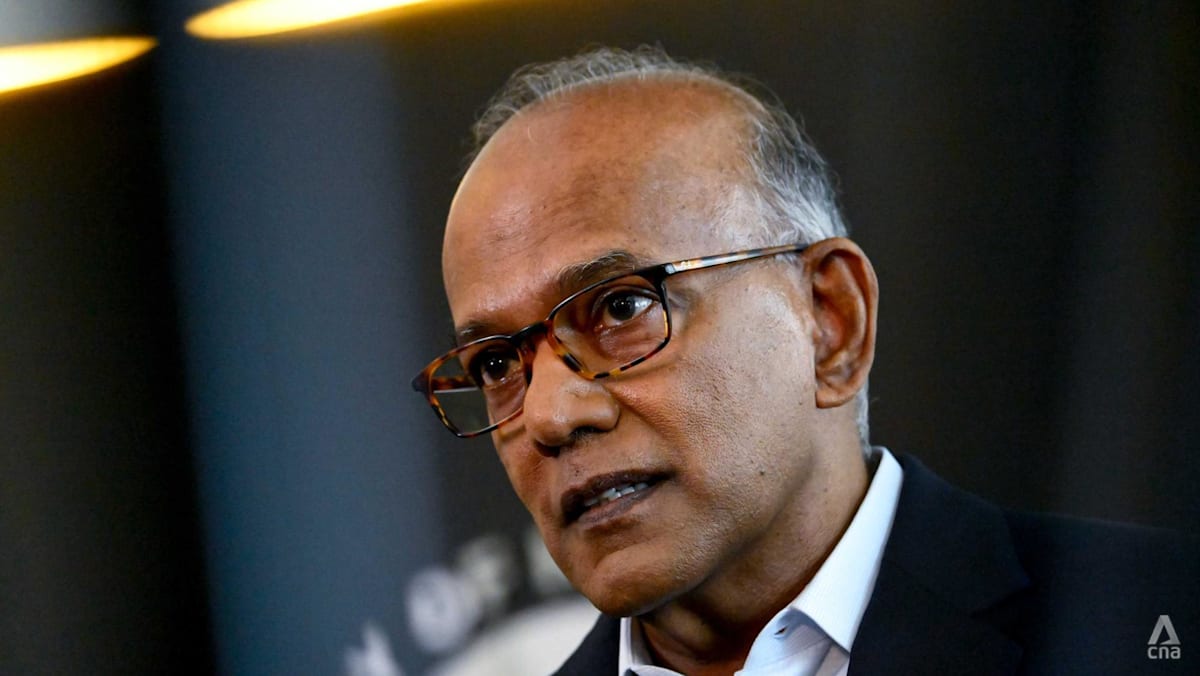
Senior Minister and Coordinating Minister for National Security and Minister for Home Affairs K Shanmugam speaks to the media in the Ministry of Home Affairs building, on Jul 27, 2026. (File photo: CNA/Wallace Woon)
This audio is generated by an AI tool.
SINGAPORE: Singapore has detected an uptick in attempts by threat actors to set up websites pretending to be Singapore-based entities, said Coordinating Minister for National Security K Shanmugam on Tuesday (Sep 8).
The websites recruit individuals to gain access to sensitive or classified information, with most of them set up overseas, he added in a parliamentary reply to a question by Member of Parliament Yip Hon Weng (PAP-Yio Chu Kang).
Mr Yip had asked, in view of suspicious entities masquerading as Singapore-based think tanks and recruiting former public officers for privileged information, about the safeguards against foreign actors who attempt to exploit Singapore as a base for covert intelligence-gathering.
He also asked about ways that the authorities use to thwart entities suspected of facilitating such activities.
CNA Games Guess Word Crack the word, one row at a time Buzzword Create words using the given letters Mini Sudoku Tiny puzzle, mighty brain teaser Mini Crossword Small grid, big challenge Word Search Spot as many words as you can Show More Show Less Mr Shanmugam, who is also Home Affairs Minister, said that the ministry takes a "serious view" of entities who try to use Singapore as a cover to obtain sensitive information via deceptive means. "We will investigate any such attempts and take decisive action to neutralise the threat." He added that MHA has not found any increase in Singapore-registered entities offering employment opportunities as a means of recruiting individuals for foreign intelligence purposes. On the increase in threat actors setting up websites that purport to represent Singapore-based entities, Mr Shanmugam said that the government has a range of legislative levers to guard against them. He cited the Online Criminal Harms Act (OCHA) as an example - it allows authorities to deal with online activities that are criminal in nature, including offences that affect national security, national harmony and individual safety. For instance, the government recently issued an Access Blocking Direction under OCHA against the Global Asia Think Tank website, following an assessment prompted by a police report lodged by the Ministry of Foreign Affairs (MFA). In August, CNA reported on a number of suspicious websites masquerading as Singapore-based think tanks and consultancies, including Global Asia Think Tank. Global Asia claimed on its website that it was supported by MFA and works with both the Lee Kuan Yew School of Public Policy (LKYSPP) in the National University of Singapore, and the Nanyang Technological University’s S. Rajaratnam School of International Studies. All three institutions denied the purported links when contacted by CNA. MFA said it "does not and has not supported" Global Asia. LKYSPP said it had "no relationship" with the entity while RSIS said it had "no knowledge" of it. Global Asia also claimed to have held an in-person seminar at LKYSPP in June, but CNA's checks found that no such event appeared on the school's calendar. An image on Global Asia's website purportedly showing the event was generated using one of OpenAI's image generation models, CNA found. In Mr Shanmugam's reply on Tuesday, he also cited other legislative levers such as the Internal Security Act, the Official Secrets Act and the Statutory Bodies and Government Companies (Protection of Secrecy) Act. In addition, he said that MHA monitors and acts against threats of espionage and foreign interference using various ways, though it is unable to disclose details for operational reasons "Both serving and former public officers, as well as others who have access to sensitive/classified information, must remain vigilant to such threats and report suspicious approaches to the relevant authorities," said Mr Shanmugam. "We will also raise awareness of these threats among the wider public. If individuals encounter a suspicious approach, they should take steps to verify if an entity is legitimate before providing further information."
Mr Shanmugam, who is also Home Affairs Minister, said that the ministry takes a "serious view" of entities who try to use Singapore as a cover to obtain sensitive information via deceptive means.
"We will investigate any such attempts and take decisive action to neutralise the threat."
He added that MHA has not found any increase in Singapore-registered entities offering employment opportunities as a means of recruiting individuals for foreign intelligence purposes.
On the increase in threat actors setting up websites that purport to represent Singapore-based entities, Mr Shanmugam said that the government has a range of legislative levers to guard against them.
He cited the Online Criminal Harms Act (OCHA) as an example - it allows authorities to deal with online activities that are criminal in nature, including offences that affect national security, national harmony and individual safety.
For instance, the government recently issued an Access Blocking Direction under OCHA against the Global Asia Think Tank website, following an assessment prompted by a police report lodged by the Ministry of Foreign Affairs (MFA).
In August, CNA reported on a number of suspicious websites masquerading as Singapore-based think tanks and consultancies, including Global Asia Think Tank.
Global Asia claimed on its website that it was supported by MFA and works with both the Lee Kuan Yew School of Public Policy (LKYSPP) in the National University of Singapore, and the Nanyang Technological University’s S. Rajaratnam School of International Studies.
All three institutions denied the purported links when contacted by CNA.
MFA said it "does not and has not supported" Global Asia. LKYSPP said it had "no relationship" with the entity while RSIS said it had "no knowledge" of it.
Global Asia also claimed to have held an in-person seminar at LKYSPP in June, but CNA's checks found that no such event appeared on the school's calendar.
An image on Global Asia's website purportedly showing the event was generated using one of OpenAI's image generation models, CNA found.
In Mr Shanmugam's reply on Tuesday, he also cited other legislative levers such as the Internal Security Act, the Official Secrets Act and the Statutory Bodies and Government Companies (Protection of Secrecy) Act.
In addition, he said that MHA monitors and acts against threats of espionage and foreign interference using various ways, though it is unable to disclose details for operational reasons
"Both serving and former public officers, as well as others who have access to sensitive/classified information, must remain vigilant to such threats and report suspicious approaches to the relevant authorities," said Mr Shanmugam.
"We will also raise awareness of these threats among the wider public. If individuals encounter a suspicious approach, they should take steps to verify if an entity is legitimate before providing further information."
Get our pick of top stories and thought-provoking articles in your inbox
Stay updated with notifications for breaking news and our best stories
Join our channel for the top reads for the day on your preferred chat app
国家安全统筹部长尚穆根表示,当局将调查此类企图,并采取果断行动消除威胁。
2026年7月27日,高级部长兼国家安全统筹部长、内政部长尚穆根在内政部大楼接受媒体采访。(资料照片:CNA/Wallace Woon)
这段音频由人工智能工具生成。
新加坡:国家安全统筹部长尚穆根周二(9月8日)表示,新加坡已发现有威胁行为者试图建立冒充新加坡实体的网站的企图有所增加。
他在国会答复议员叶汉荣(人民行动党-义顺)的提问时补充说,这些网站招募人员以获取敏感或机密信息,其中大多数网站都设在海外。
鉴于一些可疑实体伪装成新加坡智库,并招募前公职人员获取特权信息,叶先生询问了有关防范外国势力利用新加坡作为秘密情报收集基地的保障措施。
他还询问了当局用来阻止涉嫌协助此类活动的实体的手段。
CNA游戏 猜词游戏 逐行破解单词 流行词游戏 用给定的字母组成单词 迷你数独 小谜题,脑力挑战 迷你填字游戏 小方格,大挑战 单词搜索 尽可能多地找出单词 显示更多 显示更少 尚穆根先生(同时也是内政部长)表示,内政部对试图利用新加坡作为掩护,通过欺骗手段获取敏感信息的实体持“严肃态度”。“我们将调查任何此类企图,并采取果断行动消除威胁。” 他补充说,内政部尚未发现任何以提供就业机会为幌子,为外国情报目的招募人员的新加坡注册实体数量增加。针对威胁行为者设立冒充新加坡实体的网站数量增加的情况,尚穆根先生表示,政府拥有一系列立法手段来防范此类行为。他以《网络犯罪危害法》(OCHA)为例——该法允许当局处理本质上属于犯罪性质的网络活动,包括影响国家安全、国家和谐和个人安全的犯罪行为。例如,新加坡政府近期根据人道事务协调厅(OCHA)的指示,对“全球亚洲智库”(Global Asia Think Tank)网站发出了访问封锁指令。此前,外交部向警方报案,促使政府进行了评估。今年8月,亚洲新闻台(CNA)报道了多个伪装成新加坡智库和咨询机构的可疑网站,其中包括“全球亚洲智库”。“全球亚洲智库”在其网站上声称,它得到了新加坡外交部的支持,并与新加坡国立大学李光耀公共政策学院(LKYSPP)和南洋理工大学拉惹勒南国际研究院(RSIS)都有合作。亚洲新闻台联系这三所机构后,均否认了所谓的关联。新加坡外交部表示,它“现在和过去都没有支持”“全球亚洲智库”。李光耀公共政策学院表示,它与该机构“没有任何关系”,而拉惹勒南国际研究院则表示,它“对此毫不知情”。“全球亚洲智库”还声称,它曾在6月份在李光耀公共政策学院举办过一次线下研讨会,但亚洲新闻台的核实发现,该学院的日程安排中并没有此类活动。中央社发现,环球亚洲网站上一张据称展示该活动的图片,实际上是使用OpenAI的图像生成模型生成的。尚穆根先生周二在答复中还提及了其他法律手段,例如《内部安全法》、《官方保密法》和《法定机构和政府公司(保密保护)法》。此外,他还表示,内政部会通过多种方式监控并打击间谍活动和外国干预的威胁,但出于行动原因,无法透露具体细节。尚穆根先生说:“现任和前任公职人员,以及其他能够接触敏感/机密信息的人员,都必须对这类威胁保持警惕,并将可疑的接触报告给相关部门。我们还将提高公众对这些威胁的认识。如果遇到可疑的接触,个人在提供进一步信息之前,应先核实对方的合法性。”
尚穆根先生同时也是内政部长,他表示,内政部对试图利用新加坡作为掩护,通过欺骗手段获取敏感信息的实体持“严肃态度”。
“我们将调查任何此类企图,并采取果断行动消除威胁。”
他还补充说,内政部并未发现任何以提供就业机会为手段招募人员从事外国情报活动的新加坡注册实体数量有所增加。
针对威胁行为者设立网站冒充新加坡实体的现象日益增多,尚穆根先生表示,政府拥有一系列立法手段来防范此类行为。
他以《网络犯罪危害法》(OCHA)为例——该法允许当局处理具有犯罪性质的网络活动,包括影响国家安全、国家和谐和个人安全的犯罪行为。
例如,在外交部向警方报案后,政府最近根据联合国人道主义事务协调厅(OCHA)对全球亚洲智库网站发布了访问封锁指令。
8 月,CNA 报道了一些可疑网站,这些网站伪装成总部位于新加坡的智库和咨询公司,其中包括 Global Asia Think Tank。
Global Asia 在其网站上声称,它得到了新加坡外交部的支持,并与新加坡国立大学李光耀公共政策学院 (LKYSPP) 和南洋理工大学拉惹勒南国际研究院合作。
CNA联系这三家机构时,均否认了所谓的关联。
外交部表示“现在和过去都不支持”环球亚洲。李光耀公共政策研究所表示与该机构“没有任何关系”,而拉脱维亚国际研究院则表示“对此毫不知情”。
Global Asia 还声称在 6 月份于李光耀公共政策学院举办了一场线下研讨会,但 CNA 的调查发现,该校的日程表上并没有出现这样的活动。
CNA发现,Global Asia网站上据称显示的这张图片是用OpenAI的图像生成模型生成的。
尚穆根先生在周二的答复中还提到了其他立法手段,例如《内部安全法》、《官方保密法》和《法定机构和政府公司(保密保护)法》。
此外,他还表示,内政部通过多种方式监控并打击间谍活动和外国干涉的威胁,但出于行动原因,无法透露具体细节。
尚穆根先生表示:“现任和前任公职人员以及其他能够接触敏感/机密信息的人员,都必须对这类威胁保持警惕,并将可疑的接触情况报告给有关当局。”
“我们还将提高公众对这些威胁的认识。如果遇到可疑情况,个人应在提供更多信息之前,采取措施核实对方的合法性。”
订阅我们的邮件,即可获取精选热门新闻和引人深思的文章。
订阅通知,第一时间获取突发新闻和精彩报道。
加入我们的频道,即可在您常用的聊天应用上获取当日热门文章。