What It Was Like Flying And Fighting The F-16N Viper, Topgun’s Legendary Hotrod驾驶和战斗F-16N“蝰蛇”——《壮志凌云》中的传奇战机——是一种怎样的体验
It was hideously fast, incredibly maneuverable and a huge step forward for the US Navy's aerial adversary capabilities.
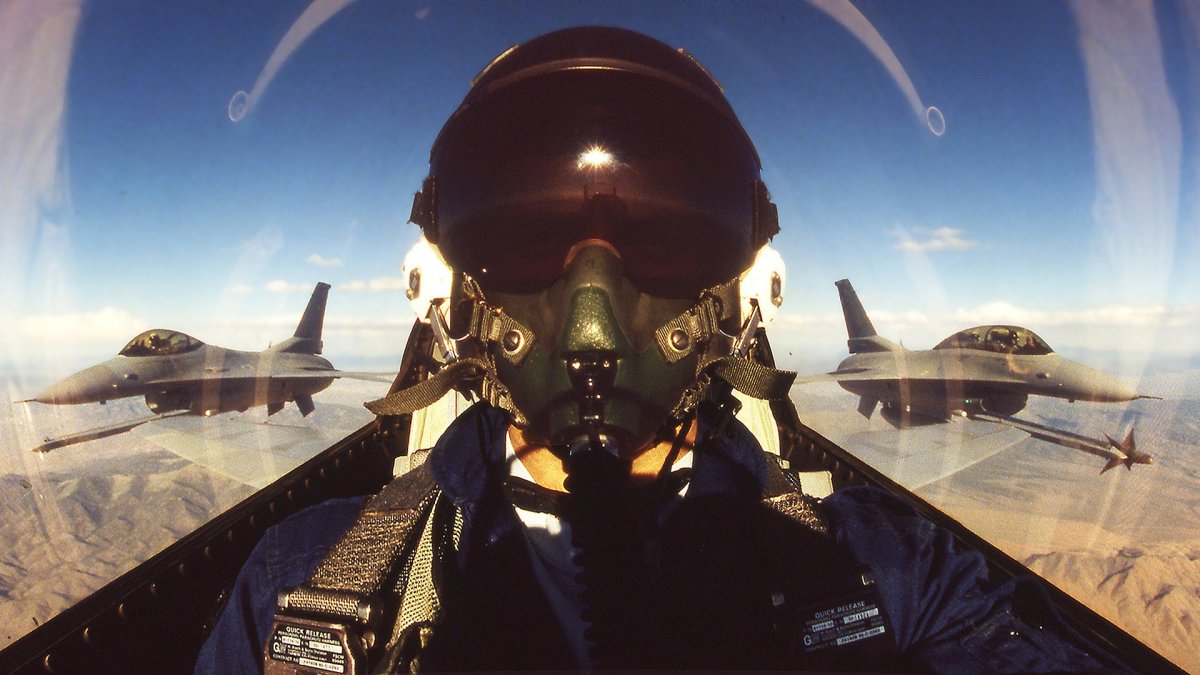
By Paul Nickell And Tyler Rogoway
Updated Jul 2, 2020 2:58 PM EDT
In the late 1980s, F-14 Tomcat pilot and Topgun instructor Paul Nickell found himself strapping into the cockpit of a brand new Navy jet that would never land on an aircraft carrier. Instead, it was built specifically to challenge the skills of the best fighter crews the Navy had to offer. It was a stripped down, up-engined, exotically painted variant of the already nimble F-16. General Dynamics built only 26 of them, and the fleet served less than a decade before being controversially retired, but the impression the jet made was legendary.
For part one of a multi-part, in-depth series on Paul Nickell’s incredible experiences flying fighters during one of the most celebrated eras of naval aviation, here is the F-16N’s story told through the eyes of one of the small cadre of Topgun flyers that pushed it to its limits on a daily basis.
Courtesy of Paul Nickell
Genesis Of The F-16N
I served nine years on active duty, which meant that I never made it to DC for a Pentagon tour, fortunately. As a result, I’m not very familiar with the acquisition process for military aircraft with respect to the Pentagon and Congress. By the early to mid 1980s, it was becoming obvious that potential adversaries were fielding aircraft with greatly improved maneuvering capabilities and advanced air-to-air radars that supporti an increasingly reliable forward-quarter, head-on threat profile.
From a training standpoint, we could no longer ignore this improved capability, but it was difficult to train to the latest threat without the supporting hardware needed to emulate it. The Navy’s decision to purchase the F-16N was made in January 1985 while I was still flying Tomcats in the fleet with VF-24. Since I was not there at the time, I was not really aware of how the decision was made, nor was it mentioned much while I was at Topgun.
Interestingly, I do recall seeing an F-16 taxiing around at Miramar while I was flying F-14’s that said “F-16/79” on the side. Someone mentioned that it was a jet the Navy was looking at for an adversary aircraft, but I only recall seeing it once or twice. Having done some research myself, and also consulting a number of the Topgun contacts who were around when the decision was made, it’s quite obvious that there were a lot of politics involved, from the macro level to the micro level.
That’s not a good thing, nor a bad thing; just a reality for a decision with such far reaching implications. The following were a few of the players ultimately involved: President Jimmy Carter, President Ronald Reagan, Taiwan, China, South Korea, Pakistan, Venezuela, Turkey, Greece, US State Department, US Congress, Secretary of Defense, Northrop, General Dynamics, US Air Force, US Navy, National Guard, Navy Fighter Weapons School, and the Navy’s adversary program.
I’ll start by saying that designing and building a fourth generation fighter is an extremely expensive endeavor. The only way to sell them at an affordable price is to sell them in large quantities. There was no way that purchasing 26 aircraft for the Navy would pay for a project such as that, even if the Air Force and Marines had become involved. The only way for the Navy to obtain an affordable fourth generation adversary aircraft was to use something already in production or a variant of the same.
To further complicate the issue, you need a dissimilar aircraft to train against effectively. If you put two F-14s against two other F-14s, it works fine until the aircraft merge in mock aerial combat. After the first turn in the visual arena, it’s virtually impossible to keep track of which F-14 is your wingman and which ones are the opponents. With this in mind the Navy needed a relatively small number of dissimilar, fourth generation fighters at a cheap price. To narrow the options, according to the commanding officer of Topgun at the time, they were focused on selecting a US made aircraft. They were aware of the Israel Aircraft Industries F-21 Kfir during the selection process, however it was not a US made aircraft, and they did not believe the Navy would have entertained the idea of purchasing the Kfir for the fourth generation adversary aircraft. It was never seriously considered.
To understand the selection process, a short look at history is in order. In the late 70s the Carter administration had placed limitations on the export of front-line US fighters in an attempt to curtail the transfer of technology to the Soviets. At the same time, the US Department of Defense, seeking to make our allies stronger, encouraged the development of fighters that were capable of handling the latest Soviet threat, but without the latest and greatest in technology. Two US companies were looking for revenue in this area. Northrop, maker of the F-5E Tiger II, was looking at building upon that design to provide a viable option for Foreign Military Sales (FMS). Going through several iterations, the F-5E morphed to the F-5G as a participant in the FX program, and finally in 1982 it became the F-20 Tigershark.
The F-20 was a very capable fourth generation fighter. At the same time, General Dynamics was looking at a way to obtain business through Foreign Military Sales for its F-16. Unlike Northrop’s problem, General Dynamics had to determine a way of dumbing down its fighter while still keeping it attractive to foreign countries. In 1979 they announced the F-16/79. It would be powered by the venerable General Electric J79 turbojet engine, the same engine that powered the F-4 Phantom and many other military aircraft of the previous couple of decades. It would be heavier and have less thrust than the F100 turbofan powered F-16A/B, and would have downgraded avionics. The selling points were a cheaper price tag and a jet that could be exported to foreign countries. However, by 1980 the Carter administration was already loosening its restrictions on foreign sales, and with the election of Ronald Reagan as president in late 1980, the restrictions would be further reduced.
By the early ‘80s the Navy had identified the need for a fourth generation adversary aircraft with a small price tag. The two readily available options were the F-16/79 and the F-20. General Dynamics brought the F-16/79 to Naval Air Station Miramar, and at least five Topgun Instructors including the CO flew the jet. They felt it was acceptable. The CO felt that the F-16N, based upon a proven, capable, and respected airframe, was a new look compared to the vintage F-5 and its follow-on F-20, and he felt that it was the best choice. Unfortunately, although Northrop allowed some instructors to fly the F-20 simulator, they were never allowed to fly the actual aircraft itself. Some thought this was because Northrop did not want to jeopardize their foreign military sales by any type of negative evaluation by the Navy.
As the Reagan administration relaxed FMS restrictions, the F-16/79 faded from the Navy’s short list for a new aggressor aircraft and was eventually replaced by the F-16N. During that same period of time the F-20 was able to be enhanced. Unfortunately in October 1984, just prior to the final decision, one of three existing F-20’s crashed and the pilot was killed. Ultimately the Navy chose the F-16N. The decision was announced in January 1985.
During the same period, the Air Force was directed to look at the F-20 Tigershark as a dissimilar aggressor aircraft. Additionally the Air National Guard looked at it as an operational aircraft. Then in May 1985 the second of the three prototype F-20s crashed and the pilot was killed. The crash happened as the F-20 team was preparing for the Paris Airshow. Both crashes were eventually attributed to G loss of consciousness (GLOC). Ultimately the decision of both the Air Force and Air National Guard was to maintain commonality by sticking with the F-16. In late 1986 the F-20 Tigershark program was cancelled.
Having spent a great deal of time researching how this decision was made, I have an even greater respect for my predecessor instructors at Topgun. As a recipient of their efforts, I was able to fly a magnificent fourth generation adversary aircraft, one that seemingly fell into my lap, yet the true recipients of their efforts were the Navy and Marine Corps aircrews who were able to train against the N. I never realized how much effort had been put forth on our behalf by a group of guys who would never get to personally reap the fruits of their labor.
The Navy’s Hotrod Viper
The F-16N looked like an F-16C block 30 airframe, powered by the General Electric F110-GE-100 engine with 25,735 pounds of thrust in full afterburner. It normally weighed less than 25,000 pounds with full internal fuel. Later blocks of F-16s had a larger air intake, because that was apparently a limiting factor for the GE engine. With the bigger intake the engine could develop almost 29,000 pounds of thrust.
We normally flew the N with an AIM-9 Sidewinder captive training round on the left wing-tip, and an ACMI (air combat maneuvering instrumentation) pod on the right wing tip if we were going to be operating on a range equipped to support the system. Otherwise the wings were clean with no pylons to add weight and drag. We could carry a fuel tank on the cernterline belly station, but usually didn’t on the single seat models. The two-seater TF-16N Topgun had held about 1200 pounds less fuel than the single seat F-16N models, so they were flown with a centerline fuel tank at times.
Department of Defense
The F-16N’s radar was the APG-66 from the standard F-16A/B model. My feeling was that this was done to keep the price down. The APG-66 radar was adequate for the missions that we conducted, however I was never exposed to the more advanced APG-68 radar from the C/D model to determine all of the differences. I know that the APG-68 did have a Track While Scan (TWS) capability and the APG-66 did not.
The F-16N had no gun. Consequently Topgun gun dets (detachments away from their home base for gunnery practice) came to an end as the F-5 departed the inventory. The lack of the cannon eliminated approximately 250 pounds of weight, plus the weight of the ammunition storage and feed system. It left a fairly large compartment on top of the left side of the fuselage where we could throw a gear bag when going on any type of overnight mission. Because of the removal of the gun, some ballast weight had to be placed in the forward part of the fuselage to keep the aircraft center of gravity within limits. The HUD still displayed a Lead Computing Optical System (LCOS) gun sight, and we could select “GUN” and simulate gun shots, there was just no physical gun in the jet. Additionally there was no Airborne Self Protection Jammer (ASPJ) since the aircraft would not be flown in a true hostile environment.
Unlike the F-14, the Viper had no noticeable reduction in acceleration as you approached Mach 1. Bottom line, it was sleek and it was fast. I’ve personally seen it achieve Mach two.
Another great training asset that came with the jet was an audio/video recording system for the radar display and HUD. It definitely made recall of engagements much easier and really steepened the learning curve. Finally, the lower wing attach fittings of the jet were manufactured out of titanium, assuming that the aircraft would experience more high-G maneuvering based upon the mission it would be used for by the Navy.
One thing that we had to be careful about was the fact that the jet would do supersonic cruise (supercruise) in the configuration that we flew it. Generally slick, at altitude it could go supersonic with no afterburner with the help of its powerful General Electric engine. This was something we had to keep in mind transiting around the country. Unlike the F-14, there was not a noticeable reduction in acceleration as you approached Mach 1. Bottom line, it was sleek and it was fast. I’ve personally seen it achieving Mach two.
The “N” Versus Its Predecessors
North thirty two fifty two six, west one one seven zero seven six; numbers that are indelibly etched in my brain. Throw them into your “maps” app and you’ll find yourself located on the old Topgun ramp at Naval Air Station Miramar. That’s where I was standing on the 17th of June, 1987 when the Topgun Commanding Officer and Training officer flew the first two Topgun F-16Ns into Miramar. Having programmed those numbers into the inertial navigation system (INS) so many times, after almost thirty years, they’re stuck in my brain.
Adding the F-16N to Topgun and the Navy’s adversary inventory was a huge step forward for Navy fighter tactical training. Although the A-4 and F-5 had their limitations, it’s amazing what they had been capable of when employed well. But the times, they were a changin’! If you asked me to pick my favorite of the three, I would be hard pressed to give you a definitive answer. They each had their qualities and quirks. I loved flying all of them, and for a period of about 3 months during the transition, we were able to do just that. Then the F-5’s departed, and it was sad to see it go.
From a standpoint of transitioning the squadron pilots over to the F-16N, there were definite challenges. We had about 15 pilots at any time, and we were attempting to transition to the F-16N between Topgun classes, usually about a six week break. A group of six pilots departed near the end of a class and went to Luke Air Force Base for a month of Air Force training which would include ground school, simulators, and two flights in F-16Ds with Pratt and Whitney engines. The plan was that the remainder of us would go to a week of ground school at General Dynamics (at the time the manufacturer of the F-16) and then return and fly our first flight in the N with one of the qualified pilots in a chase aircraft.
Once the Topgun class concluded the remaining nine of us headed to Fort Worth for the General Dynamics training. The Navy had purchased 26 F-16s, however the two seaters would be the last four airframes off of the assembly line. That may have made sense from a production standpoint, but it was terrible from a training standpoint. The group that went to Luke AFB returned, and shortly after that, the decision was made that since the Navy had no two-seat aircraft, the nine of us who had gone to General Dynamics would now need to go to Luke AFB for the same training that the first six had gone through.
Topgun and other Navy adversary pilots graduating F-16 training at Luke AFB, Courtesy of Paul Nickell
As I recall, due to scheduling at Luke AFB, the first six F-16N qualified instructors flew them with the next Topgun class, while the remaining nine of us flew the A-4s and F-5s. Once that class was complete, the remaining nine Topgun instructors, plus a new instructor, departed for Luke and completed our training there. I had my second F-16D ride at Luke on the 26th of August, and after a morning A-4 flight back to Miramar the next day, I flew my first F-16N flight on the afternoon of 27th August.
The funniest thing that I remember about that flight was sitting on the runway looking through the HUD, advancing the throttle with my left hand, and swatting around all between my knees with my right hand trying to find the stick. I obviously knew that it was on the right console (the F-16 has a sidestick cockpit layout), but having flown the A-4 that morning, I reverted right back to how I had always flown aircraft!
The advantage that our pilots had was that we were all fighter pilots before we got in the F-16. We were also already checked out as adversary pilots. Some had flown the F/A-18 and were very experienced running an air-to-air radar and using the HUD for flying. F-14 pilots, with their Radar Intercept Offers in back, hadn’t. Combining all of these things together, we had a very steep learning curve. We developed a FAM/TAC (familiarization/tactics) syllabus for the F-16N modeled off those already in place for our A-4a and F-5a. For those of us already qualified in the other two aircraft, we abbreviated the syllabus. We obviously still had a great deal to learn about the F-16N, but we were full up and ready to go when the next class arrived.
The N was an amazingly powerful jet with a one-to-one plus thrust-to-weight ratio at takeoff. It could take off, pitch straight up, and maintain its airspeed—to a point. Obviously as it got higher and the air got thinner, it would lose performance. But a burner takeoff roll in the N was the next best thing to a catapult shot off a carrier!
In flight it was very responsive in pitch and roll and flew very smoothly. It did have the standard F-16 angle of attack and G limiters set at 30 degrees angle of attack and nine positive Gs. Once you got to one of those limits, it would give you no more. Any aircraft is like that, they can only give you so much. But they’re usually talking to you through things like buffet and wing rock as they approach that point, so you’re more aware that it has no more to give. The F-16 could be flying very smoothly at a slow speed and be at its angle of attack limit and you could pull with all your might, but you weren’t going to move the nose any more as its computerized flight control system limited you from doing so.
We actually had a minor mid-air collision between an N and an F-14 during the first year of flying them, and as I recall the F-16s flight control automation was a contributing factor. The F-16’s wingtip rail grazed the F-14’s trailing-edge flap. Also as with the other F-16 variants, it had an aft center of gravity and fly by wire flight controls to keep it under control in pitch. If you pulled back on the stick, initially the leading edge of the horizontal stabilizers would go down to start the nose of the aircraft pitching up. As you got the desired pitch rate and stopped increasing the pull on the stick, the leading edge of the horizontal stabilizers would actually go up to stop the pitch rate from increasing. We did have the ability to override the computer with a switch, but it was only for use in an emergency situation. Thankfully I never had to use it, however I was once fighting another F-16N whose pilot was required to do so.
Tactically, the A-4’s performance was very similar to the MiG-17, although not quite as good. In the mid ‘80s, the MiG-17 was definitely no longer a front line Soviet fighter, but it was still operational in many third world countries that we considered threats. The same things could be said for our F-5s that simulated MiG-21s, although there were large numbers of the ‘21s still operational in the world at that time.
The F-5 could also simulate the MiG-23 if it stayed fast and made large arcing turns, and the ‘23 was operational all over the world. However, neither the A-4 or F-5 could properly simulate the fourth generation threats (Mig-29, Su-27 etc). The beauty of the F-16N was that it could simulate all of these threats well if flown properly by the adversary pilot. To simulate the MiG-17 or a similar threat, we simply flew the F-16 full up, except we never used the afterburner. To simulate the MiG-21, we flew it full up, except we would select more than zone two (zone five being the max) afterburner. To simulate the MiG-23 we flew the F-16N at the speed of heat and made no turns greater than about four G. On top of that, we could simulate the fourth generation Soviet fighters, the SU 27 and MIG 29, if we flew it full up, full burner and at any speed.
I think that the arrival of the F-16N finally brought Naval Aviation to the reality that we had truly entered into the fourth generation threat arena. Prior to that time, we didn’t train to a large extent to confront forward-quarter capable threats (shooting down an enemy aircraft from front) because it was difficult to simulate shots, and we generally did not kill-remove fighters during exercises for forward quarter shots by bogeys. Now the adversary aircraft had a recordable radar and HUD which could be viewed in the debrief to validate forward quarter shots. The HUD also allowed instructors to make visual contact with opposing fighters much sooner, and the F-16’s bowless bubble canopy allowed us to maintain it more easily.
Having flown the F-14 and A-4, both of which had multiple canopy bows and items everywhere blocking your outward vision, the visibility from the cockpit of the F-16 was spectacular! The thirty degree recline of the seat was comfortable, and felt very natural. It was supposed to allow the aircrew to withstand the high G forces better, although it did seem to help some in that regard, since your neck was now bent about thirty degrees between your upright head and your reclined body, turning your head and looking aft in under high G forces seemed more difficult. Another nice thing that we had with the N was a Radar Warning Receiver (RWR). This allowed the bogeys to know that their aircraft had been locked up by a fighter radar. When you added up all of these advances that the F-16N brought to the adversary pilot, they truly allowed us to simulate a very capable fourth generation threat, even in the absence of GCI (ground control intercept) radar control for the bogeys and/or the use of an instrumented range.
Putting The F-16N To Work At Topgun
Initially the addition of the fourth generation adversary threat was phased in at the end of each phase of the Topgun class. For example, in the 1 V 1 phase, students would still fight simulators of second and third generation fighters early in the phase. However by the end of the phase, we now had the capability of exposing students to a fourth generation dissimilar threat.
Each phase was done in a building block approach, as was the entire course. Normally as students progressed through the class to the latter phases, most flights had some type of scenario as a backdrop, so the students would have an idea of what the threat capabilities might be, and the tactics that they might be likely to use. Early class lectures prepared them in both of these areas. Obviously the further the class progressed, the more likely students would be to see a full up F-16N threat. If we were working with fleet squadrons or the RAG (replacement air group), we could do whatever they needed based upon their training objectives at the time.
One problem that a fourth generation threat exposed us to was the inability to analyze the forward quarter battle. Instrumented ranges made this much easier, but attempting to do this on non-instrumented ranges was challenging. In the forward-quarter arena, when shots are taken relative to each other, missile flight times and aircraft maneuvering can all play into the difference between a kill, and being killed. Forward quarter shot kill removal had to become a reality, but it needed to be accurate. Consequently following the 1 V 1 phase, we did as much flying on instrumented ranges at Yuma, Fallon, and occasionally Nellis as possible. These ranges could accurately simulate the forward quarter missile shots.
Probably the biggest side benefit for the instructors was that now we no longer simply had to talk the talk, we had to walk the walk. For all but the former F/A-18 and F-15 (exchange) pilots, this was the first time that we had operated an air-to-air radar and practiced tactical intercept communications. With the use of the radar/HUD recorders, we could do a much better job of debriefing ourselves after the fighter debrief was complete. The end result over time, based upon our experiences flying he F-16N, would be changes in what was taught at Topgun and consequently what was put out to the fleet.
We had a total of eight F-16Ns at Topgun. With the departure of the F-5s, we had around seven or eight A-4s, plus we eventually got a TA-4. Normally the F-16s would work in sections of two aircraft. In the larger scenarios, we would normally have a section of F-16s as leaders with a section of A-4s hanging on behind them. If the “Dogs” (A-4s) got separated from the F-16s, they would obviously then become more dependant upon ground radar operator control. It all depended upon the scale of the mission, and the scenario that we were using. However, it was a safe bet that virtually any threat country with fourth generation fighters would be using a section of two aircraft together at a minimum, and we did the same.
Parrying The Super Nimble F-16N
The F-14’s and F/A-18’s greatest defense against a full-up fourth generation threat was to win the forward quarter battle, and both had the ability to do just that. The F-14, with its two man crew, AWG-9 radar, AIM-54 missile launch-and-leave capability, and AIM- 7 and AIM-9 forward-quarter capable missiles, definitely could excel prior to the merge. Post-merge, short of perfect situational awareness and arriving in a position of advantage over a fourth generation threat, in particular an F-16N, the F-14 did not need to engage in a turning fight. That’s not to say that an F-14 could not win a turning fight with an F-16, but it would require a superior job by the F-14 crew and mistakes by the threat pilot. The F-16N simply enjoyed a significant maneuvering advantage over the Tomcat.
The Hornet also enjoyed outstanding capabilities in the forward quarter, and could also win the battle there. Additionally the Hornet could also turn with most fourth generation threats in a turning fight. The scale could be tipped simply by how the Hornet was configured and how the threat aircraft was configured. A slick Hornet (configured with no external stores) taking on an F-16N was a great fight. Probably the biggest advantage that the Hornet had was the lack of an angle of attack limiter, which the F-16 did have. In a very slow knife fight, the Hornet could achieve a higher angle of attack and slow its down-course speed, flushing the F-16 out in front of it. Obviously this was about the last place a Hornet wanted to be in a true hostile all-aspect weapons capability environment, but in a sterile 1 V 1 engagement, this capability might give the Hornet an advantage. To counter this, the F-16N did not want to get into a slow-speed fight with the Hornet.
During my time at Topgun, we simulated a variety of threat weapons starting with the basics, the gun. We demonstrated and emphasized how lethal the gun could be even in high-angle off passes in a close in fight. From an air-to-air missile standpoint, we simulated the AA-2 Atoll, AA-7 Apex, AA-8 Aphid, AA-10 Alamo, and the AA-11 Archer. The Atoll and Aphid missiles were close-in and primarily rear quarter infrared (IR) homing missiles, like older Sidewinder variants. The Apex and Alamo were primarily forward quarter simi-active radar guided missiles loosely similar to our AIM-7 Sparrow. With the arrival of the F-16N, we did start simulating the Archer, an all aspect IR missile with off-boresight capability.
Typically this would be part of the loadout when the N was being used to simulate a fourth generation threat. To simulate the Archer, we carried an AIM-9L or M simulator, and used the targeting symbology displayed on the HUD. The seeker could be boresighted or slaved to the radar, for limited off boresight capability. We did not have helmet mounted sights like those Russia had to target their Archer missiles far off their aircraft’s nose during a dogfight. Still, simulating the Archer even without it reinforced the fact that a turning fight with a fourth generation threat could be very deadly.
Prior to my arrival at Topgun, the squadron received its first of a number of successive Air Force exchange pilots. Each was an F-15 pilot and a graduate of the Air Force F-15 Fighter Weapons School. Each was hand selected by the F-15 Fighter Weapons School to serve with us for a two to three year tour. They were all great assets to Topgun, and through them we developed a great rapport with the Weapons School at Nellis AFB.
Usually once a year as both schools’ schedules allowed, we would meet at Nellis or Miramar for an exchange of the latest information and to do a little 1 V 1 flying. During one of these exchanges I remember going out into the SOCAL restricted airspace area in an F-16N with an F-15C. As I recall, most of the engagements ended up relatively neutral… except for one.
On this particular engagement I, with probably less than 100 hours in the F-16, was rapidly becoming offensive on the F-15, whose FWS instructor pilot probably had 2000 hours in the Eagle. Something was just not adding up, but I accredited it to my superior airmanship, and that was a mistake! He started going vertical and I, slightly in lag, started right up behind him. As we were pointed straight up, I saw this barn door size panel open on the top of his jet (speedbrake) and quickly realized that I had a lot of closure on him. At that point I transitioned to panic and collision avoidance mode. I successfully streaked right past him vertically, and as I did I noticed the barn door closing.
Within a few seconds I had gone from a windscreen full of F-15, to looking back over my shoulder, straight down at him, trapped exactly where he wanted me to be; completely in control, at my six o’clock. He had baited me, and I had taken it hook, line, and sinker. We both had a good laugh about it in the debrief and I’ll bet he’s told that story a hundred times since!
Although we were close with the F-15 FWS guys, we didn’t work with the F-16 FWS guys, even though we were flying F-16s. In the Air Force, the F-16’s mission was to a large extent air-to-ground, or what we considered “Attack” in Navy terms. Since at the time Topgun’s concentration was exclusively on the air-to-air or “Fighter” mission in Navy terms, we worked more closely with the F-15 guys as their mission was the same. For that reason, I never had the opportunity to fly the F-16N against any other variant of the F-16.
Keeping The F-16N In The Fight
During my time flying the F-16N, it was a very reliable jet. Obviously there are some qualifiers that go along with that statement. It was a brand new aircraft, so the parts still had a great deal of life left in them. Additionally at Topgun we had great maintainers, and we had money and parts support priority to keep the jets flying. I don’t recall ever flying an F-16 with a failed radar. That was a far cry from my F-14 experience. Obviously as time went on, other problems would develop.
I do recall a couple of things early on with the GE engine. One was a type of alert that we could get indicating that the oil quantity could be depleting. I remember my wingman getting this once in the warning area southwest of San Diego. I flew on his wing and we climbed to about 40,000 feet in case the engine seized as we headed back to Miramar. At that altitude he could have flown a flame out approach either into North Island or Miramar if the engine failed. Fortunately it didn’t and once in range of Miramar, we flew a precautionary flame out approach spiraling down to land on Runway 24 Right. It turned out to be a faulty alert.
Another alert dealing with the engine meant that the jet would be down until maintenance could accomplish some type of check. I recall heading east on a Friday afternoon cross country trip and somewhere over New Mexico getting the alert. I was able to get ATC to call our maintenance people and they wanted me to return to Miramar. Fortunately due to the great fuel economy of the jet, I was able to turn around and fly nonstop back to San Diego. After landing I got in a different jet and started the trip again, only about three hours behind schedule.
I also recall a problem in the summer of 1988 that downed all of the aircraft for a short period. I can’t remember if it was structural or engine related, but I do remember all of the N’s sitting in the hangar with their GE F110 engines removed. This was something not too uncommon for a new aircraft model, and it did not last for a long period of time.
Obviously over time, structural issues did become a problem. I think a large factor in that was the fact that the aircraft had a G limiter, so we felt we could pull as hard as we wanted without damaging the jet. We had all flown jets with G limits, and we had a sense of feel for G forces, but in those previous jets we had been the G limiters. We could pull as much as the jet could give us, and as much as we could physically take, yet we had to personally limit the G load based upon what we were feeling. Not that we were looking at a G readout in a turn, but we did have an indicator in the cockpit that would tell us what G we were pulling and mark the max G pulled until it was reset. At times we would pull too hard, exceed the G limit, and have to write it up and have Maintenance inspect the aircraft.
The bottom line was that we were conscious of the G we were putting on the previous aircraft that we had flown. With the F-16 and its limiter, we weren’t so conscious of the G because we had an element of protection. However, it wasn’t long before we found out that even with the G limiter, we could overstress the jet.
With the rapid onset of G, the aircraft could spike up and exceed the 9 G limit, which would be recorded on the HUD video. Maintenance would then have to use our tape to analyze how many frames of tape the exceedance lasted, which equated to the duration of the overstress. This would be used to determine if an inspection was warranted. The last factor was that the G limiter was for a symmetrical pull. If you are rolling and pulling at the same time, the wing on the side you’re rolling toward experiences less G, and the wing on the side you’re rolling from experiences higher G. The G limiter does not take this into account.
There’s no doubt in my mind that over time these overstresses were what led to the demise of the F-16N. The Air Force flew the jet too and I’m sure that they had the same type of overstresses. The difference was in the missions of the Air Force F-16’s verses the Navy F-16’s and the frequency of overstresses on the N.
Occasionally someone would refer to the F-16 as the “lawn dart.” That name came from a popular game at that time which used nose weighted plastic darts about a foot and a half long that a player would throw at a round plastic loop lying on a lawn. Because of the heavy point, when thrown at the loop the darts would generally pitch down and stick into the ground, hopefully in or near the ring. Unfortunately the F-16 had experienced several accidents early in its life where aircraft at low altitude suddenly and uncontrollably pitched nose-down and impacted the ground. Fortunately the problem had been fixed long before the N came on the scene, however you still heard reference to that name. We generally referred to them as “Vipers” and I think that was the unofficial name used even by Air Force pilots, due to its resemblance of a viper snake. The official name was the “Fighting Falcon.”
The F-16N’s arrived with a factory paint job that was a light grey and blue camo scheme. During my time flying them, that stayed the same, except for one aircraft. I don’t know the origin of the different camo schemes, or who controlled them. Asking some of my old Topgun bros it seems to be somewhat of an unknown, at least in my era at Topgun and the time shortly thereafter.
The one aircraft that was painted differently just seems to have appeared that way on the ramp at some point. It was dark green and light green striped, and became known as “The Lizard.” I assume that as time went on and aircraft were due for repainting, various different schemes were used based upon threat country schemes. I don’t know if any of the others ever developed nicknames based upon their paint schemes.
From Vipers Back To Dogs
In early 1988 I spoke to the detailer about my future after Topgun. He told me that I could pretty much go anywhere that I wanted. I told him that I was interested in transitioning to F/A-18 and being stationed at NAS Cecil Field in Florida. His response was, “well I really didn’t mean anywhere.” At that time it was not easy for an F-14 pilot to get orders to the Hornet for his department head sea tour. Within a few years, they were forcing Topgun instructors with previous Tomcat experience to go to Hornet, but timing is everything and I had been extremely lucky with my timing up to this point in the Navy.
I must say that leaving Topgun was one of the most difficult things that I have ever had to do. We had some amazingly gifted and talented instructors, but I was simply a fleet average pilot attempting to do an above average job. I had been honored to be in their company for almost three years, but now it was time to move on.
Leaving active duty late that year, I was very fortunate to stumble upon VFC-885, an augment unit for VFC-13, the Fighting Saints, at Miramar. My last 10-12 months at Topgun were spent as the Training Officer. Even though I had made the decision to pursue a job as an airline pilot, I was so busy with my Topgun responsibilities that I accomplished very little towards securing a job in civilian aviation prior to separating from the Navy. Fortunately a RIO that I knew from VF-24 was very involved with the Reserves at Miramar. He called me a week or two before I left active duty, told me that there was a selection board for Reserve pilots very soon and advised me to fill out the paperwork. I followed his advice, and was fortunate to be selected. I owe him a debt of gratitude! My last day of active duty at Topgun was a Friday, and on Saturday morning I was drilling with the Reserves in VFC-885.
For the next seven months I flew exclusively with VFC-885 while I continued working towards securing a job with a commercial carrier. As an augment unit to VFC-13, a fleet adversary support squadron, the two squadrons operated as one. Administratively, some of us were assigned to one squadron, some to the other, but otherwise no one knew the difference.
The pilots’ experience levels ranged anywhere from a previous S-3 Viking pilot who was a full time reservist, to former Blue Angel pilots, Topgun instructors and everything in between. Many were graduates of Topgun as either a fighter pilot, or as an adversary pilot. Some had many years of experience flying the A-4 and were extremely proficient at flying and fighting the jet.
We flew the A-4F, otherwise known as the “Super Fox”, and the TA-4J. The Super Fox was more powerful than the A-4Es that I was familiar with from Topgun. It was the only A-4 that I ever flew that required you to pull the power back at times while fighting the aircraft. Prior to that it had always been push the throttle to the stop and leave it there for the duration of the engagement.
Fighting the TA-4 was somewhat of a humbling experience. I mentioned previously that we had ended up with a TA-4 at Topgun, but we never flew it in 1 V 1s because we only had one. I still remember my first 1 V 1 between two TA-4s with the Fighting Saints. We were about a mile abeam and 300 knots when we called “Fights On.” I rolled and pulled with about the same amount of force that I was used to from the E/F model Skyhawk variants I had flown previously and was immediately in heavy buffet. I knew better, but it was what came natural after years of fighting the single seaters. The guy in the back was laughing and shouting “easy!!!, easy!!!” over the intercom. I eventually got used to fighting the “T bird.”
VFC-885’s mission was very different from Topgun’s mission, and my time there allowed me to gradually transition to civilian life. As opposed to training and guiding the fleet, VFC-885’s job was to support the fleet and RAG in any way those squadrons required. They did so in an extremely professional manner. I arrived qualified in the A-4 and was pretty much dove right into the mission from day one at VFC-885.
Walking away from Topgun and the F-16N was extremely difficult, but a part of life. I had become very comfortable with the aircraft and its weapons systems. Although most would think that the sheer power and maneuverability of the jet would be the greatest part of it, I’ll have to say that running the radar and learning to employ the weapons system through the hands on throttle and stick (HOTAS) controls was the most rewarding part of it for me.
Coming from the Tomcat, the ability to operate the radar in every manner, employ all types of weapons, fly the aircraft, and communicate with other aircraft without ever taking your hands off of the throttle and stick was like heaven! On top of that you had the ability to see the radar picture on a multifunction display, and all flight and weapons parameters on the HUD. Thus you had the complete tactical picture displayed directly in front of you. And because you were operating the system, you didn’t have to try to listen to someone else describe the situation.
With time, you not only flew tactically as one with the aircraft, but you also operated and employed the weapons system in the same manner. I had never played the piano, but I eventually felt as if I did while operating the F-16N. It was amazing at times in the debrief to watch the tapes and see what you had done during and engagement, realizing that you had done many of these things without ever consciously thinking about them.
So as I left the F-16N behind, it was back to the basics in the A-4 full time. Loaded up with simulated rear quarter missiles and a gun, we would use reverse bearing and distance calls that the fighters were making and eyeballs out of the cockpit to run intercepts. Locating the giant F-14s usually wasn’t too difficult. If we survived until the merge, then it was time to try to bait the fighters to turn with us and get slow. That was where the A-4 still had a chance; it was back to groveling.
Lockheed Martin/US Navy
The Early Death And Eventual Rebirth Of The Navy Viper
I know that the F-16N had problems structurally, but its retirement occurred so long after I left Topgun that I don’t have first-hand knowledge of its demise. I do recall that even in its first year and a half of service there was an awareness of structural issues, and we became more conscious of the loads that we were putting on the jet, as opposed to relying on the G limiter. We did start making maintenance write-ups if our G counter on the HUD displayed over nine Gs, and Maintenance would look at our video tapes to determine the appropriate inspection requirements. Topgun had eight of the 26 F-16s the Navy purchased. I’m not sure what was happening at the other squadrons flying the remaining 18 aircraft.
In researching the problem, I’ve come to the realization that all F-16s have had problems with hairline cracks on some of the airframe’s bulkheads. This problem is not unique to the F-16, it occurs in virtually all airframes over time. The F-16 was designed to withstand up to a nine G load with a life of 8,000 flying hours. However by the time the F-16 had been operational for 10 years, a program called Mid-Life Upgrade (MLU) was in place to complete an extensive modernization and add an additional 5,000 hours to its life. As a precursor to the MLU, the airframe was examined and all cracks were repaired. Possibly when GD sold the N to the Navy at a rock bottom price, they planned to make some of the profit back at the MLU point, but I doubt they would have advertised that detail. It’s similar to buying a new car. The dealers don’t make their money on the sale, they make it on maintenance and repair over the life of the vehicle.
From an engineering standpoint, it’s advertised that the lower wing attachment points of the N were made stronger to withstand the higher expected rates of heavy G. Is it possible that by strengthening the weakest link in the structure, a new weakest link was created elsewhere, and one that might be much more difficult and expensive to repair than the previous weak link. I don’t know the answer to that question. I’m sure that the decision to retire the jet was based upon economics. I doubt that anyone wanted to see such a capable dissimilar adversary aircraft disappear, but ultimately someone had to pay the repair bill. Obviously the money that had been saved on the purchase of the aircraft had not been placed in an “F-16N maintenance trust”.
The Navy did reacquire the F-16 less than a decade after the N’s retirement, although not buy ordering them new from the factory. These jets came from a lot of embargoed F-16s that were built for Pakistan. The good news is that when the Naval Strike and Air Warfare Center (NSAWC) received the aircraft in the 2002/03 timeframe, the airframes had virtually zero time on them.
Lockheed Martin/Code One
In comparison to the N, these aircraft have the Pratt & Whitney F100-PW-220 engine with about 2000 pounds less thrust than the N’s GEs F110 engines. Of the Pratts, it was the more reliable of the early model F-16 engines. The radar should be the same as what we had on the N, the APG-66. For Hornet pilots I’m sure it is a step down, but at least in the mid ‘80s, it was sufficient for our mission.
Unless removed, I assume the aircraft have the cannon and ammo feed system, adding around 350 pounds of weight, but eliminating the requirement for ballast weight in the nose. Most likely these aircraft do not have the strengthened wing… and maybe that’s a good thing. Overall, I surely would not pass up these aircraft. I would say that they are very close to what we had with the F-16N, with the biggest difference being 2000 pounds of thrust. Personally, of all of the differences, I would place the thrust difference at the bottom of the priority list. For 1 V 1 scenarios that bit of thrust might be important, but for the vast majority of NSAWC’s missions, I think it’s negligible.
It appears that since the embargo has been lifted against Pakistan, they now want the 28 jets delivered that they paid for but never received. Fourteen went to the Air Force, and fourteen went to the Navy at NSAWC. My understanding is that both services were told to return the aircraft for delivery to Pakistan, but so far only the Air Force has begun to do so. The Navy has managed to hang on to theirs and keep them flying.
I have to laugh about that. Even though the command or squadron of Topgun no longer exists, the spirit still lives with those running the class and mission at NSAWC. From the beginning of Topgun, it was lie, cheat, and steal; do whatever you had to do to get what you need and make it work for the organization, and ultimately the fleet. My guess is that the Navy will finally surrender the F-16s when they have zero hours left on the airframes, and then bill Pakistan for the cost of maintenance for all of these years!
Memorable Moments In The Hottest F-16 On The Planet
We were at Naval Air Station Fallon between Topgun classes, in support of Air Wing training. After the F-16’s arrived, our services were in constant demand because everyone wanted exposure to the fourth generation threat. At times this stretched us very thin, and we often anguished and battled it out in staff meetings as we attempted to prioritize what we could support and what we could not.
On one particular night it was another instructor and I each flying F-16Ns. We provided adversary support for several Air Wing night strike missions, and then we were done. We had lots of gas remaining and started heading back to Fallon.
There happened to be a restricted target area, R-4804, about 20 miles from the runway and we asked if anyone was using it. No one was, so we meandered into it. It was a beautifully clear night with a full moon. There was a lot of snow on the mountains and it was almost like daytime with so much moonlight reflecting off the snow cliffs. Before you know it, one of us lights the burner and starts turning in, a move which was quickly reciprocated by the other. Rapidly we end up across the circle from each other in somewhat of a lufbery , with neither of us being aggressive, just taking in the beauty of it all.
Long light-blue burner plumes were visible against the deep blue night sky with the moon acting almost as the sun above. Then one of us started going more vertical and pretty soon we were across the circle from each other doing loops. At times we were looking at the other against the deep blue heavens above, and at times against the brilliant white snow on the earth below. This lasted for several minutes of time above the earth that night, but the beauty of it is etched in my brain forever.
Another time that stands out was one of my last Topgun class graduation exercises. The target was an enemy airfield in R-4804. I was in the lead section of bogeys, two F-16N’s, and we had a section of A-4’s dragging along behind us. Initially we were holding over the enemy airfield, and then we got the call that radar showed fighters inbound. We did another quick circle around over the airfield simulating the reaction and launch time for enemy bogeys from the airfield, and then took a vector for the inbound fighters.
We pushed it up to about 450 knots, hoping the Dogs could hang with us. Almost immediately we had the fighters on the radar. Each F-16 pilot called his contacts, with the lead having a flight of two, line abreast, at about 20,000 feet, and the wing having a flight of two about five miles in trail of the lead section, and offset right at about 15,000 feet.
I locked one of their lead section jets and my wingman locked one of the jets in the trail section. Our communications were very clear and concise with every call acknowledged. Beyond that there was a good bit of silence during the intercept, with the Dogs in tow behind us silent the entire time. They were simply listening to the comms between the Viper pilots and building their situational awareness from it.
Approaching ten miles head-on, I took a simulated Alamo missile shot on the lead section of fighters. Within a few seconds, I was told by the range controller that I was dead. Oh well! That meant my shot went stupid, and that would probably be it for me for the day. I did the standard kill removal procedure for being shot in the forward quarter. I went to full burner, stood the jet on the tail, and started doing aileron rolls going straight up. This would identify me visually to the fighters so that they would not pursue me any longer.
During that maneuver I topped out somewhere close to 35,000 feet, then rolled and headed back toward the bogey airfield. To simulate the reality of larger numbers of bogeys, I could come back to life, but I would have to fly back to my home airfield (the target) before I could regenerate. I bolted that way and arrived just after the strike package had exited the target area. By the time the range controllers gave me a vector, the good guys were well out of range and home free. I joined back up with the rest of the bogeys and we did some low-altitude intercepts, raging around in the valleys between the mountain ranges until we got to bingo fuel, and then headed back to Fallon.
Before the class debrief, we did a quick bogey debrief with everyone describing what they had seen during the scenario. My comments were obviously very short. Then the Dog driver that was in trail of me spoke. He picked it up with our initial vector and then talked about listening to the communications of the two F-16 pilots running the intercept. As he flew along simply listening, he felt as if he had perfect situational awareness as to what to expect when the flight merged with the fighters.
He then went on to talk about me being shot, and the kill removing maneuver I executed. As I pulled into the vertical and started doing aileron rolls, he flew right under me. He described how he watched as I pulled the F-16N vertical and went straight up, virtually disappearing into the deep blue sky above. He was mesmerized by what he saw.
As I sat and listened to his recap, two things came to mind. First, the F-16N had finally allowed our staff to practice what we preached, and to build upon our syllabus based on our experiences flying and fighting this awesome fourth generation jet. Second, it made me realize the amazing power of the F-16N, and how blessed I had been to have the opportunity to fly it. Again, this was probably not the flight that most people would think would be my most memorable. However, as my F-16N time was waning, it was a time of reflection for me on just how far we had come as a staff since the arrival of the F-16N.
Some outsiders believed that we were a group of arrogant pilots who lived to win. The reality was that this might be true, but you had to determine what constituted winning. We definitely were arrogant about training the best fighter pilots in the world. If we did our jobs well, we went out and lost to those fleet fighter pilots, dying at their hands on a daily basis. In some ways we couldn’t lose. If the fighters did poorly, we could win an engagement, but if the fighters did well and killed us, we truly won in the sense of the big picture and our mission.
Such was the life of an adversary pilot and Topgun Instructor…
Contact the author at tyler@thedrive.com
Paul Nickell spent 21 years in the Navy and Navy Reserves amassing 2491 hours of military flight time and 284 carrier arrested landings. He has been a pilot for Fedex for 27 years flying 727s, DC-10s and MD-11s. He is also a farther of three and currently resides in Germantown, Tennessee, with his wife Janeen and loves competitive water skiing , Courtesy of Paul Nickell
Paul “Nick” Nickell after his last flight flying fast jets for the United States Navy. rr , Courtesy of Paul Nickell
Comments couldn’t be loaded. Please refresh the page.
作者:保罗·尼克尔和泰勒·罗格威
更新于美国东部时间2020年7月2日下午2:58
上世纪80年代末,F-14“雄猫”战斗机飞行员兼“壮志凌云”飞行训练教官保罗·尼克尔(Paul Nickell)发现自己正坐进一架全新的海军喷气式飞机的驾驶舱。这架飞机永远不会在航空母舰上降落,而是专门为了挑战海军最优秀战斗机飞行员的技能而建造的。它是在原本就十分灵活的F-16战斗机基础上,进行了简化、升级发动机并涂装了独特图案的改进型。通用动力公司仅生产了26架,这支机队服役不到十年便因颇具争议而退役,但它留下的印象却堪称传奇。
这是关于保罗·尼克尔在海军航空史上最辉煌的时代之一驾驶战斗机的非凡经历的多部分深度系列报道的第一部分,讲述了F-16N的故事,故事是通过一小群“壮志凌云”飞行员的视角讲述的,他们每天都将F-16N的性能发挥到极致。
图片由保罗·尼克尔提供
F-16N战斗机的起源
我在现役部队服役了九年,幸运的是,我从未有机会去五角大楼参观。因此,我对五角大楼和国会的军用飞机采购流程不太了解。到了20世纪80年代初中期,很明显,潜在对手正在部署机动性大幅提升、配备先进空空雷达的飞机,这些飞机能够提供日益可靠的前向迎头威胁。
从训练角度来看,我们不能再忽视这种能力的提升,但如果没有相应的硬件支持,就很难针对最新的威胁进行训练。海军决定采购F-16N是在1985年1月,当时我还在VF-24中队驾驶F-16“雄猫”战斗机。由于我当时不在海军,所以并不了解这项决定是如何做出的,而且在我参加“壮志凌云”(Topgun)训练营期间,也没人怎么提起过这件事。
有趣的是,我记得驾驶F-14战斗机时,曾在米拉马空军基地看到一架侧面印有“F-16/79”字样的F-16滑行。有人提到海军正在考虑采购这架战机作为假想敌机,但我只记得见过一两次。我自己也做了一些研究,并咨询了一些参与过“壮志凌云”项目、当时参与决策的人员,很明显,这其中牵涉到很多政治因素,从宏观到微观层面都有涉及。
这既非好事,也非坏事;对于一项影响深远的决定而言,这只是一个现实。最终参与其中的部分各方包括:吉米·卡特总统、罗纳德·里根总统、台湾、中国、韩国、巴基斯坦、委内瑞拉、土耳其、希腊、美国国务院、美国国会、国防部长、诺斯罗普公司、通用动力公司、美国空军、美国海军、国民警卫队、海军战斗机武器学校以及海军的假想敌项目。
首先我要说的是,设计和制造第四代战斗机是一项极其昂贵的工程。要想以合理的价格出售,唯一的办法就是大量销售。即使空军和海军陆战队也参与其中,海军仅采购26架飞机也根本无法支付这样的项目费用。海军要想获得价格合理的第四代假想敌战机,唯一的办法就是使用已经量产的机型或其改进型。
更复杂的是,你需要使用不同的战机进行有效的训练。如果两架F-14对战另外两架F-14,在模拟空战中,当两架战机交汇时,训练效果尚可。但在第一回合的视觉训练之后,几乎不可能分辨哪架F-14是你的僚机,哪架是对手。考虑到这一点,海军需要数量相对较少、价格低廉的第四代战斗机。据当时“壮志凌云”(Topgun)训练基地的指挥官称,为了缩小选择范围,他们专注于选择美国制造的战机。在选择过程中,他们也了解以色列飞机工业公司(IAI)的F-21“幼狮”(Kfir)战斗机,但它并非美国制造,而且他们认为海军不会考虑购买“幼狮”作为第四代假想敌战机。事实上,海军从未认真考虑过采购“幼狮”。
要了解选型过程,有必要简要回顾一下历史。20世纪70年代末,卡特政府限制了美国一线战斗机的出口,试图阻止技术向苏联转移。与此同时,美国国防部为了增强盟友实力,鼓励研发能够应对苏联最新威胁但并非采用最先进技术的战斗机。两家美国公司正寻求在这个领域寻找商机。F-5E“虎II”战斗机的制造商诺斯罗普公司正考虑在此基础上进行改进,以提供一种可行的对外军售(FMS)方案。经过多次迭代,F-5E演变为参与FX项目的F-5G,最终在1982年成为F-20“虎鲨”。
F-20 是一款性能卓越的第四代战斗机。与此同时,通用动力公司正寻求通过对外军售为其 F-16 战斗机拓展业务。与诺斯罗普公司面临的问题不同,通用动力公司必须找到一种方法,既能降低其战斗机的性能,又能保持其对外国的吸引力。1979 年,他们发布了 F-16/79 战斗机。该机将采用久经考验的通用电气 J79 涡轮喷气发动机,这款发动机也曾用于 F-4“鬼怪”战斗机以及过去二十年间的许多其他军用飞机。与采用 F100 涡扇发动机的 F-16A/B 相比,F-16/79 的重量更重,推力更小,并且航电系统也进行了降级。其卖点在于更低的价格以及可以出口到其他国家。然而,到了 1980 年,卡特政府已经开始放宽对外军售的限制,而随着罗纳德·里根在 1980 年底当选总统,这些限制将进一步放宽。
到了 20 世纪 80 年代初,海军意识到需要一种价格适中的第四代假想敌战机。当时可供选择的机型只有 F-16/79 和 F-20。通用动力公司将 F-16/79 带到了米拉马尔海军航空站,至少有五名“壮志凌云”训练教官(包括指挥官)驾驶过这架战机。他们认为这架战机性能尚可。指挥官认为,基于成熟、性能优异且备受好评的机身设计的 F-16N,相比老旧的 F-5 及其后续机型 F-20,外观焕然一新,是最佳选择。遗憾的是,尽管诺斯罗普公司允许一些教官驾驶 F-20 模拟器,但他们始终未能驾驶真正的 F-20 战机。有人认为,这是因为诺斯罗普公司不想因为海军的任何负面评价而影响其对外军售。
随着里根政府放宽对外军售(FMS)限制,F-16/79逐渐淡出海军新型假想敌战机的候选名单,最终被F-16N取代。与此同时,F-20也得到了改进。不幸的是,1984年10月,就在最终决定出台前夕,三架现役F-20战机中的一架坠毁,飞行员不幸遇难。最终,海军选择了F-16N,并于1985年1月正式宣布了这一决定。
同期,空军奉命将F-20“虎鲨”战斗机作为异型假想敌机进行研究。此外,空中国民警卫队也将其作为作战飞机进行考察。1985年5月,三架F-20原型机中的第二架坠毁,飞行员遇难。坠机时,F-20团队正在为巴黎航展做准备。两起坠机事故最终都被归因于过载性意识丧失(GLOC)。最终,空军和空中国民警卫队一致决定继续使用F-16战斗机,以保持通用性。1986年末,F-20“虎鲨”项目被取消。
在花了大量时间研究这项决定是如何做出之后,我对Topgun的前任教官们更加敬佩。作为他们努力的受益者,我得以驾驶一架性能卓越的第四代假想敌飞机,这架飞机仿佛是天上掉馅饼般落到我头上。然而,他们努力的真正受益者是海军和海军陆战队的飞行员,他们得以进行对抗训练。我从未意识到,为了我们,有一群永远无法亲身享受劳动成果的人付出了如此巨大的努力。
海军的Hotrod Viper
F-16N 的外形与 F-16C Block 30 的机身相似,搭载通用电气 F110-GE-100 发动机,全加力燃烧室状态下推力为 25,735 磅。其正常重量(含满载内部燃油)低于 25,000 磅。后期的 F-16 型号采用了更大的进气口,因为进气量显然是通用电气发动机的瓶颈。更大的进气口使发动机能够产生近 29,000 磅的推力。
我们通常会在F-16N的左翼翼尖挂载一枚AIM-9“响尾蛇”训练弹,如果要在配备相应系统的靶场作战,则会在右翼翼尖挂载一个ACMI(空中作战机动仪表)吊舱。否则,机翼上没有任何挂架,不会增加重量和阻力。我们可以在机腹中央挂架上挂载副油箱,但单座型通常不会这样做。双座型TF-16N“壮志凌云”的载油量比单座型F-16N少约1200磅,因此有时也会挂载副油箱飞行。
美国国防部
F-16N 的雷达是标准型 F-16A/B 的 APG-66。我感觉这样做是为了降低成本。APG-66 雷达足以满足我们执行的任务需求,但我从未接触过 C/D 型上更先进的 APG-68 雷达,所以无法确定它们之间的所有区别。我知道 APG-68 具备边扫描边跟踪 (TWS) 功能,而 APG-66 则不具备。
F-16N 没有机炮。因此,随着 F-5 退役,Topgun 机炮分遣队(离开基地进行射击训练的分遣队)也随之终止。机炮的移除减轻了大约 250 磅的重量,再加上弹药储存和供弹系统的重量。这使得机身左侧上方留出了一个相当大的舱室,我们可以在执行任何类型的过夜任务时放置装备包。由于移除了机炮,必须在机身前部增加一些配重,以保持飞机重心在允许的范围内。平视显示器 (HUD) 仍然显示领先计算光学系统 (LCOS) 瞄准具,我们可以选择“GUN”并模拟射击,只是飞机上没有实际的机炮。此外,由于该飞机不会在真正的敌对环境中飞行,因此也没有机载自卫干扰器 (ASPJ)。
与F-14不同,蝰蛇战机在接近1马赫时,加速度并没有明显下降。总而言之,它外形流畅,速度极快。我亲眼见过它达到2马赫。
这架喷气式飞机配备的另一项出色的训练装备是雷达显示器和平视显示器(HUD)的音视频录制系统。它无疑大大简化了交战过程的回忆,也显著加快了学习曲线。最后,考虑到海军使用该飞机执行的任务需要承受更高的过载机动,其下翼连接件均采用钛合金制造。
我们必须注意的一点是,在我们驾驶的这种配置下,这架喷气式飞机可以进行超音速巡航(超音速巡航)。它外形流畅,在高空飞行时,凭借其强大的通用电气发动机,无需加力燃烧室即可达到超音速。这是我们在全国各地飞行时必须牢记的一点。与F-14不同,这架飞机在接近1马赫时,加速度并没有明显下降。总而言之,它外形流畅,速度极快。我亲眼见过它达到2马赫。
“N”与其前身
北纬32526度,西经117076度;这些数字深深地烙印在我的脑海里。把它们输入你的“地图”应用,你就能找到位于米拉马尔海军航空站旧“壮志凌云”训练场停机坪的位置。1987年6月17日,我就站在那里,亲眼见证了“壮志凌云”训练队的指挥官和训练官驾驶着首批两架F-16N战斗机降落在米拉马尔。近三十年来,我无数次地将这些数字输入惯性导航系统(INS),它们早已牢牢地印在我的脑海里。
将F-16N加入“壮志凌云”演习和海军的假想敌机库,对海军战斗机战术训练来说是一次巨大的飞跃。虽然A-4和F-5各有其局限性,但它们在运用得当的情况下所展现出的能力令人惊叹。然而,时代在变迁!如果让我在这三款战机中选出最爱,我恐怕很难给出确切的答案。它们各有千秋,各有各的特点。我热爱驾驶它们,在过渡期的大约三个月里,我们得以体验驾驶它们的乐趣。之后,F-5退役了,这着实令人惋惜。
从让中队飞行员过渡到F-16N的角度来看,确实存在一些挑战。我们任何时候都有大约15名飞行员,而且我们是在“壮志凌云”飞行训练课程的间隙进行过渡的,通常间隔大约六周。六名飞行员在课程即将结束时前往卢克空军基地接受为期一个月的空军训练,其中包括地面理论课程、模拟器训练以及两次驾驶配备普惠发动机的F-16D的飞行。计划是,我们其余的人将前往通用动力公司(当时的F-16制造商)进行为期一周的地面理论课程,然后返回,与一名合格飞行员驾驶伴飞飞机进行我们的F-16N首飞。
“壮志凌云”课程结束后,我们剩下的九个人前往沃斯堡接受通用动力公司的训练。海军采购了26架F-16战斗机,但双座型将是最后下线的四架。从生产角度来看,这或许情有可原,但从训练角度来看,却糟糕透了。前往卢克空军基地的那批学员返回后不久,海军就做出了决定:由于海军没有双座型飞机,我们这九个去通用动力公司的人现在也需要前往卢克空军基地,接受与前六个人相同的训练。
图为“壮志凌云”及其他海军假想敌飞行员在卢克空军基地完成F-16训练毕业,图片由保罗·尼克尔提供。
我记得,由于卢克空军基地的日程安排,前六名获得F-16N资格的教官驾驶该机参加了下一期“壮志凌云”训练班,而我们其余九人则驾驶A-4和F-5。那一期训练结束后,剩下的九名“壮志凌云”教官加上一名新教官前往卢克空军基地,在那里完成了我们的训练。8月26日,我在卢克空军基地进行了第二次F-16D飞行,第二天上午驾驶A-4返回米拉马尔空军基地后,于8月27日下午进行了我的第一次F-16N飞行。
那次飞行最让我印象深刻的趣事是,我坐在跑道上,透过平视显示器(HUD)看着,左手推着油门,右手却在两腿间胡乱摸索着寻找操纵杆。我当然知道操纵杆在右侧控制台上(F-16是侧杆式座舱布局),但因为那天早上刚飞过A-4,我的操作又回到了以往的飞行习惯!
我们飞行员的优势在于,在驾驶F-16之前,我们都是战斗机飞行员。而且,我们都已经通过了假想敌飞行员的考核。有些飞行员驾驶过F/A-18,在操作空对空雷达和使用HUD进行飞行方面经验丰富。而F-14飞行员,由于机身后部装有雷达拦截设备,则没有这些经验。综合所有这些因素,我们的学习曲线非常陡峭。我们参考A-4A和F-5A的现有课程,为F-16N制定了一套熟悉/战术(FAM/TAC)教学大纲。对于已经具备其他两种飞机驾驶资格的飞行员,我们简化了教学大纲。显然,我们还有很多关于F-16N的知识需要学习,但当下一期学员到来时,我们已经满员,准备就绪。
N型喷气式飞机动力强劲,起飞推重比超过1:1。它能起飞、垂直爬升并保持空速——当然,这在一定程度上是行不通的。随着高度增加,空气稀薄,它的性能自然会下降。但N型飞机的加力燃烧室起飞滑跑,其效果堪比从航母上弹射起飞!
飞行中,它的俯仰和滚转响应非常灵敏,飞行也非常平稳。它配备了标准的F-16迎角和过载限制器,分别设定为30度迎角和9个正G。一旦达到这些限制,飞机就无法再提供更多动力。任何飞机都是如此,它们的能力都是有限的。但通常情况下,飞机在接近极限时会通过抖振和机翼摇摆等现象来提醒飞行员,让你更清楚地意识到飞机已经无法再提供更多动力。F-16可能以低速平稳飞行,并且已经达到迎角极限,即使你竭尽全力拉杆,也无法再改变机头,因为它的计算机飞行控制系统已经限制了你的操作。
在F-16N投入使用的第一年,我们确实发生过一次F-16N和F-14之间的轻微空中碰撞。我记得F-16的飞行控制自动化系统是造成碰撞的原因之一。F-16的翼尖导轨擦到了F-14的后缘襟翼。和其他F-16系列一样,F-16N也采用了后置重心和电传操纵系统来控制俯仰。如果你向后拉杆,水平尾翼的前缘会先向下移动,使机头开始抬升。当你达到所需的俯仰速率并停止拉杆时,水平尾翼的前缘会向上移动,以阻止俯仰速率继续增加。我们确实可以通过一个开关来手动控制电脑,但这只能在紧急情况下使用。幸运的是,我从未用到过这个开关,但我曾经与另一架F-16N交战,那架飞机的飞行员就被要求使用这个开关。
从战术角度来看,A-4的性能与米格-17非常相似,尽管略逊一筹。20世纪80年代中期,米格-17无疑已不再是苏联的主力战斗机,但它仍然在许多我们认为构成威胁的第三世界国家服役。同样的情况也适用于我们用来模拟米格-21的F-5战斗机,尽管当时世界上仍有大量米格-21在役。
如果F-5保持高速并进行大弧度转弯,它也能模拟米格-23,而米格-23当时在全球各地都有服役。然而,A-4和F-5都无法准确模拟第四代威胁(例如米格-29、苏-27等)。F-16N的优势在于,如果敌方飞行员操作得当,它就能很好地模拟所有这些威胁。为了模拟米格-17或类似的威胁,我们只需让F-16全速飞行,但从不使用加力燃烧室。为了模拟米格-21,我们也让F-16全速飞行,但会选择超过第二级(第五级为最大)的加力燃烧室。为了模拟米格-23,我们驾驶F-16N以极快的速度飞行,转弯过载不超过4G左右。此外,如果我们让F-16N全速飞行,开启全部燃烧室,并且以任意速度飞行,我们还可以模拟第四代苏联战斗机苏-27和米格-29。
我认为F-16N的到来最终让海军航空兵意识到,我们已经真正进入了第四代威胁时代。在此之前,我们很少进行应对正面攻击(从正面击落敌机)的训练,因为模拟射击非常困难,而且在模拟正面攻击的演习中,我们通常不会用假想敌击落敌机。现在,敌机配备了可记录的雷达和平视显示器(HUD),可以在战后总结中查看,以验证正面攻击的有效性。HUD也使教官能够更早地与敌机建立目视联系,而F-16的无弓形气泡座舱盖则使我们能够更轻松地保持目视联系。
驾驶过F-14和A-4之后,你会发现这两款飞机的座舱盖都有很多凸起,而且到处都是遮挡视线的部件,相比之下,F-16的驾驶舱视野简直太棒了!座椅可以后仰30度,非常舒适自然。这种设计本意是为了让飞行员更好地承受高过载,虽然它在这方面确实起到了一定的作用,但由于头部保持直立,身体后仰,脖子弯曲了大约30度,在高过载下转头向后看似乎更加困难。F-16N的另一个优点是配备了雷达告警接收机(RWR)。这使得敌机能够知道他们的飞机已被战斗机雷达锁定。F-16N为敌机飞行员带来的所有这些进步,让我们能够真正模拟出一个非常强大的第四代威胁,即使敌机没有地面控制拦截(GCI)雷达控制,也没有使用仪器化测距仪。
在《壮志凌云》中运用F-16N战斗机
最初,第四代敌机威胁的引入是在“壮志凌云”课程每个阶段的末尾分阶段进行的。例如,在1对1阶段,学员们在阶段初期仍会使用第二代和第三代战斗机的模拟器进行训练。然而,到了阶段末期,我们就有能力让学员们面对第四代不同的敌机威胁。
整个课程以及每个阶段都采用循序渐进的方式进行。通常情况下,随着学员们逐步深入到课程的后期阶段,大多数飞行训练都会以某种场景为背景,以便学员们了解潜在的威胁能力以及他们可能使用的战术。早期的课程讲座会帮助他们做好这两方面的准备。显然,随着课程的深入,学员们就越有可能遇到完整的F-16N威胁。如果我们与舰队中队或后备航空大队(RAG)合作,我们可以根据他们当时的训练目标提供所需的任何帮助。
第四代威胁暴露出的一个问题是无法分析前场作战。配备仪器的靶场大大简化了这项工作,但在未配备仪器的靶场上进行分析则极具挑战性。在前场作战中,由于导弹的飞行时间和飞机的机动性都可能影响击落敌机与被击落之间的差异,因此,必须能够准确识别前场导弹造成的杀伤。因此,在1V1阶段结束后,我们尽可能多地在尤马、法伦以及偶尔在内利斯空军基地的配备仪器的靶场进行飞行训练。这些靶场能够精确模拟前场导弹攻击。
对教官们来说,最大的额外好处或许在于,我们不再只是纸上谈兵,而是必须付诸实践。除了前F/A-18和F-15(交换)飞行员之外,其他人都是第一次操作空对空雷达并进行战术拦截通信训练。借助雷达/HUD记录仪,我们在战斗机飞行任务结束后能够更好地进行自我汇报。随着时间的推移,基于我们驾驶F-16N的经验,最终将导致“Topgun”训练营的教学内容以及最终向舰队提供的训练内容发生改变。
我们在“壮志凌云”演习场总共有八架F-16N战斗机。随着F-5战斗机的撤离,我们只剩下七八架A-4攻击机,后来又添置了一架TA-4。通常情况下,F-16会以两架一组的形式执行任务。在规模较大的演习中,我们通常会安排一组F-16作为领队,一组A-4紧随其后。如果A-4(绰号“狗”)与F-16脱离,它们显然会更加依赖地面雷达操作员的控制。这一切都取决于任务的规模和我们采用的演习方案。然而,几乎可以肯定的是,任何拥有第四代战斗机的威胁国家至少都会采用两架飞机一组的编队作战,我们也采取了同样的做法。
格挡超级灵活的F-16N
F-14 和 F/A-18 对抗全面第四代战机威胁的最大防御手段是赢得前场四分之一空域的空战,而它们都具备这种能力。F-14 拥有双人机组、AWG-9 雷达、AIM-54 导弹发射后即可脱离的能力,以及具备前场四分之一空域作战能力的 AIM-7 和 AIM-9 导弹,在合并之前无疑能够脱颖而出。合并之后,除非拥有完美的态势感知能力并占据对第四代战机(尤其是 F-16N)的优势位置,否则 F-14 无需进行缠斗。这并非意味着 F-14 无法在缠斗中战胜 F-16,而是需要 F-14 机组人员技高一筹,并依赖对方飞行员的失误。F-16N 的机动性明显优于 F-14。
“大黄蜂”在前方空域也拥有卓越的作战能力,并且能够赢得该区域的战斗。此外,“大黄蜂”在转弯缠斗中也能与大多数第四代战机匹敌。战局的胜负往往取决于“大黄蜂”和对手的配置。一架配置精良(未挂载外挂)的“大黄蜂”与F-16N的对决堪称精彩绝伦。“大黄蜂”最大的优势或许在于它没有F-16所配备的迎角限制器。在低速近距离缠斗中,“大黄蜂”可以获得更大的迎角并降低下行速度,从而将F-16逼到前方。显然,在真正敌对的全方位武器作战环境中,“大黄蜂”最不希望遇到的情况就是如此,但在相对简单的1对1交战中,这种能力或许能为“大黄蜂”带来优势。为了应对这种情况,F-16N并不想与“大黄蜂”进行低速空战。
在Topgun训练期间,我们模拟了各种威胁武器,首先从最基本的机枪开始。我们演示并强调了机枪在近距离空战中,即使是高角度偏离飞行,也能造成多么致命的伤害。从空空导弹的角度来看,我们模拟了AA-2“环礁”(Atoll)、AA-7“顶点”(Apex)、AA-8“蚜虫”(Aphid)、AA-10“阿拉莫”(Alamo)和AA-11“射手”(Archer)导弹。“环礁”和“蚜虫”导弹是近程导弹,主要采用后方四分之一红外(IR)制导,类似于早期的“响尾蛇”(Sidewinder)导弹。“顶点”和“阿拉莫”导弹主要采用前方四分之一半主动雷达制导,与我们的AIM-7“麻雀”(Sparrow)导弹大致相似。随着F-16N的到来,我们开始模拟“射手”导弹,这是一种全方位红外制导导弹,具备离轴射程能力。
通常情况下,当使用N型飞机模拟第四代威胁时,这会是装备配置的一部分。为了模拟“弓箭手”导弹,我们携带了AIM-9L或M型模拟器,并使用HUD上显示的目标指示符号。导引头可以与雷达进行同步瞄准,也可以与雷达联动,从而实现有限的离轴瞄准能力。我们没有像俄罗斯那样的头盔瞄准具,无法在近距离空战中瞄准远离机头的“弓箭手”导弹。即便没有“弓箭手”导弹,模拟它仍然强化了这样一个事实:与第四代威胁进行缠斗可能非常致命。
在我抵达“壮志凌云”中队之前,我们中队迎来了第一批空军交换飞行员,此后陆续有多名飞行员加入。他们都是F-15战斗机飞行员,毕业于空军F-15战斗机武器学校。每位飞行员都是由F-15战斗机武器学校亲自挑选,与我们共事两到三年。他们都是“壮志凌云”中队的宝贵财富,通过他们,我们与内利斯空军基地的武器学校建立了良好的合作关系。
通常情况下,只要两所学校的日程允许,我们每年都会在内利斯空军基地或米拉马空军基地碰面一次,交流最新信息,并进行一些一对一的飞行演练。我记得有一次,我们驾驶一架F-16N和一架F-15C进入了南加州限制空域。我记得,大多数交锋最终都以相对中立告终……除了一次例外。
在这次交战中,我驾驶F-16的时间可能不到100小时,却迅速对F-15发起了猛攻,而他的F-15教官飞行员驾驶F-16的时间可能已经超过2000小时。我感觉有些不对劲,但我把这归功于我高超的飞行技术,结果却大错特错!他开始垂直爬升,而我稍稍落后,紧随其后。当我们的机头都指向正上方时,我看到他机顶上一个像谷仓门一样大的面板(减速板)打开了,我立刻意识到我和他之间的距离非常近。这时我立刻进入了恐慌状态,开始采取避碰策略。我成功地垂直掠过他,就在这时,我注意到那扇“谷仓门”正在关闭。
短短几秒钟,我的视线就从满屏的F-15战机转移到了回头,直直地盯着他,完全被他困在了他想要的位置上:我完全掌控着局面,他正对着我。他耍了我,而我完全上钩了。事后我们俩都哈哈大笑,我敢打赌,他之后肯定把这个故事讲过一百遍了!
虽然我们和F-15战斗机飞行员关系密切,但我们并没有和F-16战斗机飞行员合作过,即便我们驾驶的是F-16。在空军,F-16的任务主要是对地攻击,或者用海军的话来说,就是“攻击”。由于当时“壮志凌云”的重点完全放在对空作战,也就是海军所说的“战斗机”任务上,所以我们和F-15飞行员的合作更为紧密,因为他们的任务也相同。正因如此,我从未有机会驾驶F-16N与其他型号的F-16进行对抗。
让F-16N继续战斗
在我驾驶F-16N的那段时间里,它是一款非常可靠的战机。当然,这句话也有一些前提条件。首先,它是一架全新的飞机,所以零部件的使用寿命还很长。其次,在Topgun公司,我们拥有优秀的维护人员,并且资金和零部件供应充足,确保战机能够正常飞行。我印象中从未遇到过雷达故障的F-16。这与我驾驶F-14的经历截然不同。当然,随着时间的推移,其他问题也会出现。
我确实记得早期使用通用电气发动机时遇到的一些问题。其中之一是机油量可能即将耗尽的警报。我记得我的僚机在圣地亚哥西南部的警戒区就收到过一次这样的警报。我跟在他后面飞行,为了以防万一,我们爬升到大约40000英尺的高度,以防在返回米拉马尔机场的途中发动机发生故障。在这个高度,如果发动机发生故障,他可以采取熄火进近的方式降落在北岛机场或米拉马尔机场。幸运的是,发动机没有发生故障。进入米拉马尔机场的航程后,我们采取了预防性的熄火进近,螺旋下降,最终降落在24号右跑道上。后来证明,那只是一个故障警报。
另一个与发动机相关的警报意味着飞机将停飞,直到维修人员完成某种检查。我记得当时是周五下午,我正进行一次横跨美国的东行飞行,飞越新墨西哥州上空时收到了这个警报。我设法联系了空管,让他们通知我们的维修人员,他们要求我返回米拉马尔机场。幸运的是,由于这架飞机的燃油经济性极佳,我得以掉头直飞圣地亚哥。着陆后,我换乘另一架飞机继续行程,只比原计划晚了大约三个小时。
我还记得1988年夏天发生的一件事,当时所有飞机都停飞了一段时间。我不记得是结构问题还是发动机问题了,但我记得所有N型飞机都停在机库里,它们的GE F110发动机都被拆掉了。对于一款新机型来说,这种情况并不算罕见,而且持续时间也不长。
显然,随着时间的推移,结构性问题确实出现了。我认为其中一个重要原因是飞机配备了过载限制器,所以我们觉得可以随心所欲地拉杆,而不会损坏飞机。我们都驾驶过带有过载限制器的飞机,对过载力有一定的感觉,但在之前的飞机上,我们才是过载限制器。我们可以拉到飞机所能提供的最大过载,以及我们自身能够承受的最大过载,但我们必须根据自己的感觉来限制过载。虽然我们转弯时不会去看过载读数,但驾驶舱里确实有一个指示器,可以显示我们承受的过载值,并标记出达到的最大过载值,直到它被重置。有时我们会拉杆过猛,超过过载限制,这时就需要记录下来,并让维修人员检查飞机。
关键在于,我们很清楚之前驾驶的飞机承受的过载。而F-16由于配备了过载限制器,我们并没有那么在意过载,因为有了某种程度的保护。然而,我们很快发现,即使有了过载限制器,我们仍然可能使这架飞机承受过大的压力。
由于过载迅速增加,飞机的过载可能会飙升并超过9G的限制,这种情况会被HUD视频记录下来。维护人员需要使用录像带分析过载持续时间,即过载持续时间,以此来判断是否需要进行检查。最后一点是,过载限制器是针对对称拉力的情况设定的。如果您同时进行滚转和拉力操作,滚转方向一侧的机翼承受的过载较小,而滚转方向另一侧的机翼承受的过载较大。过载限制器并未考虑这种情况。
我毫不怀疑,随着时间的推移,正是这些过载最终导致了F-16N的退役。空军也曾使用过这种战机,我相信它们也面临着同样的过载问题。区别在于空军F-16和海军F-16的任务不同,以及F-16N承受过载的频率更高。
偶尔有人会把F-16称为“草坪飞镖”。这个名字源于当时流行的一种游戏:玩家使用大约一英尺半长的塑料飞镖,镖尖加重,投掷到草坪上的圆形塑料环上。由于镖尖较重,投掷后通常会向下倾斜并扎入地面,最好是扎进环内或附近。不幸的是,F-16在其服役初期发生过几起事故,飞机在低空飞行时会突然不受控制地机头向下俯冲并撞击地面。幸运的是,这个问题在F-16“N”型投入使用之前就已经解决了,但你仍然会听到人们这样称呼它。我们通常称它为“毒蛇”(Vipers),我认为这甚至连空军飞行员也用这个非正式名称,因为它的外形酷似蝰蛇。它的正式名称是“战斗猎鹰”(Fighting Falcon)。
F-16N出厂时涂装是浅灰色和蓝色的迷彩图案。在我驾驶这些飞机的期间,除了一架之外,其他飞机的涂装都保持不变。我不知道不同迷彩图案的由来,也不知道是谁负责制定这些图案。问过一些以前参加“壮志凌云”的战友,他们似乎对此知之甚少,至少在我参加“壮志凌云”的那段时间以及之后不久都是如此。
那架涂装与众不同的飞机似乎在某个时候以这种涂装出现在停机坪上。它机身涂有深绿色和浅绿色条纹,后来被称为“蜥蜴”。我推测,随着时间的推移,当飞机需要重新涂装时,会根据威胁国家的涂装方案采用不同的涂装。我不知道其他飞机是否也因为涂装而得过绰号。
从毒蛇到犬类
1988年初,我跟人事主管谈了“壮志凌云”项目结束后我的未来规划。他告诉我,我几乎可以去任何我想去的地方。我告诉他,我有兴趣转飞F/A-18,并驻扎在佛罗里达州的塞西尔海军航空站。他的回答是:“嗯,我其实没说去任何地方。”当时,F-14飞行员想要调到“大黄蜂”战斗机担任部门主管海上任务并不容易。几年后,他们开始强制要求之前驾驶过“雄猫”战斗机的“壮志凌云”教官调往“大黄蜂”战斗机,但时机至关重要,而我在海军的这段时间里,时机一直都非常幸运。
离开“壮志凌云”飞行队是我做过的最艰难的决定之一。我们队里有很多才华横溢的教官,而我只是一个水平一般的飞行员,努力做到比平均水平更高。我很荣幸能和他们一起工作近三年,但现在是时候离开了。
那年年底退役时,我非常幸运地加入了VFC-885中队,它是驻扎在米拉马尔海军航空站的VFC-13“圣徒”中队的增援部队。我在“壮志凌云”中队的最后10到12个月担任训练官。尽管我已决定成为一名民航飞行员,但由于“壮志凌云”中队的职责繁重,我在退役前几乎没有为找到民航方面的工作做任何努力。幸运的是,我在VF-24中队认识的一位无线电拦截官(RIO)在米拉马尔海军航空站的预备役部队中非常活跃。在我退役前一两周,他给我打了个电话,告诉我预备役飞行员的选拔委员会即将举行,并建议我填写申请表。我听从了他的建议,并很幸运地被选中了。我对他感激不尽!我在“壮志凌云”中队的最后一天是星期五,星期六早上我就和VFC-885中队的预备役人员一起进行了训练。
接下来的七个月里,我一直在VFC-885中队服役,同时继续努力争取在一家商业航空公司找到工作。作为舰队假想敌支援中队VFC-13的增援部队,这两个中队协同作战。行政上,我们有些人被分配到一个中队,有些人被分配到另一个中队,但实际上,没有人知道其中的区别。
飞行员的经验水平参差不齐,从曾驾驶过S-3“维京”反潜巡逻机的全职预备役飞行员,到前“蓝天使”特技飞行队飞行员、“壮志凌云”飞行表演队教官,应有尽有。许多人毕业于“壮志凌云”飞行表演队,担任过战斗机飞行员或假想敌飞行员。一些飞行员拥有多年驾驶A-4攻击机的经验,精通该机型的飞行和空战技术。
我们驾驶过A-4F,也就是俗称的“超级狐狸”,还有TA-4J。“超级狐狸”比我在《壮志凌云》里见过的A-4E动力更强劲。它是我驾驶过的唯一一款需要在空战中时不时收回油门的A-4。在此之前,我都是把油门推到底,然后一直保持这个姿势直到交战结束。
与TA-4的空战经历着实令人沮丧。我之前提到过,我们在“壮志凌云”飞行训练营里弄到了一架TA-4,但因为只有一架,所以从未进行过一对一的空战。我至今仍记得第一次与两架TA-4在“战斗圣徒”中队进行一对一空战的情景。当时我们大约在一英里左右的横向距离,速度达到300节,然后喊出了“战斗开始”。我像之前驾驶E/F型“天鹰”战斗机那样,用同样的力道滚转并拉起机头,结果立刻陷入了剧烈的气流颠簸。我明明知道应该这么做,但多年驾驶单座战斗机的经验让我养成了这种本能反应。后座的战友一边笑着一边通过对讲机大喊“慢点!慢点!”。最终,我还是习惯了与这架“雷鸟”的较量。
VFC-885的任务与“壮志凌云”中队的任务截然不同,我在那里的经历让我得以逐步过渡到平民生活。VFC-885的任务并非训练和指导舰队,而是以各种方式支援舰队和后勤支援大队(RAG),满足各中队的需求。他们以极其专业的态度完成了这项工作。我抵达VFC-885时已具备A-4的驾驶资格,几乎从第一天起就被投入到任务中。
离开《壮志凌云》和F-16N战斗机非常艰难,但这也是人生的一部分。我已经非常熟悉这架飞机及其武器系统。虽然大多数人会认为这架喷气式飞机的强大动力和卓越机动性才是它最大的魅力所在,但我必须说,操作雷达并通过手不离杆(HOTAS)操控系统来使用武器系统,才是对我来说最有成就感的部分。
对于驾驶过“雄猫”战斗机的我来说,能够操控雷达、使用各种武器、驾驶飞机,并且无需将手从油门和操纵杆上移开,就能与其他飞机通信,简直是梦寐以求的体验!更棒的是,你还能在多功能显示器上查看雷达图像,并在平视显示器(HUD)上查看所有飞行和武器参数。这样,完整的战术态势就呈现在你眼前。而且,由于系统由你操控,你无需费力去听别人描述情况。
随着时间的推移,你不仅在战术上与飞机融为一体,而且在操作和使用武器系统方面也达到了同样的境界。我以前从未弹过钢琴,但在驾驶F-16N时,我最终感觉自己就像弹过钢琴一样。在战后总结会上,观看录像,看到你在交战期间的种种操作,真是令人惊叹。我意识到,很多事情都是你在无意识中完成的。
于是,我把F-16N留在了后面,重新回到A-4的训练中。A-4装载着模拟的后方导弹和机炮,我们会利用战斗机发出的反向方位和距离呼叫,并透过座舱目视观察来执行拦截任务。找到那些巨大的F-14通常并不难。如果我们能坚持到交战阶段,那就该想办法引诱战斗机跟上我们的方向并减速。这时A-4还有一线生机;我们又得开始卑躬屈膝地讨伐它们了。
洛克希德·马丁公司/美国海军
海军毒蛇战斗机的早期消亡与最终重生
我知道F-16N存在结构性问题,但它退役的时间比我离开“壮志凌云”飞行表演队晚得多,所以我对它的最终命运并不了解。我记得,即使在它服役的头一年半里,人们就已经意识到了结构性问题,我们也开始更加注意飞机的过载情况,而不是仅仅依赖过载限制器。如果平视显示器上的过载计数器显示超过9G,我们就会开始填写维护报告,维护人员会查看我们的录像,以确定相应的检查要求。“壮志凌云”飞行表演队拥有海军购买的26架F-16中的8架。我不确定其他飞行中队驾驶剩余的18架飞机的情况如何。
在研究这个问题的过程中,我发现所有F-16战斗机的机身隔框都存在细微裂纹的问题。这个问题并非F-16独有,几乎所有飞机随着时间的推移都会出现这种情况。F-16的设计寿命为8000飞行小时,可承受高达9G的过载。然而,在F-16服役10年后,一项名为“中期升级”(MLU)的计划启动,旨在完成一次全面的现代化改造,并使其寿命延长5000小时。作为中期升级的先决条件,机身经过检查,所有裂纹都得到了修复。通用汽车公司(GD)当初以极低的价格将F-16卖给海军时,可能计划在中期升级时收回部分利润,但我怀疑他们是否会公开宣传这一点。这就像买新车一样。经销商的利润并非来自车辆销售,而是来自车辆使用寿命期间的维护和修理。
从工程角度来看,官方宣称F-16N的下翼连接点经过加固,以承受预期中更高的过载率。但加固结构中最薄弱的环节是否反而造成了新的薄弱环节,而且这个新环节的维修难度和成本可能远高于之前的薄弱环节?我不知道答案。我确信,退役这款战机是出于经济考量。我怀疑没有人愿意看到这样一款性能卓越的异型对手战机消失,但最终总得有人来承担维修费用。显然,当初购买这架战机节省下来的钱并没有被存入“F-16N维护信托基金”。
海军在F-16N退役不到十年后就重新采购了该型战机,但并非从工厂全新订购。这些战机来自一批被禁运的、原本为巴基斯坦制造的F-16。好消息是,当海军打击与空中作战中心(NSAWC)在2002/03年间接收这些飞机时,它们的机身几乎是全新的。
洛克希德·马丁/Code One
与N型相比,这些飞机配备的是普惠F100-PW-220发动机,推力比N型的通用电气F110发动机少了约2000磅。在普惠发动机中,它是早期F-16发动机中最可靠的型号之一。雷达应该和N型一样,都是APG-66。对于“大黄蜂”飞行员来说,这肯定是一种退步,但至少在80年代中期,它足以满足我们的任务需求。
除非被移除,我假设这些飞机都配备了机炮和弹药输送系统,这会增加大约350磅的重量,但省去了机头配重。这些飞机很可能没有加强型机翼……也许这反而是件好事。总的来说,我肯定不会放弃这些飞机。我认为它们与我们之前的F-16N非常接近,最大的区别在于2000磅的推力。就我个人而言,在所有区别中,我会把推力差异放在优先级最低的位置。在1对1的对抗场景中,这点推力或许很重要,但对于NSAWC的绝大多数任务来说,我认为这点推力可以忽略不计。
看来,自从对巴基斯坦的禁运解除后,他们现在想要回之前已经付款但从未收到的28架战机。其中14架交付给了空军,另外14架交付给了海军在国家航空航天战中心(NSAWC)的部队。据我了解,空军和海军都被告知要将这些飞机归还给巴基斯坦,但到目前为止,只有空军开始执行这项任务。海军设法保留了他们的飞机,并让它们继续飞行。
我对此感到好笑。虽然“壮志凌云”的指挥部或中队已经不复存在,但其精神仍然在海军航空武器中心(NSAWC)负责该课程和任务的人员中延续。从“壮志凌云”项目伊始,谎言、欺骗和偷窃就是不择手段;为了达到目的,不惜一切代价,最终为组织乃至整个舰队谋取利益。我猜想,海军最终会在F-16战机报废时交出它们,然后向巴基斯坦收取这些年来的维护费用!
地球上最热门的F-16战斗机上的难忘瞬间
在“壮志凌云”飞行训练课程的间隙,我们驻扎在法伦海军航空站,为航空联队的训练提供支持。F-16战斗机抵达后,我们的服务需求量激增,因为每个人都想亲身感受第四代战机的威力。有时,这让我们疲于奔命,我们经常在参谋会议上为此争论不休,试图确定哪些任务我们能够支持,哪些任务我们力所不及。
那天晚上,我和另一位教官分别驾驶F-16N战斗机。我们为空军联队的几次夜间打击任务提供了假想敌支援,然后任务就结束了。我们油箱里还剩很多油,于是开始返回法伦空军基地。
碰巧跑道附近20英里处有个禁飞区R-4804,我们问有没有人用。没人,我们就溜了进去。那是一个晴朗美丽的夜晚,一轮满月高悬。山上积雪很厚,月光洒在雪崖上,几乎像白天一样明亮。没过多久,我们其中一人点燃了发动机,开始转弯,另一人也迅速跟进。很快,我们就在圆圈的两端相遇,有点像是在打转,但谁也没有攻击性,只是静静地欣赏着这美景。
长长的浅蓝色烟柱在深蓝色的夜空中清晰可见,月亮几乎像太阳一样高悬在空中。随后,我们中的一人开始向上倾斜,很快我们便在圆圈的两端相望,开始盘旋。有时,我们仰望着彼此,映衬着头顶的湛蓝天空;有时,我们又仰望着下方大地上洁白的积雪。那晚,我们在地面上空停留了几分钟,但那份美景却永远铭刻在我的脑海中。
另一次令我印象深刻的经历是我参加“壮志凌云”飞行训练班的最后一次毕业演习。目标是位于R-4804的敌方机场。我所在的先头小队由两架F-16N战斗机组成,后面跟着一队A-4攻击机。起初我们在敌方机场上空盘旋,随后接到雷达显示敌方战斗机正在接近。我们再次快速绕场一周,模拟敌方飞机从机场起飞的反应和起飞时间,然后转向追击来袭的敌方战斗机。
我们把速度提升到大约450节,希望敌机能跟上我们。几乎立刻,我们就在雷达上发现了敌机。每架F-16飞行员都报告了各自的目标,领队两架飞机并排飞行,高度大约20000英尺;中队两架飞机在领队后方约5英里处,向右偏移,高度大约15000英尺。
我锁定了对方领头编队的一架战机,我的僚机锁定了尾随编队的一架战机。我们的通讯非常清晰简洁,每次呼叫都得到了确认。除此之外,拦截过程中相当长一段时间都是静默的,我们后面的“狗”式战斗机也全程保持沉默。它们只是在监听蝰蛇战机飞行员之间的通讯,并以此来了解敌情。
接近十英里时,我正面向敌机发射了一枚模拟阿拉莫导弹,目标是敌机的领头编队。几秒钟后,靶场控制员告诉我,我被击落了。唉!这意味着我的攻击失败了,今天的任务大概也就到此为止了。我按照标准的被击中前部四分之一位置后的清除程序进行操作。我打开加力燃烧室,让飞机尾部着地,然后开始做副翼滚转,向上爬升。这样可以让敌机在目视上识别出我,从而停止追击。
在那次机动中,我爬升到了接近35000英尺的高度,然后滚转并返回目标机场。为了模拟更多目标飞机的实际情况,我可以复活,但必须先飞回我的基地机场(也就是目标机场)才能恢复。我立即朝那个方向飞去,到达时攻击编队刚刚离开目标区域。等到靶场管制员给我下达指令时,敌方飞机已经远远飞出了射程,安全返回基地。我重新加入其他目标飞机编队,进行了一些低空拦截,在山脉间的山谷中盘旋,直到燃料耗尽,然后返回法伦机场。
在课堂总结之前,我们进行了一次简短的模拟演练总结,每个人都描述了自己在演练过程中看到的情况。我的发言自然非常简短。然后,跟在我后面的那位狗式侦察机驾驶员发言了。他接上了我们最初的飞行方向,然后谈到他如何监听执行拦截任务的两架F-16战斗机飞行员的通讯。他一边飞行一边倾听,感觉自己对与战斗机汇合后可能发生的情况了如指掌。
然后他接着讲述了我被击中以及我执行的清除敌机机动。当我拉起机头垂直并开始做副翼滚转时,他正好从我下方飞过。他描述了他如何目睹我驾驶F-16N垂直向上,几乎消失在蔚蓝的天空中。他被眼前的景象深深震撼了。
我坐着听他总结,脑海中浮现出两件事。首先,F-16N终于让我们教员有机会实践我们一直以来所倡导的理念,并根据我们驾驶和对抗这架强大的第四代战机的经验来完善我们的教学大纲。其次,这让我意识到F-16N的惊人威力,以及我能够有机会驾驶它是多么幸运。当然,这或许不是大多数人认为我最难忘的一次飞行。然而,随着我驾驶F-16N的时间逐渐减少,我反思了自F-16N到来以来,我们教员团队取得了多么大的进步。
一些外人认为我们是一群傲慢自大的飞行员,一心只想赢。事实上,这或许没错,但你必须自己定义什么是胜利。我们训练世界上最优秀的战斗机飞行员,这一点毋庸置疑。如果我们尽职尽责,最终却败给了那些舰队战斗机飞行员,每天都死在他们手里。从某种意义上说,我们不可能输。如果敌方战斗机表现不佳,我们或许能赢得一场战斗;但如果敌方战斗机表现出色,击落了我们,从大局和任务目标来看,我们才是真正的胜利。
这就是敌方飞行员兼“壮志凌云”教官的生活……
请通过 tyler@thedrive.com 联系作者。
保罗·尼克尔曾在海军和海军预备役服役21年,累计飞行2491小时,完成284次航母着舰。他担任联邦快递飞行员27年,驾驶过波音727、DC-10和MD-11等机型。他育有三个孩子,目前与妻子简妮居住在田纳西州日耳曼敦,热爱竞技滑水运动。(图片由保罗·尼克尔提供)
保罗·“尼克”·尼克尔在为美国海军驾驶高速喷气式飞机完成最后一次飞行后。照片由保罗·尼克尔提供。
评论加载失败,请刷新页面。