China’s shipbuilding dominance a national security risk for US: Report报告称,中国造船业的主导地位对美国构成国家安全风险。
A report details how China has grown to be the dominant global player in shipbuilding, dwarfing the U.S., which now has only 0.1% of the global market.
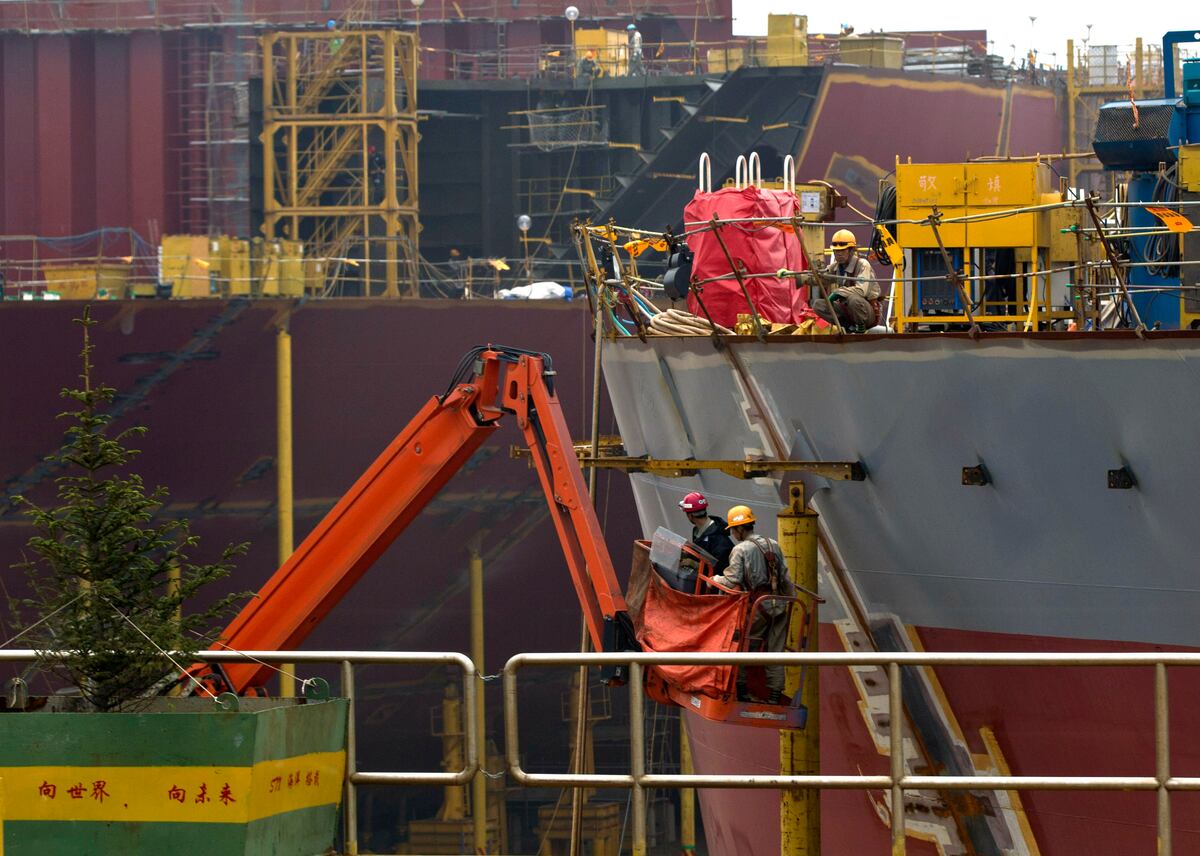
In only two decades, China has grown to be the dominant player in shipbuilding, claiming more than half of the world’s commercial shipbuilding market, while the U.S. share has fallen to just 0.1%, posing serious economic and national security challenges for the U.S. and its allies, according to a report released Tuesday by the Center for Strategic and International Studies.
In 2024 alone, one Chinese shipbuilder constructed more commercial vessels by tonnage than the entire U.S. shipbuilding industry has built since the end of World War II. China already has the world’s largest naval fleet, the Washington-based bipartisan think tank said in its 75-page report.
“The erosion of U.S. and allied shipbuilding capabilities poses an urgent threat to military readiness, reduces economic opportunities, and contributes to China’s global power-projection ambitions,” the report said.
Concerns about the poor state of U.S. shipbuilding have been growing in recent years, as the country faces rising challenges from China, which has the world’s second-largest economy and has ambitions to reshape the world order. At a congressional hearing in December, senior officials and lawmakers urged action.
Last week, President Donald Trump told Congress that his Republican administration would “resurrect” the American shipbuilding industry, for commercial and military vessels, and he would create “a new office of shipbuilding in the White House.”
“We used to make so many ships,” Trump said. “We don’t make them anymore very much , but we’re going to make them very fast, very soon. It will have a huge impact.”
In February, the heads of four major labor unions called on Trump to boost American shipbuilding and enforce tariffs and other “strong penalties” against China for its increasing dominance in that sector.
“What we are seeing now is a recognition of the strategic significance of shipbuilding and port security, and the related challenges posed by China,” said Matthew Funaiole, a senior fellow in the China Power Project at CSIS and a co-author of the report. Funaiole said concerns over shipbuilding are “a fairly bipartisan issue.”
The report said that China’s shipbuilding sector went through “a striking metamorphosis” in the past two decades, transforming from a “peripheral player” to the dominant player on the global market, with efforts centered on one state-owned enterprise: China State Shipbuilding Corporation, or CSSC.
At the same time, China has greatly expanded its navy. Last year, a CSIS assessment found that China was operating 234 warships, compared with the U.S. Navy’s 219, although the U.S. continued to hold an advantage in guided missile cruisers and destroyers.
In developing recommendations for the U.S. to compete with China, the researchers zoomed in on the Chinese company’s use of Beijing’s “military-civil fusion” strategy, which blurs the lines between the country’s defense and commercial sectors.
They found that CSSC, which builds both commercial and military ships, sells three-quarters of its commercial production to buyers outside China, including to the U.S.-allied Denmark, France, Greece, Japan and South Korea. These foreign firms are thus funneling billions of dollars to Chinese shipyards that also make warships, advancing China’s modernization of its navy and providing Chinese defense contractors with key dual-use technology, the report said.
The CSIS researchers suggested that, as a long-term fix, the U.S. should invest in rebuilding its shipbuilding industry and work with allies to expand shipbuilding capacities outside China. For the near term, they recommended actions to level the playing field and “disrupt China’s murky dual-use ecosystem,” such as by charging docking fees on Chinese-made vessels and cutting U.S. financial and business ties with CSSC and its subsidiaries.
The Trump administration has proposed new fees on China-linked vessels calling on U.S. ports. A BlackRock-led consortium last week agreed to acquire stakes in 43 ports across the globe, including the two ports on either side of the Panama Canal, from a Hong Kong-based conglomerate.
据战略与国际研究中心周二发布的一份报告显示,短短二十年间,中国已发展成为造船业的主导力量,占据了世界商用造船市场的一半以上,而美国的份额已降至仅0.1%,这给美国及其盟友带来了严重的经济和国家安全挑战。
仅在2024年,一家中国造船企业建造的商船吨位就超过了二战结束以来整个美国造船业的建造总量。总部位于华盛顿的两党智库在其75页的报告中指出,中国已经拥有世界上最大的海军舰队。
报告称:“美国及其盟国造船能力的削弱对军事战备构成紧迫威胁,减少了经济机会,并助长了中国在全球范围内投射力量的野心。”
近年来,随着美国面临来自中国的日益严峻的挑战,人们对美国造船业现状的担忧与日俱增。中国是世界第二大经济体,并雄心勃勃地想要重塑世界秩序。在去年12月举行的国会听证会上,高级官员和议员们敦促采取行动。
上周,唐纳德·特朗普总统告诉国会,他的共和党政府将“重振”美国造船业,包括商用和军用船舶,他还将在白宫设立“一个新的造船办公室”。
特朗普说:“我们过去造了很多船。现在造得不多了,但我们很快就会加快造船速度。这将产生巨大的影响。”
今年2月,四大工会的负责人呼吁特朗普提振美国造船业,并对中国在该领域日益增长的主导地位实施关税和其他“严厉惩罚”。
“我们现在看到的是,人们认识到造船业和港口安全的战略意义,以及中国带来的相关挑战,”战略与国际研究中心(CSIS)中国实力项目高级研究员、该报告的合著者马修·富奈奥莱(Matthew Funaiole)表示。富奈奥莱说,对造船业的担忧“是一个相当跨党派的问题”。
报告称,过去二十年来,中国造船业经历了“显著的蜕变”,从“边缘参与者”转变为全球市场的主导者,而这一切的努力都集中在一家国有企业:中国船舶集团有限公司(简称CSSC)。
与此同时,中国海军规模大幅扩张。去年,战略与国际研究中心(CSIS)的一项评估发现,中国拥有234艘军舰,而美国海军则拥有219艘,尽管美国在导弹巡洋舰和驱逐舰方面仍然保持优势。
在为美国如何与中国竞争制定建议时,研究人员重点关注了这家中国公司如何利用北京的“军民融合”战略,该战略模糊了国家国防和商业部门之间的界限。
报告发现,中国船舶集团(CSSC)既建造商船也建造军舰,其商船产量的四分之三销往中国以外的买家,包括美国的盟友丹麦、法国、希腊、日本和韩国。报告指出,这些外国公司因此向中国造船厂输送了数十亿美元,这些造船厂也建造军舰,从而推进了中国海军的现代化建设,并为中国国防承包商提供了关键的两用技术。
战略与国际研究中心(CSIS)的研究人员建议,从长远来看,美国应该投资重建本国造船业,并与盟友合作,在中国以外地区扩大造船产能。就短期而言,他们建议采取措施创造公平的竞争环境,并“扰乱中国错综复杂的两用船舶体系”,例如对中国制造的船舶收取停靠费,以及切断美国与中国船舶集团有限公司(CSSC)及其子公司的金融和商业联系。
特朗普政府提议对停靠美国港口的与中国有关联的船只征收新费用。上周,由贝莱德牵头的财团同意从一家总部位于香港的集团手中收购全球43个港口的股份,其中包括巴拿马运河两岸的两个港口。