Germany’s military build up continues, but personnel shortages remain德国的军事建设仍在继续,但人员短缺问题依然存在。
The report outlined the European power’s more assertive foreign military involvement, including its navy’s first-ever shots fired in a combat situation.
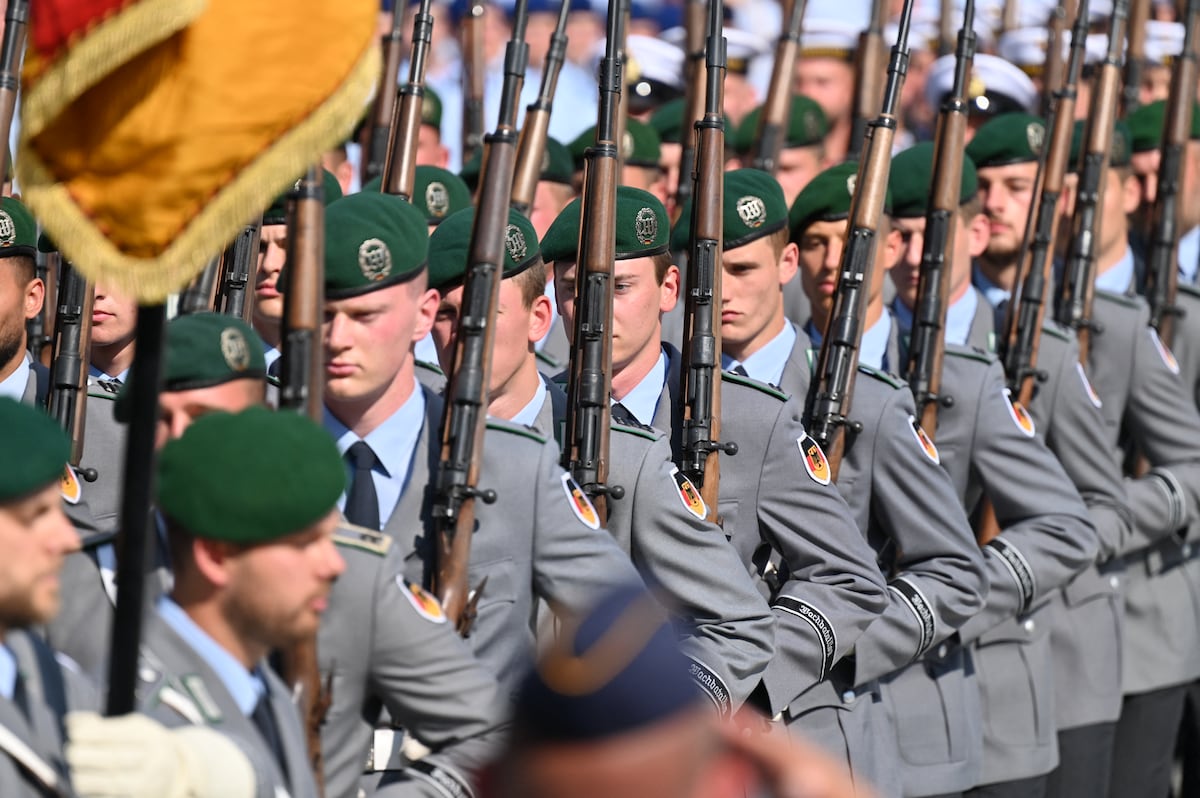
THE HAGUE, Netherlands – The German military continued its rearmament but still suffered from serious personnel shortages last year, a report presented to the country’s parliament on Tuesday showed. The paper also detailed the European power’s more assertive foreign military involvement, including its navy’s first-ever shots fired in a combat situation.
Presented by the Parliamentary Commissioner for the Armed Forces Eva Högel, the annual paper outlines the military’s status quo while highlighting key shortcomings. Her office was created to ensure parliamentary oversight over the German armed forces .
Since Russian President Vladimir Putin’s full-scale invasion of Ukraine in 2022 , Germany has undergone a deep transformation in how it approaches its armed forces. It has come with a major cash injection to the tune of hundreds of billions of Euros and a more assertive role for its fighting force internationally.
Symbolizing this, last fall, the country ratified an agreement for its first-ever brigade permanently stationed abroad, which will be 5,000 strong and whose facilities are currently being built in Lithuania.
The Bundeswehr’s navy, meanwhile, for the first time ever fired live rounds in a combat setting. It was the frigate Hessen that saw the engagement while on an EU mission in the Red Sea to protect the region’s vital shipping routes against attacks by the Yemeni Houthi rebels.
For the first time in recent years, Germany’s defense spending in 2024 reached the NATO goal of 2% of GDP, the report says, with military expenditures amounting to more than €69 billion, or $75.4 billion USD.
Roughly a quarter of this was funded from the special one-off cash injection announced by Chancellor Scholz in the form of a “Sondervermögen” — a special fund — worth €100 billion ($109 billion) that was created in the immediate aftermath of Russia’s invasion of Ukraine. Only about 18% of this funding source is remaining, the commissioner said.
The government’s budgetary committee approved a record 97 major procurement decisions last year, up from 55 the year before. Several of these large purchase decisions fall in the domain of air defense, which is itself a key priority highlighted in this year’s report.
In 2024, Germany decided to buy both the Skyranger 30 from Rheinmetall and the Arrow 3 from Israel. The country also ordered new Leopard main battle tanks and 22 self-propelled howitzers to replace those the country sent to Ukraine.
But money alone cannot solve some things, and one of the most stubbornly persistent issues plaguing Germany’s armed forces remained a central topic in 2024: Staffing.
While recruitment increased by 8%, bringing in more than 20,000 new people last year, over a quarter of them chose to leave after their six-month probationary period. Meanwhile, nearly 20% of non-enlisted and 28% of enlisted positions remained vacant. The Bundeswehr is 21,826 heads short of its 203,000 active personnel target, the report laid out.
There was a significant structural reform to report, too. The cyber warfare arm last year was elevated to become a full branch of the German military, alongside the Luftwaffe, navy and land forces.
On a touchier subject, the report included several pages discussing cases of neo-Nazi sympathies among the ranks and institutional shortcomings in addressing and successfully investigating these situations. In one case, a soldier had reportedly played an SS song for comrades. Only after several years did the case make it to trial; by then, the witnesses professed not to be able to recall whose phone had been playing the song or who had put an end to it.
A new enforcement mechanism became available in 2024 following an amendment to the Soldiers Act passed the year prior that sought to accelerate such proceedings. While only a “small minority of soldiers” harbored extremist views, this mechanism was touted as being a necessary and “sharp and effective means against identified enemies of the constitution in the Bundeswehr.”
Germany’s incoming governing coalition of conservatives and social democrats has promised to continue down the path of revitalizing and building up the country’s military might.
To do so, incoming chancellor Friedrich Merz has suggested exempting defense spending from the country’s constitutionally enshrined debt ceiling, a move that would have been largely unthinkable in notoriously fiscally frugal Germany until recently. While this particular proposal is still mired in a political tug-of-war at present, the more militarist tone of the past few years appears here to stay.
Linus Höller is Defense News' Europe correspondent and OSINT investigator. He reports on the arms deals, sanctions, and geopolitics shaping Europe and the world. He holds master’s degrees in WMD nonproliferation, terrorism studies, and international relations, and works in four languages: English, German, Russian, and Spanish.
荷兰海牙——周二提交给德国议会的一份报告显示,尽管德国军方去年继续推进重整军备,但仍面临严重的人员短缺问题。该报告还详细介绍了德国这个欧洲强国更加积极的海外军事行动,包括其海军首次在实战中开火。
这份年度报告由议会武装部队事务专员伊娃·霍格尔提交,概述了军队的现状,并着重指出了其主要不足之处。她的办公室设立的目的是确保议会对德国武装部队进行监督。
自俄罗斯总统弗拉基米尔·普京2022年全面入侵乌克兰以来,德国对其武装力量的管理方式发生了深刻的转变。德国向其武装力量注入了数千亿欧元的巨额资金,并在国际舞台上扮演了更加积极主动的角色。
象征着这一点的是,去年秋天,该国批准了一项协议,将首次在国外永久驻扎一支旅,该旅将有 5000 名士兵,其设施目前正在立陶宛建设中。
与此同时,德国联邦国防军海军首次在实战环境中进行了实弹射击。参与此次交战的是“黑森”号护卫舰,当时该舰正在红海执行欧盟任务,保护该地区重要的航运路线免受也门胡塞武装的袭击。
报告称,德国2024年的国防开支近年来首次达到北约设定的占GDP 2%的目标,军费开支超过690亿欧元,约合754亿美元。
其中约四分之一的资金来自朔尔茨总理宣布的一次性特别注资——“特别基金”(Sondervermögen),该基金规模达1000亿欧元(约合1090亿美元),是在俄罗斯入侵乌克兰后立即设立的。欧盟委员会委员表示,目前该基金仅剩约18%。
政府预算委员会去年批准了创纪录的97项重大采购决定,高于前一年的55项。其中几项大宗采购决定涉及防空领域,而防空本身也是今年报告中重点强调的优先事项。
2024年,德国决定从莱茵金属公司购买Skyranger 30无人机,并从以色列购买Arrow 3自行榴弹炮。此外,德国还订购了新的豹式主战坦克和22门自行榴弹炮,以替换之前交付给乌克兰的装备。
但光靠金钱解决不了有些问题,而困扰德国武装部队最顽固的问题之一在 2024 年仍然是一个中心议题:人员配备。
去年,德国联邦国防军的招募人数增长了8%,新增超过2万人,但其中超过四分之一的人在六个月的试用期结束后选择离职。与此同时,近20%的非士兵职位和28%的士兵职位仍然空缺。报告指出,德国联邦国防军距离20.3万现役人员的目标还差21826人。
此外,还有一项重要的结构性改革需要报告。去年,网络战部队被提升为德国军队的一个正式军种,与空军、海军和陆军并列。
报告还涉及一个更为敏感的话题,其中有数页讨论了军队中出现新纳粹倾向的案例,以及在处理和成功调查此类情况方面存在的制度缺陷。其中一个案例中,据报道一名士兵曾向战友播放党卫军歌曲。几年后,此案才得以开庭审理;而此时,证人们却声称记不清是谁的手机在播放这首歌,也记不清是谁制止了播放。
2024年,一项新的执法机制正式启用。此前一年,《士兵法》通过修正案,旨在加快此类诉讼程序。尽管只有“极少数士兵”持有极端主义观点,但该机制被誉为打击联邦国防军中已确认的“宪法敌人”的必要且“有力有效的手段”。
德国即将上台的保守党和社会民主党联合执政联盟承诺将继续走振兴和增强国家军事实力的道路。
为此,即将上任的总理弗里德里希·默茨提议将国防开支排除在国家宪法规定的债务上限之外。这一举措在以财政节俭著称的德国,直到最近都几乎是不可想象的。尽管这项提议目前仍深陷政治角力,但过去几年来日益浓厚的军国主义氛围似乎将持续下去。
林努斯·霍勒是《防务新闻》的欧洲记者和开源情报调查员。他报道影响欧洲乃至全球的军火交易、制裁和地缘政治。他拥有大规模杀伤性武器不扩散、恐怖主义研究和国际关系三个硕士学位,并精通英语、德语、俄语和西班牙语四种语言。