China and Russia conduct joint sub patrols — should America worry?中国和俄罗斯进行联合潜艇巡逻——美国应该担心吗?
While the exercise only involved two subs, the warning was clear: America should contemplate the prospect of confronting a China-Russia alliance.
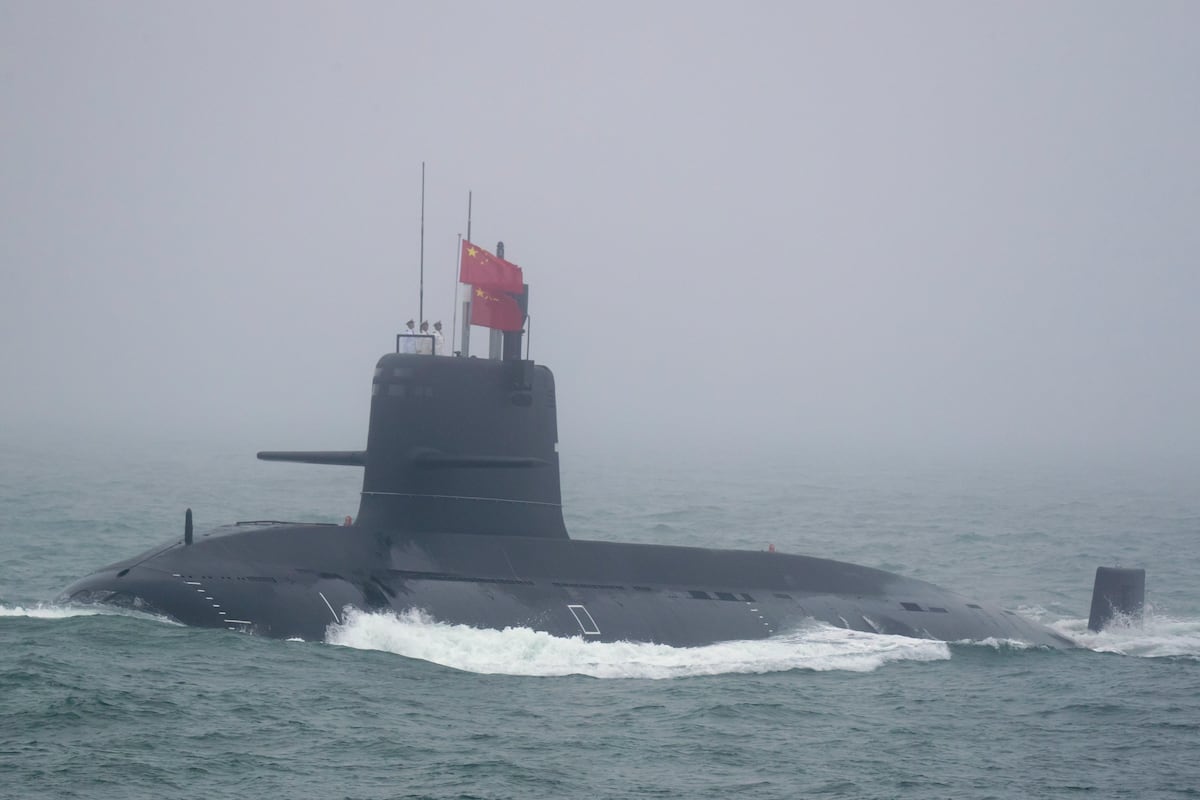
Chinese and Russian submarines have conducted a joint patrol, in the latest step in a growing Sino-Russian partnership.
While the exercise only involved two subs, the warning was clear: America should contemplate the prospect of confronting a China-Russia alliance.
“I’d say this is simply an effort at deterrence,” Lyle Goldstein, director of the Asia Program at the Defense Priorities think tank in Washington, told Defense News. “While it is hard to conceive of a scenario where they would embark on a war with the West simultaneously, they may benefit from some impression that could be the case.”
Beijing and Moscow are portraying this as a milestone in military cooperation. A Chinese military expert told China’s Global Times newspaper that “the first joint submarine patrol indicated a high level of strategic mutual trust between China and Russia. Having submarines keeping in contact requires not only higher technical expertise but also more in-depth exchanges.”
The patrol comprised the Russian submarine Volkhov and a Chinese sub, accompanied by two Russian surface ships: the corvette Gromkiy and a submarine rescue vessel. They sailed in August through the East China Sea and the Sea of Japan, following a joint China-Russia anti-submarine exercise earlier that month, which included surface ships and aircraft. The Volkhov traveled 2,000 miles before terminating its voyage at Vladivostok, according to Russian newspaper Izvestia .
The Russian and Chinese boats were both Kilo-class, a 1970s Soviet diesel electric design known for being acoustically quiet.
“It’s a logical choice, since China imported this type of submarine from Russia, so they have very similar capabilities and could make easy exercise partners,” said Goldstein, whose new book on the China-Russia naval alliance will be published in January.
What was more significant was what China and Russia chose not to do for the exercise: commit their nuclear-powered submarines, perhaps out of reluctance to reveal the capabilities of advanced warships to an ally that could be a future rival.
“So far, China and Russia are not cooperating — at least openly — in wielding nuclear-powered submarines,” Goldstein said.
Indeed, the current bromance between China and Russia is practical rather than affectionate. Though the two nations were allies in the 1950s, Chinese and Russian troops battled each other in border clashes in 1969, Soviet leaders once pondered a nuclear strike against China and the Kremlin knows that China considers parts of the Russian Far East to be stolen Chinese territory .
Whatever the reason, the ostensible allies only paired up aging and more or less identical warships.
“Neither side gave up anything the other participant didn’t already know by using Kilos,” Richard Moss, a professor at the U.S. Naval War College’s Russian Maritime Studies Institute, told Defense News.
While the Chinese and Russian armed forces share a common lineage in Soviet military thought and equipment, that doesn’t guarantee integration during joint exercises.
“The level of interaction does not remotely approximate what the U.S. and its allies, such as NATO countries, do on a regular basis,” noted Moss, who said he was speaking in a personal capacity.
Nonetheless, the sub patrol is only the latest in a series of highly public displays of Sino-Russian military cooperation. In 2019, the two nations began sporadic bomber patrols, including a 2024 flight by four Chinese and Russian bombers that flew near Alaska . 2021 saw the onset of annual joint patrols by surface ships. There have also been joint land exercises such as the Zapad/Interaction wargame in 2021.
“I think this [the sub patrol] is quite consistent with the overall pattern,” said Goldstein. “It is repetitive, consistent, quite small in scale, and often features a new dimension, whether technological or geographical.”
Goldstein floats an intriguing possibility: The sub patrol was a warning shot against AUKUS , the Australia-U.K.-U.S. agreement that calls for Australia to acquire nuclear submarines with the help of America and Britain, and U.S. subs operating out of Australian bases.
“I have seen substantial evidence that Chinese naval strategists are tracking AUKUS developments extremely closely and, moreover, that their threat anxiety about this program is acute,” Goldstein said. “I have also seen Chinese strategists discussing how enhanced China-Russia cooperation in undersea warfare is a logical counter to AUKUS.”
A key indicator of the China-Russia relationship will be that their nuclear submarines operate together.
“If they do take that major step in the future, it could indicate a tighter and more worrisome development, as that could herald more high-tech sharing on the most cutting-edge warfighting platforms,” said Goldstein.
He argues against overreacting to these joint patrols.
“Ever greater deployments of U.S. forces, and ever more intense exercising with allies, often goes beyond our intention and provokes a counter-reaction — and this can be seen in the budding China-Russia quasi-alliance.”
How deep that alliance is remains to be seen.
“Both sides are somewhat chastened by the history of the Sino-Soviet dispute,” Goldstein said. “They seem to realize that there are dangers in being too close, and also in being too dependent on one another. Now, there is a certain maturity in the relationship, wherein it is fully realized that their interests will not always be identical.”
Michael Peck is a correspondent for Defense News and a columnist for the Center for European Policy Analysis. He holds an M.A. in political science from Rutgers University. Find him at theuncommondefense.com. His email is mikedefense1@gmail.com.
中国和俄罗斯潜艇进行了联合巡逻,这是中俄伙伴关系不断发展的最新进展。
虽然这次演习只涉及两艘潜艇,但警告很明确:美国应该考虑与中俄联盟对抗的可能性。
“我认为这仅仅是一种威慑手段,”华盛顿国防优先智库亚洲项目主任莱尔·戈德斯坦告诉《防务新闻》。“虽然很难想象他们会同时与西方开战,但他们或许会从这种可能性中受益。”
北京和莫斯科将此视为军事合作的一个里程碑。一位中国军事专家告诉《环球时报》:“首次联合潜艇巡逻表明中俄之间存在高度的战略互信。潜艇保持联络不仅需要更高的技术水平,还需要更深入的交流。”
此次巡逻由俄罗斯潜艇“沃尔霍夫”号和一艘中国潜艇组成,并有两艘俄罗斯水面舰艇护卫:一艘“格罗姆基”号轻型护卫舰和一艘潜艇救援船。他们于8月航行于东海和日本海,此前,中俄两国于当月早些时候举行了联合反潜演习,演习中包括水面舰艇和飞机。据俄罗斯《消息报》报道,“沃尔霍夫”号航行了2000英里后抵达符拉迪沃斯托克。
俄罗斯和中国的潜艇都是基洛级潜艇,这是苏联在 20 世纪 70 年代设计的柴电潜艇,以噪音低而闻名。
“这是一个合乎逻辑的选择,因为中国从俄罗斯进口了这种类型的潜艇,所以它们的能力非常相似,可以成为很容易的演习伙伴,”戈尔茨坦说,他的关于中俄海军联盟的新书将于1月出版。
更重要的是,中国和俄罗斯在这次演习中选择不派出核动力潜艇,或许是出于不愿向未来可能成为对手的盟友暴露先进战舰的能力。
戈尔茨坦说:“到目前为止,中国和俄罗斯在运用核动力潜艇方面还没有合作——至少没有公开合作。”
事实上,目前中俄之间的这种“兄弟情”更多的是出于务实而非友谊。尽管两国在20世纪50年代曾是盟友,但中俄军队在1969年的边境冲突中兵戎相见;苏联领导人一度考虑对中国发动核打击;而且克里姆林宫也清楚,中国认为俄罗斯远东地区的某些领土是窃取的中国领土。
无论出于何种原因,这些名义上的盟友只是将老旧且大同小异的战舰配对使用。
“双方都没有通过使用基洛斯来泄露对方不知道的任何信息,”美国海军战争学院俄罗斯海事研究所教授理查德·莫斯告诉《防务新闻》。
虽然中国和俄罗斯军队在苏联军事思想和装备方面有着共同的渊源,但这并不能保证在联合演习中实现一体化。
“这种互动程度远远达不到美国及其盟友(如北约国家)的日常互动水平,”莫斯指出,并表示他是以个人身份发表这番言论。
然而,此次潜艇巡逻只是中俄军事合作一系列高调展示中的最新一次。2019年,两国开始进行零星的轰炸机巡逻,包括2024年中俄四架轰炸机飞越阿拉斯加附近的一次联合飞行。2021年,两国开始进行年度水面舰艇联合巡逻。此外,2021年还举行了“西部/互动”联合陆上演习等联合军事演习。
戈尔茨坦说:“我认为这(潜艇巡逻)与整体模式相当一致。它具有重复性、一致性,规模很小,而且经常出现新的方面,无论是技术上的还是地理上的。”
戈尔茨坦提出了一个有趣的可能:这次潜艇巡逻是对澳英美三国协议(AUKUS)的警告,该协议要求澳大利亚在美国和英国的帮助下获得核潜艇,并允许美国潜艇从澳大利亚基地出发。
戈德斯坦说:“我看到大量证据表明,中国海军战略家们正密切关注AUKUS的进展,而且他们对该项目的威胁担忧非常强烈。我还看到中国战略家们讨论,加强中俄在水下作战领域的合作,是应对AUKUS的合理方式。”
中俄关系的一个关键指标将是两国核潜艇能否协同作战。
“如果他们将来真的迈出这一重大一步,这可能预示着更紧密、更令人担忧的发展,因为这可能预示着在最尖端的作战平台上会有更多高科技共享,”戈尔茨坦说。
他认为不应该对这些联合巡逻反应过度。
“美国不断扩大兵力部署,并与盟友进行越来越频繁的演习,这往往超出了我们的预期,并引发了反制措施——这一点可以从正在萌芽的中俄准联盟中看出。”
这种联盟的深度还有待观察。
戈尔茨坦说:“中苏争端的历史让双方都有些警醒。他们似乎意识到,走得太近、过于依赖彼此都存在危险。如今,两国关系已趋于成熟,双方都充分认识到,彼此的利益并非总是完全一致的。”
迈克尔·佩克是《防务新闻》的通讯员,也是欧洲政策分析中心的专栏作家。他拥有罗格斯大学政治学硕士学位。您可以在theuncommondefense.com找到他。他的邮箱是mikedefense1@gmail.com。