France seeks ‘mutually acceptable’ accord on next-gen fighter progress法国寻求就下一代战斗机进展达成“双方都能接受的”协议
Dassault Aviation has repeatedly said wrangling over work share with partner Airbus is causing delays.
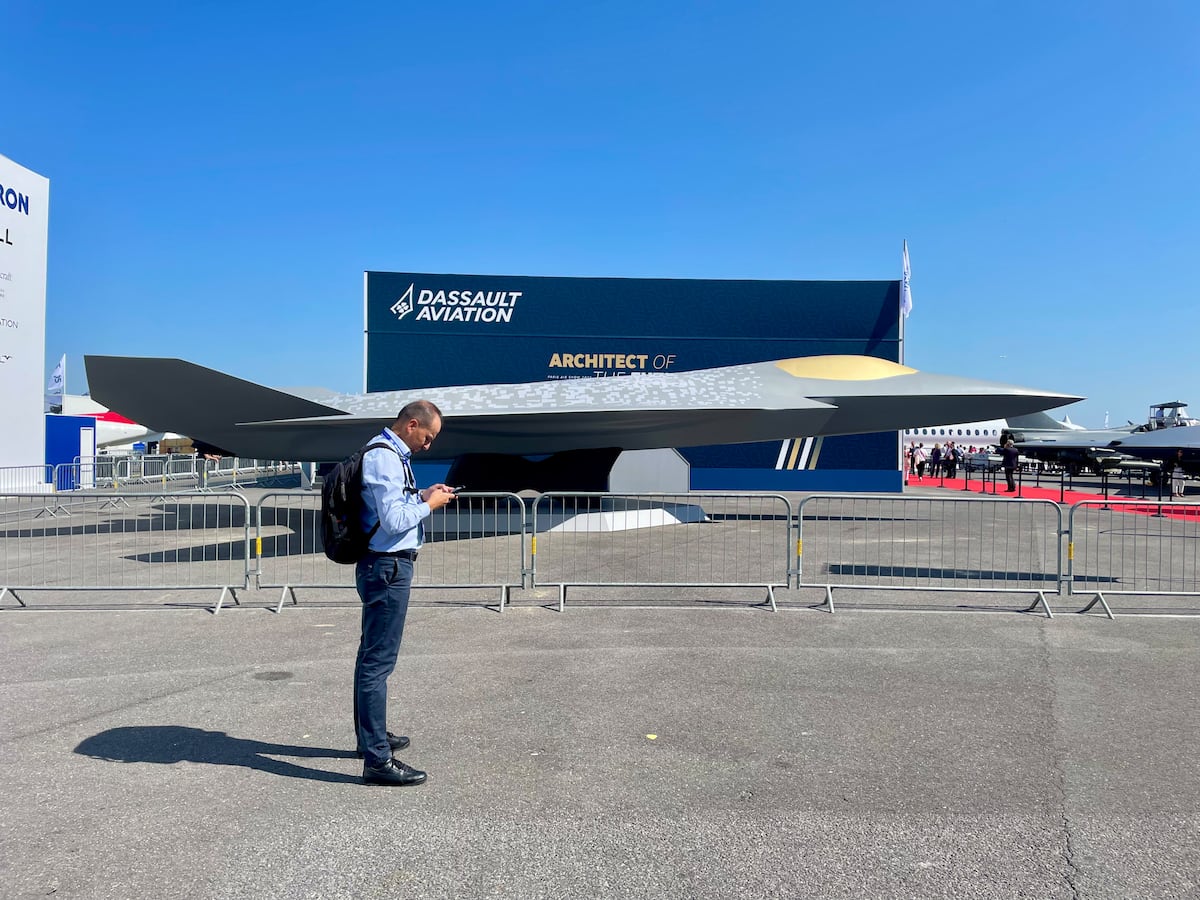
PARIS — France said it’s fully committed to reaching a “mutually acceptable solution” with Germany and Spain this year on the next phase of the Future Combat Air System, as prospects for the next-generation fighter project remain troubled amid infighting amongst the industrial partners.
France, Germany, Spain and the companies involved are “fully mobilized” to prepare phase 2 of the program, which includes building a demonstrator of the combat aircraft at the heart of the system, the French Armed Forces Ministry said in an emailed statement on Saturday.
France earlier this year asked Germany and Spain to redesign their FCAS cooperation to focus on “strengthening industrial leadership,” in order to meet a deadline for a future fighter to enter into service from 2040 onwards. Dassault Aviation, the French industrial partner for the fighter part of the program, has repeatedly said wrangling over work share with partner Airbus is causing delays.
“France and Germany remained determined to successfully carry out the FCAS program in cooperation with Spain,” the ministry said, adding it’s “fully committed, alongside its German and Spanish counterparts, to reaching a mutually acceptable solution by the end of the year.”
Dassault Aviation has reportedly been seeking a greater share on some parts of the program, with CEO Eric Trappier highlighting that the company, in combination with its French industrial partners Safran and Thales, has all the necessary skills to develop an aircraft on its own.
Spanish Prime Minister Pedro Sánchez said the original work-share plans must be respected, at a press conference with German Chancellor Friedrich Merz on Thursday, according to media reports. Meanwhile, Merz said talks among the three partiers are ongoing, saying “we cannot continue as things are at present.”
The current difficulties on FCAS echo those around a joint European fighter program in the 1980s, where France opted to go it alone after disagreements on design authority and operational requirements. That split resulted in Dassault Aviation developing the Rafale, while partners Germany, the United Kingdom, Italy and Spain developed the Eurofighter Typhoon.
Following completion of the first stage with the signing of contracts to develop key technologies, the FCAS team is “mobilized for a decision at the end of 2025,” the French armed forces ministry said.
Germany’s defense ministry discussed FCAS with Airbus earlier this month, and told the company it was exploring potential closer cooperation with Sweden or the U.K., or going it alone with Spain, Politico reported on Thursday, citing two unidentified people familiar with the discussions.
The U.K. is cooperating with Italy and Japan on the Global Combat Air Programme to develop a next-generation fighter, while Sweden is looking into its own future air-combat system .
The various approaches, including programs in the United States, typically follow a system of systems approach: a crewed sixth-generation fighter at the core, teamed with unmanned wingman drones and remote carriers, using AI to reduce pilot workload and speed up decision making, all of it tied together through a combat cloud network.
Rudy Ruitenberg is a Europe correspondent for Defense News. He started his career at Bloomberg News and has experience reporting on technology, commodity markets and politics.
巴黎——法国表示,由于工业合作伙伴之间的内讧,下一代战斗机项目的前景仍然不明朗,法国将全力致力于在今年与德国和西班牙就未来作战空中系统下一阶段达成“双方都能接受的解决方案”。
法国武装部队部周六在一份电子邮件声明中表示,法国、德国、西班牙和相关公司已“全力动员”准备该计划的第二阶段,其中包括建造该系统核心战斗机的演示机。
今年早些时候,法国要求德国和西班牙重新设计未来空中作战系统(FCAS)合作方案,重点放在“加强工业领导地位”上,以确保未来战斗机能够从2040年起陆续服役。作为该项目战斗机部分的法国工业合作伙伴,达索航空多次表示,与合作伙伴空客在工作分工上的分歧导致了项目延误。
“法国和德国仍然决心与西班牙合作,成功实施FCAS计划,”该部表示,并补充说,“它与德国和西班牙的同行一道,完全致力于在年底前达成双方都能接受的解决方案。”
据报道,达索航空一直在寻求在该项目的部分环节中获得更大的份额,首席执行官埃里克·特拉皮耶强调,该公司与其法国工业合作伙伴赛峰集团和泰雷兹集团相结合,拥有自主开发飞机所需的所有技能。
据媒体报道,西班牙首相佩德罗·桑切斯周四在与德国总理弗里德里希·默茨举行的联合新闻发布会上表示,必须尊重原有的工作分工方案。与此同时,默茨表示,三方谈判仍在进行中,并称“我们不能再像现在这样继续下去了”。
目前FCAS项目面临的困境与上世纪80年代欧洲联合战斗机项目的情况如出一辙。当时,由于在设计权限和作战需求方面存在分歧,法国最终选择独立研发。结果,达索航空公司开发了“阵风”战斗机,而德国、英国、意大利和西班牙等伙伴国则开发了“台风”战斗机。
法国武装部队部表示,在第一阶段完成关键技术开发合同签署后,FCAS团队“已做好准备,将在2025年底做出决定”。
据 Politico 周四报道,德国国防部本月早些时候与空客公司讨论了未来空中作战系统(FCAS),并告知该公司正在探索与瑞典或英国更紧密合作的可能性,或者单独与西班牙合作。该报道援引了两位知情人士的话。
英国正与意大利和日本合作开展全球空中作战计划,以开发下一代战斗机,而瑞典也在研究自己的未来空中作战系统。
包括美国在内的各种方案通常都遵循系统之系统方法:以有人驾驶的第六代战斗机为核心,搭配无人僚机和远程载具,利用人工智能来减轻飞行员的工作量并加快决策速度,所有这些都通过作战云网络连接在一起。
鲁迪·鲁伊滕贝格是《防务新闻》的欧洲记者。他的职业生涯始于彭博新闻社,拥有报道科技、大宗商品市场和政治方面的经验。