Italian leaders scramble to reverse military headcount shrinkage意大利领导人紧急应对军队人员缩减的局面
The country's Navy, for example, needs a massive 34% increase in the number of sailors, according to the sea service's latest annual report.
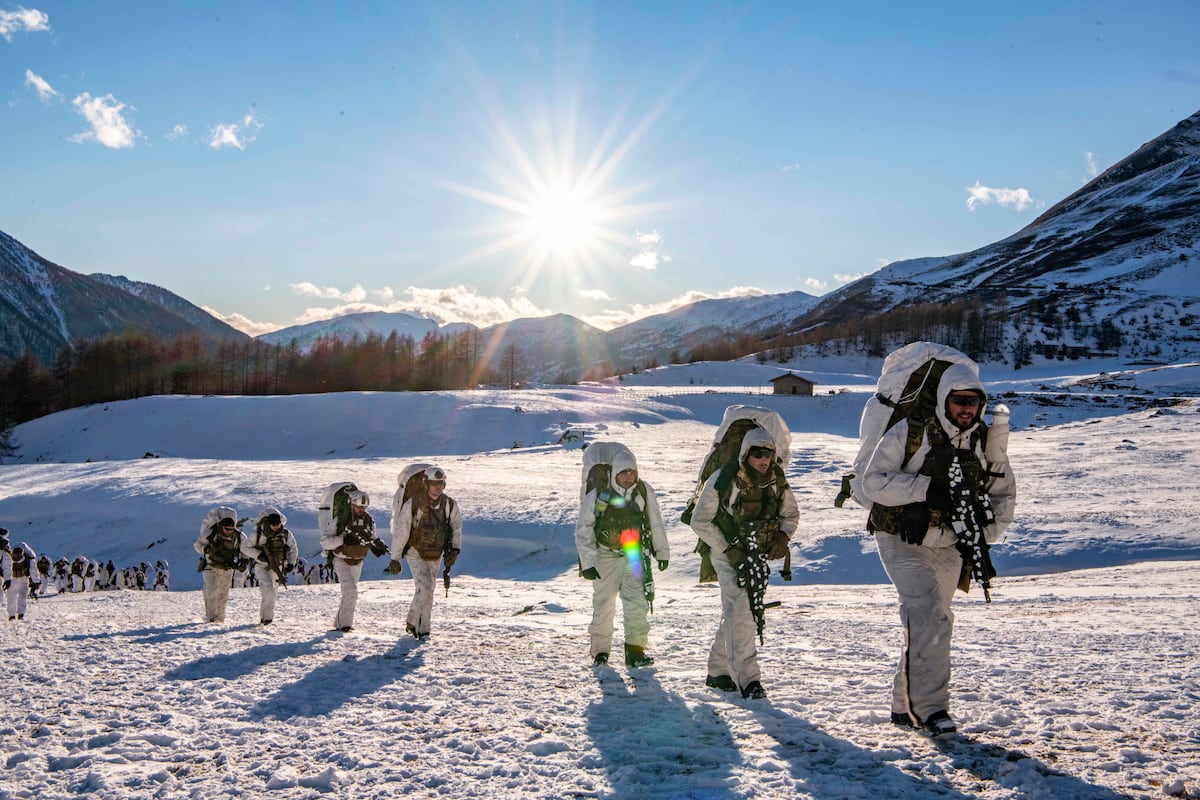
ROME — As it shoots down Houthi drones in the Red Sea, sends submarines to monitor internet cables and shadows Russian ships in the Mediterranean, the Italian Navy has issued an urgent call for more personnel, echoing a growing debate in Italy about beefing up the country’s armed forces as war edges closer.
In its latest annual report, the Navy said it needed to hit a headcount of 39,000 to fulfill its ongoing missions, a massive 34% increase on its current roster of around 29,000.
The appeal echoed a speech made last week before parliament by Chief of Staff Adm. Giuseppe Cavo Dragone in which he called on lawmakers to authorize big boosts in numbers across the board – covering the army, navy and air force.
“We are absolutely undersized,” he said. While the Italian armed forces currently have a strength of 165,564, Cavo Dragone said 170,000 was “at the limit of survival.”
His appeal was shared in a TV interview last week by Italian Defense Minister Guido Crosetto, who said Italy’s armed forces were not “at an acceptable level.”
The irony is that Italy has been working to reduce the size of its armed forces for over a decade, before Russia invaded Ukraine in 2020, sparking a high-intensity land war on Europe’s borders and sending generals back to the drawing board.
A 2012 law envisaged the reduction of Italy’s 190,000-strong armed forces to 150,000 and the shrinking has been ongoing, albeit slowly, ever since.
After the Ukraine invasion, a decree passed late last year added 10,000 back to the target, making 160,000 the new headcount to aim for, but Cavo Dragone was not impressed.
“150,000 was unworkable, while the 160,000 now approved is still little,” he said.
The Italian Navy report said the decree would, on paper, give it a headcount of 30,500, which is slightly higher than the 29,000 sailors it has now, but still far lower than the 39,000 it wants.
Last year the Navy was using an average of 4,000 sailors every day in operations, with the peak reached on April 27, when it deployed 42 ships, four submarines, 18 aircraft and 7,324 in operations.
The Navy has factored in lower headcounts into the design of its new PPA-class vessels which feature an unusual bridge designed along the lines of an aircraft cockpit that requires a smaller crew.
That was a practical solution, but less so during a conflict, said Andrea Margelletti, the president of the CeSI think tank in Rome and an adviser to the Italian ministry of defense.
“Small crews are fine until you are shot at and have to put out fires,” he said.
Margelletti said that rather than getting politicians to authorize a rise in headcounts, the armed forces’ big challenge was ensuring that the average age of serving men and women dropped.
“You can’t ask a solider in their 40s to lug a 30kg back pack,” he said.
Alessandro Marrone, who heads the defense programme at Rome think tank IAI, said the problem of aging soldiers could only be solved if the armed forces were able to help older servicemen and women move on to non-military jobs.
“You need to find them jobs in the private sector or other branches of government, and Italy does not have the set-up to do that,” he said.
Whether the problem was old soldiers or too few soldiers, Margelletti said Italy did not have much time to fix the problem.
“Russia wants to push on in Ukraine and the front will collapse if we do not provide more arms,” he said. “Russia knows its strongest weapon is our collective fear about entering the war, while our strongest weapon would be Russia knowing we will fight. I believe it is inevitable we will enter this war sooner or later, possibly defending a line from Kyiv to Odessa, with a 90,000 strong force drawn from countries like France, the U.K., Poland, the Baltics, Romania and finally Germany. Italy will also be asked to contribute,” he said.
“And we will not be able to rely on the U.S., not only if Trump wins - even if he doesn’t, due to the rising isolationism in the U.S.,” he added.
Tom Kington is the Italy correspondent for Defense News.
罗马——意大利海军在红海击落胡塞武装无人机、派出潜艇监视互联网电缆、并在地中海跟踪俄罗斯船只的同时,紧急呼吁增派人员。这反映了意大利国内关于加强国家武装力量的日益激烈的辩论,因为战争正一步步逼近。
海军在其最新年度报告中表示,为了完成正在进行的任务,需要达到 39,000 人的人员编制,比目前约 29,000 人的编制大幅增加 34%。
这一呼吁与参谋长朱塞佩·卡沃·德拉戈内海军上将上周在议会发表的讲话遥相呼应,他在讲话中呼吁立法者授权大幅增加陆军、海军和空军的人员数量。
“我们的兵力绝对不足,”他说。卡沃·德拉戈内表示,虽然意大利武装部队目前的兵力为165564人,但17万人“已经是生存的极限了”。
他的呼吁在上周的一次电视采访中得到了意大利国防部长圭多·克罗塞托的响应,克罗塞托表示,意大利武装部队的水平“并不令人满意”。
具有讽刺意味的是,在俄罗斯于 2020 年入侵乌克兰之前,意大利已经努力缩减其武装部队规模十多年了。俄罗斯入侵乌克兰引发了欧洲边境的高强度地面战争,迫使意大利将军们重新制定战略。
2012 年的一项法律设想将意大利 19 万人的武装部队缩减至 15 万人,此后,尽管速度缓慢,但这一缩减进程一直在进行。
乌克兰战争后,去年底通过的一项法令将目标人数增加了 10,000 人,使新的目标人数达到 160,000 人,但卡沃·德拉戈内对此并不满意。
他说:“15万个根本行不通,而现在批准的16万个仍然太少。”
意大利海军的报告称,该法令在纸面上将使海军人数达到 30,500 人,略高于其目前的 29,000 名水兵,但仍远低于其希望达到的 39,000 人。
去年,海军平均每天出动 4000 名水兵执行任务,高峰出现在 4 月 27 日,当时海军部署了 42 艘舰艇、4 艘潜艇、18 架飞机和 7324 名人员执行任务。
海军在设计新型 PPA 级舰艇时考虑到了人员数量减少的问题,该舰艇采用了一种不寻常的舰桥设计,类似于飞机驾驶舱,因此需要的船员较少。
罗马智库 CeSI 主席、意大利国防部顾问 Andrea Margelletti 表示,这曾经是一个切实可行的解决方案,但在冲突期间就不那么实用了。
他说:“小班组在遇到枪击或需要灭火时还好。”
马格莱蒂表示,军队面临的最大挑战不是让政客批准增加兵员人数,而是确保现役男女军人的平均年龄下降。
“你不能要求一个40多岁的士兵背着30公斤重的背包,”他说。
罗马智库 IAI 国防项目负责人亚历山德罗·马罗内表示,只有当军队能够帮助年长的男女军人转行从事非军事工作时,才能解决士兵老龄化问题。
他说:“你需要为他们在私营部门或其他政府部门找到工作,但意大利没有这样的机制。”
马尔盖莱蒂表示,无论是老兵还是士兵人数不足的问题,意大利都没有太多时间来解决这个问题。
“俄罗斯想在乌克兰继续推进,如果我们不提供更多武器,战线就会崩溃,”他说。“俄罗斯知道它最强大的武器是我们集体害怕卷入战争,而我们最强大的武器则是俄罗斯知道我们会战斗。我相信我们迟早会卷入这场战争,届时我们可能需要守卫从基辅到敖德萨的防线,届时将有9万兵力从法国、英国、波兰、波罗的海国家、罗马尼亚以及最终的德国等国抽调兵力。意大利也将被要求提供支援,”他说。
“而且,即便特朗普没有当选,我们也无法依靠美国,因为美国的孤立主义日益抬头,”他补充道。
汤姆·金顿是《防务新闻》驻意大利记者。