South Korea launches second military spy satellite韩国发射第二颗军用间谍卫星
South Korea’s Defense Ministry said it confirmed the satellite entered orbit and communicated with an overseas ground station after separation.
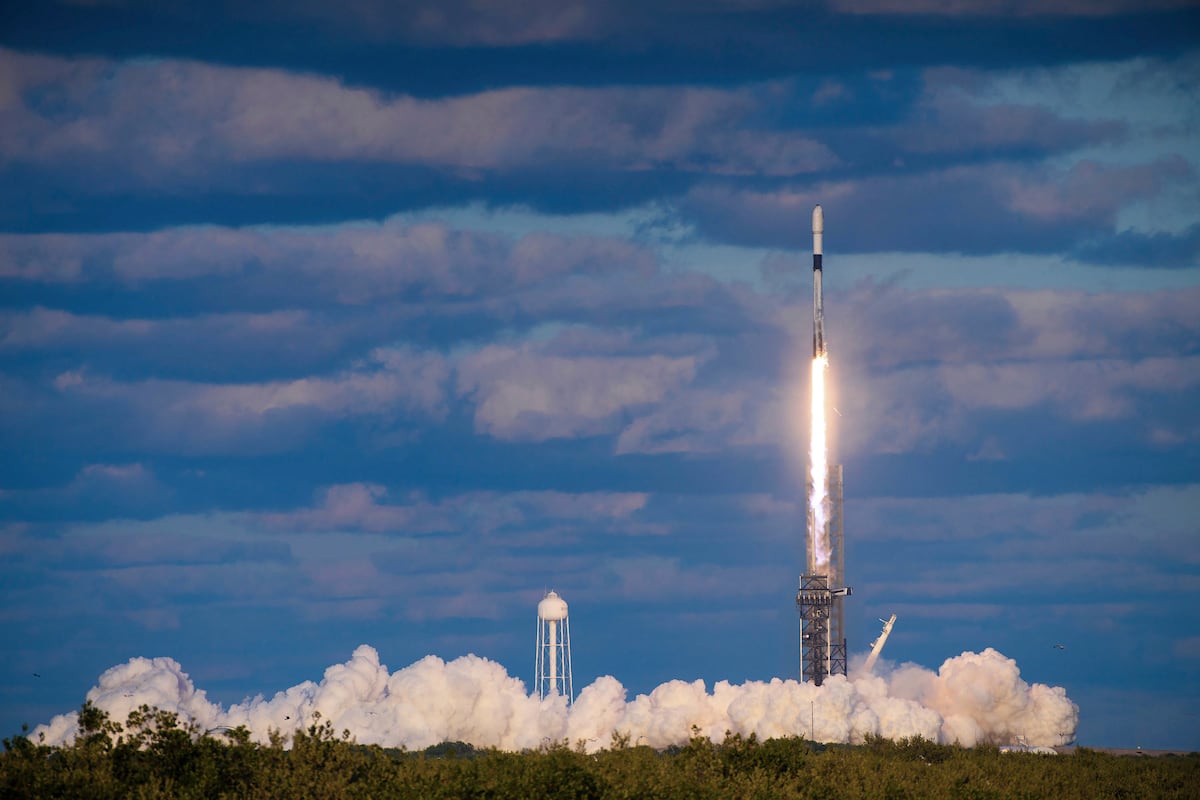
SEOUL, South Korea — South Korea has successfully launched its second military spy satellite into orbit, days after North Korea reaffirmed its plan to launch multiple reconnaissance satellites this year.
The Koreas each launched their first spy satellites last year — North Korea in November and South Korea in December — amid heightened animosities. They said their satellites would boost their abilities to monitor each other and enhance their own missile attack capabilities.
South Korea’s second spy satellite was launched from the Kennedy Space Center in Florida on Sunday evening local time, which was Monday morning in Seoul.
South Korea’s Defense Ministry said it confirmed the satellite entered orbit and communicated with an overseas ground station after separation from a rocket.
“With the success of the second military spy satellite launch, our military has acquired an additional independent surveillance ability and further bolstered our ‘kill chain’ capability,” Defense Ministry spokesperson Jeon Ha Gyu told reporters, referring to the military’s preemptive missile strike capability.
South Korea in 2022 became the world’s 10th nation to successfully launch a satellite with its own technology by using a homegrown rocket to place what it called a “performance observation satellite” in orbit.
Under a contract with SpaceX, South Korea was to launch five spy satellites by 2025. South Korea’s first spy satellite launch on Dec. 1 was made from California’s Vandenberg Space Force Base.
North Korea is also eager to acquire its own space-based surveillance network to cope with what it calls military threats posed by the United States and South Korea.
After two launch failures earlier in 2023, North Korea placed its Malligyong-1 spy satellite into orbit on Nov. 21. North Korea has since said its satellite had transmitted imagery with space views of key sites in the U.S. and South Korea, including the White House and the Pentagon. But it hasn’t released any of those satellite photos, and foreign experts doubt whether the North Korean satellite can transmit militarily meaningful imagery.
On March 31, Pak Kyong Su, vice general director of the North’s National Aerospace Technology Administration, said North Korea is expected to launch several more reconnaissance satellites this year. During a key political conference in late December, North Korean leader Kim Jong Un vowed to launch three additional military spy satellites in 2024.
South Korean Defense Minister Shin Wonsik said Monday that North Korea will likely go ahead with its second spy satellite launch soon to mark the April 15 birthday of state founder Kim Il Sung, the late grandfather of Kim Jong Un. Shin said it’s still possible for the North to perform the launch later due to technical reasons.
The U.N. bans North Korea from conducting a satellite launch, considering it as a disguised test of its long-range missile technology. The North’s November satellite launch deepened tensions on the Korean Peninsula, with both Koreas taking steps to breach their 2018 agreement to lessen military tensions.
In recent years, North Korea has been engaged in a provocative run of missile tests to modernize and expand its weapons arsenals, prompting the U.S. and South Korea to strengthen their military drills in response. Experts say North Korea likely believes that an enlarged weapons arsenals would increase its leverage in future diplomacy with the U.S.
韩国首尔——韩国成功将第二颗军用间谍卫星送入轨道,此前几天,朝鲜重申了今年发射多颗侦察卫星的计划。
去年,朝韩双方在敌对情绪高涨之际,分别发射了各自的首颗间谍卫星——朝鲜于11月,韩国于12月。双方均表示,这些卫星将增强彼此的监视能力,并提升各自的导弹攻击能力。
韩国第二颗间谍卫星于当地时间周日晚间(首尔时间周一早上)从佛罗里达州肯尼迪航天中心发射升空。
韩国国防部表示,已确认该卫星进入轨道,并在与火箭分离后与海外地面站进行了通信。
“随着第二颗军用间谍卫星发射成功,我军获得了额外的独立监视能力,并进一步增强了我们的‘杀伤链’能力,”国防部发言人全河圭告诉记者,他指的是军队的先发制人导弹打击能力。
2022年,韩国成为世界上第十个成功利用自主技术发射卫星的国家,它使用国产火箭将一颗所谓的“性能观测卫星”送入轨道。
根据与SpaceX公司的合同,韩国将在2025年前发射五颗间谍卫星。韩国于12月1日从加利福尼亚州范登堡太空部队基地发射了第一颗间谍卫星。
朝鲜也渴望获得自己的天基监视网络,以应对其所谓的美国和韩国构成的军事威胁。
在2023年初两次发射失败后,朝鲜于11月21日将“万里镜一号”间谍卫星送入轨道。此后,朝鲜声称该卫星已传回美国和韩国重要地点的太空图像,包括白宫和五角大楼。但朝鲜并未公布任何卫星照片,外国专家也质疑朝鲜卫星是否能够传回具有军事意义的图像。
3月31日,朝鲜国家航天技术局副局长朴京洙表示,朝鲜预计今年将发射更多侦察卫星。去年12月底的一次重要政治会议上,朝鲜领导人金正恩承诺在2024年再发射三颗军事侦察卫星。
韩国国防部长申元植周一表示,朝鲜很可能在4月15日朝鲜建国者金日成(金正恩的祖父)诞辰之际,进行第二次间谍卫星发射。申元植还表示,由于技术原因,朝鲜仍有可能推迟发射。
联合国禁止朝鲜进行卫星发射,认为这是朝鲜变相测试远程导弹技术。朝鲜11月的卫星发射加剧了朝鲜半岛的紧张局势,朝韩双方均采取措施违反了2018年旨在缓和军事紧张局势的协议。
近年来,朝鲜进行了一系列挑衅性的导弹试验,旨在实现武器库现代化和扩充,这促使美国和韩国加强了军事演习以作回应。专家表示,朝鲜可能认为,扩大武器库将增加其未来与美国外交博弈的筹码。