For Lockheed Martin’s Skunk Works, It’s All About Getting To The Prototype Stage对于洛克希德·马丁公司的臭鼬工厂来说,一切都关乎到达原型阶段。
The famous design division says "skunking" helps it avoid many traditional pitfalls in the development process and build flying examples faster.
By Joseph Trevithick
Updated Jun 26, 2018 8:46 PM EDT
Lockheed Martin’s legendary Skunk Works advanced design bureau is in the midst of celebrating its 75th anniversary and has been revealing various heretofore unseen prototypes and information to mark the occasion. The firm has been particularly keen to stress how good it is at rapid prototyping, recently using a tongue-in-cheek principle to help explain how they’re continually able to get new aircraft flying so quickly.
On June 25, 2018, in a presentation at the American Institute of Aeronautics and Astronautics’ (AIAA) annual Aviation Forum in Atlanta, Georgia, representatives from Skunk Works showed a chart derived from one of Norm Augustine’s “laws” next to a list of some of their most famous aircraft and how long it took them to put it in the air for the first time. Norman Augustine served in senior civilian roles in the Department of Defense and the U.S. Army and was the first president of the Lockheed Martin Corporation, which came into being in 1995 when Lockheed merged with Martin Marietta.
“The last 10 percent of performance generates one-third of the cost and two-thirds of the problems” is the 15th of 52 laws that he first published in 1984. These were based on his experience both as an industry executive and a senior military official.
Though Augustine put it into writing more than four decades after what we now know as Skunk Works came into being, the aphorism almost perfectly encapsulates the reality that it and Kelly Johnson, its legendary first chief engineer, sought to change. The briefing slide in the presentation at the AIAA gathering was itself titled “Skunk Works Golden Rule: Get to a Prototype.”
According to the chart, the “skunking” to avoid as many potential pitfalls as possible starts with around 20 percent left to go on the project, but what that necessarily entails isn’t entirely clear. The goal is clearly to do everything possible to avoid getting bogged down in Augustine’s figurative final “10 percent” of the process and get as much as you can get done and finalized up front.
It can only require more time and effort to make significant changes and additions to an aircraft as time goes on and as an underlying design becomes firmer. This has only become truer as military aircraft have continued to become more complex over time in general.
Still, right from its beginnings in 1943, the Skunk Works has been able to meet the deadlines despite complicated demands, truncated timetables, and limited resources. At that time, what was still the War Department, gave Lockheed and Johnson just six months to come up with a working fighter jet prototype that could hit 600 miles per hour.
Kelly Johnson sits in the cockpit of an F-104 Starfighter., Lockheed Martin
In something that seems perfect for a Hollywood biopic, Johnson took nearly 30 engineers and other 30 mechanics and set up shop in a circus tent next to a plastics factory spewing vile fumes. He had little choice since Lockheed’s actual facilities and the bulk of its personnel were all occupied building existing aircraft for the war effort.
The smell at the site is credited with being the basis for the Skunk Works name . In the comic strip Li’l Abner , the “Skonk Works” makes oil from the ground up dead skunks for some unknown purpose. The parallels led to the Lockheed group calling its own workspace the Skonk Works, which then became the Skunk Works. The organization’s mascot to this day is a cartoon skunk and the logo is an easy way to identify its projects.
The smell didn’t prevent Johnson’s team from building the first generation XP-80 fighter jet and having it take its first flight in just five months. Though too late to see service in World War II, the aircraft was an important development and led directly to the T-33 Shooting Star trainer and the F-94 Starfire radar-equipped interceptor. It only took three and four months respectively for those aircraft to go from the drawing board to their first flight.
Skunk Works was essentially inventing “rapid prototyping” before anyone had even coined that phrase. And in something of a precursor to Augustine’s Laws, Johnson established three ground rules for his team to help keep them on track.
A P-80 Shooting Star., USAF
These were “It’s more important to listen than to talk; second, even a timely wrong decision is better than no decision; and third, don’t halfheartedly wound problems–kill them dead,” according to a story on his management style by Fast Company . On top of all of that, he insisted that no one work on anything they didn’t believe in.
These principles eventually evolved into 14 rules , which Lockheed Martin still has on their website . They’re less humorous than Augustine’s maxims, but they’re no less important.
“There must be a minimum number of reports required, but important work must be recorded thoroughly,” Johnson wrote. “There must be a monthly cost review covering not only what has been spent and committed but also projected costs to the conclusion of the program.”
Whether they sound like truisms or not, it was an underlying philosophy that famously allowed Lockheed to go from a concept for a high-altitude spy plane to flying prototype of the U-2 spy plane in just eight months. This remains one of the shortest and most efficient projects in Skunk Works history.
A U-2C spy plane., USAF
It took less than three years to get to the first flight of the much more complicated supersonic A-12 , the predecessor to the SR-71 spy plane and less time than that to craft the Have Blue stealth demonstrator aircraft. With its growing knowledge base and experience with quickly prototyping designs, Skunk Works was able to get the first F-117 Nighthawk stealth jet into the air in the same time it had taken them to develop the famous C-130 airlifter .
It took almost 50 months for the YF-22 and X-35 prototype stealth fighters, the latter of which led to the F-35 Joint Strike Fighter program, to see their first flight. This might seem like a dramatic increase compared to how long things took with the F-117, but it’s impressive nonetheless when one considers that these schedules are still less than twice what it took to craft the Nighthawk and the resulting aircraft were significantly more complex.
A pair of F-117 Nighthawks., USAF
Skunk Works has only continued to improve its rapid manufacturing and prototyping capabilities since then. The most obvious of these projects was the experimental X-55A Advanced Composite Cargo Aircraft (ACCA), which was part of a dedicated U.S. Air Force program to explore the benefits of building aircraft using large sections made out of composite materials.
It took just 20 months for Skunk Works to get the X-55A flying and organization pioneered a number of composite manufacturing techniques to get there. You can read more about that project in detail here .
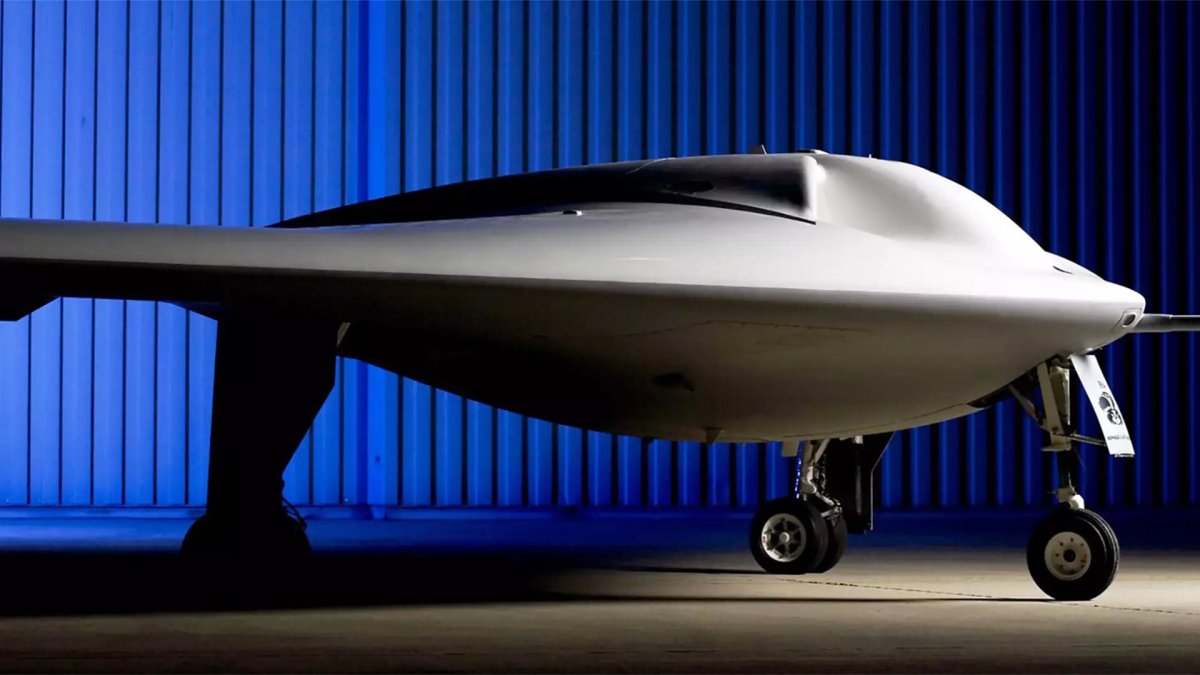
But perhaps where Skunk Works has shown off the most in this regard is in its unmanned aircraft projects. It only took 18 months for the P-175 Polecat demonstrator drone to ready for its first flight. This almost certainly helped along by the development of the recently revealed X-44A , which itself was in part an effort to further advance Lockheed Martin’s existing rapid production methods. We don’t know how long that drone , or the secretive RQ-170 Sentinel that came after Polecat, took to get to its first flight.
The X-44A with a very prominent “Skunk Works” logo, photographed earlier in 2018., Matt Hartman/Shorealonefilms.com
It also helps explain the defense contractor’s confidence in deciding not to produce a physical prototype of its proposed design for the U.S. Navy’s MQ-25 Stingray drone tanker program unless it actually wins the competition. Skunk Works has used the X-44A as a testbed for visual cueing systems it would include on its future MQ-25, creating a direct link between one rapid prototyping effort and another prospective one.
But there’s little doubt that the design group is continuing to build on this experience , as well as that from other projects in the classified realm that we still don’t know about yet. Having turned rapid prototyping and manufacturing into a science, Skunk Works can use that advantage, as well as existing design knowledge, to help keep development timelines for new aircraft as short as they can even when dealing with systems of ever-increasing complexity.
A rare shot of an RQ-170 in a special testing configuration., Matt Hartman/Shorealonefilms.com
If nothing else, Lockheed Martin’s advanced design teams are clearly eager to continue finding ways around Norm Augustine’s 15th law. But there are significant questions about whether or not these rapid prototyping mechanisms translates into positive gains when a particular aircraft goes from the prototype stage to series production. By that point, it’s out of Skunk Works’ hands.
Rushing to have 80 percent of an aircraft’s design done and a prototype flying as quickly as possible might be good for smaller programs the Skunk Works will ‘own’ throughout its life cycle, and for capturing larger development contracts, at least initially, but it doesn’t really change Augustine’s Law about growing complexities and resulting costs in the final stages of the project. And this is true especially for larger production programs the Skunk Works ‘passes off’ to a large degree after winning the initial contract.
Lockheed Martin itself only needs to look at how successful it was in getting the X-35 flying and how long it is still taking to solve a host of subsequent challenges in the production version of the jet. Also, keep in the mind that the X-35 flew nearly two decades ago and the F-35’s first flight was well over a decade ago.
F-35 Joint Strike Fighters under construction., Lockheed Martin
To be fair, much of the fault there lies in the concept known as “ concurrency ,” in which the U.S. military agreed to buy a large number of aircraft under the premise that the larger orders up front would drive down production costs. Problems identified during the development phase would then get fixed on existing planes during depots maintenance and get inserted into jets on the production line “concurrently.”
The entire plan has turned out to be inherently flawed, as many warned from the beginning, and has not only not delivered on the supposed cost savings, but led to substantial delays and overruns. Of course, the whole idea violated one of Kelly Johnson’s three core principles—that problems with a design shouldn’t be allowed to fester under the idea that they’ll get fixed later on.
As such, Skunk Works, and Lockheed Martin as a whole, might want to be mindful of another one of Augustine’s Laws, which comes right after the one they chose to cite in their presentation.
“In the year 2054, the entire defense budget will purchase just one aircraft,” the former Lockheed Martin executive quipped in Law 16. “This aircraft will have to be shared by the Air Force and Navy 3-1/2 days each per week except for leap year, when it will be made available to the Marines for the extra day.”
Contact the author: jtrevithickpr@gmail.com
Comments couldn’t be loaded. Please refresh the page.
作者:约瑟夫·特雷维西克
更新于美国东部时间2018年6月26日晚上8:46
洛克希德·马丁公司传奇的“臭鼬工厂”先进设计局正在庆祝其成立75周年,并为此发布了一系列此前从未公开的原型机和相关信息。该公司尤其热衷于强调其快速原型制造能力,最近还用一种略带戏谑的原理来解释他们如何能够持续快速地让新型飞机投入使用。
2018年6月25日,在佐治亚州亚特兰大举行的美国航空航天学会(AIAA)年度航空论坛上,臭鼬工厂的代表展示了一张图表,该图表源自诺曼·奥古斯丁的一条“定律”,旁边列出了他们一些最著名的飞机以及这些飞机首次试飞所花费的时间。诺曼·奥古斯丁曾在美国国防部和陆军担任高级文职职务,并担任洛克希德·马丁公司的首任总裁。该公司成立于1995年,由洛克希德公司与马丁·玛丽埃塔公司合并而成。
“最后 10% 的绩效会产生三分之一的成本和三分之二的问题”是他于 1984 年首次发表的 52 条定律中的第 15 条。这些定律基于他作为行业高管和高级军官的经验。
尽管奥古斯丁是在臭鼬工厂成立四十多年后才写下这句格言的,但它几乎完美地概括了臭鼬工厂及其传奇的首任首席工程师凯利·约翰逊试图改变的现实。在AIAA会议上的演示文稿中,相关幻灯片的标题正是“臭鼬工厂黄金法则:打造原型”。
根据图表,为了尽可能避免潜在的陷阱,所谓的“抢先一步”工作应该在项目还剩大约20%的时候就开始,但这具体意味着什么并不完全清楚。显然,目标是尽一切可能避免陷入奥古斯丁所说的最后10%的困境,尽可能多地提前完成和定稿。
随着时间的推移和飞机基础设计的日趋成熟,对飞机进行重大改动和增添所需的时间和精力必然会更多。这一点在军用飞机整体结构日益复杂的背景下尤为明显。
尽管面临复杂的要求、紧迫的时间表和有限的资源,臭鼬工厂自1943年成立以来,始终能够按时完成任务。当时,当时的美国陆军部只给了洛克希德和约翰逊六个月的时间,让他们研制出一架时速可达600英里的实用战斗机原型机。
凯莉·约翰逊坐在洛克希德·马丁公司F-104星式战斗机的驾驶舱内。
这场景简直就像好莱坞传记电影里的情节:约翰逊带着近30名工程师和30名机械师,在一家散发着刺鼻气味的塑料厂旁边,搭起了一个马戏团帐篷,开始了临时工作。他别无选择,因为洛克希德公司的厂房和大部分员工都忙于为战争生产现成的飞机。
据说,臭鼬工厂的气味是其名称的由来。在漫画《小阿布纳》(Li'l Abner)中,“臭鼬工厂”(Skonk Works)将死臭鼬磨成粉末,用于某种未知的用途。这种相似之处促使洛克希德集团将自己的工作场所命名为“臭鼬工厂”(Skonk Works),后来演变为“臭鼬工厂”(Skunk Works)。时至今日,该机构的吉祥物仍然是一只卡通臭鼬,其标志也便于识别其项目。
气味并没有阻止约翰逊的团队建造第一代XP-80战斗机,并使其在短短五个月内完成首飞。尽管这款飞机未能赶上二战,但它是一项重要的发展,并直接促成了T-33“流星”教练机和配备雷达的F-94“星火”截击机的问世。这两款飞机分别仅用了三个月和四个月的时间就从图纸设计到首飞完成。
臭鼬工厂实际上在“快速原型制作”这个词出现之前就已经发明了它。而且,在某种程度上类似于奥古斯丁定律,约翰逊为他的团队制定了三条基本原则,以帮助他们保持正轨。
美国空军P-80“流星”战斗机
据《快公司》一篇关于他管理风格的文章报道,他的几条原则是:“第一,倾听比说话更重要;第二,即使是及时做出的错误决定也比不做决定要好;第三,不要敷衍了事,要彻底解决问题。” 除此之外,他还坚持要求任何人不得从事自己不认同的工作。
这些原则最终演变为14条规则,洛克希德·马丁公司至今仍在其网站上保留着这些规则。它们不如奥古斯丁的格言那样幽默,但同样重要。
约翰逊写道:“必须规定报告的最低数量,但重要的工作必须详细记录。必须每月进行成本审查,不仅要涵盖已支出和已承诺的款项,还要涵盖项目结束前的预计成本。”
无论这些话听起来是否像老生常谈,正是这种根本理念使得洛克希德公司仅用了八个月的时间,就从高空侦察机的概念研发出了U-2侦察机的飞行原型机。这至今仍是臭鼬工厂历史上耗时最短、效率最高的项目之一。
美国空军的U-2C侦察机
从研发出更为复杂的超音速A-12(SR-71侦察机的前身)到首飞,仅用了不到三年时间;而打造“Have Blue”隐形验证机所用的时间则更短。凭借不断增长的知识储备和快速原型设计经验,臭鼬工厂在与研发著名的C-130运输机相同的时间内,就成功将首架F-117“夜鹰”隐形战斗机送入蓝天。
YF-22 和 X-35 隐形战斗机原型机(后者是 F-35 联合攻击战斗机项目的前身)的首飞耗时近 50 个月。与 F-117 的研发周期相比,这似乎是一个显著的延长,但考虑到这些工期仍然不到“夜鹰”战斗机研发时间的两倍,而且最终的飞机结构要复杂得多,这样的速度仍然令人印象深刻。
两架F-117“夜鹰”战斗机,美国空军
此后,臭鼬工厂不断提升其快速制造和原型制作能力。其中最引人注目的项目是实验性的X-55A先进复合材料运输机(ACCA),该项目是美国空军一项专门计划的一部分,旨在探索使用复合材料制造大型部件来建造飞机的优势。
臭鼬工厂仅用了20个月就让X-55A成功试飞,并为此开创了多项复合材料制造技术。您可以在这里阅读更多关于该项目的详细信息。
但或许臭鼬工厂在这方面最令人瞩目的成就体现在其无人机项目上。P-175“臭鼬”验证机仅用了18个月就完成了首飞准备。这几乎肯定得益于近期发布的X-44A的研发,而X-44A本身也是洛克希德·马丁公司进一步推进现有快速生产方法的成果之一。我们并不清楚X-44A无人机,以及在“臭鼬”之后研发的神秘RQ-170“哨兵”无人机,究竟花了多长时间才完成首飞。
这架X-44A飞机有着非常醒目的“臭鼬工厂”标志,照片拍摄于2018年初。(图片来源:Matt Hartman/Shorealonefilms.com)
这也解释了这家国防承包商为何如此自信,除非最终赢得美国海军MQ-25“黄貂鱼”无人加油机项目的竞标,否则不会为其设计的方案制作实体原型。臭鼬工厂已将X-44A用作其未来MQ-25项目视觉提示系统的测试平台,从而在两个快速原型项目之间建立了直接联系。
但毫无疑问,设计团队正在不断积累这些经验,以及我们目前尚不了解的其他机密项目经验。臭鼬工厂已将快速原型制作和制造发展成一门科学,他们可以利用这一优势以及现有的设计知识,尽可能缩短新型飞机的研发周期,即使面对日益复杂的系统也是如此。
一张罕见的RQ-170特殊测试配置照片。(图片来源:Matt Hartman/Shorealonefilms.com)
至少,洛克希德·马丁公司的先进设计团队显然热衷于继续寻找绕过诺姆·奥古斯丁第十五定律的方法。但这些快速原型制造机制能否在特定飞机从原型阶段过渡到批量生产阶段时转化为实际效益,仍然存在很大的疑问。到那时,就超出了臭鼬工厂的掌控范围了。
赶在飞机设计完成80%之前尽快完成原型机试飞,这或许有利于臭鼬工厂在其整个生命周期内“负责”的小型项目,也有利于赢得更大的研发合同(至少在初期如此),但这并不能真正改变奥古斯丁定律——即项目后期阶段复杂性和成本都会不断增加。对于那些臭鼬工厂在赢得初始合同后很大程度上“转包”出去的大型生产项目而言,尤其如此。
洛克希德·马丁公司只需看看X-35试飞的成功程度,以及在量产型F-35战斗机后续诸多挑战的解决上耗费的时间,便可知晓其困境。此外,别忘了X-35首飞已近二十年,而F-35的首飞更是超过十年。
F-35联合攻击战斗机正在建造中,洛克希德·马丁公司
平心而论,很大程度上问题出在所谓的“并行生产”概念上。美国军方当时同意大量采购飞机,其前提是前期的大批量订单能够降低生产成本。研发阶段发现的问题会在现有飞机进行大修时得到解决,并“并行”地应用到生产线上的新飞机中。
整个计划最终被证明存在根本缺陷,正如许多人从一开始就警告的那样,它不仅没有实现预期的成本节约目标,反而导致了严重的延误和超支。当然,这个想法本身就违背了凯利·约翰逊的三大核心原则之一——设计中的问题不应该被放任不管,指望以后再解决。
因此,臭鼬工厂和整个洛克希德·马丁公司或许应该注意奥古斯丁定律中的另一条,这条定律紧随他们在演讲中引用的那条定律之后。
“到 2054 年,整个国防预算将只购买一架飞机,”这位前洛克希德·马丁公司高管在第 16 条中打趣道。“这架飞机每周将由空军和海军各使用 3.5 天,闰年除外,闰年时将额外提供给海军陆战队使用一天。”
联系作者:jtrevithickpr@gmail.com
评论加载失败,请刷新页面。