Missile Defense Agency Seeking A High-Flying Drone For “Airborne Laser 2.0”美国导弹防御局寻求用于“机载激光2.0”的高空无人机
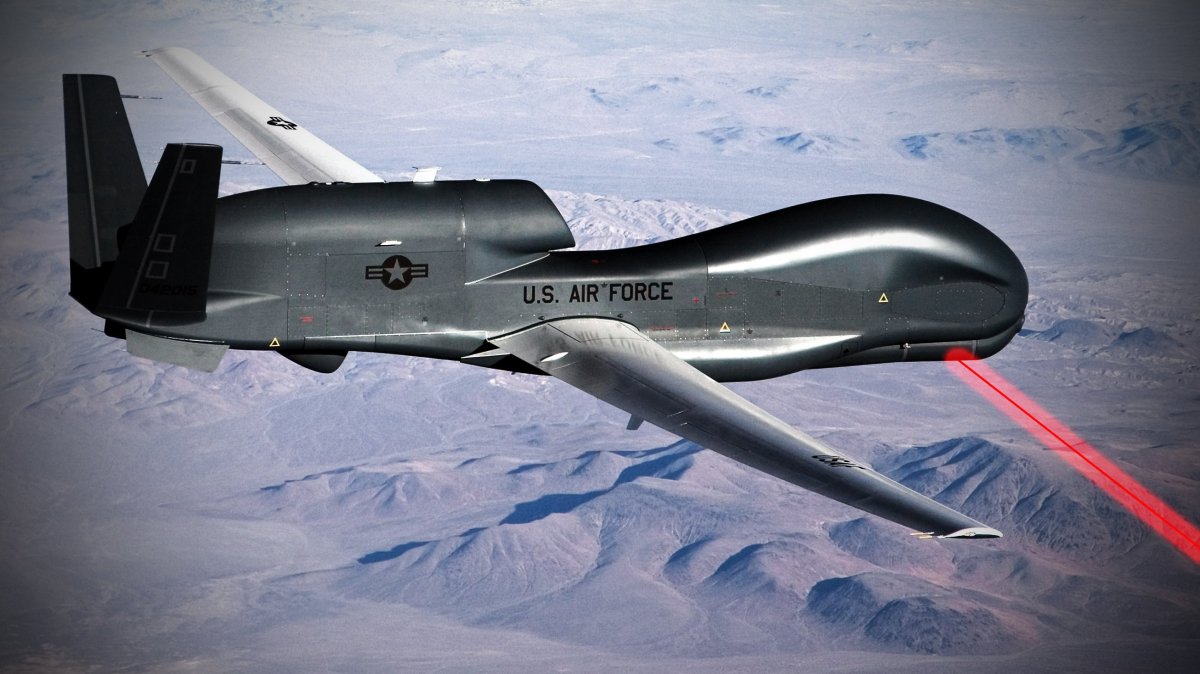
You can think of the defunct YAL-1 as the "analogue" version of the Airborne Laser concept, with an unmanned high-flying drone sporting a solid state laser being the digital version.
新闻视频
Updated Jul 5, 2020 7:04 PM EDT
It was one of the most awesome failures of the 2000s. The giant 747-400-based YAL-1 Airborne Laser sure looked the part of a future weapon system, but in the end it was a miserable and money chugging failure. In all, the program took a decade and half—add another decade more if you count earlier test platforms—and over $5 billion to develop, with very little readily applicable war fighting capability to show for it. By the time the jet was retired in 2011, it could indeed shoot down ballistic missiles during their boost phase, but at far too short of ranges and under too narrow of conditions to make the system combat effective. But now the Missile Defense Agency (MDA) wants a second go at the concept—this time leveraging recent and undeniably major advances in solid-state laser technology and unmanned aircraft systems that could very well see the concept finally come of age.
The YAL-1 used a huge, complex, fuel-hungry chemical oxygen iodine laser (COIL) to do its missile murdering business. The size of a 747-400 was required to house the huge complex system and all its chemicals, and even then the YAL-1 could only provide about 20 full power shots on a single sortie. Operationally, there were issues as well. A fleet of AL-1s would have been extremely expensive to procure and operate. Especially when providing continuous coverage of an enemy area. Secretary of Defense Bob Gates, who was adamant about cancelling the YAL-1 program, said that a fleet 10 to 20 AL-1s, would cost a billion and a half dollars apiece, and each would demand $100 million a year to operate. Gates concluded before the budget axe fell on the program that “there’s nobody in uniform that I know who believes that this is a workable concept.”
Even if such a AL-1 force was fielded, enemy countries could just move their ballistic missiles beyond the relatively short range of the AL-1’s laser. Also, it was pretty clear how to defeat such a system overall. Just shooting down the Airborne Laser before a surprise launch would negate its capability entirely, and a 747 flying continuous figure-eight patters along an enemy’s border is not a hard to target to acquire to say the least. As such, operational AL-1s would have required constant fighter coverage and electronic jamming and even suppression of enemy air defenses (SEAD) support. The whole concept was simply unrealistic, but using a flying laser of some type to solve the boost-phase intercept challenge still seemed like the only way to go.
YAL-1, stripped of it engines and sensors, now sits idle at AMARG., Soracat/wikicommons
Between the YAL-1’s short life and today there have been major leaps in directed energy. Much smaller and lighter solid-state laser technologies that use electricity instead of chemicals for energy are all the rage in the defense worlds. In fact, the strides made in the solid state laser space are so profound that arming not just ground vehicles , but combat aircraft, such as gunships , high-performance fighters and attack helicopters , with highly dynamic tactic laser systems are very much concepts under development and testing today. At the same time, unmanned aircraft technologies have continued to evolve, as have the optical and radar payloads they are capable of carrying over or near the battlefield. The high-altitude, long-endurance (HALE) RQ-4 Global Hawk in particular has finally come into its own as an operational intelligence gathering system that can rival its manned competitor, the U-2 Dragon Lady.
These two technologies, specifically HALE unmanned aircraft and solid state lasers, are what the Missile Defense Agency wants to combine into a Airborne Laser 2.0 of sorts—a networked system capable of loitering very high over or near enemy airspace, ready to knock down theatre ballistic missiles, and possibly even fast-flying ICBMs, during their most vulnerable phase of the flight. This of course is the missile’s boost phase, when it ascends at its lowest flying speeds atop a bright plume of hot gas.
Using a HALE platform, based around a semi-autonomous concept of operations , would be much more affordable to fly for long periods than a quad-engined 747, and its magazine depth would only be limited by the amount of electricity it can generate. Also, it would operate roughly 20,000 feet higher than the YAL-1 could, giving it much longer lines-of-sight and lower beam distortion through a thinner atmosphere, but also the ability to fly above the vast majority of weather. This would also help its infrared tracking systems acquire its targets at greater range.
In a business solicitation posted over at FedBizOpps.gov on June 13th, the Missile Defense Agency clearly defines the criteria for a test system they want to field in the near future based around this very concept. The posting reads:
The Missile Defense Agency (MDA) Advanced Technology Directorate is interested in industry’s capability to provide a High Altitude Long Endurance (HALE) unmanned aircraft in the 2023 timeframe. A HALE aircraft with greater payload capacity is needed to carry a high energy laser system payload to high altitudes to mature Boost Phase Intercept (BPI). The results of this RFI will inform future program options for maturing BPI technology and capability following the current Low Power Laser Demonstrator (LPLD) effort. Proposed aircraft should be able to maintain continuous positive ground control and are expected to operate from the Pacific Missile Range Facility in Hawaii and Edwards AFB in California. Unmanned platforms are highly desired; however, manned concepts will be considered with appropriate justification. In parallel with ongoing BPI technology maturation and demonstration projects, BMDS capability requirements for an airborne high energy laser BPI capability are being developed. Based on analysis to date, Paragraph 2.a below describes the ideal platform characteristics to enable robust BPI capability. MDA is interested in far-term platform approaches to meet the full performance of Paragraph 2.a and mid-term solutions that demonstrate significant progress toward achieving these performance parameters. Concepts that do not meet these parameters are requested to include future options for improving performance, where applicable. Under this BAA/RFI, multiple White Papers and/or proposals at differing levels of capability and/or risk are acceptable. Contractors are encouraged to include information on alternate uses and potential commercialization for proposed aircraft designs along with potential Government and/or non-Government co-sponsors. Areas such as cost, life-cycle affordability, and further commercialization will be important considerations in evaluating future concepts and for any forthcoming acquisitions. Performance Parameters • On-station altitude of greater than 63,000 ft • Flight endurance of greater than 36 hrs on-station (plus flight time for notional 3,000 km transit to station) • Flight cruise speed of less than Mach 0.45 at on-station altitude • Payload capacity of at least 5,000 lbs and as much as 12,500 lbs • Power available for the payload of at least 140 kW and as much as 280 kW for greater than 30 minutes with no loss in platform altitude • Support a 1 to 2 meter aperture optical payload • Low vibration at altitude: angular displacements of less than 50 µrad • Maintain continuous positive ground control
The Missile Defense Agency (MDA) Advanced Technology Directorate is interested in industry’s capability to provide a High Altitude Long Endurance (HALE) unmanned aircraft in the 2023 timeframe. A HALE aircraft with greater payload capacity is needed to carry a high energy laser system payload to high altitudes to mature Boost Phase Intercept (BPI). The results of this RFI will inform future program options for maturing BPI technology and capability following the current Low Power Laser Demonstrator (LPLD) effort. Proposed aircraft should be able to maintain continuous positive ground control and are expected to operate from the Pacific Missile Range Facility in Hawaii and Edwards AFB in California. Unmanned platforms are highly desired; however, manned concepts will be considered with appropriate justification.
In parallel with ongoing BPI technology maturation and demonstration projects, BMDS capability requirements for an airborne high energy laser BPI capability are being developed. Based on analysis to date, Paragraph 2.a below describes the ideal platform characteristics to enable robust BPI capability. MDA is interested in far-term platform approaches to meet the full performance of Paragraph 2.a and mid-term solutions that demonstrate significant progress toward achieving these performance parameters. Concepts that do not meet these parameters are requested to include future options for improving performance, where applicable.
Under this BAA/RFI, multiple White Papers and/or proposals at differing levels of capability and/or risk are acceptable. Contractors are encouraged to include information on alternate uses and potential commercialization for proposed aircraft designs along with potential Government and/or non-Government co-sponsors. Areas such as cost, life-cycle affordability, and further commercialization will be important considerations in evaluating future concepts and for any forthcoming acquisitions.
Performance Parameters
• On-station altitude of greater than 63,000 ft
• Flight endurance of greater than 36 hrs on-station (plus flight time for notional 3,000 km transit to station)
• Flight cruise speed of less than Mach 0.45 at on-station altitude
• Payload capacity of at least 5,000 lbs and as much as 12,500 lbs
• Power available for the payload of at least 140 kW and as much as 280 kW for greater than 30 minutes with no loss in platform altitude
• Support a 1 to 2 meter aperture optical payload
• Low vibration at altitude: angular displacements of less than 50 µrad
• Maintain continuous positive ground control
At first glance, these requirements look most suited for the Q-4 Global Hawk, or more specifically an enhanced performance derivative of it. By using this aircraft, it would offer the MDA as close to an “off the shelf” and proven HALE solution as any. One that is also already in service—a fact that could help see such a capability turn from experimental to operational with minimal timelines and expenditure.
RQ-4B is a large and proven HALE solution, although it may need to be enhanced to meet all the MDA’s requirements. , USAF
There is also the possibility that a firm like Scaled Composites could offer an updated and unmanned aircraft based on their successful manned Proteus aircraft. Proteus worked as a testbed for many high-altitude sensors—including those found on the Global Hawk family of aircraft today. The company has scaled up the design multiple times, in one case drastically, for space-faring projects.
On the other hand, in an operational form, a penetrating HALE capability would be ideal as it could allow for such a laser system to get closer to its potential targets during a time of conflict or heightened tensions.
The Global Hawk’s Multi-Platform Radar Technology Insertion Program radar slung underneath Proteus. , DoD
Lockheed has pushed the USAF on its unmanned “TR-X” HALE concept that has low observable features and uses many of U-2 Dragon Lady’s components. Originally this aircraft was to be an alternative option to unseat the RQ-4, and in doing so, keeping Lockheed’s lock on a mission set they have owned since the dawn of the jet age. But this same concept could be adapted to the Missile Defense Agency’s needs, and if the U-2 were to be retired in the coming decade, which is very possible, the MDA could likely obtain these surplus aircraft and transform them for their needs around a TR-X like configuration. Doing so could save money and lower risk compared to fielding a “clean sheet” design.
TR-X concept art., Lockheed Skunk Works
In the meantime, a single U-2S could be converted for the test initiative and the aircraft already has a superior altitude and payload hauling capability compared to the RQ-4. The Skunk Works has also already looked at making an optionally manned U-2 variant . This could act as a bridge between a test program’s optionally manned or unmanned U-2S and a full-on reconfigured TR-X like operational fleet down the road.
Maybe most enticing, at least for an end-game platform solution, would be the USAF’s secretive HALE stealth flying wing aircraft dubbed the RQ-180. The existence of this Northrop Grumman aircraft, which is loosely akin to the high-flying strategic reconnaissance counterpart to the medium-altitude and far smaller, but also stealthy, tactical reconnaissance oriented RQ-170 Sentine l, has been all but outright confirmed by the USAF. It is likely in service today in very small numbers. The difference between it and all the other options discussed here is that its high degree of low observability, both on the radio and infrared spectrum, and its extreme operating altitudes, allow it to penetrate and loiter deep over enemy airspace while remaining undetected for long periods of time.
Adapting such a platform for the MDA’s boost-phase intercept mission would be attractive as the system could make the best of today’s limited laser power and range by being able to get closer to its potential targets. It would also be able to provide far better area coverage than a standoff system that has to fly along a border. Additionally, fielding such a system on an RQ-180-like platform makes it far more survivable during a time of conflict and it could even be potentially used against enemy aircraft operating over their own territory.
By all accounts, the RQ-180, or whatever its official name may be, is still a highly compartmentalized program, so the idea that the MDA would be able to integrate an experimental laser with it at this early stage is highly doubtful, unless this is also done under a cloak of secrecy. But eventually, migrating this type of capability to specifically this type of aerial asset is likely where the MDA’s laser technology will end up.
Whatever the MDA ends up with for their HALE platform, it sounds like they are on an exciting track to realizing it. Boost-phase intercept/kill has always been the “holy grail” of missile defense. Being able to shower your enemy with the remnants of their own ballistic missiles is a strong strategic deterrent. When mixed with existing midcourse intercept ( SM-3 and the ground-based missile defense interceptors ) and terminal intercept ( THAAD , Patriot PAC-3, SM-6) capabilities, it would complete an “end-to-end” series of missile defense layers that could be deployed regionally against rogue states.
Such a system could be especially useful today, as it would provide a capability of knocking down Kim Jong Un’s test missiles before valuable flight test data can be gained, and even if the missiles are shot at steep trajectories over North Korea’s own territory. It could also allow for such an engagement to take place without actually firing any sort of projectile at the missile itself.
So after many decades of development, it looks like the Airborne Laser concept may finally be coming of age. And don’t be surprised if these “Airborne Laser 2.0” drones become a constantly airborne fixture over the world’s most troublesome hotspots.
Contact the author: Tyler@thedrive.com
Comments couldn’t be loaded. Please refresh the page.
更新于美国东部时间2020年7月5日晚上7:04
这是2000年代最令人震惊的失败案例之一。基于波音747-400的巨型YAL-1机载激光武器系统,外形确实像极了未来武器系统,但最终却以惨败告终,耗资巨大。整个项目耗时十五年——如果算上早期的测试平台,还要再加十年——耗资超过50亿美元,却几乎没有任何可直接用于实战的能力。到2011年该型飞机退役时,它确实能够在弹道导弹助推段将其击落,但射程太短,适用条件也过于狭窄,根本无法发挥作战效能。然而,如今导弹防御局(MDA)却想重启这一概念——这一次,他们将利用固态激光技术和无人机系统领域近期取得的显著进展,这或许能让这一概念最终走向成熟。
YAL-1导弹使用一种体积庞大、结构复杂且耗油量巨大的化学氧碘激光器(COIL)来拦截导弹。为了容纳这套庞大复杂的系统及其所有化学试剂,需要一架波音747-400的体积。即便如此,YAL-1单次出击也只能发射约20次全功率激光。在作战方面也存在诸多问题。采购和运营一支YAL-1机队的成本极其高昂,尤其是在需要对敌方区域进行持续监控的情况下。国防部长鲍勃·盖茨坚决反对取消YAL-1项目,他表示,10到20支YAL-1机队,每支造价将高达15亿美元,每年的运营成本也需要1亿美元。在项目预算被削减之前,盖茨总结道:“据我所知,没有一个军人认为这是一个可行的方案。”
即使部署了这样一支AL-1部队,敌国也可以将弹道导弹的射程转移到AL-1激光射程之外。此外,如何破解这种系统也相当明确。只需在敌方突袭发射前将其击落,就能彻底丧失其作战能力;而一架沿着敌方边境持续进行“8”字形飞行的747客机,至少可以说很容易被锁定。因此,要部署AL-1,就需要战斗机持续护航、电子干扰,甚至压制敌方防空系统(SEAD)。整个构想显然不切实际,但使用某种类型的飞行激光来解决助推段拦截难题,似乎仍然是唯一的出路。
YAL-1飞机已被拆除发动机和传感器,目前闲置在AMARG基地。(图片来自Soracat/wikicommons)
从YAL-1短暂服役至今,定向能技术取得了重大飞跃。体积更小、重量更轻的固态激光技术,以电能而非化学能为能量来源,在国防领域备受瞩目。事实上,固态激光领域的进步如此显著,以至于为地面车辆乃至武装飞机(例如武装直升机、高性能战斗机和攻击直升机)配备高动态战术激光系统,如今已成为正在研发和测试的概念。与此同时,无人机技术及其能够携带到战场上空或附近的的光学和雷达有效载荷也在不断发展。特别是高空长航时(HALE)RQ-4“全球鹰”无人机,如今已发展成为能够与有人驾驶的竞争对手U-2“龙夫人”侦察机相媲美的作战情报收集系统。
导弹防御局希望将高空长航时无人机和固态激光器这两项技术结合起来,打造一种类似机载激光2.0的系统——一个能够在敌方空域上空或附近高空盘旋的网络化系统,随时准备在弹道导弹(包括高速洲际弹道导弹)飞行最脆弱的阶段将其击落。这个阶段指的是导弹的助推段,此时导弹在高空飞行速度最低,伴随着一股炽热的尾焰向上攀升。
基于半自主运行理念的高空长航时(HALE)平台,相比四引擎747飞机,其长时间飞行成本要低得多,而且其弹药库容量仅受限于自身发电量。此外,其飞行高度比YAL-1高出约20,000英尺,拥有更远的视距和更低的穿透稀薄大气层时的光束畸变,并且能够在绝大多数天气条件下飞行。这也有助于其红外跟踪系统在更远的距离上捕获目标。
6月13日,导弹防御局在FedBizOpps.gov网站上发布了一份商业招标公告,明确阐述了他们希望在不久的将来部署的、基于这一概念的测试系统的标准。公告内容如下:
导弹防御局 (MDA) 先进技术局对业界在 2023 年前后提供高空长航时 (HALE) 无人机的能力感兴趣。需要一种有效载荷能力更强的 HALE 无人机,以便将高能激光系统有效载荷送至高空,从而完善助推段拦截 (BPI) 技术。本次信息征询书 (RFI) 的结果将为未来在当前低功率激光演示验证机 (LPLD) 项目之后,进一步完善 BPI 技术和能力的方案提供参考。拟议的无人机应能保持持续有效的地面控制,并预计将在夏威夷太平洋导弹靶场和加利福尼亚州爱德华兹空军基地运行。我们优先考虑无人平台;但是,在有充分理由的情况下,我们也会考虑有人驾驶方案。在进行 BPI 技术成熟和演示项目的同时,弹道导弹防御系统 (BMDS) 正在制定机载高能激光 BPI 能力的要求。根据迄今为止的分析,下文第 2.a 段描述了实现稳健 BPI 能力的理想平台特性。 MDA对能够满足第2.a段全部性能要求的远期平台方案以及能够显著提升性能参数的中期解决方案均感兴趣。对于未能满足这些参数的概念方案,我们要求其在适用情况下提供未来性能提升方案。根据本BAA/RFI,我们接受能力和/或风险水平各异的多份白皮书和/或提案。我们鼓励承包商提供拟议飞机设计的替代用途和潜在商业化方案的信息,以及潜在的政府和/或非政府合作方。成本、全寿命周期可承受性以及进一步的商业化等领域将是评估未来概念方案和任何即将进行的采购的重要考量因素。性能参数 • 驻站高度大于 63,000 英尺 • 驻站飞行续航时间大于 36 小时(加上 3,000 公里往返空间站的飞行时间) • 驻站高度巡航速度小于 0.45 马赫 • 有效载荷能力至少为 5,000 磅,最高可达 12,500 磅 • 有效载荷可用功率至少为 140 千瓦,最高可达 280 千瓦,持续时间超过 30 分钟,且平台高度不下降 • 支持 1 至 2 米孔径的光学有效载荷 • 高空低振动:角位移小于 50 微弧度 • 保持持续可靠的地面控制
美国导弹防御局(MDA)先进技术局对业界在2023年左右提供高空长航时(HALE)无人机的能力很感兴趣。需要一种有效载荷能力更大的HALE无人机,以便将高能激光系统有效载荷送至高空,从而完善助推段拦截(BPI)技术。本次信息征询书(RFI)的结果将为未来在低功率激光演示验证机(LPLD)项目之后,进一步完善BPI技术和能力的方案提供参考。拟建的无人机应能保持持续有效的地面控制,并预计将从夏威夷太平洋导弹靶场和加利福尼亚州爱德华兹空军基地起飞作战。我们优先考虑无人平台;但是,在有充分理由的情况下,我们也会考虑有人驾驶方案。
在持续推进BPI技术成熟和示范项目的同时,BMDS正在制定机载高能激光BPI能力的要求。根据迄今为止的分析,下文第2.a段描述了实现稳健BPI能力的理想平台特性。MDA对能够满足第2.a段所述全部性能要求的远期平台方案以及能够显著提升性能参数的中期方案均感兴趣。对于未能满足这些参数的方案,请尽可能提供未来提升性能的选项。
根据本招标公告/信息征询书,我们接受不同能力水平和/或风险级别的多份白皮书和/或提案。我们鼓励承包商提供拟议飞机设计的替代用途和潜在商业化方案的信息,以及潜在的政府和/或非政府合作方。成本、全寿命周期可承受性以及进一步商业化等领域将是评估未来概念和任何即将进行的采购的重要考量因素。
性能参数
• 站内海拔高度大于 63,000 英尺
• 在空间站上的飞行续航时间超过 36 小时(加上前往空间站的 3,000 公里虚拟飞行时间)
• 在驻点高度的飞行巡航速度低于0.45马赫
• 有效载荷能力至少为 5,000 磅,最高可达 12,500 磅
• 有效载荷可用功率至少为 140 千瓦,最高可达 280 千瓦,持续时间超过 30 分钟,且平台高度不下降
• 支持 1 至 2 米孔径的光学有效载荷
• 高空低振动:角位移小于 50 µrad
• 保持持续有效的地面控制
乍一看,这些需求似乎最适合Q-4“全球鹰”预警机,更确切地说是其性能增强型衍生机型。使用这款飞机,导弹防御局(MDA)就能获得最接近“现成”且经过验证的高空长航时(HALE)解决方案。而且,该机型目前已在服役——这一事实有助于以最短的时间和最少的成本,将此类能力从实验阶段转化为实际作战阶段。
RQ-4B 是一款大型且成熟的高空长航时 (HALE) 解决方案,但可能需要进行改进才能满足导弹防御局 (MDA) 的所有要求。(美国空军)
还有一种可能性是,像Scaled Composites这样的公司可能会基于其成功的载人Proteus飞机,开发出升级版的无人驾驶飞机。Proteus曾作为多种高空传感器的测试平台,其中包括如今全球鹰系列无人机所使用的传感器。该公司已多次扩大Proteus的设计规模,其中一次甚至大幅扩展,用于太空探索项目。
另一方面,在实际操作中,具有穿透力的高空长距离射击能力是理想的,因为它可以让这种激光系统在冲突或局势高度紧张时期更接近其潜在目标。
全球鹰多平台雷达技术插入计划的雷达悬挂在普罗透斯无人机下方。(美国国防部)
洛克希德公司一直力推其“TR-X”高空长航时(HALE)无人机概念,该机具备低可探测性,并沿用了U-2“龙夫人”侦察机的诸多部件。最初,这款飞机旨在取代RQ-4,从而巩固洛克希德公司自喷气机时代伊始便占据的无人机任务主导地位。然而,这一概念同样可以应用于导弹防御局(MDA)的需求。如果U-2在未来十年内退役(可能性很大),MDA很可能获得这些剩余的飞机,并根据自身需求,将其改装成类似TR-X的配置。与全新设计相比,这样做可以节省资金并降低风险。
TR-X概念图,洛克希德·马丁公司臭鼬工厂
与此同时,一架U-2S可以改装用于测试计划,而且与RQ-4相比,该机在飞行高度和有效载荷能力方面已经更胜一筹。臭鼬工厂也已经考虑过制造可选有人驾驶的U-2改进型。这可以作为测试项目中可选有人驾驶或无人驾驶的U-2S与未来全面改装的类似TR-X的作战机队之间的过渡方案。
或许最具吸引力的,至少对于最终的平台解决方案而言,是美国空军神秘的高空长航时隐形飞翼飞机RQ-180。这款由诺斯罗普·格鲁曼公司制造的飞机,与中空、小型化但同样具备隐形能力的战术侦察机RQ-170“哨兵”I型有着异曲同工之妙,其存在几乎已被美国空军公开证实。RQ-180目前可能已少量服役。它与本文讨论的其他所有方案的区别在于,其在无线电和红外频谱上都具有极高的隐蔽性,并且拥有极高的作战高度,使其能够深入敌方空域盘旋,并在很长一段时间内保持不被发现。
将这种平台改装用于导弹防御局(MDA)的助推段拦截任务将极具吸引力,因为该系统能够更接近潜在目标,从而最大限度地利用当前激光功率和射程的局限性。此外,与必须沿边界飞行的防区外系统相比,它还能提供更广阔的区域覆盖范围。而且,将这种系统部署在类似RQ-180的平台上,可以显著提高其在冲突时期的生存能力,甚至有可能用于攻击在其领空活动的敌机。
据各方消息,RQ-180(无论其正式名称如何)仍然是一个高度保密的项目,因此,除非同样在高度保密的情况下进行,否则导弹防御局(MDA)在现阶段就能将其与实验性激光器集成到该无人机上的可能性微乎其微。但最终,将这种能力迁移到特定类型的空中装备上,很可能是导弹防御局激光技术的最终应用方向。
无论美国导弹防御局最终为其高空长航时导弹平台选择何种方案,听起来他们都正朝着这个目标稳步前进。助推段拦截/摧毁一直是导弹防御领域的“圣杯”。能够将敌方弹道导弹的残骸倾泻而下,是一种强大的战略威慑。如果将这项技术与现有的中段拦截(SM-3 和陆基导弹防御拦截器)和末段拦截(萨德、爱国者 PAC-3、SM-6)能力相结合,就能构建一个完整的“端到端”导弹防御体系,并可将其部署在区域范围内,用于打击流氓国家。
这种系统在今天尤其有用,因为它能够在获取宝贵的飞行测试数据之前,甚至在朝鲜领空以陡峭弹道发射导弹的情况下,将其击落。此外,它还能在不向导弹本身发射任何弹丸的情况下进行拦截。
经过数十年的发展,机载激光武器的概念似乎终于走向成熟。如果这些“机载激光武器2.0”无人机成为全球最棘手热点地区上空的常驻力量,也不要感到惊讶。
联系作者:Tyler@thedrive.com
评论加载失败,请刷新页面。