This Stretched Super FB-111 Was A Low-Cost Challenger To The B-1 Bomber这款加长型超级FB-111是B-1轰炸机的低成本挑战者。
With the B-1 canceled, the Air Force looked to a radically revised, truly strategic FB-111 variant that carried more than double the fuel and weapons.
Updated Jan 9, 2021 5:03 AM EST
For most of its career with the U.S. Air Force, the FB-111A, Strategic Air Command’s version of the F-111 Aardvark , was pretty much unloved. After a troubled path to service, the tactical F-111 eventually became one of the most capable strike aircraft of the Cold War, while the FB-111 fulfilled a requirement for a supplemental bomber to augment Strategic Air Command, only 76 examples being built to provide a stopgap until a next-generation bomber became available. However, with the cancelation of the original B-1 bomber program in 1977, another opportunity suddenly emerged for the FB-111, or a derivative thereof, to shine. To take the place of the larger, more advanced bomber, the Air Force started looking at a much-improved “Super FB-111,” and the idea lingered on until the B-1 program was finally revived under the Reagan Administration in 1981, resulting in today’s B-1B Lancer .
General Dynamics, the FB-111A’s manufacturer, had already begun studies to enhance the aircraft in 1974, hoping to address the limited range and payload that dogged an aircraft that hadn’t originally been designed for the strategic mission and which Strategic Air Command found itself operating more or less against its will.
One of the 76 original FB-111As undergoes flight-line maintenance. , U.S. Air Force
Development of a reworked, stretched-fuselage version of the FB-111A, eventually known as the FB-111H, initially took place secretly within General Dynamics, since the U.S. Department of Defense remained committed to the more ambitious B-1. The firm invested almost $10 million of discretionary funds on the studies, including 800 hours spent evaluating wind-tunnel models, plus completion of a quarter-scale model used to assess the radar cross-section at its Fort Worth, Texas, plant.
President Jimmy Carter had different plans for the B-1, which he canceled in June 1977, describing it as “a very expensive weapon” that was “not now necessary” because of the “recent evolution of the cruise missile.” For a brief moment, at least, the concept of a penetrating bomber — one that relied primarily on speed to get to its target, rather than lobbing cruise missiles from a safe standoff distance — was dead.
Just two-and-a-half months after the ax fell on the B-1, the House Appropriations Committee began to look at alternatives to the stillborn B-1. These included simply resuming work on the B-1, developing an all-new B-X penetrating bomber, a rebuilt and upgraded B-52X penetrating bomber design, adapting B-52s into more capable cruise missile carriers, converting commercial or military widebody aircraft into launch platforms for cruise missiles, and the FB-111H. Also, among all these options, the Carter administration was also secretly pushing ahead with stealth technology, including the Advanced Technology Bomber and F-117 Nighthawk , some of the early history of which you can read about here .
Although the House of Representatives still preferred the B-1, in September 1977 the Senate Armed Services Committee recommended a $20-million budget for Fiscal Year 1978 to study the FB-111H. The argument was that this aircraft would be able to match the B-1 in almost every aspect of performance, apart from its weapons payload, which would be roughly half that of the larger bomber.
It was envisaged that the first FB-111H could be converted from an FB-111A and take to the air within two years, followed by a second prototype six months later.
Standard U.S. Air Force FB-111As in formation., U.S. Air Force
General Dynamics subsequently developed a test plan for these two aircraft. It was planned to use the first to evaluate propulsion, performance, stability and control, flutter, flight load, and stores separation. The second would be utilized for tests of the electronic countermeasures system, terrain-following radar, and the navigation/bombing system.
Then, once these two airframes had been successfully proven, another 65 examples would be converted from other FB-111As, before General Dynamics would reopen the production line to produce another 100 new-build versions.
This 167-aircraft fleet was anticipated to cost $7 billion, providing a unit price of $42.1 million, which was less than half the expected cost of each B-1A. Beyond that, there was the possibility that more FB-111Hs could be ordered beyond this total, allowing the swing-wing bomber to finally fulfill its full potential as a key component of Strategic Air Command’s fleets and potentially replacing aging B-52s as well.
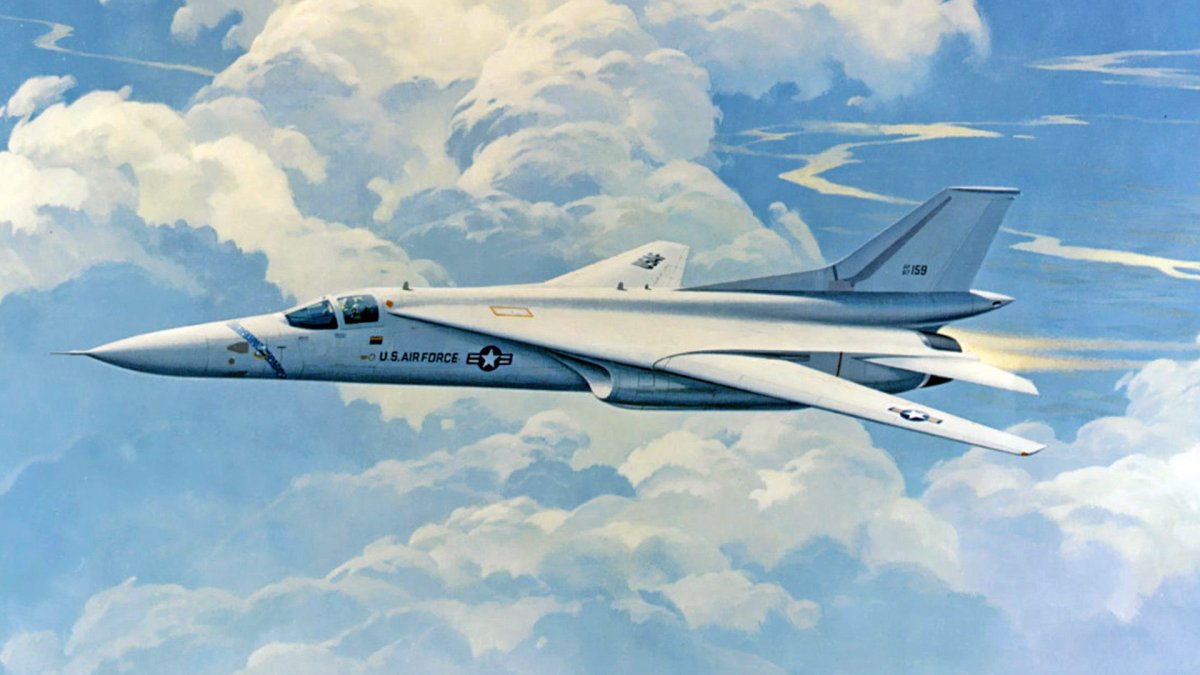
An artist’s concept of the FB-111H revealing the revised engine intakes and tail section., U.S. Air Force
While it would retain 43 percent structural commonality with the FB-111A, and 79 percent of its subsystems were to be similar to the ones found in that earlier design, the H-model was expected to look significantly different from the basic Aardvark. Its stretched fuselage would accommodate new engines, additional fuel capacity, and an enlarged weapons bay, resulting in reconfigured landing gear and entirely different air intakes, which would be fixed rather than the variable-geometry design that The War Zone has looked at in detail in the past. The F-111/FB-111’s unique crew escape module was to be retained.
The powerplant would be a pair of General Electric F101 turbofans, the same engines used in the original B-1As and the later B-1Bs, each of which was rated at 30,000 pounds of thrust at full afterburner.
Visitors attending the rollout ceremony for the first production B-1B examine a model of an F101 turbofan., U.S. Air Force
The variable-geometry wings would retain the same 70-foot span when fully spread as earlier F-111 variants, but would now be able to sweep back to only 60 degrees, compared to 72.5 degrees on the FB-111A. This would eliminate the low-level supersonic “dash” capability, but the H-model was still expected to be able to hit Mach 0.95 at sea level.
Performance-wise, the FB-111H was planned to reach a speed of Mach 1.6 above 36,000 feet, a cruise speed of Mach 0.75, and a low-altitude penetration speed of Mach 0.85 flying at 200 feet. This would be slower than the FB-111A, which could hit Mach 2.2, but the tradeoff was judged acceptable to boost range and weapons carriage.
The enlarged fuselage would add another 104 inches in length, making the aircraft 88 feet 2.5 inches long compared to the FB-111A’s 73 feet 6 inches. Weights were to be increased proportionally, including an empty weight of 51,832 pounds and a maximum inflight weight of 155,000 pounds. The same figures for the FB-111A were 116,115 pounds and 122,900 pounds, respectively. To allow truly strategic range, internal fuel would have to be doubled, growing to a whopping 64,000 pounds.
It was in terms of range that the FB-111H would have offered a real advance over the FB-111A. While its predecessor could fly 5,300 nautical miles, the FB-111H would have increased this figure by 44 percent, for a range of 7,632 nautical miles. In both cases, this envisaged a mission profile that included the aid of aerial refueling, a 1,200-nautical-mile high-speed dash at low level, and carriage of two internal nuclear weapons. What is more, the FB-111H would be able to match the range of the FB-111A when carrying three times the payload.
A 509th Bombardment Wing FB-111 aircraft, bottom, and a KC-135 Stratotanker aircraft conduct aerial refueling during a flight out of Pease Air Force Base, New Hampshire., U.S. Air Force
Those weapons were to be carried in a bomb bay that was almost doubled in size, allowing four or five nuclear weapons to be carried instead of two. There would also be external hardpoints, too, 12 in all, including six that were below and on the sides of the air intakes, not dissimilar to those later found on the F-15E Strike Eagle . While the FB-111A could carry a maximum of six nuclear weapons, this revised design was expected to haul 15. These would be either freefall bombs or AGM-69 Short-Range Attack Missiles (SRAMs), the latter being a Cold War-era defense-suppression weapon that you can read more about here .
An AGM-69 training round is maneuvered under a B-1B., U.S. Air Force
The avionics and self-defense suite for the FB-111H was expected to benefit considerably from equipment that had been developed for the B-1 and would have included an AN/APQ-144 radar, a modified AN/APQ-134 terrain-following radar, AN/APN-200 Doppler Velocity Sensor, AN/AJN-16 and SKN-2400 Inertial Navigation Systems, dual CP-2A computers, AN/ALQ-131 and AN/ALQ-137 electronic warfare jammers, AN/ALQ-153/154 tail warning radar, AN/ALR-62 radar warning receivers, and AN/ALE-28 chaff/flare dispensers.
Aside from its cost, projected performance, and, at least compared to the FB-111A, its payload, there were other factors that made the FB-111H an attractive proposition for the Air Force. Despite its mission with Strategic Air Command, the FB-111A was not classed as a strategic asset and the same would be the case for the FB-111H, preventing it from being subject to restrictions that might be imposed by future Strategic Arms Limitation Talks (SALT) agreements or similar arms control deals with the Soviet Union. In the same way that the Soviet Union argued that the Tu-22M Backfire was a non-strategic asset, the United States could have likely done the same for the FB-111H, pointing out that it was merely a derivative of the F-111/FB-111.
However, the Senate Committee’s decision to pursue the FB-111H instead of the B-1 drew the wrath of members of the House Appropriations Committee. They made the case that the Carter administration had informed them that the penetrating bomber had no future and yet now another penetrating bomber was being approved. In late October 1977, the House of Representatives overruled the FB-111H study budget that the Senate had proposed and instead fought to get the B-1 back on track.
The FB-111H, however, was not entirely dead and lawmakers agreed it could be revived at a later date if a case could be made to reassign funds.
Writing about the FB-111H at the time , Dr. Harold Brown, U.S. Secretary of Defense, noted: “Our analysis showed no significant advantage in cost or effectiveness over the B-1. That being the case, coupled with the added uncertainties of — and time required for —development, there was little purpose in pursuing an option that at best would be roughly equal to what we already have in hand. However, now that we have canceled production of the B-1, it may turn out that beginning in a few years from now it will be less expensive to maintain some version of the FB-111 as an option for an advanced penetrator than the B-1.”
A prototype B-1A accompanied by an F-111 chase plane in January 1983., U.S. Air Force
Although no recommendations were made to fund the FB-111H in the fiscal years to come, by late 1979 the Air Force was revisiting the idea of a reworked FB-111, with proposed variants known as the FB-111B/C. It is not entirely clear how these proposed variants differed from each other, but it may have been a matter of alternative avionics, other minor differences in the overall designs, or the starting variants from which they were to be converted.
Regardless, this plan looked again at stretching FB-111As to accommodate more fuel and weapons and re-engining them with F-101s. The gross takeoff weight for the FB-111B variant, at least, was to be 140,000 pounds. Projected weapons loads were broadly similar to the FB-111H. It was expected that these aircraft would penetrate to the target area flying at below 200 feet and at a speed of Mach 0.85.
A total of 66 FB-111As would be converted to the new configuration under the revised proposal, which would then be joined by 89 more modified F-111Ds . Those latter aircraft would be similarly modified after their transfer from Tactical Air Command. It was estimated that the FB-111B/Cs could be operational by 1983, with all of the planned aircraft modified into these new configurations by 1985.
Since the FB-111B/C program would involve no new-build production, it was potentially cheaper than the previous FB-111H project and the Strategic Air Command leader General Richard Ellis described it as: “the best near-term solution to the penetrating bomber problem.”
The FB-111B/C was still on the agenda in 1981, but in October of that year, the newly elected President Ronald Reagan took the bold step both to resurrect the B-1 — now as the somewhat more modest B-1B, optimized for low-level missions — as well as invest in the future B-2 stealth bomber .
The first production B-1B aircraft outside a hangar at the Rockwell International Corporation facility in Palmdale, California., U.S. Air Force
The FB-111’s loss was the B-1’s gain and those latter bombers remain workhorses of the Air Force, despite repeated plans to retire them and other well-publicized problems with the fleet. Had the FB-111H — or indeed the FB-111B/C — been procured, it’s difficult to know how they would have fared long-term, although they would not have been able to match B-1B’s much-vaunted ability to carry conventional weapons, and huge numbers of them.
Putting aside the smaller payload, the improved variants of the FB-111 could have been relatively low-cost, plentiful assets that might even still have been around to undertake the kinds of long-range force-projection missions that the B-1B regularly flies today, or even received a conventional role post-Cold War. An aircraft with that kind of ‘regional bomber’ unrefueled range and large payload could have proven very useful in the post-Cold War age.
As it is, the FB-111 in general is destined to be remembered as a Cold War bomber that never quite cemented its place in the Air Force’s strategic branch.
Editor’s note: A big thanks to WB Young (@FormerDirtDart) for the inspiration on this one!
Contact the author: thomas@thedrive.com
Comments couldn’t be loaded. Please refresh the page.
更新于美国东部时间2021年1月9日凌晨5:03。
在服役于美国空军的大部分时间里,作为战略空军司令部F-111“土豚”战斗机的衍生机型,FB-111A几乎无人问津。F-111战术型经历了坎坷的服役之路后,最终成为冷战时期最强大的攻击机之一,而FB-111则满足了战略空军司令部对补充轰炸机的需求,仅生产了76架,作为过渡机型,直至下一代轰炸机问世。然而,随着1977年B-1轰炸机项目的取消,FB-111或其衍生机型突然迎来了另一个大放异彩的机会。为了取代更大、更先进的轰炸机,空军开始考虑改进型的“超级 FB-111”,这个想法一直持续到 1981 年里根政府时期,B-1 计划最终得以恢复,最终诞生了今天的 B-1B 枪骑兵轰炸机。
FB-111A 的制造商通用动力公司早在 1974 年就开始研究如何改进该飞机,希望解决该飞机航程和有效载荷有限的问题。该飞机最初并非为战略任务而设计,战略空军司令部发现自己或多或少违背了其意愿而使用它。
76架原装FB-111A之一正在进行飞行线维护。(美国空军)
FB-111A 的改进型加长机身版本(最终被称为 FB-111H)的研发最初在通用动力公司内部秘密进行,因为美国国防部仍然致力于更雄心勃勃的 B-1 轰炸机项目。该公司投入了近 1000 万美元的自由支配资金用于相关研究,其中包括花费 800 个小时评估风洞模型,以及在其位于德克萨斯州沃斯堡的工厂完成用于评估雷达反射截面的四分之一比例模型。
吉米·卡特总统对B-1轰炸机另有打算,他在1977年6月取消了该项目,称其为“一种非常昂贵的武器”,并且由于“巡航导弹的最新发展”,“现在没有必要”。至少在短暂的时间里,那种主要依靠速度而非从安全距离发射巡航导弹来接近目标的穿透式轰炸机的概念,就此终结。
在B-1轰炸机项目被取消仅仅两个半月后,众议院拨款委员会就开始研究B-1的替代方案。这些方案包括:重启B-1项目;研发全新的BX穿透轰炸机;对B-52X穿透轰炸机进行改造升级;将B-52改装成性能更强的巡航导弹发射平台;将商用或军用宽体飞机改装成巡航导弹发射平台;以及FB-111H隐形战斗机。此外,在所有这些方案中,卡特政府还在秘密推进隐形技术的发展,包括先进技术轰炸机(ATB)和F-117“夜鹰”战斗机,您可以在这里阅读一些关于它们的早期历史。
尽管众议院仍然倾向于B-1轰炸机,但1977年9月,参议院军事委员会建议在1978财年拨款2000万美元用于研究FB-111H轰炸机。理由是,除了武器载荷大约只有B-1的一半之外,这种飞机在几乎所有性能方面都能与B-1相媲美。
设想第一架 FB-111H 可以由 FB-111A 改装而来,并在两年内投入使用,随后六个月后推出第二架原型机。
标准美国空军FB-111A战斗机编队飞行。
通用动力公司随后制定了这两架飞机的测试计划。计划使用第一架飞机评估推进系统、性能、稳定性与控制、颤振、飞行载荷和挂载分离情况。第二架飞机将用于测试电子对抗系统、地形跟踪雷达和导航/轰炸系统。
然后,一旦这两架飞机的机身得到成功验证,通用动力公司将再从其他 FB-111A 改装 65 架,然后再重新开工生产 100 架全新制造的机型。
这支由167架飞机组成的机队预计耗资70亿美元,单价为4210万美元,不到B-1A轰炸机预期成本的一半。此外,还有可能追加FB-111H的订单,使这款可变后掠翼轰炸机最终能够充分发挥其作为战略空军司令部机队关键组成部分的潜力,并有可能取代老旧的B-52轰炸机。
艺术家绘制的FB-111H概念图,展示了改进后的发动机进气口和尾翼部分。(美国空军)
虽然H型F-111与FB-111A的结构通用度为43%,子系统也有79%与早期设计相似,但其外观预计与基本的“土豚”战斗机有显著差异。加长的机身将容纳新型发动机、更大的燃油容量和更大的武器舱,因此需要重新设计起落架和完全不同的进气口——采用固定式进气口,而非《战区》杂志过去详细报道过的可变后掠翼设计。F-111/FB-111独特的乘员逃生舱将被保留。
动力装置将采用一对通用电气 F101 涡扇发动机,与最初的 B-1A 和后来的 B-1B 所使用的发动机相同,每台发动机在全加力燃烧室状态下的推力为 30,000 磅。
在首架量产型B-1B轰炸机下线仪式上,来宾们正在参观F101涡扇发动机的模型。(美国空军)
可变后掠翼在完全展开时仍保持与早期F-111系列相同的70英尺翼展,但其后掠角仅为60度,而FB-111A的后掠角为72.5度。这将使其失去低空超音速“冲刺”能力,但H型预计仍能在海平面达到0.95马赫的速度。
性能方面,FB-111H计划在36000英尺(约11000米)以上高度达到1.6马赫的速度,巡航速度为0.75马赫,低空突防速度在200英尺(约60米)高度达到0.85马赫。这比FB-111A(最高速度可达2.2马赫)要慢,但为了提升航程和武器挂载能力,这种速度上的妥协被认为是可以接受的。
加长的机身将使飞机长度增加104英寸,达到88英尺2.5英寸,而FB-111A的长度为73英尺6英寸。重量也将相应增加,包括51,832磅的空重和155,000磅的最大飞行重量。FB-111A的相应数据分别为116,115磅和122,900磅。为了实现真正的战略航程,内部燃油容量必须翻倍,达到惊人的64,000磅。
FB-111H 相较于 FB-111A 的真正优势在于航程。FB-111A 的航程为 5,300 海里,而 FB-111H 的航程则提升了 44%,达到 7,632 海里。以上航程均基于包含空中加油、1,200 海里低空高速飞行以及携带两枚内置核武器的任务方案。此外,FB-111H 在携带三倍有效载荷的情况下,仍能保持与 FB-111A 相同的航程。
美国空军第509轰炸联队的一架FB-111轰炸机(下图)和一架KC-135同温层加油机在从新罕布什尔州皮斯空军基地起飞的飞行中进行空中加油。
这些武器将被放置在一个尺寸几乎翻倍的弹舱内,使其能够携带四到五枚核武器,而不是之前的两枚。此外,机身还将配备总共12个外部挂点,其中六个位于进气口下方和两侧,与后来F-15E“攻击鹰”战斗机上的挂点颇为相似。虽然FB-111A最多只能携带六枚核武器,但这种改进型预计可以携带15枚。这些核武器可以是自由落体炸弹,也可以是AGM-69短程攻击导弹(SRAM),后者是一种冷战时期的防御压制武器,您可以在这里了解更多信息。
一枚AGM-69训练弹在B-1B轰炸机下方进行机动飞行。(美国空军)
FB-111H 的航空电子设备和自卫套件预计将从为 B-1 开发的设备中受益匪浅,其中包括 AN/APQ-144 雷达、改进型 AN/APQ-134 地形跟踪雷达、AN/APN-200 多普勒速度传感器、AN/AJN-16 和 SKN-2400 惯性导航系统、双 CP-2A 计算机、AN/ALQ-131 和 AN/ALQ-137 电子战干扰机、AN/ALQ-153/154 尾部告警雷达、AN/ALR-62 雷达告警接收机和 AN/ALE-28 箔条/曳光弹投放器。
除了成本、预期性能以及(至少与FB-111A相比)有效载荷之外,还有其他因素使得FB-111H对美国空军极具吸引力。尽管FB-111A隶属于战略空军司令部,但它并未被列为战略资产,FB-111H也将如此,这使其免受未来战略武器限制谈判(SALT)协议或与苏联达成的类似军控协议的限制。正如苏联曾辩称图-22M“逆火”轰炸机并非战略资产一样,美国很可能也可以对FB-111H提出同样的论点,指出它仅仅是F-111/FB-111的衍生机型。
然而,参议院委员会决定推进FB-111H而非B-1的决定激怒了众议院拨款委员会的成员。他们指出,卡特政府曾告知他们,这种穿透轰炸机已无未来,而现在却又批准了另一款穿透轰炸机。1977年10月下旬,众议院否决了参议院提出的FB-111H研究预算,转而力主B-1项目重回正轨。
然而,FB-111H 项目并没有完全夭折,立法者们一致认为,如果能够提出重新分配资金的理由,该项目可以在日后重新启动。
当时,美国国防部长哈罗德·布朗博士在谈到FB-111H时指出:“我们的分析表明,FB-111H在成本或效能方面与B-1相比并无显著优势。鉴于此,再加上研发过程中的不确定性以及所需时间,继续研发一个充其量只能与我们现有装备大致相当的方案意义不大。然而,既然我们已经停止了B-1的生产,那么从几年后开始,维护某种型号的FB-111作为先进穿甲弹的备选方案,其成本可能比B-1更低。”
1983年1月,一架B-1A原型机在F-111伴飞机的伴随下进行飞行表演。(美国空军)
尽管在接下来的财政年度中没有提出为FB-111H提供资金的建议,但到了1979年末,空军重新考虑了对FB-111进行改进的想法,并提出了被称为FB-111B/C的改进型。目前尚不完全清楚这些改进型之间的区别,但可能在于不同的航电系统、整体设计上的其他细微差别,或者它们所基于的初始型号。
无论如何,该计划再次考虑加长FB-111A的机身以容纳更多燃料和武器,并为其更换F-101发动机。至少FB-111B型的总起飞重量将达到14万磅。预计其武器载荷与FB-111H大致相同。预计这些飞机将以低于200英尺的高度和0.85马赫的速度飞行,突入目标区域。
根据修订后的方案,总共将有66架FB-111A改装成新配置,随后还将有89架改装后的F-111D加入。这些改装后的飞机在从战术空军司令部移交后也将进行类似的改装。据估计,FB-111B/C型飞机可在1983年投入使用,所有计划改装的飞机将在1985年之前完成改装。
由于 FB-111B/C 项目不涉及新制造的生产,因此它可能比之前的 FB-111H 项目更便宜,战略空军司令部司令理查德·埃利斯将军将其描述为:“解决穿透轰炸机问题的最佳近期解决方案”。
FB-111B/C 在 1981 年仍在计划之中,但同年 10 月,新当选的总统罗纳德·里根采取了大胆的举措,既复兴了 B-1(现在是相对温和的 B-1B,针对低空任务进行了优化),又投资了未来的 B-2 隐形轰炸机。
首架量产型B-1B飞机停在位于加利福尼亚州帕姆代尔的罗克韦尔国际公司工厂的机库外。(美国空军)
FB-111的损失成就了B-1轰炸机,尽管曾多次计划让B-1B退役,且该机队也存在其他一些广为人知的问题,但B-1B至今仍是美国空军的主力机型。如果当初采购了FB-111H——或者FB-111B/C——它们的长期表现如何,目前还很难说,但它们肯定无法匹敌B-1B引以为傲的携带常规武器的能力,更遑论携带大量武器了。
撇开有效载荷较小的问题不谈,改进型的FB-111本可以成为成本相对较低、数量充足的装备,甚至可以继续执行B-1B如今经常执行的那种远程兵力投送任务,或者在冷战后承担常规作战任务。这种拥有“区域轰炸机”般不间断航程和大有效载荷的飞机,在后冷战时代本可以发挥巨大的作用。
总的来说,FB-111注定会被人们记住,它是一款冷战时期的轰炸机,但始终未能真正巩固其在空军战略部门的地位。
编者按:非常感谢 WB Young (@FormerDirtDart) 给予我的灵感!
联系作者:thomas@thedrive.com
评论加载失败,请刷新页面。