Scorned by Trump, Canadian shipbuilders flash their icebreaker skills尽管遭到特朗普的蔑视,加拿大造船商仍展示了他们的破冰能力
"What we are trying to do is be a contributor to our neighbors and help them,” one Canadian shipbuilding executive said.
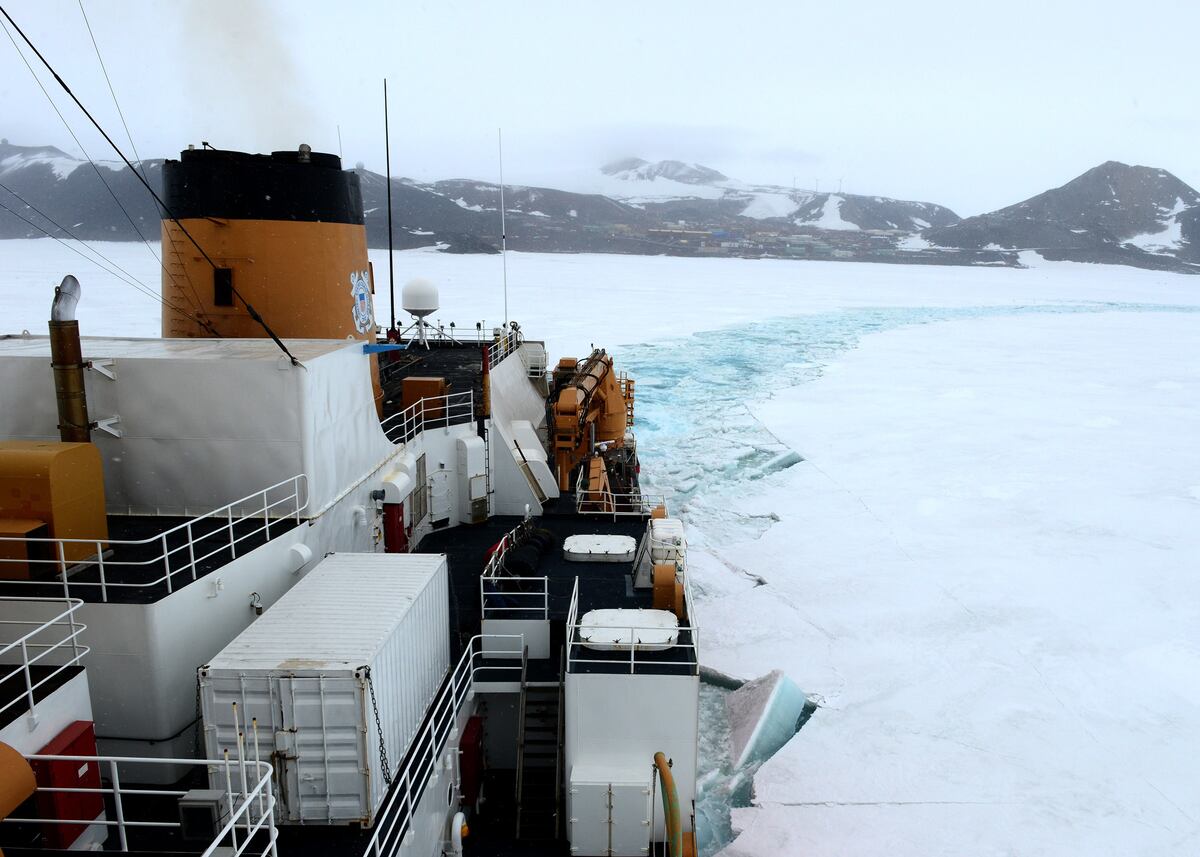
MILAN — President Donald Trump’s ambition to build 40 new icebreakers in the United States is unrealistic given the current state of the national shipbuilding industry, which may require Washington to ask for Canada’s help, according to a major Canadian shipbuilder specializing in the construction of such vessels.
In a Jan. 24 press briefing , Trump announced a target of acquiring roughly 40 icebreakers for the U.S. Coast Guard.
“We’re going to order about 40 Coast Guard big icebreakers – big ones – and all of a sudden, Canada wants a piece of the deal. … I say, ‘Why are we doing that,’” he told reporters.
On March 4, the U.S. government reinstated an executive order that hit its northern neighbor with 25% across-the-board tariffs and 10% on Canadian energy, triggering a continental trade war. Ottawa has responded with its retaliatory tariffs at the same rate but placed on a smaller basket of American goods.
According to Canadian shipbuilder Seaspan, in charge of building two new heavy polar icebreakers for the country’s Coast Guard, the Canadian naval industry already possesses the requisite know-how for Trump’s plan.
“40 icebreakers are fantastic, but that is pretty aggressive – I don’t want to go against what Mr. Trump said, but I would say that the U.S. shipbuilding industry capability is pretty stressed and busy right now. … I think it’s fair to say that it is not [currently] capable of doing that,” David Hargreaves, senior vice president of business development at Seaspan, told Defense News.
“He also said that Canada is trying to get a part of it – what we are trying to do is be a contributor to our neighbors and help them,” he added.
The economic rift between the two nations does not appear to have negatively impacted the shipbuilding industry so far. On the contrary, companies from both sides of the border continue to engage in dialogue and appear determined to carry out business as usual.
Davie, a Quebec shipbuilder, told Defense News earlier this year that it was moving forward with plans to acquire an American shipyard despite the threat of a looming trade war.
Canadian and Finnish government representatives shared similar perspectives in Feb. 4 email statements, stating that the tense climate seen as of late between Canada and the U.S. had not compromised cooperation within the trilateral Icebreaker Collaboration Effort.
While that agreement, signed last summer and known as the ICE Pact, seeks to bring together Finnish, Canadian and U.S. expertise to build best-in-class ice boats and cooperate in other areas, Hargreaves notes that Washington has the most to gain from it when it comes to gaining knowledge.
“I don’t think it explicitly says this, but it is really about helping the U.S. to build their icebreaking capability,” he said.
Whereas Finland and Canada have long histories of manufacturing these vessels, America has lagged behind. For example, the U.S. Coast Guard has not launched a new heavy icebreaker since 1976.
U.S. regulations have previously required that military vessels be built domestically. Two new bills introduced last month by Utah senators Mike Lee and John Curtis, both Republicans, seek to modify these practices, placing greater emphasis on shipyards in NATO countries or in trusted Indo-Pacific nations for getting America’s ship count up quickly.
Regardless of the bills’ prospects for adoption, Canada’s Seaspan is already putting itself in a position to help out.
“We are exploring how a U.S. shipyard(s) could use our existing Canadian Coast Guard Multi-Purpose Vessel design, a polar class 4 icebreaker that could be relatively easily upgraded to class 3,” Hargreaves wrote in an email.
Talks are already underway with the U.S. Coast Guard about cooperating. The Americans are “very interested” in the ship design, according to the company.
Elisabeth Gosselin-Malo was a Europe correspondent for Defense News. She covers a wide range of topics related to military procurement and international security, and specializes in reporting on the aviation sector. She is based in Milan, Italy.
米兰——据一家专门建造此类船舶的加拿大大型造船厂称,鉴于美国造船业目前的状况,唐纳德·特朗普总统在美国建造 40 艘新破冰船的雄心壮志是不现实的,这可能需要华盛顿向加拿大寻求帮助。
1月24日,特朗普在新闻发布会上宣布,美国海岸警卫队的目标是购置大约40艘破冰船。
“我们打算订购大约40艘海岸警卫队的大型破冰船——是那种非常大的破冰船——结果加拿大突然也想分一杯羹……我说,‘我们为什么要这么做?’”他告诉记者。
3月4日,美国政府恢复了一项行政命令,对加拿大全面征收25%的关税,并对加拿大能源产品征收10%的关税,由此引发了北美大陆的贸易战。渥太华方面也采取了报复性关税措施,税率相同,但针对的美国商品种类较少。
负责为加拿大海岸警卫队建造两艘新型重型极地破冰船的加拿大造船企业 Seaspan 表示,加拿大海军工业已经具备特朗普计划所需的技术诀窍。
“40艘破冰船固然很棒,但这确实有点激进——我不想反驳特朗普先生的说法,但我认为美国造船业目前产能已经相当紧张且繁忙……我认为可以公平地说,它(目前)没有能力做到这一点,”Seaspan公司负责业务发展的高级副总裁大卫·哈格里夫斯告诉《防务新闻》。
“他还说加拿大也想从中分一杯羹——我们想做的就是为邻国做出贡献,帮助他们,”他补充道。
两国之间的经济裂痕似乎尚未对造船业造成负面影响。相反,两国企业仍在继续对话,并决心照常开展业务。
今年早些时候,魁北克造船商戴维公司告诉《防务新闻》,尽管面临迫在眉睫的贸易战威胁,该公司仍将推进收购美国造船厂的计划。
加拿大和芬兰政府代表在 2 月 4 日的电子邮件声明中表达了类似的观点,称最近加拿大和美国之间出现的紧张气氛并没有损害三方破冰船合作努力中的合作。
去年夏天签署的这项协议被称为“冰上协议”,旨在汇集芬兰、加拿大和美国的专业知识,建造一流的冰上帆船并在其他领域开展合作。哈格里夫斯指出,就获取知识而言,华盛顿将从中获益最多。
“我认为协议中没有明确说明这一点,但实际上是为了帮助美国提升破冰能力,”他说。
芬兰和加拿大在制造这类船舶方面有着悠久的历史,而美国则远远落后。例如,美国海岸警卫队自1976年以来就没有建造过新的重型破冰船。
美国此前的规定要求军舰必须在国内建造。上个月,犹他州共和党参议员迈克·李和约翰·柯蒂斯提出了两项新法案,旨在修改这些规定,更加重视北约国家或值得信赖的印太地区的造船厂,以迅速增加美国的舰艇数量。
无论这些法案能否获得通过,加拿大的 Seaspan 公司已经做好准备提供帮助。
哈格里夫斯在一封电子邮件中写道:“我们正在探索美国造船厂如何使用我们现有的加拿大海岸警卫队多用途船舶设计,这是一种极地 4 级破冰船,可以相对容易地升级到 3 级。”
公司已与美国海岸警卫队就合作事宜展开洽谈。据该公司称,美方对该舰艇设计“非常感兴趣”。
伊丽莎白·戈斯林-马洛曾任《防务新闻》欧洲通讯员。她的报道涵盖军事采购和国际安全等广泛领域,尤其擅长航空领域的报道。她常驻意大利米兰。