Ministerial pay update ensures financial sacrifice doesn’t deter political talent: Observers观察人士称,部长级薪酬调整确保经济牺牲不会阻碍政治人才的培养。
Observers said the formula will always be a judgment call to be reached after assessing various data points. Read more at straitstimes.com.
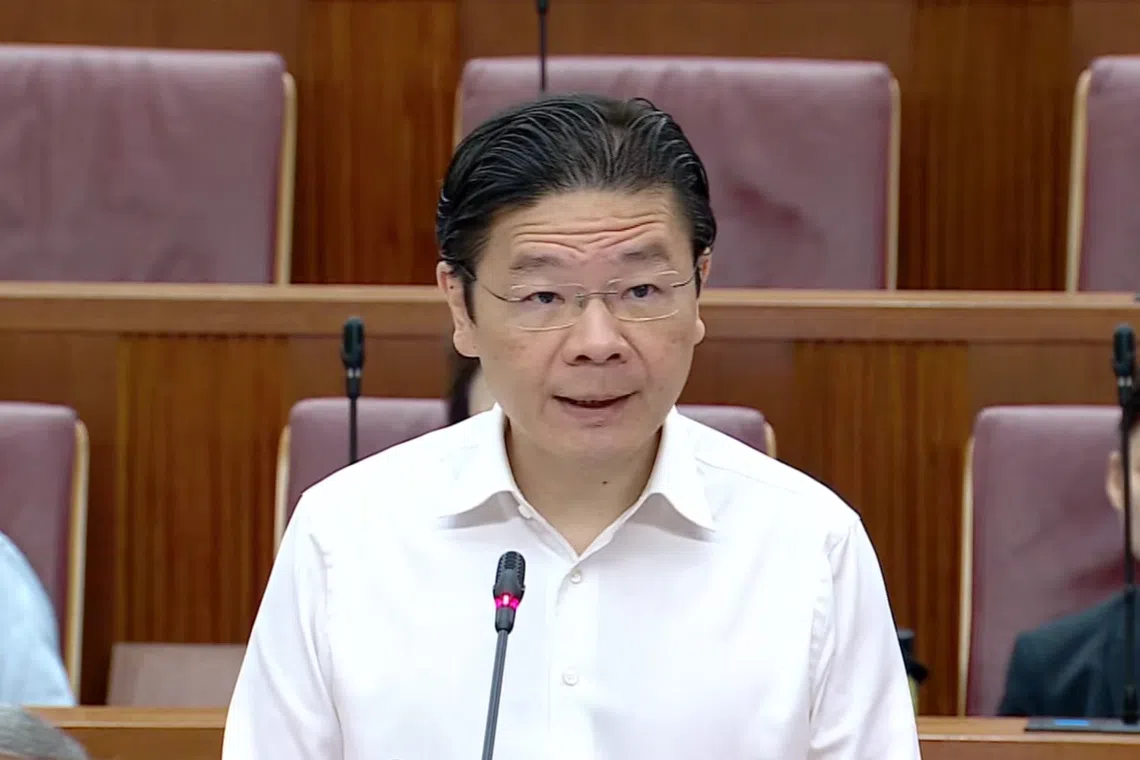
Prime Minister Lawrence Wong making a statement in Parliament on Sep 8, 2026 about the ministerial pay review.
Published Sep 09, 2026, 04:18 PM
Updated Sep 09, 2026, 04:18 PM
Analysts say salaries benchmarking salaries to the median income of the top 1,000 earners with a 40% discount to reflect public service ethos avoids matching private-sector pay.
Analysts say the benchmark helps attract talent while distinguishing political leadership with high-paying commercial leadership roles.
Analysts stress the need for a strong public service spirit in leadership recruitment.
SINGAPORE - Benchmarking ministerial salaries to the median income of the top 1,000 Singapore citizens continues to reflect the desired talent pool that the city-state seeks to draw from for political leadership, said analysts.
At the same time, applying a significant 40 per cent discount stresses the ethos required of public service, they added, while noting that the formula will always be a judgment call, with each review providing a reference point for future adjustments.
Observers’ comments followed changes to ministerial salaries that Prime Minister Lawrence Wong announced in Parliament on Sept 8.
The annual benchmark pay for ministers at the entry-level grade, which has been unchanged since 2011, will rise from $1.1 million to $1.8 million, though PM Wong said the Government will not move to the proposed salary levels in one step.
Instead, ministers will get a one-time adjustment of up to 9 per cent when the new salaries take effect from Oct 15, which will bring their annual salary from $1.1 million to $1.2 million, with further pay adjustments to be based on performance.
Analysts noted that the updated salary framework is not meant to match top private-sector compensation, but will help to manage financial opportunity costs so that capable candidates are not deterred from entering political service.
Aaron Maniam, deputy director of the Institute of Policy Studies, noted that the pool of 1,000 includes jobs with similar scope, complexity, budgets and decision-making demands to a minister’s role.
He added that the size of the pool had been enlarged over the years, reflecting the reality that Singapore needs to draw its leaders from a wide range of roles and functions.
The reference pool started out with 24 top earners from six professions in 1994, was increased to 48 top earners from six professions in 2007, before going up to 1,000 top earners from across the economy following the 2012 salary review that was backdated to 2011.
Ng Siew Quan, former PwC partner who is on the board of several charities, said benchmarking to this pool of talent was reasonable.
“(The ministers) will be taking care of 6 million people…therefore you want to look for top talents and not just good enough,” he said.
However, Singapore Management University Associate Professor of Law Eugene Tan suggested that the pool should be enlarged further.
“Top 1,000 earners strike me as being highly selective and perhaps elitist,” he said, adding that a legitimate question is whether there is any empirical basis for this number.
He suggested expanding the pool further, noting that the prime minister had said he wants to recruit capable Singaporeans not only from the private sector or public service, but other walks of life.
“Those from the other walks of life are unlikely to fall into the region of the top 1,000 earners,” said Tan.
Institute for Human Resource Professionals chief executive officer Aslam Sardar said while there is value in a consistent benchmark, it should not be treated as something that will never change.
“As Singapore’s income distribution and senior talent pool evolve, future reviews should continue to assess whether the reference group remains relevant,” he said.
In its report, the latest salary review committee said it affirmed the benchmark after reviewing the data, which showed that the pool comprises Singaporeans from a diverse range of industries and professions.
The committee considered expanding the pool, but concluded that the top 1,000 earners better reflect the calibre of Singaporeans who are up to the job.
The size of the pool, though, should be seen in combination with the 40 per cent discount applied to reflect the ethos of public service, said observers.
Noting that this is a key component of the benchmark, Aslam and Ng said it prevents political salaries from matching top-private sector pay and maintains the distinction between political leadership and commercial leadership roles.
“People who enter public service are making a choice based on purpose and contribution, not simply financial reward,” said Aslam.
While not all will agree on the size of the pool or the quantum of the discount, it provides a baseline which society can debate on, said Norshahril Saat, principal fellow at the ISEAS – Yusof Ishak Institute.
“Every mechanism has its justification which is debatable, but a decision has to be made to operationalise the values the salary structure seeks to address.”
Analysts said the adjustment will ensure that pay does not become a hindrance to political recruitment, even if some sacrifice remains.
The current framework, which was set in 2012 but backdated to 2011, has not been changed since then. Changes recommended by a review committee in 2017 were not adopted, while a review slated for 2023 was deferred until this year, due to geopolitical and economic uncertainties.
Aslam noted that Singapore’s economy, wages, productivity and labour market have changed in the last 15 years, while political salaries had remained unchanged.
“Remuneration frameworks need to keep pace with the market and with the responsibilities of the roles they support,” he said. “When a framework remains unchanged for too long, there is a risk that the benchmark becomes less relevant over time.”
Tan said: “The new benchmark will still lag behind what the private sector commands; but the benchmark was never and should never be competitive.”
Even so, more should be done to ascertain the true opportunity cost of joining politics before settling on a benchmark salary, said David Leong, chairman and chief executive of PeopleWorldwide Consulting.
Not every candidate will be giving up as much, he added.
“Public office should certainly not require an unreasonable financial sacrifice. But neither should we automatically assume that every person entering politics has walked away from a multimillion-dollar private-sector career,” he said.
Ultimately, said the analysts, the salary adjustments are not meant to act alone in attracting suitable candidates.
Maniam said: “Politics is one of the most exacting careers around - it is not only cognitively and emotionally demanding, but also places significant pressures and creates scrutiny on individuals and their families.”
They emphasised the importance of inculcating in Singaporeans a strong sense of community spirit and willingness to serve, whether in political office or other public and social causes.
“It is imperative for society to be instilled and inculcated with the ethos of public service. Even if pay is not an issue, the lack of such an ethos will mean the pipeline of political leaders will not be healthy,” said Tan.
Singapore politicians
2026年9月8日,总理黄循财在国会就部长薪酬检讨发表声明。
发布于 2026 年 9 月 9 日下午 4:18
更新于2026年9月9日下午4:18
分析人士表示,以收入最高的 1000 人的收入中位数为基准,并打 40% 折扣以体现公共服务精神的薪酬标准,可以避免与私营部门的薪酬水平持平。
分析人士表示,这一基准有助于吸引人才,同时将政治领导职位与高薪的商业领导职位区分开来。
分析人士强调,在领导人才招聘中,需要有强烈的公共服务精神。
新加坡——分析人士表示,将部长薪酬与新加坡收入最高的 1000 名公民的收入中位数进行比较,继续反映出这个城邦国家希望从中选拔政治领导人才的理想人才库。
他们补充说,与此同时,给予 40% 的大幅折扣强调了公共服务所需的精神,并指出该公式始终是一个判断性的决定,每次审查都会为未来的调整提供参考点。
观察人士的评论是在总理黄循财于9月8日在国会宣布部长薪酬调整之后发表的。
部长级初级职位的年度基准薪酬自 2011 年以来一直未变,将从 110 万美元上调至 180 万美元,但黄英贤总理表示,政府不会一步到位地提高薪酬水平。
相反,部长们将在10月15日新薪资生效时获得一次性最高9%的调整,这将使他们的年薪从110万美元增加到120万美元,进一步的薪资调整将根据绩效而定。
分析人士指出,更新后的薪酬框架并非旨在与私营部门的最高薪酬相匹配,而是为了帮助控制财务机会成本,从而避免有能力的候选人因薪酬过高而放弃进入政界。
政策研究所副所长亚伦·马尼亚姆指出,这 1000 个职位中包括与部长职位在范围、复杂性、预算和决策要求方面相似的职位。
他还补充说,人才库的规模近年来不断扩大,这反映出新加坡需要从各种角色和职能中选拔领导人才的现实。
参考人群最初于 1994 年由来自六个行业的 24 名最高收入者组成,2007 年增加到来自六个行业的 48 名最高收入者,然后在 2012 年的薪资审查(追溯至 2011 年)之后,增加到来自整个经济领域的 1000 名最高收入者。
曾任普华永道合伙人、现任多家慈善机构董事的吴秀泉表示,以这批人才为标杆是合理的。
“(部长们)将要照顾600万人……因此,你们要寻找顶尖人才,而不仅仅是足够优秀的人才,”他说。
然而,新加坡管理大学法学副教授陈永健建议,应该进一步扩大候选池。
“在我看来,收入最高的 1000 人这个数字具有很强的选择性,甚至可能带有精英主义色彩,”他说道,并补充说,一个合理的问题是,这个数字是否有任何经验依据。
他建议进一步扩大人才库,并指出总理曾表示,他希望招募有能力的的新加坡人,不仅来自私营部门或公共服务部门,还要来自其他各行各业。
“其他行业的人不太可能跻身收入最高的1000人之列,”谭说道。
人力资源专业人士协会首席执行官阿斯拉姆·萨达尔表示,虽然一致的基准很有价值,但不应该将其视为永远不会改变的东西。
“随着新加坡收入分配和高级人才库的变化,未来的审查应继续评估参考群体是否仍然具有相关性,”他说道。
最新薪酬审查委员会在其报告中表示,在审查数据后,确认了该基准。数据显示,薪酬池涵盖了来自新加坡各行各业的人士。
委员会曾考虑扩大候选人范围,但最终认为收入最高的 1000 名员工更能反映新加坡人胜任这项工作的素质。
观察人士表示,泳池的规模应该结合40%的折扣来看,这体现了公共服务的精神。
阿斯拉姆和吴指出,这是基准的一个关键组成部分,它防止政治薪酬与私营部门高管薪酬持平,并保持政治领导和商业领导角色之间的区别。
阿斯拉姆说:“选择进入公共服务领域的人是基于目标和贡献做出的选择,而不仅仅是经济回报。”
ISEAS – Yusof Ishak 研究所首席研究员 Norshahril Saat 表示,虽然并非所有人都同意资金池的规模或折扣幅度,但它提供了一个社会可以讨论的基准。
“每一种机制都有其合理性,这或许值得商榷,但必须做出决定,才能将薪酬结构所要体现的价值观付诸实践。”
分析人士表示,即使仍需做出一些牺牲,这一调整也将确保薪酬不会成为政治招募的障碍。
现行框架制定于2012年,但追溯至2011年,此后一直未作修改。2017年审查委员会提出的修改建议未被采纳,而原定于2023年进行的审查由于地缘政治和经济的不确定性而被推迟到今年。
阿斯拉姆指出,新加坡的经济、工资、生产力和劳动力市场在过去15年中发生了变化,而政治人物的薪水却保持不变。
他表示:“薪酬体系需要与市场发展以及所支持岗位的职责保持同步。如果一个体系长期保持不变,其基准指标就有可能随着时间的推移而失去意义。”
谭表示:“新的基准仍然会落后于私营部门的水平;但基准从来就不是,也永远不应该具有竞争力。”
即便如此,PeopleWorldwide Consulting 董事长兼首席执行官 David Leong 表示,在确定基准薪资之前,应该做更多的工作来确定投身政界的真正机会成本。
他还补充说,并非所有候选人都会做出如此大的让步。
“公职当然不应该要求做出不合理的经济牺牲。但我们也不应该想当然地认为,每个从政的人都放弃了年薪数百万美元的私营部门职业生涯,”他说。
分析人士表示,归根结底,薪资调整本身并不能吸引合适的候选人。
马尼亚姆说:“政治是最苛刻的职业之一——它不仅对认知和情感要求很高,而且还会给个人及其家庭带来巨大的压力和审视。”
他们强调,培养新加坡人强烈的社区精神和服务意愿至关重要,无论是在政治职位上还是在其他公共和社会事业中。
“社会必须灌输和培养公共服务精神。即使薪酬不是问题,缺乏这种精神也意味着政治领导人的培养体系将不健康,”谭说道。
新加坡政治家