Iran can still fire drones and missiles — experts weigh the implications on the war伊朗仍然可以发射无人机和导弹——专家们正在权衡这对战争的影响。
“Each interception carries a financial and logistical cost," one analyst said.
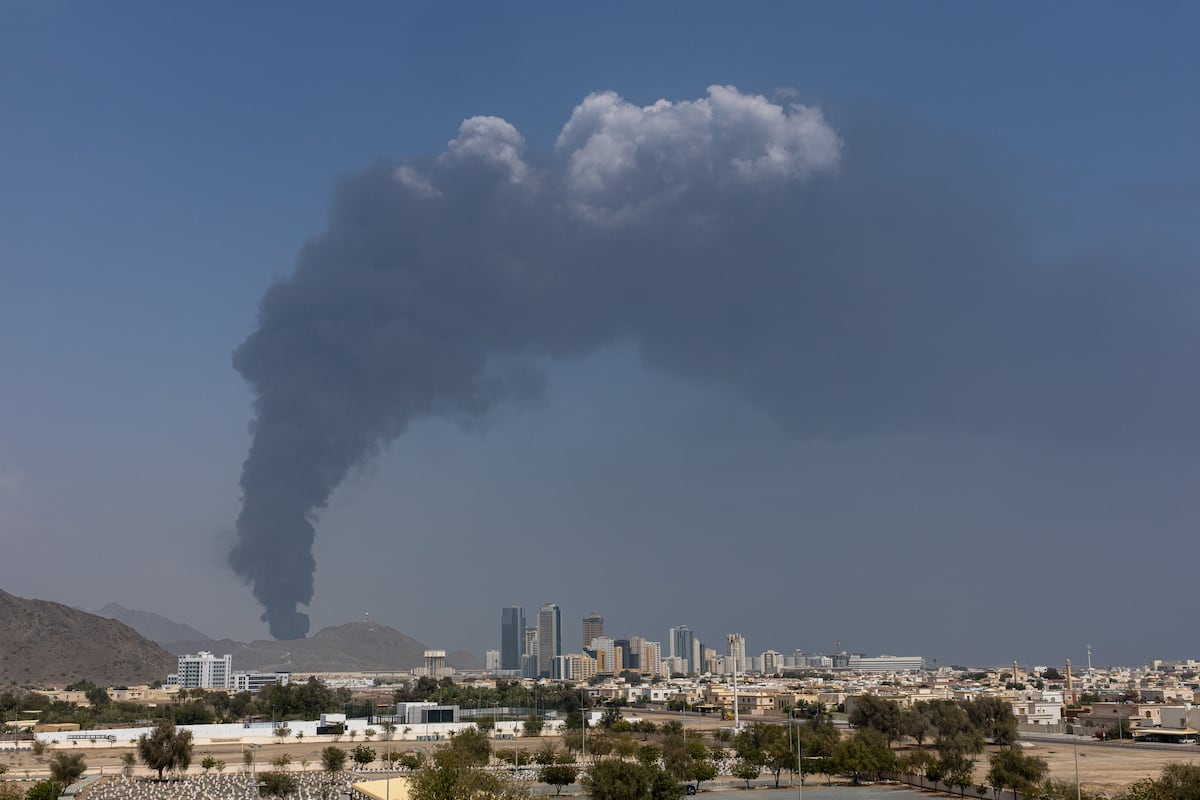
MILAN — Iran’s drone swarm tactics against Gulf states are prompting calls for cheaper regional defense layers that would avoid interceptor exhaustion, as experts warn of the possibility of a prolonged drone war across the Middle East.
Figures published by Gulf defense ministries indicate that as of March 3, Iran has launched more than 540 missiles and carried out over 1,450 drone strikes against regional countries, with drones constituting roughly three-quarters of the attacks, Reuters reported.
While the patterns seen since the start of the Iranian attack window resemble the saturation logic observed in Ukraine, where large waves of cheap one-way attack drones combined with ballistic missiles are deployed to overwhelm defensive systems, analysts note some differences in their roles.
“In Ukraine, Shahed-type drones often serve as nightly, persistent harassment and infrastructure attrition tools, whereas in the Gulf they’re being used inside a broader missile campaign intended to stretch the Gulf and U.S.-aligned air defenses across multiple states, bases and urban areas simultaneously,” Kristian Patrick Alexander, senior fellow and lead researcher at the UAE-based Rabdan Academy, said.
Thus far, Gulf countries have reported high interception rates of missile attacks, and to a lesser extent, against low-flying drones. For example, data published March 4 by the United Arab Emirates, which has absorbed a large number of the offensives, claimed military forces detected 941 drones and intercepted 876 of them.
Some of the weaponry used by countries and their allies to shoot down low-cost drones includes the U.S.-made Patriot and Terminal High Altitude Area Defence (THAAD) systems as well as Rafale fighters, F-15s and Eurofighters.
Francesco Schiavi, research fellow at the Middle East Institute Switzerland, concurs that one of the main challenges for the region will be endurance, especially as the fighting continues.
“Each interception carries a financial and logistical cost – estimates suggest that for every dollar Iran spends producing drones, Gulf states may spend $20-$28 on defensive fire, with individual interceptors often costing more than $1 million,” Schiavi added.
Both experts advised that countries under attack must urgently look to cheaper and scalable counter-drone layers: electronic warfare, jammers, guns or close-in weapons, directed energy, and enhanced shared air picture coordination.
“The ‘winning’ defense will be the one that can kill lots of targets cheaply without burning premium interceptors – without cheaper layers and better integration, the cost curve favors the attacker,” Alexander said.
Meanwhile, Tehran’s offensive arsenal, already degraded by U.S. and Israeli air strikes, is also running lower, said Federico Borsari, non-resident fellow at the Washington-based Center for European Policy Analysis
As hostilities drag on, subject experts highlight three important factors to monitor: the type of attacks, the nature of targets, and the performance of strike weapons.
According to Alexander, one tactic to watch is whether Tehran will continue to send attack drones in big waves or if they will be used in sequenced packages to probe radars before firing missiles.
Schiavi adds that it will be important to pay attention to the strike pattern Tehran adopts: Until now, the regime has followed a dispersed approach, targeting several Gulf countries at once with a mix of weapons, but it could shift toward true saturation attacks as observed in Ukraine.
The primary targets of Iranian attacks have so far been military bases and embassies. It remains to be seen if Tehran is able to expand the target set to include more critical infrastructure, such as ports, logistic hubs, or energy facilities, which experts say would signal an escalation.
Sam Bendett, advisor at the Center for Naval Analyses, said he’s keeping close tabs on the flight ranges of Iran’s Shahed drones, and the variety of similar weapons the country has in its arsenal.
It will also be important to see if Washington’s role changes as the conflict continues, considering that Gulf countries’ interception capabilities are closely tied to U.S. technology.
“Gulf air defense systems and their performance remain closely linked to U.S.-enabled radar coverage, early warning, and operational coordination – interceptions over Qatar, for example, rely heavily on radar networks connected to Al Udeid Air base, while missile engagements in Kuwait occur in airspace shared with American aircraft,” Schiavi added.
Elisabeth Gosselin-Malo was a Europe correspondent for Defense News. She covers a wide range of topics related to military procurement and international security, and specializes in reporting on the aviation sector. She is based in Milan, Italy.
米兰——伊朗针对海湾国家的无人机集群战术引发了人们呼吁建立更经济的区域防御体系,以避免拦截器耗尽。专家警告称,中东地区可能爆发旷日持久的无人机战争。
路透社报道称,海湾国家国防部公布的数据显示,截至3月3日,伊朗已向地区国家发射了540多枚导弹,并进行了1450多次无人机袭击,其中无人机袭击约占四分之三。
虽然自伊朗发动攻击以来所观察到的模式与在乌克兰观察到的饱和攻击逻辑相似(即部署大量廉价的单向攻击无人机和弹道导弹来压倒防御系统),但分析人士指出,它们的作用存在一些差异。
“在乌克兰,沙赫德型无人机经常被用作夜间持续骚扰和基础设施损耗的工具,而在海湾地区,它们则被用于更广泛的导弹行动中,旨在将海湾地区和美国支持的防空力量同时扩展到多个国家、基地和城市地区,”阿联酋拉布丹学院高级研究员兼首席研究员克里斯蒂安·帕特里克·亚历山大说。
迄今为止,海湾国家报告的导弹拦截率很高,拦截低空无人机的拦截率则相对较低。例如,遭受大量袭击的阿联酋于3月4日公布的数据显示,其军方探测到941架无人机,并拦截了其中的876架。
一些国家及其盟友用来击落低成本无人机的武器包括美国制造的“爱国者”导弹防御系统和“萨德”末段高空区域防御系统,以及“阵风”战斗机、F-15战斗机和“台风”战斗机。
瑞士中东研究所的研究员弗朗切斯科·斯基亚维也认为,该地区面临的主要挑战之一是持久力,尤其是在战斗持续的情况下。
“每次拦截都会产生经济和后勤成本——据估计,伊朗每花费 1 美元生产无人机,海湾国家可能就要花费 20 至 28 美元用于防御性火力,而单个拦截器的成本通常超过 100 万美元,”斯基亚维补充道。
两位专家都建议,遭受攻击的国家必须紧急寻求更便宜、可扩展的反无人机措施:电子战、干扰器、枪支或近程武器、定向能武器以及增强的共享空中态势协调。
“‘制胜’的防御方式将是能够以较低的成本摧毁大量目标,而无需消耗昂贵的拦截器——如果没有更便宜的防御层和更好的集成,成本曲线将有利于攻击者,”亚历山大说。
与此同时,华盛顿欧洲政策分析中心非常驻研究员费德里科·博尔萨里表示,德黑兰的进攻性武器库,由于美国和以色列的空袭已经遭到削弱,目前也处于低迷状态。
随着敌对行动的持续,相关领域的专家强调了三个需要监测的重要因素:袭击类型、目标性质和打击武器的性能。
亚历山大表示,值得关注的一个策略是,德黑兰是否会继续大规模派出攻击无人机,还是会分批使用无人机来探测雷达,然后再发射导弹。
斯基亚维补充说,关注德黑兰采取的打击模式非常重要:到目前为止,该政权一直采取分散的方式,同时使用多种武器攻击多个海湾国家,但它可能会转向像在乌克兰那样的真正饱和式攻击。
迄今为止,伊朗袭击的主要目标是军事基地和大使馆。德黑兰能否将袭击目标扩大到更多关键基础设施,例如港口、物流枢纽或能源设施,仍有待观察。专家表示,如果德黑兰真的这样做,将标志着局势升级。
海军分析中心顾问萨姆·本德特表示,他正在密切关注伊朗“沙赫德”无人机的飞行范围,以及该国武器库中类似武器的种类。
考虑到海湾国家的拦截能力与美国的技术密切相关,随着冲突的持续,观察华盛顿的角色是否会发生变化也很重要。
“海湾地区的防空系统及其性能仍然与美国提供的雷达覆盖、预警和作战协调密切相关——例如,在卡塔尔上空的拦截行动严重依赖于与乌代德空军基地相连的雷达网络,而在科威特进行的导弹交战则发生在与美国飞机共享的空域,”斯基亚维补充道。
伊丽莎白·戈斯林-马洛曾任《防务新闻》欧洲通讯员。她的报道涵盖军事采购和国际安全等广泛领域,尤其擅长航空领域的报道。她常驻意大利米兰。