France, Germany create panel to advance shared nuclear deterrence plans法国和德国成立小组,推进共同核威慑计划
The Franco-German initiative appears to carry the tacit backing of the Trump administration, according to comments by a top Pentagon official.
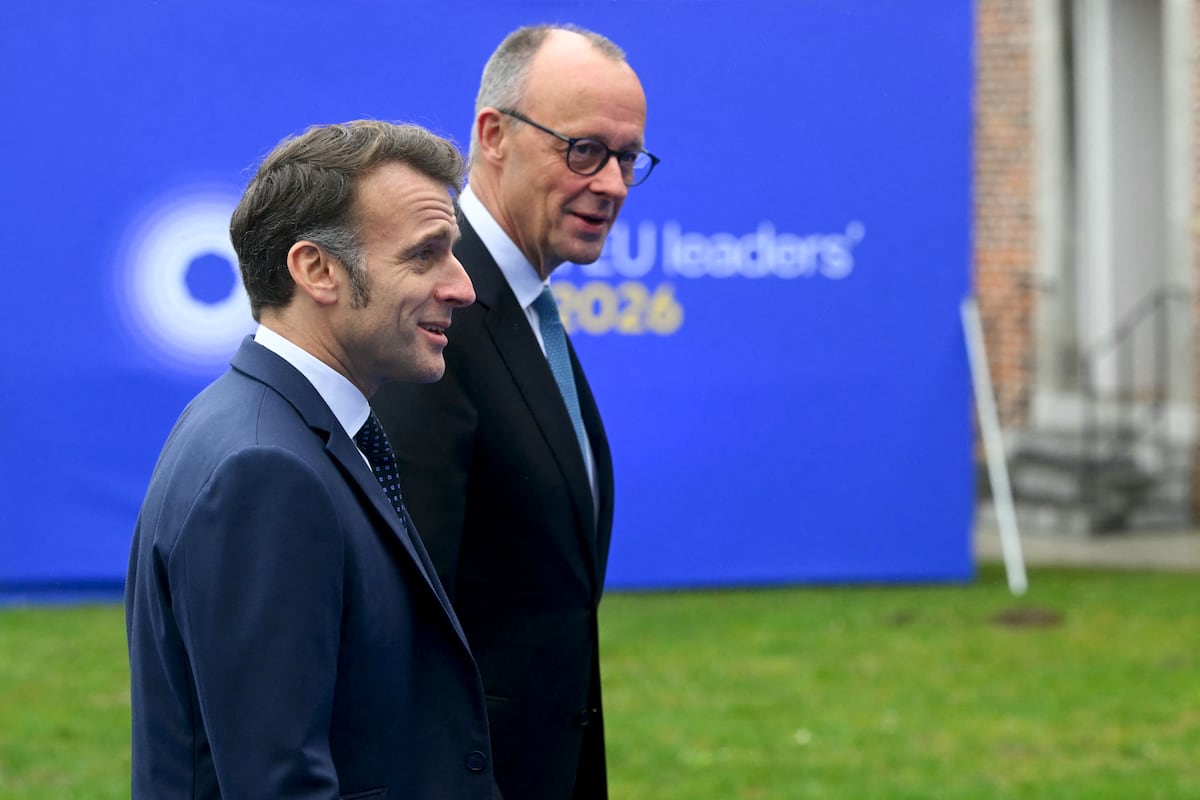
BERLIN — France and Germany this week created a high-level nuclear steering group, marking another step toward European nuclear deterrence, as questions hang here over the long-term reliability of the United States as a security guarantor.
In a joint declaration , President Emmanuel Macron and Chancellor Friedrich Merz said the new body would serve as a bilateral framework for “doctrinal dialogue and the coordination of strategic cooperation,” including consultations on the appropriate mix of conventional, missile defense and French nuclear capabilities. The announcement, grounded in the bilateral 2019 Treaty of Aachen, follows months of exploratory talks that Merz had revealed publicly at the Munich Security Conference in February.
It also came alongside a major speech by Macron in which he announced significant shifts to France’s nuclear doctrine, an increase in the country’s nuclear stockpile, and the option of extending the French nuclear-deterrence umbrella across the continent, with the president specifically naming the U.K., Germany, Poland, the Netherlands, Belgium, Greece, Sweden, and Denmark.
Berlin and Paris agreed to take concrete steps beginning this year − notably, German conventional participation in French nuclear exercises and joint visits to strategic sites.
The joint statement was careful to affirm that the arrangement “will add to, not substitute for, NATO’s nuclear deterrence and NATO’s nuclear sharing arrangements,” which hinge on U.S. presence in Europe, while also noting Britain’s role in the alliance’s nuclear arsenal.
The U.K. has also taken steps to modernize its nuclear force.
The joint statement further said that both countries would continue to comply with their obligations under the Nuclear Non-Proliferation Treaty.
Russia and a number of non-nuclear states have long objected to nuclear sharing as a potential breach of the letter or spirit of the NPT. Since 2023, Russia has itself engaged in nuclear sharing by placing some of its warheads on the territory of Belarus.
The Franco-German initiative appears to carry the tacit backing of the Trump administration. At a Council on Foreign Relations event in early March, Elbridge Colby , the under secretary of defense for policy, endorsed a greater European nuclear role within NATO.
“I think it’s perfectly appropriate and, from our point of view at the Department of War, reasonable for there to be a greater European complexion to NATO nuclear deterrence,” he said.
That endorsement reflects a broader strategic shift. Colby has consistently pushed European allies to assume primary responsibility for their own conventional defense while the U.S. refocuses on deterring China − a posture he outlined at a NATO defense ministers’ meeting in Brussels in February, where he pledged Washington would continue providing extended nuclear deterrence but that conventional capabilities would be “more limited and focused.”
The Franco-German steering group will also address capabilities below the nuclear threshold, including early warning, air defense, and deep precision strike, which are areas where European shortfalls have long been identified as a problem in any potential high-intensity conflict with Russia.
Linus Höller is Defense News' Europe correspondent and OSINT investigator. He reports on the arms deals, sanctions, and geopolitics shaping Europe and the world. He holds master’s degrees in WMD nonproliferation, terrorism studies, and international relations, and works in four languages: English, German, Russian, and Spanish.
柏林——本周,法国和德国成立了一个高级别核指导小组,这标志着欧洲在核威慑方面又迈出了一步,因为人们对美国作为安全保障者的长期可靠性仍存有疑问。
法国总统马克龙和法国总理默茨在一份联合声明中表示,新成立的机构将作为双边框架,开展“理论对话和战略合作协调”,包括就常规武器、导弹防御和法国核能力的适当组合进行磋商。该声明以2019年签署的双边《亚琛条约》为依据,此前双方已进行了数月的探索性会谈,默茨曾在2月份的慕尼黑安全会议上公开透露了这一消息。
与此同时,马克龙发表了重要讲话,宣布法国核战略将发生重大转变,法国核武库将增加,并可能将法国的核威慑保护伞扩展到整个欧洲大陆,总统特别点名了英国、德国、波兰、荷兰、比利时、希腊、瑞典和丹麦。
柏林和巴黎同意从今年开始采取具体措施——特别是德国常规参与法国核演习和共同访问战略要地。
联合声明谨慎地重申,该安排“将增强而不是取代北约的核威慑和核共享安排”,而这些安排依赖于美国在欧洲的存在,同时还指出英国在北约核武库中的作用。
英国也已采取措施对其核力量进行现代化改造。
联合声明还表示,两国将继续履行其在《不扩散核武器条约》下的义务。
俄罗斯和一些无核国家长期以来一直反对核共享,认为这可能违反《不扩散核武器条约》的条文或精神。自2023年以来,俄罗斯自身也参与了核共享,将其部分核弹头部署在白俄罗斯境内。
法德倡议似乎得到了特朗普政府的默许支持。3月初,在外交关系委员会举办的一次活动上,负责政策的国防部副部长埃尔布里奇·科尔比公开支持欧洲在北约内部发挥更大的核作用。
他说:“我认为,北约核威慑力量具有更强的欧洲特色是完全恰当的,而且从我们战争部的角度来看,也是合理的。”
这一支持反映了更广泛的战略转变。科尔比一直敦促欧洲盟友承担起自身常规防御的主要责任,而美国则将重心重新放在威慑中国上——他曾在2月份于布鲁塞尔举行的北约国防部长会议上阐述了这一立场,并承诺华盛顿将继续提供延伸核威慑,但常规防御能力将“更加有限和集中”。
法德指导小组还将讨论核门槛以下的能力,包括预警、防空和纵深精确打击,这些领域长期以来被认为是欧洲在与俄罗斯可能发生的任何高强度冲突中存在的不足之处。
林努斯·霍勒是《防务新闻》的欧洲记者和开源情报调查员。他报道影响欧洲乃至全球的军火交易、制裁和地缘政治。他拥有大规模杀伤性武器不扩散、恐怖主义研究和国际关系三个硕士学位,并精通英语、德语、俄语和西班牙语四种语言。