Gulf allies complain US did not provide notice of Iran attacks and ignored warnings, sources say消息人士称,海湾盟国抱怨美国没有提前通知伊朗发动袭击,并且无视警告。
Officials in Gulf countries complained the U.S. ignored their warnings that the war would have devastating consequences for the entire region.
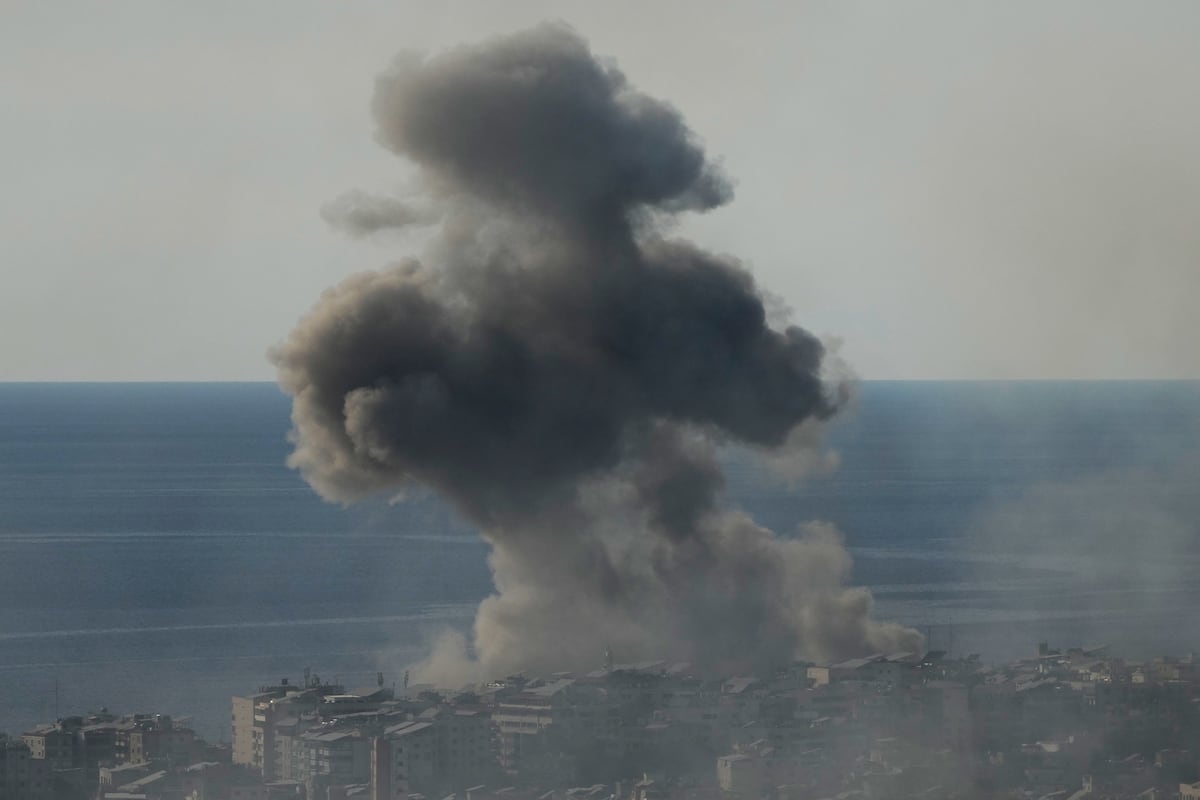
CAIRO — The Trump administration is confronting mounting discontent from allies in the Persian Gulf who have complained they were not given adequate time to prepare for the torrent of Iranian drones and missiles bombarding their countries in retaliation for strikes launched by the U.S. and Israel.
Officials from two Gulf countries said their governments were disappointed in the way the U.S. has handled the war, particularly the initial attack on Iran on Feb. 28. They said their countries were not given advance notice of the U.S.-Israeli attack and complained the U.S. had ignored their warnings that the war would have devastating consequences for the entire region.
One of the officials said that Gulf countries were frustrated and even angry that the U.S. military has not defended them enough. He said there is belief in the region that the operation has focused on defending Israel and American troops, while leaving Gulf countries to protect themselves, and said that his country’s stock of interceptors was “rapidly depleting.”
Like others in this story, the Gulf officials spoke on the condition of anonymity because they were discussing a confidential diplomatic matter.
The governments of Bahrain, Kuwait, Oman, Qatar, Saudi Arabia and the United Arab Emirates did not respond to requests for comment.
White House spokeswoman Anna Kelly said in response: “Iran’s retaliatory ballistic missile attacks have decreased by 90% because Operation Epic Fury is crushing their ability to shoot these weapons or produce more. President Trump is in close contact with all of our regional partners, and the terrorist Iranian regime’s attacks on its neighbors prove how imperative it was that President Trump eliminate this threat to our country and our allies.”
The Pentagon did not respond.
Official reactions by the Gulf Arab countries have been muted, but public figures with close ties to their governments have been openly critical of the U.S., suggesting that Israeli Prime Minister Benjamin Netanyahu dragged President Donald Trump into a needless war.
“This is Netanyahu’s war,” Prince Turki al-Faisal, the former Saudi intelligence chief, told CNN on Wednesday. “He somehow convinced the president (Trump) to support his views.”
Pentagon officials conceded this week in closed-door briefings with lawmakers they are struggling to stop waves of drones launched by Iran, leaving some U.S. targets in the Gulf region, including troops, vulnerable.
The Gulf countries have emerged as valuable targets for Iran, well within the range of Iran’s short-range missiles and filled with targets, including American troops, high-profile business and tourist locations and energy facilities, disrupting the world’s flow of oil.
Since the start of the war, Iran has fired at least 380 missiles and more than 1,480 drones targeting the five Arab Gulf countries, according to an AP tally based on official statements. At least 13 people have been killed in those countries, according to local officials.
In addition, six U.S. soldiers were killed in Kuwait on Sunday when an Iranian drone strike hit an operations center in a civilian port, more than 10 miles from the main Army base. The husband of one of the slain soldiers , who was part of a supply and logistics unit based in Iowa, said the operations center was a shipping container-style building and had no defenses.
In briefings for members of Congress on Tuesday, U.S. Defense Secretary Pete Hegseth and Gen. Dan Caine, chairman of the Joint Chiefs of Staff, told lawmakers that the U.S. will not be able to intercept many of the incoming UAVs , especially the Shaheds, according to three people familiar with the briefings.
In one of the briefings, Caine and Hegseth did not offer any details when pressed by lawmakers why the U.S. did not seem prepared for Iran to launch waves of drones at U.S. targets in the region, according to one of the people.
That person, a U.S. official who is familiar with the U.S. security posture in Gulf region, said that the U.S. did not have widespread capabilities throughout the Gulf region to effectively counter waves of the one-way drones coming to places outside conventional targets or bases outside of Iraq and Syria.
Drone attacks this week at the embassy in Saudi Arabia caused a limited fire at the embassy in Riyadh, and another drone attack the United Arab Emirates sparked a small fire outside the U.S. consulate in Dubai.
The U.S. and its allies in the Middle East on Thursday even sought help from Ukraine, which has expertise in countering Iran’s Shahed drones, according to Ukrainian President Volodymyr Zelenskyy. When asked about Zelenskyy’s comments, Trump told Reuters on Thursday, “Certainly, I’ll take, you know, any assistance from any country.”
Bader Mousa Al-Saif, a Kuwait-based analyst with Chatham House, said the U.S. appeared to have underestimated the risk to its Gulf Arab allies, believing American troops and Israel would be the primary targets of Iranian retaliation.
“I don’t think they saw that there would be as much exposure to the Gulf,” he said, saying the lack of a plan to protect the Gulf countries “speaks to U.S. short-sightedness.”
The frustration in some of the Gulf nations is driven in part by the relative success that Israel has had knocking down drones and missiles compared to some of their neighbors, according to a person familiar with the sensitive diplomatic matter who was not authorized to comment publicly.
Their air defense systems are hardly as robust as Israel’s, but according to the person, U.S. officials have been somewhat perplexed that the Gulf countries are still not showing an appetite for delivering a counteroffensive by launching missiles at Iranian targets.
Elliott Abrams, who served as a special representative for Iran and Venezuela at the end of Trump’s first term, said that U.S. national security officials and their Gulf allies were aware that Iran had the capability to carry out significant strikes.
“And the neighbors knew it and were afraid of it. But it was never clear that Iran would actually do it, because they have a lot to lose,” Abrams said. “These attacks will leave long-term enmity, and if they keep up, the Gulf Arabs may start attacking Iran.”
Michael Ratney, a former U.S. ambassador to Saudi Arabia, said that while the Gulf countries have an interest in seeing Iran weakened, they also have key concerns about the ongoing war — including the economic damage and instability it is causing and its open-ended nature.
Ratney, who is now a senior adviser in the Middle East program of the Center for Strategic and International Studies, said: “What comes next? The countries of the Gulf will have to bear the brunt of whatever that is.”
开罗——特朗普政府正面临来自波斯湾盟友日益增长的不满,这些盟友抱怨说,他们没有足够的时间为伊朗无人机和导弹的猛烈轰炸做好准备,以报复美国和以色列发动的袭击。
来自两个海湾国家的官员表示,他们的政府对美国处理这场战争的方式感到失望,特别是对2月28日对伊朗的首次袭击。他们表示,美以联军袭击伊朗事先没有通知他们的国家,并抱怨美国无视了他们的警告,即这场战争将给整个地区带来毁灭性的后果。
一位官员表示,海湾国家对美军未能充分保护它们感到失望甚至愤怒。他说,该地区普遍认为,此次军事行动的重点在于保护以色列和美军,而将海湾国家置于自卫之上。他还表示,美国的拦截导弹库存正在“迅速消耗殆尽”。
与故事中的其他人一样,这些海湾官员要求匿名发言,因为他们讨论的是一项机密的外交事务。
巴林、科威特、阿曼、卡塔尔、沙特阿拉伯和阿拉伯联合酋长国政府均未回应置评请求。
白宫发言人安娜·凯利回应称:“由于‘史诗狂怒行动’摧毁了伊朗发射或生产此类武器的能力,伊朗的报复性弹道导弹袭击减少了90%。特朗普总统与我们所有地区伙伴保持着密切联系,伊朗恐怖主义政权对其邻国的袭击证明了特朗普总统消除这一对我们国家和盟友的威胁是多么必要。”
五角大楼没有回应。
海湾阿拉伯国家的官方反应较为低调,但与这些国家政府关系密切的公众人物公开批评美国,暗示以色列总理本雅明·内塔尼亚胡将美国总统唐纳德·特朗普拖入了一场不必要的战争。
“这是内塔尼亚胡的战争,”沙特前情报局长图尔基·费萨尔亲王周三告诉CNN。“他不知用了什么方法说服了总统(特朗普)支持他的观点。”
五角大楼官员本周在与国会议员的闭门简报会上承认,他们正努力阻止伊朗发动的无人机浪潮,这使得美国在海湾地区的一些目标(包括驻军)处于危险之中。
海湾国家已成为伊朗的重要目标,它们都在伊朗短程导弹的射程之内,而且目标众多,包括美军、重要的商业和旅游景点以及能源设施,扰乱了世界石油的流通。
据美联社根据官方声明统计,自战争爆发以来,伊朗已向五个阿拉伯海湾国家发射了至少380枚导弹和1480多架无人机。据当地官员称,这些国家至少有13人丧生。
此外,周日,伊朗无人机袭击了位于科威特一处民用港口的作战中心,造成六名美军士兵丧生。该港口距离美军主基地超过10英里。其中一名遇难士兵的丈夫表示,该作战中心是一座集装箱式建筑,没有任何防御措施。遇难士兵生前隶属于驻扎在爱荷华州的后勤补给部队。
据三位知情人士透露,周二,美国国防部长皮特·赫格塞斯和参谋长联席会议主席丹·凯恩将军在向国会议员通报情况时表示,美国将无法拦截许多来袭的无人机,尤其是“沙赫德”无人机。
据一位知情人士透露,在一次简报会上,当议员们追问为什么美国似乎没有做好应对伊朗向该地区美国目标发动大规模无人机袭击的准备时,凯恩和赫格塞斯没有提供任何细节。
这位熟悉美国在海湾地区安全态势的美国官员表示,美国在整个海湾地区没有广泛的能力来有效应对一波又一波单向无人机袭击伊拉克和叙利亚以外常规目标或基地以外的地区。
本周,美国驻沙特阿拉伯大使馆遭到无人机袭击,导致利雅得大使馆发生小规模火灾;另一起无人机袭击发生在阿拉伯联合酋长国,导致美国驻迪拜领事馆外发生小规模火灾。
据乌克兰总统泽连斯基称,美国及其中东盟友周四甚至向乌克兰寻求帮助,因为乌克兰在对抗伊朗的“沙赫德”无人机方面拥有丰富的经验。当被问及泽连斯基的言论时,特朗普周四告诉路透社:“当然,我愿意接受任何国家的援助。”
科威特查塔姆研究所分析师巴德尔·穆萨·赛义夫表示,美国似乎低估了其海湾阿拉伯盟友面临的风险,认为美军和以色列将是伊朗报复的主要目标。
“我认为他们没有预料到会面临如此大的海湾地区风险,”他说,并表示缺乏保护海湾国家的计划“说明美国目光短浅”。
一位熟悉这一敏感外交事务但未获授权公开评论的人士表示,海湾一些国家的沮丧情绪部分源于以色列在击落无人机和导弹方面取得的相对成功,而这些成功与一些邻国相比显得微不足道。
他们的防空系统远不如以色列的强大,但据知情人士透露,美国官员一直感到困惑,海湾国家为何仍然没有表现出通过向伊朗目标发射导弹进行反击的意愿。
在特朗普第一任期末期担任伊朗和委内瑞拉问题特别代表的埃利奥特·艾布拉姆斯表示,美国国家安全官员及其海湾盟友都意识到伊朗有能力发动重大袭击。
“邻国也知道这一点,并且感到害怕。但伊朗是否真的会这么做,始终是个未知数,因为他们有很多东西要失去,”艾布拉姆斯说。“这些袭击会造成长期的敌对关系,如果这种情况持续下去,海湾阿拉伯国家可能会开始攻击伊朗。”
美国前驻沙特阿拉伯大使迈克尔·拉特尼表示,虽然海湾国家希望看到伊朗被削弱,但他们也对这场持续不断的战争深感担忧,包括战争造成的经济损失和不稳定,以及战争没有尽头。
现任战略与国际研究中心中东项目高级顾问的拉特尼表示:“接下来会发生什么?海湾国家将不得不承受由此带来的冲击。”