‘I can now better appreciate’ challenges faced by newsrooms, journalists: Khaw许文远:“我现在更能体会”新闻编辑室和记者面临的挑战
The outgoing chairman of SPH Media Trust noted issues such as pressure from diverse audiences and online harassment. Read more at straitstimes.com.
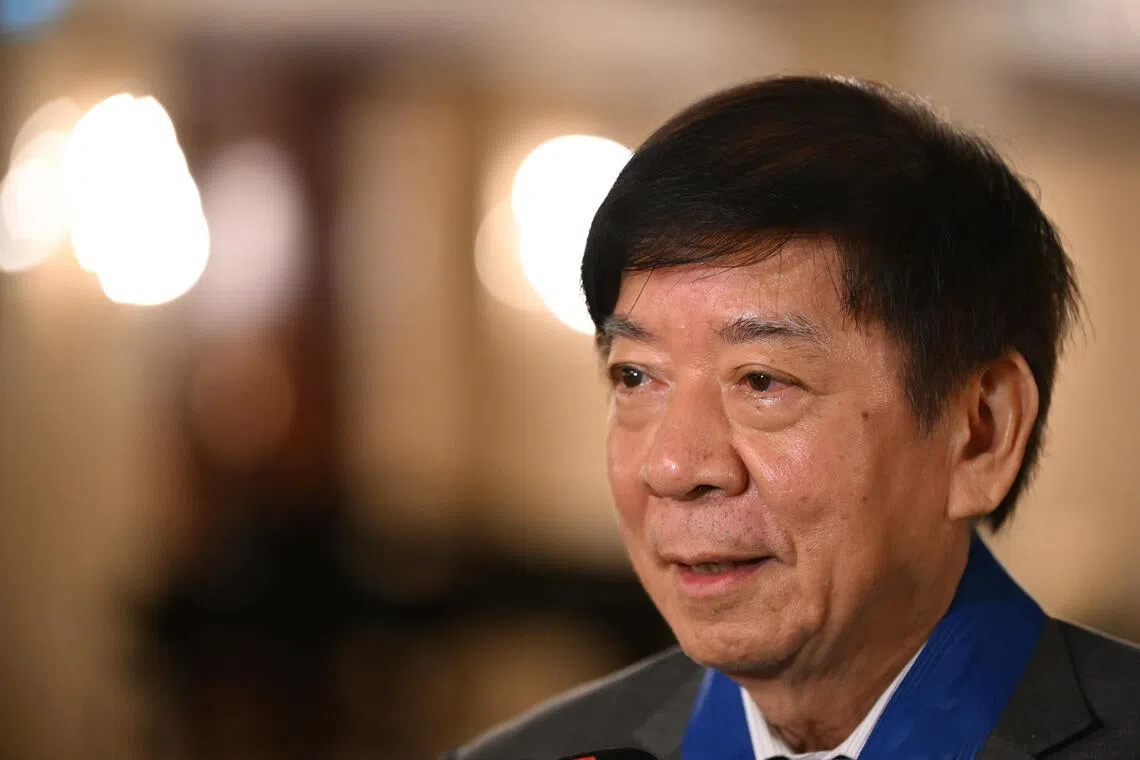
Khaw Boon Wan will be stepping down as chairman of SPH Media Trust.
ST PHOTO: LIM YAOHUI
Published Sep 10, 2026, 05:00 AM
Updated Sep 10, 2026, 05:00 AM
Khaw Boon Wan, outgoing chairman of SPH Media Trust, reflects on the challenges faced by its newsrooms and journalists, such as pressure from diverse audiences and online harassment.
Under Khaw's leadership, SPH adapted to digital disruption by enhancing digital capabilities, securing government funding, and innovating on content to compete with global platforms.
Khaw, who will retire on Oct 1, emphasised the need for SPH to continue engaging younger audiences, embrace technology, and maintain trust and credibility in Singapore's evolving media landscape.
SINGAPORE – Five years of steering SPH Media Trust (SMT) did not make Khaw Boon Wan a “media man”, but he can better appreciate the sector’s challenges.
“I am still not ‘a media man’, I still do not have the journalistic instincts in my blood,” said the chairman of SMT.
“But I can now better appreciate the challenges faced by newsrooms and the heartaches of our journalists.”
These include the pressure against time and from all sides, such as newsmakers, readers and non-readers.
“For example, some find us too US-centric; others too China-centric. With Trump in the White House, I got less complaints now,” he quipped.
Still, there is no shortage of divisive issues, such as the use of dialects, use of plastic bags and capital punishment, he said.
He noted that some even harass journalists online, which he said is “uncalled for”.
“My heart also goes out to the young journalists who have to juggle between work and family. Not easy to juggle.”
Khaw was responding to SPH Media’s reporters as he announced his decision to retire and hand over his chairmanship to chief executive officer Chan Yeng Kit.
This is subject to regulatory approval, and expected to take effect from Oct 1, 2026.
Media “particularly challenging”
The 73-year-old, whose previous career spanned healthcare, public housing and transport, was known as “Mr Fix-it” for having solved challenges like SARS, HDB flat supply and rail reliability.
While every challenge was difficult, the media assignment was “particularly challenging” as success requires both providers and consumers to be aligned, he said.
“It is like promoting a healthy lifestyle: We have the messages, we do our best to communicate them, but ultimately the consumers must agree to act on them,” he said. “We must appeal to both their heads and their hearts.”
In the media marketplace, SPH also has to compete against big firms with deep pockets that offer “attractive alternate lifestyles, even alternative facts”, he noted. “Not easy at all.”
He pointed to how kaya toast, coffee and newspapers were once mainstays of Singapore’s breakfast scene. Today, Singaporeans still reach for the first two, but smartphones have replaced the broadsheet.
To stay relevant, SPH Media’s titles reach their audiences through their smartphones, but this has meant competing daily with gossip and entertainment videos – and the competition is intense.
“There is no turning back to the era when Singaporeans got news only from SPH newspapers, and advertisers used SPH exclusively to catch Singaporeans’ attention,” said the former minister.
“While we can still produce good returns for our advertisers, we have to be more creative in our products, and work harder to close the deal.”
The silver lining, Khaw said, is that the loss of monopoly has been good for consumers, and also for the media organisation.
“It has caused SPH to innovate, producing engaging digital and social content, while collaborating with generative AI partners.”
Khaw said that as an “old-school, LKY-inspired” politician, he believes in public media’s important mission to help galvanise the people through facts, logical analyses and rational policies, and that has not changed.
He described his own habit of skimming fiction to unwind, but also reading reports and books carefully in order to be able to draw useful insights on serious topics.
“There is no shortcut. I am afraid a generation that does not read will be a lost generation,” he said.
SMT, a company limited by guarantee, was carved out of public-listed Singapore Press Holdings in 2021, in response to the global digital disruption of traditional publishers.
It was under those circumstances that Khaw, who retired in 2020 as the Coordinating Minister for Infrastructure and Minister for Transport, took over as chairman of the reconstituted company.
The publisher had three priorities then: Address the stiff competition for advertisers’ revenue from platforms like Facebook and Google, enhance its digital products, and grow their reach among the young.
All these called for a major upgrade in SPH’s digital media capabilities, technological competence and a transformation in newsroom culture to support greater experimentation, recounted Khaw. It also required money.
“We were burning cash and we needed new funding sources. Those were difficult times, with much anxiety within the company,” he said.
Fortunately, the company reached a fair arrangement with the Government, which provided grants to support the capability development SPH critically needed, said Khaw.
In 2022, the authorities announced that they would provide up to $900 million funding to SPH over five years .
Even so, there was no silver spoon for SPH, which has to work hard to earn the Government’s continued support, said Khaw.
Then Minister for Communications and Information Josephine Teo had said her ministry would closely monitor SMT’s performance through key performance indicators such as reach and engagement, particularly of its digital platforms.
The grants are also reflected in the ministry’s annual budget book, as part of its overall grant disbursements to other organisations.
At the same time, SPH has also reached out to the community for support, especially in mother tongue education, said Khaw.
He now better appreciates the commercial struggles, for a job that cannot be left entirely to foreign journalists nor to artificial intelligence, no matter how smart the machine.
“It is not a cheap operation to have talented journalists to gather news, fact-check, distil the insights and tell the stories in captivating ways,” he said.
That said, SPH newsrooms do need to learn to use AI to help do some of their tasks, and raising staff productivity is an important step going forward, Khaw added.
Asked if SPH Media can ever be profitable without government support, he said profitable models elsewhere are rare and largely built on serving global elite audiences. This is not a relevant model for SPH, especially given its vernacular media objectives.
He credited deputy CEO Kuek Yu Chuang for constantly urging SPH’s commercial team to “create our own tailwinds”, which has continued to strengthen commercial performance.
“Meanwhile, the Government remains supportive. That is a great relief,” he said.
Khaw Boon Wan addressing staff at a media townhall in SPH on May 12, 2021. ST PHOTO: KEVIN LIM
Khaw Boon Wan addressing staff at a media townhall in SPH on May 12, 2021.
Asked where he thinks the market should end and the state should step in, Khaw replied that the authorities should step forward wherever they see market failure with impact on Singaporeans’ interests.
He cited social media, and the harms it inflicts on children through excessive use.
“You cannot trust the companies to fix these problems voluntarily. Big Tech reminds me of Big Tobacco, whom we battled when I was in the Ministry of Health,” he said.
“They are only motivated by profits. Sadly, ethics is not a big factor for them. The states must therefore step in.”
In such cases, the question becomes a technical one, of how to regulate effectively without stifling innovation.
Situation has stabilised
As to the challenges he laid out when he joined SMT – including to grow younger audiences and win attention despite a more fragmented media environment – he said SPH’s newsrooms have done better than he originally feared.
For instance, its news titles’ coverage of the 2025 General Election was widely consumed, and seen to be objective, professional and balanced, as reflected by the data and outreach metrics.
International awards for SPH titles were also highly satisfying, he added, and offered further validation from global peers.
“Our facilities are now fit for purpose for an agile digital media company,” he said.
“From being a factory churning out words in print, we now produce content in all platforms, wherever Singaporeans gather, in various formats and in different tones.”
With the situation stabilised, Khaw said this was the right time for him to move aside and let Chan and his team have enough time to consolidate trust and credibility with the audience, the newsrooms and SPH’s stakeholders.
But the work is far from finished, and he cited outreach to the young and keeping up with technology as things that are a work-in-progress.
“We still have much to learn and to reskill,” said Khaw. “It is a continuing journey of discovery and experimentation.”
Chin Soo Fang is senior correspondent at The Straits Times, covering a wide range of topics including community, politics, social issues, consumer, culture and heritage.
许文远将卸任新加坡报业控股媒体信托主席一职。
ST 照片:林耀辉
发布于 2026 年 9 月 10 日上午 5:00
更新于2026年9月10日上午5:00
即将卸任的新加坡报业控股媒体信托主席许文远反思了其新闻编辑室和记者面临的挑战,例如来自不同受众的压力和网络骚扰。
在许文远的领导下,新加坡报业控股通过增强数字能力、获得政府资金和创新内容来适应数字化变革,从而与全球平台竞争。
将于 10 月 1 日退休的许文远强调,新加坡报业控股需要继续吸引年轻受众,拥抱科技,并在新加坡不断变化的媒体环境中保持信任和信誉。
新加坡——执掌新加坡报业控股媒体信托(SMT)五年并没有让许文远成为一名“媒体人”,但他可以更好地理解该行业面临的挑战。
SMT董事长表示:“我仍然不是‘媒体人’,我的血液里仍然没有新闻从业者的本能。”
“但我现在更能体会新闻编辑室面临的挑战和记者们的艰辛。”
这些压力包括时间压力和来自各方的压力,例如新闻人物、读者和非读者。
“例如,有些人觉得我们太以美国为中心;另一些人则觉得我们太以中国为中心。特朗普入主白宫后,我收到的抱怨就少多了,”他打趣道。
他说,尽管如此,仍然存在许多引发争议的问题,例如方言的使用、塑料袋的使用以及死刑等。
他指出,有些人甚至在网上骚扰记者,他称这种行为“毫无道理”。
“我也非常同情那些需要在工作和家庭之间奔波的年轻记者们。这真的不容易。”
许文远在回应新加坡报业控股媒体记者时,宣布了他退休并将主席职位移交给首席执行官陈永杰的决定。
该措施尚需获得监管部门批准,预计将于 2026 年 10 月 1 日起生效。
媒体“尤其具有挑战性”
这位 73 岁的老人,此前的职业生涯横跨医疗保健、公共住房和交通运输领域,因解决过 SARS、组屋供应和铁路可靠性等难题而被誉为“万事通先生”。
他表示,虽然每一项挑战都很困难,但媒体任务“尤其具有挑战性”,因为成功需要供应商和消费者双方保持一致。
他说:“这就像推广健康的生活方式:我们有信息,我们尽力传达这些信息,但最终消费者必须同意采取行动。我们必须既打动他们的理智,又打动他们的情感。”
他指出,在媒体市场,新加坡报业控股(SPH)还必须与财力雄厚的大公司竞争,这些公司提供“诱人的另类生活方式,甚至是另类事实”。“这绝非易事。”
他指出,咖椰吐司、咖啡和报纸曾是新加坡早餐的标配。如今,新加坡人仍然会选择前两项,但智能手机已经取代了报纸。
为了保持影响力,新加坡报业控股媒体旗下的刊物通过智能手机触达受众,但这也就意味着每天都要与八卦和娱乐视频竞争——而且竞争非常激烈。
这位前部长表示:“新加坡人再也回不到过去那种只能从新加坡报业控股(SPH)报纸获取新闻,广告商也只能通过SPH报纸来吸引新加坡人注意力的时代了。”
“虽然我们仍然可以为广告商带来良好的回报,但我们必须在产品方面更有创意,并更加努力地促成交易。”
许文远表示,好的一面是,垄断的丧失对消费者和媒体机构都有好处。
“这促使新加坡报业控股(SPH)进行创新,制作引人入胜的数字和社交内容,同时与生成式人工智能合作伙伴开展合作。”
许文远表示,作为一名“老派的、受李光耀启发的”政治家,他相信公共媒体的重要使命是通过事实、逻辑分析和理性政策来帮助团结人民,这一点从未改变。
他描述了自己喜欢浏览小说来放松身心的习惯,但同时也会认真阅读报告和书籍,以便能够对严肃的话题获得有用的见解。
“没有捷径可走。我担心不读书的一代人将会是迷失的一代,”他说。
SMT是一家担保有限公司,于2021年从上市的新加坡报业控股公司分拆出来,以应对全球数字化对传统出版商的冲击。
正是在这种情况下,于 2020 年卸任基础设施统筹部长兼交通部长的许文远接任了重组后公司的董事长一职。
当时,该出版商有三个优先事项:应对来自 Facebook 和 Google 等平台的激烈广告商收入竞争,提升其数字产品,并扩大其在年轻人中的影响力。
许文远回顾道,所有这些都要求新加坡报业控股(SPH)大幅提升其数字媒体能力和技术水平,并转变新闻编辑室文化以支持更多实验性举措。此外,这还需要资金。
“我们当时资金周转困难,需要新的资金来源。那是一段艰难时期,公司内部弥漫着焦虑的气氛,”他说。
许文远表示,幸运的是,该公司与政府达成了一项公平的协议,政府提供了拨款,以支持新加坡报业控股(SPH)急需的能力发展。
2022年,当局宣布将在五年内向新加坡公共卫生局提供高达9亿美元的资金。
即便如此,许文远表示,新加坡报业控股(SPH)也并非含着金汤匙出生,它必须努力工作才能赢得政府的持续支持。
时任通讯及新闻部长杨莉明曾表示,她的部门将通过覆盖面和参与度等关键绩效指标密切监控新加坡管理团队的表现,特别是其数字平台的表现。
这些拨款也反映在该部的年度预算书中,作为其向其他组织拨付的整体拨款的一部分。
许文远表示,与此同时,新加坡公共卫生署也向社区寻求支持,尤其是在母语教育方面。
他现在更能体会到商业竞争的艰辛,因为这项工作不能完全交给外国记者,也不能完全交给人工智能,无论机器多么智能。
他说:“聘请有才华的记者收集新闻、核实事实、提炼见解并以引人入胜的方式讲述故事,这并非一项廉价的工作。”
话虽如此,Khaw补充说,新加坡报业控股(SPH)新闻编辑室确实需要学习使用人工智能来帮助完成一些任务,提高员工生产力是未来发展的重要一步。
当被问及新加坡报业控股(SPH)旗下媒体在没有政府支持的情况下是否能够盈利时,他表示,其他地方的盈利模式很少见,而且大多建立在服务全球精英受众的基础上。考虑到新加坡报业控股的目标受众是本地媒体,这种模式并不适用。
他称赞副首席执行官郭宇庄不断敦促新加坡报业控股的商业团队“创造我们自己的顺风”,从而持续增强了商业业绩。
“与此同时,政府依然给予支持。这令人感到非常欣慰,”他说。
2021年5月12日,许文远在新加坡报业控股(SPH)举行的媒体大会上向员工发表讲话。(海峡时报摄影:林凯文)
2021年5月12日,许文远在新加坡报业控股(SPH)媒体大会上向员工发表讲话。
当被问及他认为市场应该在什么情况下停止运作,国家应该介入时,许文远回答说,只要发现市场失灵并对新加坡人的利益产生影响,当局就应该介入。
他以社交媒体为例,指出过度使用社交媒体会对儿童造成伤害。
他说:“你不能指望这些公司自愿解决这些问题。大型科技公司让我想起了大型烟草公司,我在卫生部工作时就和他们斗争过。”
“他们只受利益驱使。可悲的是,道德对他们来说并非重要考量。因此,国家必须介入。”
在这种情况下,问题就变成了技术问题,即如何在不扼杀创新的情况下进行有效监管。
局势已稳定
至于他加入 SMT 时提出的挑战——包括在媒体环境更加分散的情况下发展年轻受众并赢得关注——他表示,SPH 的新闻编辑室的表现比他最初担心的要好。
例如,其新闻刊物对 2025 年大选的报道广受欢迎,并且被认为客观、专业和平衡,数据和传播指标也反映了这一点。
他还补充说,SPH 的著作获得国际奖项也让他感到非常满意,并进一步得到了全球同行的认可。
他说:“我们的设施现在已经完全满足了敏捷型数字媒体公司的需求。”
“我们不再仅仅是一家印刷品工厂,而是为新加坡人聚集的所有平台、各种形式和不同风格的读者提供内容。”
许文远表示,随着局势稳定,现在是他让位,让陈先生及其团队有足够的时间巩固与观众、新闻编辑室和新加坡报业控股利益相关者之间的信任和信誉的合适时机。
但这项工作远未完成,他指出,与年轻人沟通以及跟上技术发展的步伐都是正在进行中的工作。
“我们还有很多东西需要学习和提升技能,”许文远说。“这是一个不断探索和试验的过程。”
Chin Soo Fang 是《海峡时报》的资深记者,报道范围广泛,包括社区、政治、社会问题、消费者、文化和遗产等话题。