Commentary: To discuss ministerial salary increases, we need to start by being clear about opportunity costs评论:要讨论部长级薪酬增长问题,我们首先需要明确机会成本。
When too few capable leaders come forward, what Singapore loses in the long run cannot be easily remedied after the fact, says Christopher Gee from the Institute of Policy Studies.
新闻视频
When too few capable leaders come forward, what Singapore loses in the long run cannot be easily remedied after the fact, says Christopher Gee from the Institute of Policy Studies.
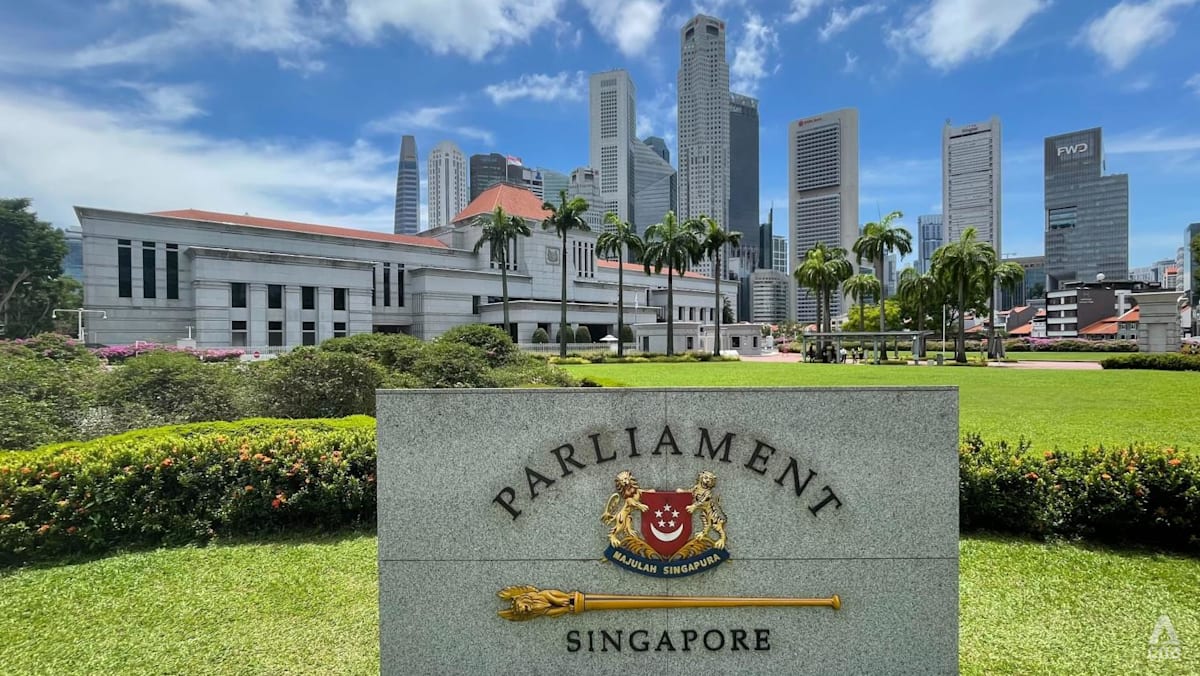
File photo of the Parliament House, Singapore (Photo: CNA/Jeremy Long)
This audio is generated by an AI tool.
SINGAPORE: Economists measure the true cost of a decision not by the price attached to it, but by the next best alternative given up to make it.
That idea, opportunity cost , is the term Prime Minister Lawrence Wong and Coordinating Minister for Public Services Chan Chun Sing both reached for in Parliament on Tuesday (Sep 8), explaining why ministerial salaries needed updating after 15 years without an adjustment .
Both used it to describe what a capable person gives up by choosing political office over whatever else they might have done with their working life.
The numbers show how much larger that forgone alternative has grown since 2011. A minister at the lowest MR4 grade with the current reference salary of S$1.1 million will receive about S$1.2 million, after the one-off adjustment of up to 9 per cent. But by my calculation, that adjusted salary is worth 14.5 per cent less than the original S$1.1 million once deflated back to 2011 prices using the Consumer Price Index.
CNA Games Guess Word Crack the word, one row at a time Buzzword Create words using the given letters Mini Sudoku Tiny puzzle, mighty brain teaser Mini Crossword Small grid, big challenge Word Search Spot as many words as you can Show More Show Less
Over the same period, median Singaporean wage from employment grew by roughly 39 per cent in real terms, based on Ministry of Manpower data. Whatever a capable Singaporean weighed against political office in 2011, they are weighing something considerably heavier now.
THE INDIVIDUAL'S OPPORTUNITY COST
Mr Wong gave this side of the calculation an unusually concrete airing. Three of his most senior ministers, holding the trade and industry, home affairs and foreign affairs portfolios, will all be past age 70 by the next term of government.
He described approaching several senior civil servants and private sector chief executives to join his team, none of whom accepted. He was careful to add that none of them told him pay was the reason, and that he would not want a candidate whose decision turned mainly on money.
Mr Chan put the going rate for chief executives of major companies at S$6 million to S$7 million a year, several times more than the revised MR4 benchmark of S$1.8 million.
The framework has always tried to manage this gap through a benchmark referenced against the median annual income of the top 1,000 Singaporean earners. There is then a discount of 40 per cent for what the government calls the ethos of political service or of commitment, one of the three principles of calibre, commitment and clean, that the 2012 and 2017 review committees affirmed and that the most recent committee has affirmed once more.
Mr Chan's figures show that it is the freeze, not the discount, that has opened the gap. Spread across the 15 years it took to arrive, the move to the S$1.8 million benchmark works out to about 3.6 per cent a year, below the 4.3 per cent that median wages grew over the same period.
The adjustment narrows that gap without closing it. Yet, a seven-figure salary is hard to sympathise with under any circumstances.
It is harder still against a backdrop of job and wage uncertainty that has left many feeling less secure in their own jobs than they did a decade or two ago.
That discomfort is not unreasonable, even when the underlying numbers hold up, and no part of the arguments here depends on anyone feeling sorry for a minister's pay packet.
THE COUNTRY'S OPPORTUNITY COST
Both ministerial statements made the country’s case at length. Mr Wong argued that weak political leadership eventually erodes civil service beneath it, and that Singapore needs depth in the pipeline because not everyone brought in will grow into the top roles.
What neither did was put a number on it. Opportunity cost appeared three times across the two speeches, and described what an individual forgoes - not what the country forgoes when it cannot persuade enough of them to come forward.
That second calculation is harder to state because it will show up as an absence rather than a number: If capable people declined and could not be replaced by anyone of comparable profile. Or if a Cabinet is ageing out of its most demanding portfolios without a deep enough bench to hand them to.
The prime minister's own account of the looming succession challenges at the three key ministries is evidence for this side of the calculation too, even though he did not describe it in those terms. Fifteen years of foregone recruitment into political office accumulate into an unseen cost.
A WELL-BEING TARGET FOR POLITICAL SALARIES
So if such salary adjustments are crucial to address these opportunity costs but are hard to swallow for the public, perhaps what is also needed is to tie the salary framework even more directly to Singaporeans’ well-being.
One recommendation from the review committee's report deserves more attention. The committee suggested, and the government has agreed to explore, adding a quality-of-life measure, its term for what amounts to a measure of national well-being, to the National Bonus.
The National Bonus is a variable component of political salaries that is dependent on meeting four socioeconomic indicators. It is tied to unemployment, real income growth of the lowest 20th percentile and average Singaporean, and GDP growth rather than to any market benchmark.
Adding a quality-of-life measure, once a robust one can be developed, would tie a minister's own financial outcome to a broader account of how the country is actually doing. It would be closer to the spirit of the pledge recited in Singapore classrooms every school day, that a democratic society built on justice and equality exists to achieve happiness, prosperity and progress for the nation, than to any figure drawn from a purely commercial perspective.
That is a different kind of accountability from the one built into the fixed component of the salary, and it is the part of the report worth more of Parliament’s time on than the headline adjustment.
Mr Wong's own framing anticipates part of this argument. “Restraint cannot become neglect,” he said, though he applied the line only to the individual side of the calculation. The fix to that side has now been announced: The one-off adjustment and the widened salary range reduce what a capable person has to give up in order to serve.
Whether that is enough depends on the calculation nobody put a number to. Singapore's harder problem is not filling one Cabinet at a time but building, over years and across several election cycles, a bench deep enough that capable and committed successors are ready for every demanding portfolio well before a transition becomes necessary.
Depth of that kind cannot be assembled after the fact once it turns out to be missing, and guarding against it is now the actual purpose of the five-year review cycle to which the government has now committed. That undertaking is worth little if restraint is allowed to lapse into neglect again before the next review falls due.
Christopher Gee is deputy director (research) and senior research fellow at the Institute of Policy Studies, National University of Singapore.
Get our pick of top stories and thought-provoking articles in your inbox
Stay updated with notifications for breaking news and our best stories
Join our channel for the top reads for the day on your preferred chat app
政策研究所的克里斯托弗·吉表示,如果能干的领导人太少,新加坡从长远来看所遭受的损失事后很难弥补。
新加坡国会大厦资料照片(图片:CNA/Jeremy Long)
这段音频由人工智能工具生成。
新加坡:经济学家衡量一项决策的真正成本,不是看它所附带的价格,而是为了做出这项决策而放弃的次优选择。
周二(9月8日),总理黄循财和公共服务统筹部长陈振声在国会中都提到了“机会成本”这个概念,以此解释为什么部长级薪酬在15年未进行调整后需要更新。
两人都用这句话来描述一个有能力的人选择从政而不是从事其他职业,意味着放弃了什么。
数据显示,自2011年以来,放弃的替代方案规模已经扩大了多少。目前参考年薪为110万新元的最低MR4级部长,在一次性调整(最高可达9%)后,年薪约为120万新元。但据我计算,如果使用消费者价格指数将调整后的年薪折算到2011年的价格水平,实际价值将比最初的110万新元少14.5%。
CNA游戏 猜词游戏 逐行破解单词 流行词游戏 用给定的字母组成单词 迷你数独 小小谜题,挑战你的大脑 迷你填字游戏 小方格,大挑战 单词搜索 尽可能多地找出单词 显示更多 显示更少
同期,新加坡人力部数据显示,新加坡就业收入中位数实际增长了约39%。2011年,有能力的新加坡人或许会因为政治职位而犹豫不决,但如今,他们面临的抉择要沉重得多。
个人的机会成本
黄之锋先生对这一考量进行了异常具体的阐述。他手下三位最资深的部长,分别担任贸工部、内政部和外交部长,到下届政府任期结束时都将年过七旬。
他描述了自己曾接触过几位高级公务员和私营企业首席执行官,邀请他们加入他的团队,但无一人接受。他特意补充说,这些人都没有告诉他薪酬是拒绝的原因,而他也不希望候选人的决定主要取决于金钱。
陈先生表示,大公司首席执行官的年薪在 600 万至 700 万新元之间,是修订后的 MR4 基准 180 万新元的数倍。
该框架一直试图通过以新加坡收入最高的1000名人群的年收入中位数为基准来缩小这一差距。此外,政府还根据所谓的“政治服务精神”或“奉献精神”给予40%的折扣,这是“能力、奉献和廉洁”三大原则之一,2012年和2017年的审查委员会都曾确认过这些原则,最近的审查委员会也再次确认了这些原则。
陈先生的数据显示,真正拉大差距的是工资冻结,而非工资折扣。从15年的时间里,工资基准线调整至180万新元,平均每年增长约3.6%,低于同期中位数工资4.3%的增长率。
这项调整缩小了差距,但并未完全消除差距。然而,无论在任何情况下,七位数的薪水都很难让人产生同情。
在就业和工资不确定性的大背景下,这种情况就更加艰难了,许多人感觉自己的工作不如十年前或二十年前那么有安全感。
即使基本数据成立,这种不安也并非不合理,而且这里的论点也并非基于任何人对部长薪水的同情。
国家的机会成本
两位部长都详细阐述了新加坡的立场。黄循财先生认为,政治领导不力最终会削弱其下属的公务员队伍,新加坡需要储备人才,因为并非所有被招入队伍的人都能成长为高级官员。
但他们都没有给出具体的数字。机会成本在两篇演讲中出现了三次,描述的是个人放弃的东西,而不是国家在无法说服足够多的人站出来时放弃的东西。
第二个计算方法更难表述,因为它表现为人才的缺失而非具体的数字:例如,如果能力出众的人才退出,且无法找到能力相当的替代者;或者,如果内阁成员逐渐老去,无法胜任最关键的职务,而又没有足够的后备人才来接任。
首相本人对三大关键部门即将面临的继任挑战的描述,也印证了这种考量,尽管他并未如此表述。十五年来错失的政治人才储备,最终会累积成难以察觉的代价。
将福祉作为政治薪酬的目标
因此,如果这种薪资调整对于解决这些机会成本至关重要,但公众却难以接受,那么或许还需要将薪资框架与新加坡人的福祉更直接地联系起来。
审查委员会报告中的一项建议值得更多关注。委员会建议,政府也已同意探讨在国民福利金中加入生活质量指标(委员会用这个词来指代衡量国民福祉的指标),并将此纳入国民福利金的计算范围。
国家奖金是政治人物薪酬中的一个可变部分,取决于是否达到四项社会经济指标。它与失业率、收入最低的20%人群和新加坡普通民众的实际收入增长以及GDP增长挂钩,而不是与任何市场基准挂钩。
一旦制定出完善的生活质量指标,将其纳入考量,就能将部长的个人财政业绩与国家整体发展状况的更广泛评估联系起来。这比任何纯粹从商业角度出发的数字都更能体现新加坡课堂上每天宣读的誓词的精神:一个建立在公正和平等基础上的民主社会,其存在是为了实现国家的幸福、繁荣和进步。
这与工资固定部分所包含的问责制是不同的,而且与表面上的调整相比,这部分报告更值得议会花时间关注。
黄先生的表述本身就预示了部分这种论点。他说:“克制不能等同于疏忽”,但他当时仅将这句话应用于个人层面的考量。如今,针对个人层面的调整方案已经公布:一次性调整和扩大的薪资范围减少了有能力的人为了服务社会而必须放弃的东西。
这是否足够,取决于一个无人量化的计算。新加坡面临的更严峻问题并非一次只填补一个内阁空缺,而是要经过数年和数个选举周期,建立起一支足够强大的后备力量,确保在权力交接真正需要之前,就能有能力且忠诚的继任者胜任每一个重要的职位。
事后一旦发现缺失,就无法弥补这种深度不足,而防止这种情况发生正是政府目前承诺的五年审查周期的真正目的。如果在下一次审查到来之前,克制再次沦为疏忽,那么这项承诺就毫无意义。
Christopher Gee 是新加坡国立大学政策研究所副所长(研究)兼高级研究员。
订阅我们的邮件,即可获取精选热点新闻和引人深思的文章。
订阅通知,第一时间获取突发新闻和精彩报道。
加入我们的频道,即可在您常用的聊天应用上获取当日热门文章。