Air Force Aggressor Squadron Has A Surprising Secondary Mission空军假想敌中队还有一个令人惊讶的次要任务
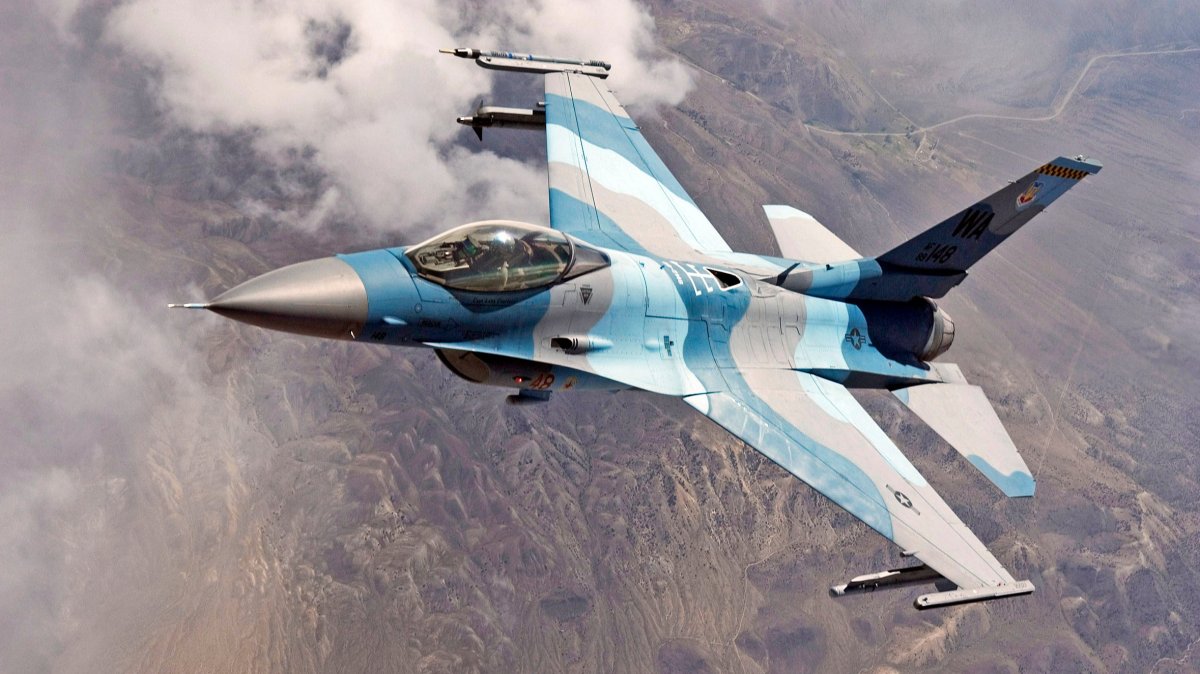
During a national emergency an airliner pilot may get a special surprise when a camouflaged F-16 with foreign-like markings shows up on their wing.
Updated Jul 5, 2020 7:04 PM EDT
In maybe the ultimate form of irony, during a national security crisis, or even an attack on the homeland, the airliner you are flying on could be intercepted by a foreign-looking fighter jet adorned in Russian camouflage with bright red bort numbers on its sides, and in some cases, even big red stars on their wings. That’s because the 64th Aggressor Squadron (64th AGRS), the same unit that provides adversary support training out of Nellis AFB in Las Vegas, Nevada, for exercises like Red Flag , was tasked in 2013 with the air defense mission, according to documents obtained by The War Zone through the Freedom of Information Act and corroborated by officials at Nellis AFB.
Here’s the excerpt from the Nellis AFB 2013-2014 Annual history which describes the establishment of the mission:
Nellis AFB was designated as a site for Operation NOBLE EAGLE Aerospace Control Alert function in mid-late 2013. While the actual mission fell to the 57th Wing’s 64th Aggressor Squadron, 99 ABW was an integral part of the preparation and mission support to include 99 CS, 99 SFS, 99 FSSW and the Base Command Post (99 ABW/CP). This mission had been envisioned under NAFB Plan 7, Air Defense Plan. 2013 and early 2014 saw identification of required facilities and assets needed to execute the mission; by 11 September 2014, First Air Force (I AF), and Continental United States NORAD Region (CONR) Air Forces Northern (AFNORTH) had defined the infrastructure standards and requirements; “for use during the initial planning, project programming, and Site Action Task Force (SATAF) convened to establish or modify tighter alert facilities in support of Operation NOBLE EAGLE (ONE) and Aerospace Control Alert (ACA) homeland defense. Use this document as a starting point to select potential sites and aid in identifying unique site-specific equipment and training requirements.” By 11 March 2014, all the known requirements and Offices of Primary Responsibility (OPR) were identified and where possible, monetary costs were estimated to procure or modify the facility or equipment needed. AIl parties were working towards a training day on 17 March 2014 to see how the process worked and what “unknown unknowns” were still unidentified; this was followed by a “full-up demo activation” on 27-29 March 2014. Command Post responsibilities for ONE were defined as well, which included “1500 hours’ worth of North American Aerospace Defense (NORAD) Emergency Action (EA) Procedure training, directly contributing to Nellis AFB being the first of nine units to report initial operational capability (IOC) to HQ ACC”; this on top of their already significant workload. On 30 June – 2 July 2014, the 57th Wing conducted an exercise under the USAF’s new inspection system. On 8-9 September, a Site Assistance Visit Team from 1 AF (CONR) AFNORTH visited Nellis AFB for a Provisional Alert Site inspection; while 99 ABW/CP limitations such as lack of some equipment or an Alternate Command Post (see Chapter 4), the team wrote “The Nellis Command Post has a strong ACA program with thorough scenario based training and well developed procedures.” On 14 October 2014, just after the end of this reporting period, the USAF Warfare Center published USAFWC Instruction 10-203, “Alert Operating Procedures,” which laid out “guidance, establishes procedures and defines responsibilities of the base organizations in order to conduct Aerospace Control Alert (ACA) and Operation Noble Eagle (ONE) for the United States Air Warfare Center, Nellis Air Force Base, Nevada in support of the Commander, NORAO/NORTHCOM,” This instruction superseded NAFB Plan 7.10.
Nellis AFB was designated as a site for Operation NOBLE EAGLE Aerospace Control Alert function in mid-late 2013. While the actual mission fell to the 57th Wing’s 64th Aggressor Squadron, 99 ABW was an integral part of the preparation and mission support to include 99 CS, 99 SFS, 99 FSSW and the Base Command Post (99 ABW/CP). This mission had been envisioned under NAFB Plan 7, Air Defense Plan. 2013 and early 2014 saw identification of required facilities and assets needed to execute the mission; by 11 September 2014, First Air Force (I AF), and Continental United States NORAD Region (CONR) Air Forces Northern (AFNORTH) had defined the infrastructure standards and requirements; “for use during the initial planning, project programming, and Site Action Task Force (SATAF) convened to establish or modify tighter alert facilities in support of Operation NOBLE EAGLE (ONE) and Aerospace Control Alert (ACA) homeland defense. Use this document as a starting point to select potential sites and aid in identifying unique site-specific equipment and training requirements.”
By 11 March 2014, all the known requirements and Offices of Primary Responsibility (OPR) were identified and where possible, monetary costs were estimated to procure or modify the facility or equipment needed. AIl parties were working towards a training day on 17 March 2014 to see how the process worked and what “unknown unknowns” were still unidentified; this was followed by a “full-up demo activation” on 27-29 March 2014. Command Post responsibilities for ONE were defined as well, which included “1500 hours’ worth of North American Aerospace Defense (NORAD) Emergency Action (EA) Procedure training, directly contributing to Nellis AFB being the first of nine units to report initial operational capability (IOC) to HQ ACC”; this on top of their already significant workload. On 30 June – 2 July 2014, the 57th Wing conducted an exercise under the USAF’s new inspection system. On 8-9 September, a Site Assistance Visit Team from 1 AF (CONR) AFNORTH visited Nellis AFB for a Provisional Alert Site inspection; while 99 ABW/CP limitations such as lack of some equipment or an Alternate Command Post (see Chapter 4), the team wrote “The Nellis Command Post has a strong ACA program with thorough scenario based training and well developed procedures.”
On 14 October 2014, just after the end of this reporting period, the USAF Warfare Center published USAFWC Instruction 10-203, “Alert Operating Procedures,” which laid out “guidance, establishes procedures and defines responsibilities of the base organizations in order to conduct Aerospace Control Alert (ACA) and Operation Noble Eagle (ONE) for the United States Air Warfare Center, Nellis Air Force Base, Nevada in support of the Commander, NORAO/NORTHCOM,” This instruction superseded NAFB Plan 7.10.
Here is a scan of the same excerpt from the official document:
Even though Nellis AFB houses every fighter type in the USAF’s inventory, there are no front-line “operational” fighter squadrons based there. The 64th Aggressor Squadron, with their fleet of Block 32 F-16Cs may not seem like an ideal fit for the air sovereignty mission, but it is the logical choice as there are really no alternatives. Also, the unit has been significantly augmented since its sister squadron, the F-15C/D Eagle flying 65th Aggressor Squadron, was shuttered as part of rampant budget cuts that occurred earlier in the decade. Still, the idea that the unit’s eclectic looking jets would be flying air patrols over America’s southwest seems odd to say the least.
The War Zone reached out to Nellis AFB for more information on the 64th AGRS’s secretive “other” mission. We got very little elaboration on our questions, but the unique squadron’s association with the air defense mission did become a bit clearer.
The 64th AGRS does not sit continuous alert, and has not had to take up an alert posture since acquiring the mission a few years ago, although according to base officials “they could be tasked to support this activity, as required by higher headquarters.” When asked about the unit’s capacity to do so, the only reply we received was that “tasking specifics are classified.” The unit was chosen for the mission because “aircraft availability and capability met the requirements for mission.” In addition they added that “typically Nellis provides facilities as an alert location and other units from outside Nellis deploy here to support the requirements. The 64th AGRS only support when other units are not available or tasking requires more aircraft than can be provided by the deployed unit.”
So it seems that the 64th AGRS stands ready to support the air sovereignty mission, but doesn’t do it on a regular basis. What is a bit puzzling is that Nellis really doesn’t seem to have a dedicated alert facility per se. And in recent decades the base has not been known, at least publicly, to support rotating fighter contingents tasked with providing air defense capabilities. Also, it really isn’t clear if this alert duty could include remote alert sites at other nearby bases that fall under Nellis AFB’s control or are directly affiliated with the base in other ways.
For instance, alert aircraft could be positioned at Creech AFB, just 40 miles northwest of Nellis AFB. And we do know that F-16s are omnipresent at Area 51. Nobody knows exactly what all the purposes of these aircraft are, but flying chase for test sorties seems to be one function, and defending the Nellis Range Complex and especially high-security “box” around Area 51 from intruders could be another. The base has HH-60G Pave Hawks that perform perimeter security functions as well. Even shadowy Tonopah Test Range Airport , located at the northern reaches of the range complex, could be a site where F-16s can be temporarily deployed for the air defense mission, although we have no proof that fighters frequent the field for that purpose.
F-16s are regularly seen in satellite imagery of Area 51. , Google Earth
Regardless of the fine details, at least we now know that the USAF’s highly touted Nellis Aggressors do have a secondary set of responsibilities—sweeping the skies for hostile aircraft during a real-world national emergency. And although their aircraft are the most dated and least capable F-16s in the inventory, their pilots are the very best of the best.
Still, their paint jobs may be a little confusing, if not downright startling for any errant aircraft they intercept. On the other hand, in a fantastical Red Dawn like scenario, those same paint jobs may confuse the enemy just long enough to get the kill.
Contact the author: Tyler@thedrive.com
Comments couldn’t be loaded. Please refresh the page.
更新于美国东部时间2020年7月5日晚上7:04
或许最具讽刺意味的是,在国家安全危机甚至本土遭受攻击时,你乘坐的客机可能会被一架涂有俄罗斯迷彩、机身两侧印有鲜红色编号、甚至机翼上还绘有醒目红色五角星的外国战斗机拦截。这是因为,根据《战区》网站通过《信息自由法》获取的文件,并经内利斯空军基地官员证实,驻扎在内华达州拉斯维加斯内利斯空军基地的第64假想敌中队(64th AGRS)——该部队负责为“红旗”军演等演习提供假想敌支援训练——于2013年被赋予了防空任务。
以下摘自内利斯空军基地 2013-2014 年度历史,描述了该任务的建立:
2013年中后期,内利斯空军基地被指定为“高贵之鹰行动”(Operation NOBLE EAGLE)航空航天控制警戒功能的基地。虽然实际任务由第57联队的第64假想敌中队负责,但第99空军基地联队(99 ABW)是准备工作和任务支持的重要组成部分,其中包括第99通信中队(99 CS)、第99安全部队中队(99 SFS)、第99地面支援中队(99 FSSW)以及基地指挥所(99 ABW/CP)。这项任务是根据内利斯空军基地第七号计划——防空计划——制定的。2013年和2014年初,确定了执行该任务所需的设施和资产;到2014年9月11日,第一航空队(I AF)和美国本土北美防空司令部(NORAD)北方空军(AFNORTH)已确定了基础设施标准和要求; “本文件用于初始规划、项目编制以及为支持‘高贵之鹰行动’(ONE)和‘航空航天管制警报’(ACA)国土防御而成立或改造更严格的警戒设施而召开的现场行动工作组(SATAF)会议。请以本文件为起点,选择潜在地点,并协助确定特定地点的设备和培训需求。” 截至2014年3月11日,所有已知需求和主要责任办公室(OPR)均已确定,并在可能的情况下估算了采购或改造所需设施或设备的资金成本。各方正努力筹备于2014年3月17日举行的培训日,以了解流程运作情况以及仍未发现的“未知未知因素”。随后,于2014年3月27日至29日进行了“全面演示激活”。ONE指挥所的职责也得到了明确,其中包括“1500小时的北美防空司令部(NORAD)紧急行动(EA)程序训练,这直接促成了内利斯空军基地成为九个向空军作战司令部(ACC)总部报告初始作战能力(IOC)的单位中第一个完成训练”;而这还不包括他们原本就繁重的工作量。2014年6月30日至7月2日,第57联队根据美国空军新的检查制度进行了一次演习。9月8日至9日,来自第一航空队(CONR)北方司令部的一个现场协助访问小组访问了内利斯空军基地,进行临时警戒现场检查;尽管第99空军基地联队/指挥所存在一些限制,例如缺少某些设备或备用指挥所(见第四章),但该小组指出“内利斯指挥所拥有强大的ACA计划,具备全面的情景训练和完善的程序。” 2014 年 10 月 14 日,就在本报告期结束后不久,美国空军作战中心发布了 USAFWC 指令 10-203《警戒操作程序》,该指令“为美国空军作战中心(位于内华达州内利斯空军基地)执行航空航天控制警戒 (ACA) 和高贵之鹰行动 (ONE) 提供了指导,确立了程序,并定义了基地组织的职责,以支持北方司令部/NORAO 司令部”。该指令取代了 NAFB 计划 7.10。
2013年中后期,内利斯空军基地被指定为“高贵之鹰行动”(Operation NOBLE EAGLE)航空航天控制警戒功能的基地。虽然实际任务由第57联队的第64假想敌中队负责,但第99空军基地联队(99 ABW)是准备工作和任务支持的重要组成部分,其中包括第99通信中队(99 CS)、第99安全部队中队(99 SFS)、第99地面支援中队(99 FSSW)以及基地指挥所(99 ABW/CP)。这项任务是根据内利斯空军基地第七号计划——防空计划——制定的。2013年和2014年初,确定了执行该任务所需的设施和资产;到2014年9月11日,第一航空队(I AF)和美国本土北美防空司令部(NORAD)北方空军(AFNORTH)已确定了基础设施标准和要求; “本文件用于初始规划、项目编制以及为支持‘高贵之鹰行动’(ONE)和‘航空航天控制警报’(ACA)国土防御而成立或改造更严密警戒设施而召集的现场行动工作组(SATAF)。请将本文件作为选择潜在地点的起点,并协助确定特定地点所需的设备和培训要求。”
截至2014年3月11日,所有已知需求和主要责任部门(OPR)均已确定,并在可能的情况下估算了采购或改造所需设施或设备的资金成本。各方正努力筹备于2014年3月17日举行的培训日,以了解流程运作方式以及仍未识别的“未知未知因素”;随后于2014年3月27日至29日进行了“全面演示启动”。ONE指挥所的职责也已明确,其中包括“1500小时的北美防空司令部(NORAD)紧急行动(EA)程序培训,这将直接促成内利斯空军基地成为九个向空军作战司令部(ACC)总部报告初始作战能力(IOC)的单位中第一个”。此外,他们原本就繁重的工作量也需要额外投入。2014年6月30日至7月2日,第57联队根据美国空军新的检查制度进行了一次演习。 9 月 8 日至 9 日,来自第 1 空军(CONR)AFNORTH 的一个现场协助访问小组访问了内利斯空军基地,进行临时警戒站点检查;虽然第 99 空军基地联队/指挥所存在一些限制,例如缺少一些设备或备用指挥所(见第 4 章),但该小组写道:“内利斯指挥所拥有强大的 ACA 计划,有彻底的基于场景的训练和完善的程序。”
2014 年 10 月 14 日,就在本报告期结束后不久,美国空军作战中心发布了 USAFWC 指令 10-203《警戒操作程序》,该指令“为美国空军作战中心(位于内华达州内利斯空军基地)执行航空航天控制警戒 (ACA) 和高贵之鹰行动 (ONE) 提供了指导,确立了程序,并定义了基地组织的职责,以支持北方司令部/NORAO 司令部”。该指令取代了 NAFB 计划 7.10。
以下是该官方文件摘录的扫描件:
尽管内利斯空军基地驻扎着美国空军所有型号的战斗机,但那里并没有部署任何一线“作战”战斗机中队。第64假想敌中队装备着Block 32型F-16C战斗机,乍看之下似乎并不适合执行空中主权任务,但由于别无选择,它却是合乎逻辑的选择。此外,自其姊妹中队——装备F-15C/D“鹰”式战斗机的第65假想敌中队——因本世纪初大规模预算削减而被解散以来,该中队的实力已得到显著增强。然而,想到该中队那些外形各异的战机将在美国西南部执行空中巡逻任务,至少听起来还是有些匪夷所思。
《战区》栏目联系了内利斯空军基地,希望了解更多关于第64空中防御中队神秘的“其他”任务的信息。我们提出的问题几乎没有得到任何详细说明,但这个特殊的飞行中队与防空任务的关联确实变得更加清晰了。
第64空中地面支援中队(64th AGRS)并非持续处于警戒状态,自几年前接手该任务以来也从未进入警戒状态。不过,据基地官员称,“根据上级指挥部的要求,他们可能会被指派支援这项行动。” 当我们询问该部队是否有能力执行这项任务时,得到的答复仅仅是“任务细节属于机密”。之所以选择该部队执行这项任务,是因为“其飞机的可用性和性能符合任务要求”。此外,他们还补充道,“通常情况下,内利斯空军基地会提供设施作为警戒地点,其他基地的部队会从内利斯基地外部署到这里支援。只有当其他部队无法提供服务,或者任务所需的飞机数量超过部署部队所能提供的数量时,第64空中地面支援中队才会提供支援。”
因此,第64空中防御支援中队似乎已做好支援空中主权任务的准备,但并未定期执行。令人费解的是,内利斯空军基地似乎并没有专门的警戒设施。而且,近几十年来,至少在公开场合,该基地并未支持轮换部署的战斗机部队执行防空任务。此外,目前尚不清楚这项警戒任务是否包括位于附近其他基地的远程警戒站点,这些基地可能隶属于内利斯空军基地管辖,或以其他方式与该基地直接相关。
例如,警戒飞机可能部署在克里奇空军基地,该基地位于内利斯空军基地西北方向仅40英里处。而且我们知道,F-16战斗机在51区随处可见。没有人确切知道这些飞机的具体用途,但为试飞任务提供护航似乎是其中一项功能,而保卫内利斯靶场综合体,特别是51区周围高度安全的“区域”,防止入侵者,可能是另一项功能。该基地还拥有HH-60G“铺路鹰”直升机,也执行周边安全任务。即使是位于靶场综合体北部边缘的神秘的托诺帕试验场机场,也可能是F-16战斗机临时部署执行防空任务的地点,尽管我们没有证据表明战斗机经常出于这个目的在该机场活动。
在谷歌地球的卫星图像中,经常可以看到51区的F-16战斗机。
撇开细节不谈,至少我们现在知道,美国空军备受赞誉的内利斯空军基地假想敌部队确实还有另一项职责——在真实的国家紧急情况下,负责扫荡空域,搜寻敌机。虽然他们驾驶的战机是现役最老旧、性能最弱的F-16,但他们的飞行员却是精英中的精英。
不过,它们的涂装对于任何误入歧途的飞机来说,或许会有些令人困惑,甚至可以说是惊恐。另一方面,在类似《赤色黎明》的奇幻场景中,同样的涂装或许能让敌人迷惑足够长的时间,从而完成击落。
联系作者:Tyler@thedrive.com
评论加载失败,请刷新页面。