SIT to give undergrads nearly 2 years’ work experience for better job prospects in age of AI新加坡理工大学将为本科生提供近两年的工作经验,以提升他们在人工智能时代的就业前景。
It's meant to give fresh graduates an edge in their job hunt as growing AI capabilities raise the bar for new hires. Read more at straitstimes.com.
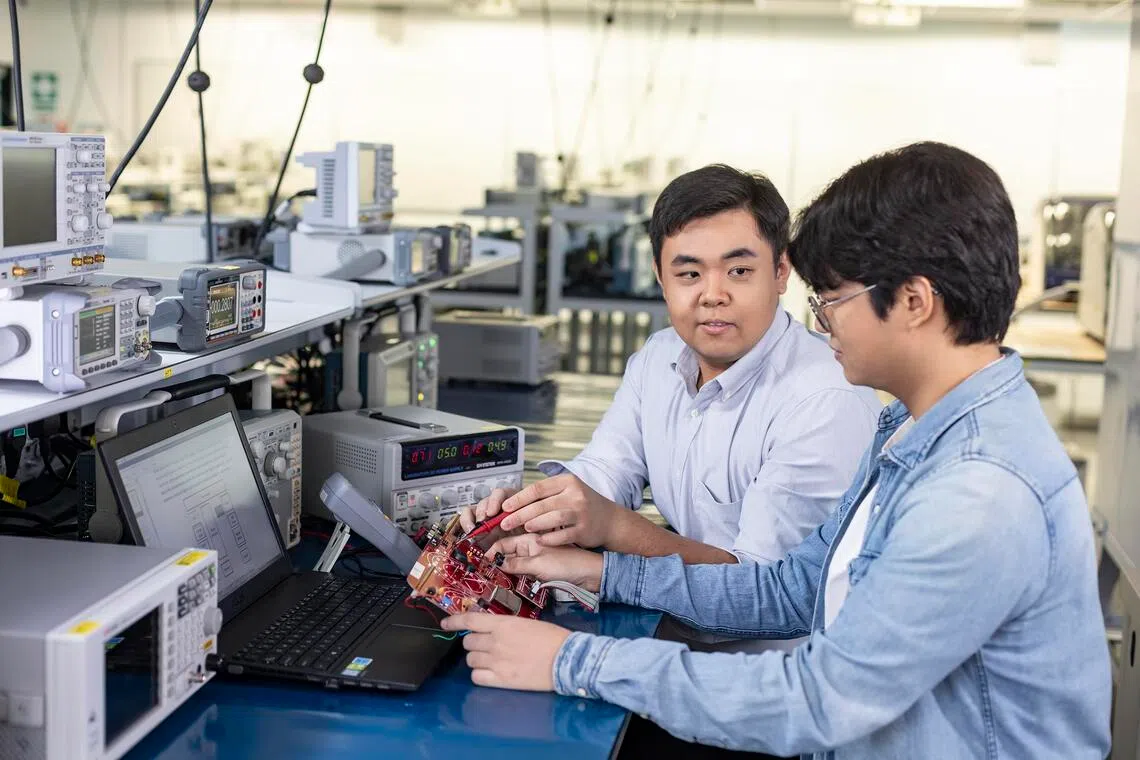
Dubbed “2+2”, the programme will have undergraduates spending their first two years on campus and the next two years in deeper workplace immersion.
Published Sep 03, 2026, 06:55 PM
Updated Sep 03, 2026, 06:55 PM
SIT will pilot a new "2+2" programme from September 2027, giving engineering and ICT undergraduates almost two years of work experience before graduation.
The programme partners with leading companies in semiconductors and cybersecurity to prepare students for higher-level work amid AI advancements.
Participating students can gain real workplace skills and stronger industry connections, with companies co-nurturing them and offering full-time job opportunities after internships.
SINGAPORE – Singapore Institute of Technology students in four engineering and ICT courses will soon have almost two years of work experience by the time they graduate, boosting their job prospects as AI use spreads rapidly.
Offered under a new pilot programme to start from September 2027, it is the longest undergraduate work attachment of any of the six local autonomous universities.
The move is meant to give fresh graduates an edge in their job hunt as the growing capabilities of AI raise the bar for new hires.
SIT president Chua Kee Chaing said: “With AI being able to do what fresh graduates used to do in Year 1, even Year 2, employers are expecting that fresh graduates have to do higher-order work, maybe up to Year 3 type (of work).
“If we ... give our students longer experience with the companies, by the time they graduate, they would be ready to do much higher-order work.”
The new “2+2” programme will be piloted with penultimate-year students selected from four degree programmes: ICT (Information Security), ICT (Software Engineering), electrical and electronic engineering, and mechanical engineering.
Companies on the programme include A*STAR Institute of Microelectronics, STMicroelectronics, and Applied Materials in the semiconductor industry, as well as Ensign InfoSecurity and NCS in the cybersecurity field.
The number of participating students will depend on the opportunities offered by the employers and the outcome of the selection processes. Students will be invited to sign up for the 2+2 programme, and go for interviews by the companies facilitated by SIT.
The 2+2 model is an extension of SIT’s existing Integrated Work Study Programme (IWSP), which includes an internship of eight to 12 months.
Since the launch of IWSP in 2014, SIT has worked closely with more than 1,000 companies to offer each SIT student an average of three positions to choose from .
IWSP is compulsory for the 2,500 SIT students outside of the institution’s Health and Social Sciences courses. Those students go on clinical placements instead.
Close to half of the students who went on IWSP internships received advance full-time employment offers from their IWSP employers, according to SIT’s Graduate Employment Survey 2025 .
Chua said what is most important for universities today, given the easy availability of content knowledge, is to help students strengthen their fundamentals, which will equip them to continue learning beyond their studies, and hence strengthen their employability for life.
The four degree courses were chosen for the 2+2 pilot because the companies in these fields have high hiring needs, Chua said.
He elaborated: “The semiconductor industry is gearing up for quite a lot of expansion, and they are already very keen to mould young people to their needs.
“There’s a real shortage of good cybersecurity people… you need people who really know how to protect systems , especially... as AI is able to probe your vulnerabilities much faster.”
ICT students on the 2+2 programme will return to campus for classes one day a week during the first eight months; some modules will be delivered online. After the first eight months, students will continue their work attachments full-time while they work on their capstone project.
Participating engineering students will similarly spend their first two years completing their foundational curriculum before beginning the 2+2 programme in Year 3.
During their internships , students will also study to acquire the relevant micro-credentials – such as a specialist certificate in data analytics in engineering – online and on campus, as well as complete their capstone project.
Chua said the 2+2 model takes IWSP a step further, as it will require the company to develop students with SIT. “We’re starting with a pilot with companies that we are quite confident will have the ability and the bandwidth to co‑nurture the students with us.”
Students will take on projects in the company to fulfil what the company needs, but also to fulfil the learning outcomes of their academic programmes. Their work will be assessed jointly by the company’s workplace supervisors and SIT’s academic staff, who will meet regularly to discuss the students’ progress.
Chua noted that 2+2 will not replace IWSP, as he wants to provide choices for students.
“For students who value more time in the industry, we would want to encourage them to do this. But some students still think that they learn better in the university, so we want to give them a choice,” he said.
Chua said the programme is beneficial for both students and companies. “I always tell companies that they have eight to 12 months to interview my students, as opposed to a one-hour or two-hour interview session.”
More experience in an “authentic” work environment will also help students develop transferable skills, he said. “They have to interact with the rest of the staff of the company. They have to carry themselves (well). They have to do presentations. They have to communicate well.”
Serene Yeo, vice-president of human resources at a participating firm Ensign InfoSecurity, concurred: “Technical knowledge alone is not enough. It is just as important to work well with others, exercise sound judgment, communicate with confidence, and adapt as expectations change, especially in a fast-evolving field like cybersecurity.
“These capabilities are best developed through sustained exposure, coaching, and feedback in a real working environment.”
Foo Kuo Yang, senior director of Singapore country human resources at STMicroelectronics, said the 2+2 programme will allow students to foster stronger connections with the firm’s employees.
“These interactions promote empathy, encourage inter-generational learning, and build meaningful relationships that strengthen collaboration across our workplace,” he said.
SIT/Singapore Institute of Technology
Universities - Singapore
Engineers/Engineering
该计划被称为“2+2”,本科生将在前两年在校园学习,后两年进行更深入的职场沉浸式体验。
发布于 2026 年 9 月 3 日下午 6:55
更新于2026年9月3日下午6:55
新加坡理工大学将于 2027 年 9 月起试行一项新的“2+2”计划,让工程和信息通信技术专业的本科生在毕业前获得近两年的工作经验。
该项目与半导体和网络安全领域的领先公司合作,旨在帮助学生为人工智能发展带来的更高层次的工作做好准备。
参与的学生可以获得真正的职场技能和更紧密的行业联系,企业将与他们共同培养,并在实习结束后提供全职工作机会。
新加坡——随着人工智能的快速普及,新加坡理工学院四个工程和信息通信技术专业的学生毕业时将拥有近两年的工作经验,这将大大提升他们的就业前景。
该项目是将于 2027 年 9 月开始实施的一项新的试点计划,是六所本地自治大学中最长的本科生实习项目。
此举旨在让应届毕业生在求职过程中更具优势,因为人工智能能力的不断提升提高了新员工的求职门槛。
新加坡理工大学校长蔡启昌表示:“人工智能能够完成应届毕业生一年级甚至二年级的工作,因此雇主期望应届毕业生能够从事更高阶的工作,或许达到三年级水平。”
“如果我们……让学生在企业中获得更长时间的实践经验,那么当他们毕业时,他们就能胜任更高层次的工作。”
新的“2+2”计划将首先从四个学位课程中选拔倒数第二年的学生进行试点:信息通信技术(信息安全)、信息通信技术(软件工程)、电气和电子工程以及机械工程。
参与该计划的公司包括半导体行业的 A*STAR 微电子研究院、意法半导体和应用材料公司,以及网络安全领域的 Ensign InfoSecurity 和 NCS 公司。
参与学生人数将取决于用人单位提供的机会和选拔结果。学生将被邀请报名参加“2+2”项目,并由新加坡理工大学(SIT)协助企业进行面试。
2+2 模式是新加坡理工大学现有综合工作学习计划 (IWSP) 的延伸,其中包括 8 至 12 个月的实习。
自 2014 年 IWSP 启动以来,SIT 与 1000 多家公司密切合作,为每位 SIT 学生提供平均三个职位选择。
IWSP是SIT除健康与社会科学课程以外的2500名学生的必修课。这些学生则选择进行临床实习。
根据 SIT 的《2025 年毕业生就业调查》,近一半参加 IWSP 实习的学生提前收到了 IWSP 雇主提供的全职工作机会。
蔡教授表示,鉴于如今内容知识唾手可得,大学最重要的任务是帮助学生夯实基础,使他们能够在毕业后继续学习,从而增强他们终身的就业能力。
蔡先生表示,之所以选择这四个学位课程作为“2+2”试点项目,是因为这些领域的公司招聘需求量很大。
他进一步解释说:“半导体行业正在为大幅扩张做准备,他们已经非常热衷于根据自身需求塑造年轻人。
“目前优秀的网络安全人才非常短缺……我们需要真正懂得如何保护系统的人才,尤其是在人工智能能够更快地探测到系统漏洞的情况下。”
参加“2+2”课程的信息通信技术(ICT)专业的学生,在最初的八个月里,每周有一天需要返校上课;部分课程将在线授课。八个月后,学生将继续全职实习,同时完成毕业设计项目。
同样,参与该项目的工程系学生将在前两年完成基础课程,然后在第三年开始 2+2 课程。
在实习期间,学生们还将在线上和校园内学习,以获得相关的微证书(例如工程数据分析专业证书),并完成他们的毕业设计项目。
蔡先生表示,“2+2”模式使IWSP更进一步,因为它要求企业与新加坡理工大学(SIT)共同培养学生。“我们首先会与一些我们非常有信心有能力和资源与我们共同培养学生的公司进行试点。”
学生将在公司承担项目,以满足公司需求,同时也达成其学术课程的学习目标。他们的工作将由公司现场主管和新加坡理工大学的教职人员共同评估,双方将定期会面讨论学生的进展情况。
蔡教授指出,2+2 模式不会取代 IWSP 模式,因为他想为学生提供更多选择。
他说:“对于那些更看重在行业内积累经验的学生,我们鼓励他们这样做。但有些学生仍然认为在大学里学习效果更好,所以我们想给他们一个选择。”
蔡老师表示,该项目对学生和企业都有益处。“我总是告诉企业,他们有八到十二个月的时间来面试我的学生,而不是只有一两个小时的面试时间。”
他还表示,在“真实”的工作环境中积累更多经验也有助于学生培养可迁移技能。“他们必须与公司其他员工互动。他们必须举止得体。他们必须做演示。他们必须善于沟通。”
参与公司 Ensign InfoSecurity 的人力资源副总裁 Serene Yeo 对此表示赞同:“仅仅拥有技术知识是不够的。与他人良好合作、做出合理的判断、自信地沟通以及随着期望的变化而适应,同样重要,尤其是在网络安全这样快速发展的领域。”
“这些能力最好通过在真实的工作环境中持续接触、指导和反馈来培养。”
意法半导体新加坡国家人力资源高级总监傅国阳表示,“2+2”计划将使学生能够与公司员工建立更紧密的联系。
他说:“这些互动能够促进同理心,鼓励代际学习,并建立有意义的关系,从而加强我们工作场所的合作。”
新加坡理工学院
新加坡大学
工程师/工程