Expired arms, tepid fighters: Russian ally Transnistria may have little to offer for Putin’s war过期武器,反应迟钝的战士:俄罗斯盟友德涅斯特河沿岸共和国可能对普京的战争贡献甚微
Speculation has grown that Russian troops will advance to Transnistria and use it as a launch pad for further operations in Ukraine or even an invasion of Moldova.
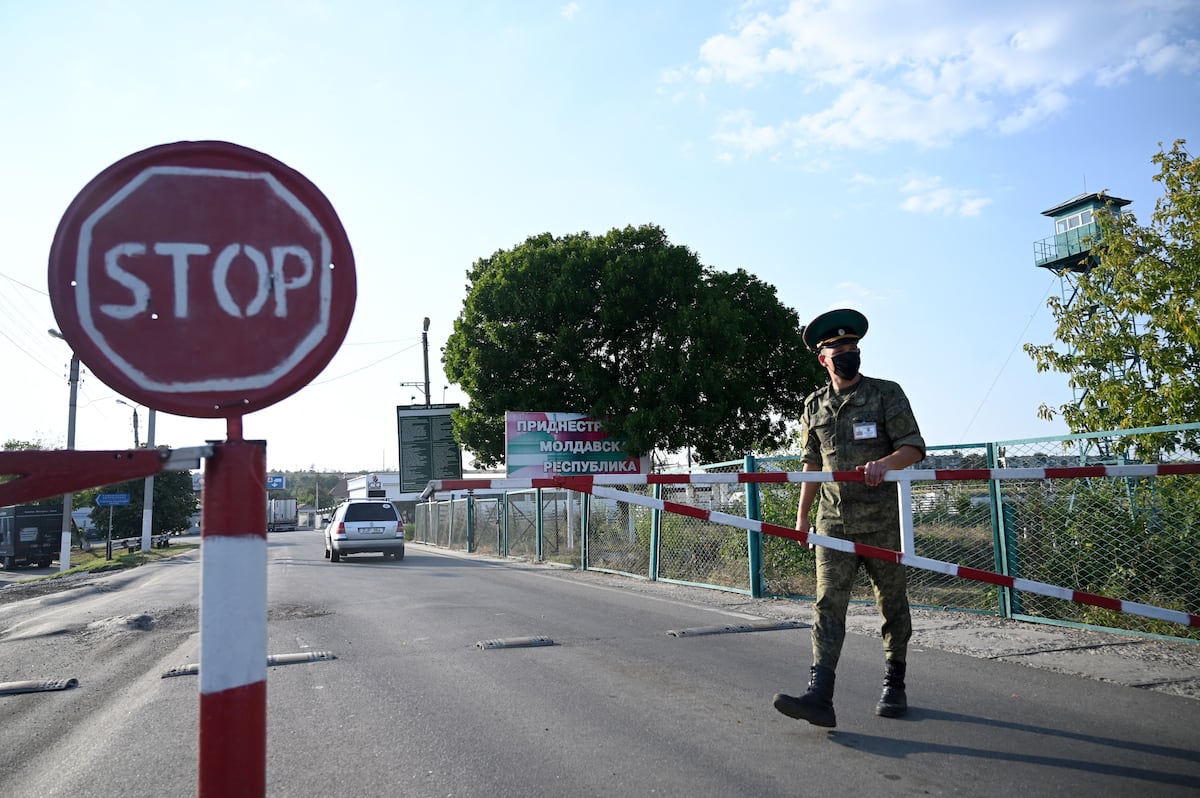
CHISINAU, Moldova – A breakaway republic on Ukraine’s south-west border, which supports Russia and is seen as a possible staging post for Moscow’s Ukraine invasion, hosts out-of-date weaponry and reluctant fighters, experts have said.
Transnistria, a 250 mile long strip of land sandwiched between Ukraine and Moldova, has attracted attention from military analysts as Russian forces edge closer to it, but concerns it could enter the war may be exaggerated, experts have told Defense News.
The territory remained loyal to Russia in the early 1990s when its two larger neighbors – both former Soviet republics – gained independence from Moscow at the end of the Cold War.
Officially part of Moldova, Transnistria has since been an unrecognized statelet with a population of 300,000, claiming autonomy while receiving free Russian gas and keeping a military force of around 1,300.
Now, as Russia slowly pushes west into Ukraine and may seek to occupy nearby Odessa, speculation has grown that Russian troops will advance to Transnistria and use it as a launch pad for further operations in Ukraine or even an invasion of Moldova.
On paper, Transnistria looks like a perfect place for President Vladimir Putin’s forces to occupy. As well as hosting a garrison of pro-Russian troops, it stores 20,000 tonnes of weaponry, much of which was stashed there by the Russian military at the start of the 1990s when it pulled out of Moldova.
Nicu Popescu, Moldova’s foreign minister said an arms dump is situated in the village of Cobasna on the Ukrainian border.
But the age of the armaments would render most of them unusable in a conflict today, he said.
“We estimate 11,000 tonnes have expired and 9,000 tonnes are usable,” he said, adding no recent access had been granted, making an accurate assessment difficult.
“Right before the war we had a dialogue with the Russian Federation about destroying the expired weapons. … They said they were willing to evacuate or destroy most of the weapons. But we have not discussed the matter in the new context,” he said.
The troops stationed there may not be much use either. Although local forces fought a brief war of independence with Moldova in 1992 in which 1,000 died, they reportedly do not have much will to fight today.
Of the 1,300 soldiers now stationed in Transnistria, 400 take part in a local peacekeeping mission. Of the total, only 50-100 are Russian soldiers dispatched from Russia, said Thomas de Waal, a senior fellow at the Carnegie Europe think tank.
Most of the remainder are locals who have been given Russian passports said Popescu.
“They were born there, they have homes there, why would they want to fight?” said Alexandru Flenchea, a former deputy prime minister of Moldova.
Popescu said, “We do not see signs of intentions by the region of Transnistria or its local security forces or Russian military personnel stationed in Transnistria (to prepare) for deployment in military action in Ukraine.”
He cautioned however, “We need to be prepared for all possible risks and a lot will depend on the course of the war in Ukraine.”
While free gas and pension payment top-ups from Russia have kept Transnistria loyal to Moscow in recent years, the statelet has also been admitted into the European Union’s free trade zone. It sells electricity to Moldova and is also a flourishing crossroads for smuggling gasoline and cigarettes between Moldova and Ukraine.
All of which means it has benefitted from its unresolved status and, despite professing loyalty to Russia, is not pleased with the prospect of being reabsorbed into Russia – should Russia take over Ukraine, analysts said.
The problem facing the republic’s leaders is that if the Russians do arrive, they will be unable to turn them away, said De Waal.
“If the Russians show up they will say ‘You owe us,’ and Transnistria would be unable to say no,” he said.
Tom Kington is the Italy correspondent for Defense News.
摩尔多瓦基希讷乌——专家表示,乌克兰西南边境的一个分离共和国支持俄罗斯,被视为莫斯科入侵乌克兰的潜在中转站,该国拥有过时的武器和不情愿参战的战士。
德涅斯特河沿岸是一条长 250 英里的狭长地带,夹在乌克兰和摩尔多瓦之间。随着俄罗斯军队不断逼近,这条地带引起了军事分析人士的关注。但专家告诉《防务新闻》,担心德涅斯特河沿岸可能卷入战争的说法可能有些夸大。
20 世纪 90 年代初,当其两个较大的邻国(均为前苏联加盟共和国)在冷战结束时从莫斯科获得独立时,该地区仍然效忠于俄罗斯。
德涅斯特河沿岸地区名义上是摩尔多瓦的一部分,但自那以后一直是一个未被承认的小国,人口为 30 万,声称拥有自治权,同时享受俄罗斯免费天然气,并拥有一支约 1300 人的军队。
现在,随着俄罗斯缓慢地向西推进到乌克兰,并可能试图占领附近的敖德萨,人们越来越猜测俄罗斯军队将进军德涅斯特河沿岸地区,并将其作为进一步在乌克兰开展行动甚至入侵摩尔多瓦的跳板。
从表面上看,德涅斯特河沿岸地区似乎是普京总统的军队占领的理想之地。该地区不仅驻扎着亲俄部队,还储存着2万吨武器,其中大部分是俄罗斯军队在20世纪90年代初从摩尔多瓦撤军时藏匿于此的。
摩尔多瓦外交部长尼库·波佩斯库表示,在乌克兰边境的科巴斯纳村发现了一个武器库。
但他表示,这些武器装备年代久远,在今天的冲突中大部分都无法使用。
“我们估计有 11,000 吨已经过期,9,000 吨可以使用,”他说,并补充说,最近没有获得任何准入许可,这使得准确评估变得困难。
“就在战争爆发前,我们曾与俄罗斯联邦就销毁过期武器进行过对话……他们表示愿意撤离或销毁大部分武器。但我们还没有在新形势下讨论过这个问题,”他说。
驻扎在那里的部队可能也用处不大。虽然当地武装力量曾在1992年与摩尔多瓦爆发过一场短暂的独立战争,造成1000人死亡,但据报道,他们如今已缺乏战斗意志。
卡内基欧洲智库高级研究员托马斯·德瓦尔表示,目前驻扎在德涅斯特河沿岸地区的1300名士兵中,有400人参与当地的维和任务。这些人中只有50到100人是俄罗斯派遣的士兵。
波佩斯库说,其余大部分人都是持有俄罗斯护照的当地人。
“他们出生在那里,他们在那里有家,他们为什么要打仗呢?”摩尔多瓦前副总理亚历山德鲁·弗伦切亚说道。
波佩斯库表示:“我们没有看到德涅斯特河沿岸地区或其地方安全部队或驻扎在德涅斯特河沿岸的俄罗斯军事人员有任何意图(准备)向乌克兰部署军事行动。”
但他同时警告说:“我们需要做好应对所有可能风险的准备,很多事情都将取决于乌克兰战争的走向。”
近年来,俄罗斯提供的免费天然气和养老金补贴使德涅斯特河沿岸地区一直对莫斯科保持忠诚,但这个小国也已加入欧盟自由贸易区。它向摩尔多瓦出售电力,同时也是摩尔多瓦和乌克兰之间走私汽油和香烟的重要枢纽。
分析人士表示,所有这些都意味着乌克兰从其悬而未决的地位中受益,尽管乌克兰声称效忠俄罗斯,但对于被俄罗斯重新吞并的前景并不满意——如果俄罗斯接管乌克兰的话。
德瓦尔说,共和国领导人面临的问题是,如果俄罗斯人真的来了,他们将无法把他们赶走。
他说:“如果俄罗斯人出现,他们会说‘你们欠我们的’,德涅斯特河沿岸地区将无法拒绝。”
汤姆·金顿是《防务新闻》驻意大利记者。