Lidar: Another emerging technology brought to you by China激光雷达:中国带来的又一项新兴技术
Opinion: More must be done to safeguard U.S. data and prevent dependence on geopolitical adversaries for a critical, emerging technology.
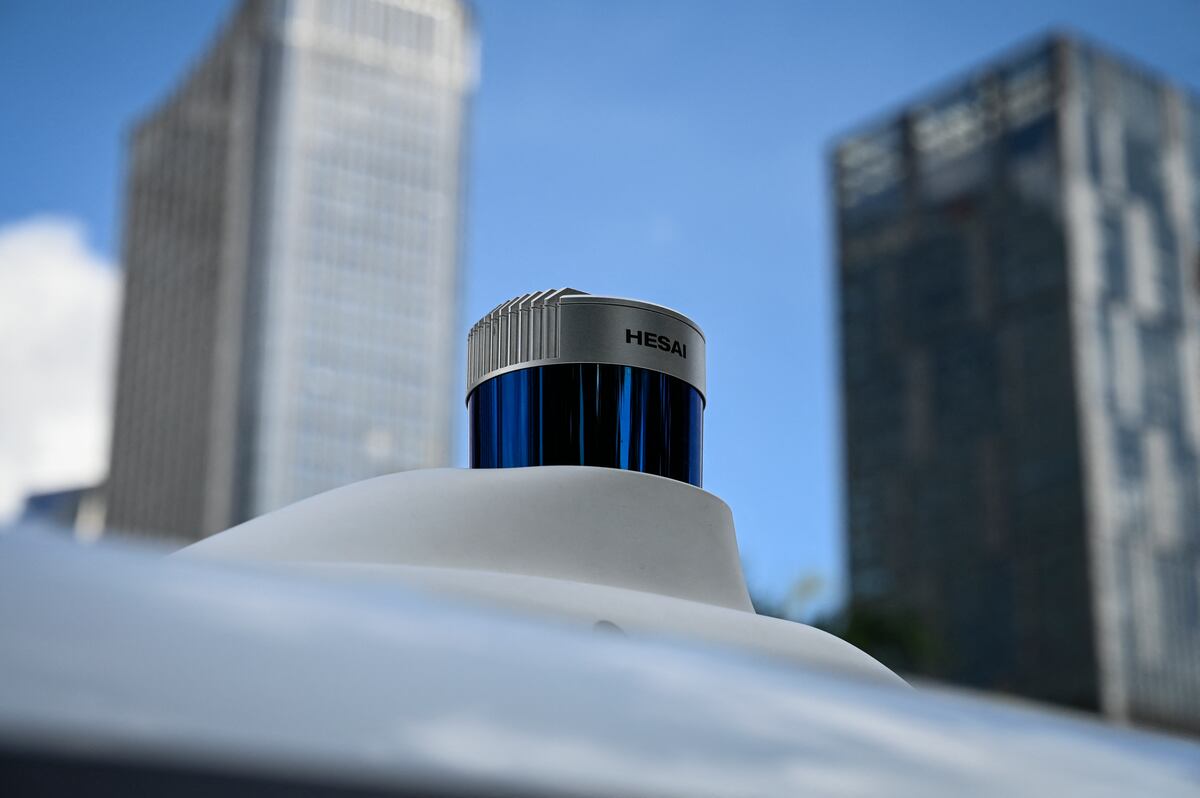
The exponential growth in connected and automated systems has increased the demand for the sensor technology necessary to make them operate safely. Light detection and ranging, or lidar, is just such a remote sensing technology that uses pulsed light to measure and map the surrounding environment. Lidar’s ability to quickly and precisely map complex environments has made it essential for autonomous vehicles, and has given it an increasing role in airports, infrastructure mapping, ports and other emerging connected systems.
For 2022, analysts estimated global automotive lidar revenues at $332 million per year , a number only expected to grow as the technology becomes more widespread and sophisticated. However, the rapid growth of lidar in connected systems and the predominant position Chinese companies have in the marketplace, coupled with the precise data the technology collects, expose the threat posed by untrusted lidar systems. The systems could easily be exploited by malign actors to conduct any manner of malicious actions, including clandestinely mapping U.S. critical infrastructure or conducting cyberattacks that disrupt operations.
American and European companies previously comprised the majority of the global market, but Chinese technology firms like Hesai, RoboSense, Seyond, and Livox (a division of the Chinese drone maker DJI) have rapidly expanded into international markets, including the United States. Hesai has grabbed over 47% of the global market share , benefitting from Chinese domestic industrial policies, including state subsidies and procurement preference. An analysis of filings from publicly traded lidar companies shows that Hesai and RoboSense gained approximately 50% of the North American market share in just a few short years.
While the presence of Chinese companies in lidar competition can drive innovation and competitive pricing, we must be clear-eyed about the threats posed by companies affiliated with the Chinese Communist Party and its strategy of military-civil fusion. Under the military-civil fusion, the Chinese Communist Party, or CCP, obfuscates the line between private companies and the government in order to direct technological research and development that would benefit the state both commercially and militarily.
Further, Chinese companies are subject to national security laws that require People’s Republic of China businesses to pass data to Chinese intelligence agencies when asked, even if their operations are overseas. These laws create the distinct possibility that Chinese technology can serve as an access point for CCP-directed intelligence collection and cybersecurity exploitation.
In a form sent to the SEC , Hesai directly admitted the “PRC government has significant authority in regulating our operations and may influence or intervene in our operations at any time.”
U.S. national security leaders have expressed serious concerns about the potential threat posed by Chinese malware installed in critical infrastructure, near military bases and even on American roads . Similar concerns about Chinese-connected systems and lidar have also been corroborated by our close allies. The Estonian Foreign Intelligence Service published a report highlighting the threats of Chinese technologies, including lidar, to Estonian national security. Specifically, the report warns the agency is aware of an effort to develop Chinese-manufactured lidar intended to scan the environment and exfiltrate that data back to China.
In addition to the direct cybersecurity threat Chinese lidar systems pose to the United States, they also risk oversaturating the market. Overdependence on foreign technology allows an adversary to disrupt the United States’ economy and security with the implementation of an export control, and limits the development of viable alternatives.
In 2022, the PRC’s Ministry of Commerce added lidar to its proposed “Catalog of Technologies Prohibited and Restricted from Export” because the country considers lidar a “strategic emerging industry.” In a crisis, the CCP could threaten to transition that list from proposed to enacted — and seriously disrupt the U.S. autonomous vehicle, agricultural and industrial sectors.
The U.S. government has begun to pay attention to these security concerns and take action. In November 2023, the House Committee on the Chinese Communist Party encouraged the secretaries of commerce, defense, and the Treasury to investigate PRC lidar firms for ties to the People’s Liberation Army. Two months later, the Department of Defense concluded that Hesai held close ties to the Chinese military and consequently placed Hesai on its so-called 1260H list of Chinese military-linked companies. Hesai’s designation was notable not only because it is the first lidar manufacturer added to the list but also because it is the first publicly traded company on the U.S. stock exchange to be added.
Hesai has since objected to its designation by the DOD as a Chinese military-linked company, claiming it does “not sell our products to any military in any country, nor do we have ties of any kind to any military in any country.”
However, contrary to their claims, Hesai’s lidar systems have appeared on Chinese military vehicles, highlighting the dual-use nature of lidar technology and underscoring the true extent of Hesai’s role in the People’s Liberation Army’s defense industry. The DOD even defended Hesai’s addition to the 1260H list after Hesai threatened to sue .
Hesai’s designation on the Section 1260H list should be a wake-up call about the growing threat posed by untrusted sensing technology companies from countries of concern. Shortly after Hesai’s designation, numerous lobbying firms terminated business with Hesai after reports that congressional offices were considering banning firms that represent 1260H-listed companies.
On March 1, the Department of Commerce issued a proposed rule to identify information and communications technology and services used in autonomous vehicles deserving of regulation, specifically citing lidar. This is an important step toward scrutinizing the use of untrusted lidar in commercial applications. However, more must be done to safeguard U.S. data and prevent dependence on geopolitical adversaries for a critical, emerging technology.
First, Congress should continue its scrutiny of the threat posed by untrusted lidar companies. It is imperative that American lawmakers and the public be aware of how this technology is being employed across the nation’s cities, infrastructure and homes — and what vulnerabilities it creates for malign actors to exploit. Based on their findings, officials should consider placing additional restrictions or regulations on untrusted sensor technology companies.
Second, the Department of Commerce should use its authorities derived from the final rule on “Securing the Information and Communications Technology and Services Supply Chain; Connected Software Applications” to inform an assessment of regulatory action needed to prevent Chinese lidar companies from posing a risk to U.S. cybersecurity interests.
At a minimum, the departments of the Treasury and Commerce should consider using their authorities to place companies found to have ties to the People’s Liberation Army on the sanctions list and entity list, respectively.
Third, the United States needs to invest in expanding its own trusted lidar-industrial base, drawing from domestic capacity and that of our allies and partners, to offer alternatives to subsidized Chinese lidar companies.
U.S. government investments in emerging sensing technologies, like lidar, through a CHIPS and Science Act-like program will likely be needed to strengthen the competitiveness of American industry.
If the U.S. government does not scrutinize lidar and other emerging technologies produced by companies from countries of concern, we run the risk of our automated future being dependent on untrusted systems that jeopardize our national security and undermine global competitiveness.
Retired U.S. Navy Rear Adm. Mark Montgomery is a senior fellow at the Foundation for Defense of Democracies think tank. He is also a senior adviser to the chairman of the Cyberspace Solarium Commission. He previously served as policy director of the Senate Armed Services Committee under Sen. John McCain, R-Ariz., and as director of operations (J3) at U.S. Pacific Command.
互联自动化系统的指数级增长,使得对确保其安全运行所需的传感器技术的需求日益增长。激光雷达(LiDAR)正是这样一种遥感技术,它利用脉冲光来测量和绘制周围环境。激光雷达能够快速、精确地绘制复杂环境地图,这使其成为自动驾驶车辆的必备工具,并在机场、基础设施测绘、港口和其他新兴互联系统中发挥着越来越重要的作用。
分析师预计,2022年全球汽车激光雷达收入将达到每年3.32亿美元,随着技术的普及和完善,这一数字预计还将继续增长。然而,激光雷达在互联系统中的快速发展,以及中国企业在市场上的主导地位,再加上该技术能够收集到的精确数据,都暴露出不受信任的激光雷达系统所带来的威胁。这些系统很容易被恶意行为者利用,实施各种恶意活动,包括秘密绘制美国关键基础设施地图或发起网络攻击以扰乱其正常运营。
此前,欧美公司占据了全球市场的大部分份额,但像合赛、RoboSense、Seyond 和 Livox(中国无人机制造商大疆创新旗下子公司)这样的中国科技公司迅速扩张至包括美国在内的国际市场。合赛已占据超过 47% 的全球市场份额,这得益于中国国内的产业政策,包括国家补贴和采购优惠。对上市激光雷达公司提交的文件进行分析显示,合赛和 RoboSense 在短短几年内就获得了北美市场约 50% 的份额。
尽管中国企业参与激光雷达竞争能够推动创新和价格竞争,但我们必须清醒地认识到与中国共产党及其军民融合战略有关联的企业所构成的威胁。在军民融合战略下,中国共产党模糊了私营企业与政府之间的界限,从而引导有利于国家商业和军事发展的技术研发。
此外,中国企业受国家安全法约束,即使其业务位于海外,也必须应中国情报机构要求提供数据。这些法律极有可能使中国技术成为中共进行情报收集和网络安全攻击的入口。
在提交给美国证券交易委员会的一份表格中,何赛直接承认“中国政府对我们的运营拥有重大的监管权力,并可能随时影响或干预我们的运营”。
美国国家安全领导人对中国恶意软件可能被安装在关键基础设施、军事基地附近甚至美国道路上构成的潜在威胁表示严重关切。我们的亲密盟友也对与中国相关的系统和激光雷达技术表达了类似的担忧。爱沙尼亚对外情报局发布了一份报告,重点指出包括激光雷达在内的中国技术对爱沙尼亚国家安全的威胁。该报告特别警告称,爱沙尼亚对外情报局已注意到有人正试图开发中国制造的激光雷达,用于扫描环境并将数据窃取回中国。
除了中国激光雷达系统对美国构成的直接网络安全威胁外,它们还可能导致市场过度饱和。过度依赖外国技术会使对手能够通过实施出口管制来扰乱美国的经济和安全,并限制可行替代方案的开发。
2022年,中国商务部将激光雷达技术列入拟议的“禁止和限制出口技术目录”,因为中国认为激光雷达是“战略性新兴产业”。在危机情况下,中共可能威胁将该目录从拟议阶段转为正式实施,从而严重扰乱美国的自动驾驶汽车、农业和工业领域。
美国政府已开始关注这些安全隐患并采取行动。2023年11月,众议院中国共产党委员会敦促商务部长、国防部长和财政部长调查中国激光雷达公司与中国人民解放军的关联。两个月后,国防部得出结论,认为和赛科技与中国军方关系密切,因此将和赛科技列入所谓的“1260H”名单,该名单列出了与中国军方有关联的公司。和赛科技的入选引人注目,不仅因为它是首家被列入该名单的激光雷达制造商,还因为它是首家被列入该名单的美国上市公司。
和赛公司随后对美国国防部将其认定为与中国军方有关联的公司提出异议,声称该公司“不向任何国家的任何军队出售产品,也不与任何国家的任何军队有任何形式的联系”。
然而,与他们的说法相反,何赛公司的激光雷达系统已经出现在中国军用车辆上,这凸显了激光雷达技术的军民两用特性,也突显了何赛公司在解放军国防工业中扮演的真实角色。在何赛公司威胁要提起诉讼后,美国国防部甚至还为将何赛公司列入1260H清单一事进行了辩护。
Hesai被列入1260H名单应该敲响警钟,提醒人们注意来自受关注国家的、不受信任的传感技术公司构成的日益增长的威胁。Hesai被列入名单后不久,有报道称国会办公室正在考虑禁止代表1260H名单公司的游说公司,随后多家游说公司终止了与Hesai的业务往来。
3月1日,美国商务部发布了一项拟议规则,旨在明确自动驾驶汽车中使用的信息通信技术及服务中哪些需要监管,其中特别提到了激光雷达。这是在审查商业应用中使用不受信任的激光雷达技术方面迈出的重要一步。然而,为了保护美国数据安全,防止对地缘政治对手提供这项关键的新兴技术,我们仍需采取更多措施。
首先,国会应继续密切关注不受信任的激光雷达公司构成的威胁。美国立法者和公众必须了解这项技术在全国各城市、基础设施和家庭中的应用情况,以及它可能给恶意行为者带来的安全漏洞。根据调查结果,官员们应考虑对不受信任的传感器技术公司施加更多限制或监管。
其次,商务部应利用其从“保障信息和通信技术及服务供应链;互联软件应用”最终规则中获得的权力,对防止中国激光雷达公司对美国网络安全利益构成风险所需的监管行动进行评估。
至少,财政部和商务部应该考虑利用其职权,将与中国人民解放军有联系的公司分别列入制裁名单和实体名单。
第三,美国需要投资扩大其自身可靠的激光雷达工业基础,利用国内产能以及盟友和伙伴的产能,为受补贴的中国激光雷达公司提供替代方案。
美国政府可能需要通过类似《芯片和科学法案》的计划,对激光雷达等新兴传感技术进行投资,以增强美国工业的竞争力。
如果美国政府不对来自相关国家的公司生产的激光雷达和其他新兴技术进行审查,我们的自动化未来就有可能依赖于不可信的系统,从而危及我们的国家安全并削弱我们的全球竞争力。
美国海军退役少将马克·蒙哥马利是保卫民主基金会智库的高级研究员,同时也是网络空间日光浴委员会主席的高级顾问。他曾担任亚利桑那州共和党参议员约翰·麦凯恩领导下的参议院军事委员会政策主任,以及美国太平洋司令部作战主任(J3)。