EU should buy ammo outside of the bloc to quickly resupply Ukraine欧盟应该从欧盟以外购买弹药,以便迅速补充乌克兰的弹药。
Opinion: While the world watches Israel and Iran, Russia’s war of aggression in Ukraine is at a crossroads.
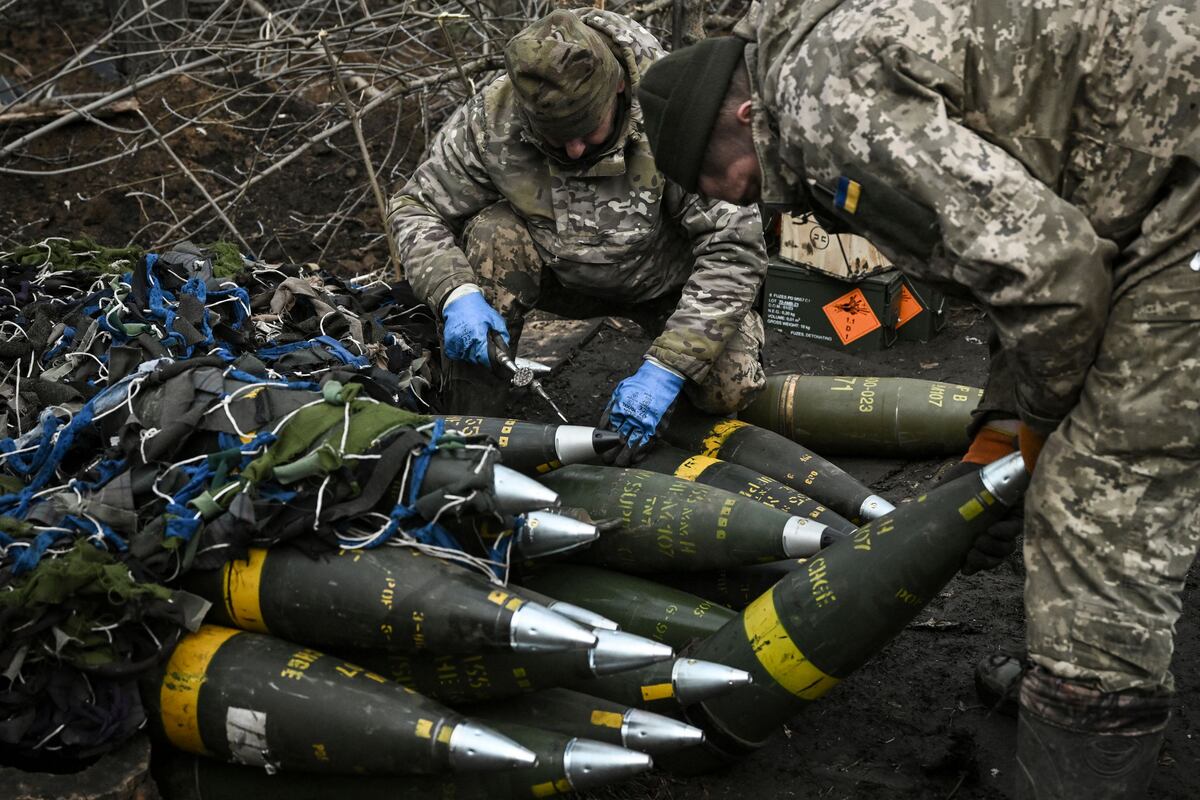
While the world watches Israel and Iran , Russia’s war of aggression in Ukraine is at a crossroads. More than two years since the full-scale Russian invasion of Ukraine , the situation on the eastern front now looks dire, with Ukrainian defenders running out of ammunition fast and Western unity in question. The Czech Republic has a plan that could help resupply Ukrainian forces with artillery shells.
Earlier this year, many believed the war in Ukraine was reaching a stalemate . However, such assumptions now appear unfounded, much to the detriment of the Ukrainians. The conflict has evolved into a positional struggle: Both sides are employing defensive tactics such as trenches, fortifications, land mines and vast numbers of drones to make it difficult to concentrate forces, let alone maneuver, without drawing fire.
As the much larger country, and with fewer qualms about human costs, Russia is better prepared for such a war of attrition . It has mobilized its defense industry onto a war footing and significantly increased its production capacity , especially in terms of artillery munitions. It is reportedly producing around 250,000 artillery rounds per month, or 3 million a year, compared to the much less ambitious — and unrealized — goal of increasing U.S. production to 100,000 rounds a month by the end of 2025.
U.S. military aid to Ukraine has now been passed in the U.S. Congress, but Europe has been struggling to ramp up its own production to offset the American shortfalls.
As a result, Ukraine has found itself in an increasingly vulnerable position, with Russian forces making tactical gains across the front line and capturing the city of Avdiivka. While none of these advances have translated into a decisive breakthrough, Russia is thought to be preparing major offensives for the late spring or summer, seeking to exploit its growing advantages in both troops and firepower.
To fuel its attacks, Russia has tapped into its recruitment pool and devoted a large amount of its state budget to defense. President Vladimir Putin signed a decree on March 31 to conscript 150,000 Russians as part of its regular spring conscription campaign. The war effort is further backed by a major increase in military spending, as the country is reportedly planning to spend $140 billion on defense in 2024, representing 7.1% of its gross domestic product and 35% of all government expenditure. It is believed that Russia can sustain the current rate of attrition through 2025 .
In the meantime, the situation in Ukraine is arguably more critical than at any time since the early days of the invasion. According to Ukraine’s defense minister , half of all promised military support has not arrived on time, complicating planning and costing lives. While NATO allies are discussing the establishment of a five-year aid package to Ukraine worth more than $100 billion, the plan seems to be a long-term solution to equip the Ukrainian military and does not meet the immediate needs. In contrast, Russia fires 10,000 artillery shells per day , five times more than Ukraine, as it escalates its attacks and seeks to wear down Ukrainian defenses .
To address Ukraine’s urgent needs, the Czech Republic has initiated a plan to purchase artillery shells from non-European Union sources, demonstrating proactive leadership and aligning with its robust new defense strategy . The initiative aims to procure 500,000 pieces of 155mm rounds and 300,000 pieces of 122mm rounds worth €3 billion (U.S. $3.2 billion).
Czechia has already received funds from allies for the purchase of the first 300,000 pieces of ammunition and contracted for the first 180,000 , with negotiations ongoing for an additional half a million rounds. So far, 18 countries have joined the initiative, but Czech Foreign Affairs Minister Jan Lipavský is urging more funding, as the current amount pledged is not sufficient.
The Czechs are reportedly exploring ammunition sources in South Korea, Turkey and South Africa, though suppliers have not been specified.
This small country’s initiative has contributed to exposing divisions within the EU. After much wrangling, the bloc has belatedly agreed on reforms of the European Peace Facility, which is used to reimburse member states for sending aid to Ukraine.
One significant obstacle was France’s opposition to the buying of military materiel from non-EU countries as it pushed for a “buy European” clause to support the European defense industry. Germany, on the other hand, asked for national donations to Ukraine to be considered in determining the size of financial contributions to the fund.
Eventually, EU members reached a compromise that gives priority to the European industry but allows for flexibility when it would not be able to provide Ukraine with assistance in the necessary time frames, opening the way for the Czech initiative. In contrast, Slovakia and Hungary have declined to join the Czech initiative altogether, stating that they are not prepared to change their strict refusal to provide arms to Ukraine.
These disagreements cast the spotlight on the EU’s dilemma between addressing Ukraine’s immediate battlefield needs and addressing longer-term goals such as increasing European defense-industrial capacity. In reality, the EU needs to pursue both paths simultaneously to provide Kyiv with enough support.
After decades of underinvestment, improving the EU’s industry capacity will not happen overnight. Therefore, the EU ought to purchase ammunition outside the EU to buy time for European industry to develop the necessary capacities.
Providing Ukraine with artillery shells would not only support Ukraine’s military at a time of immediate need but would also signal the EU’s continuing will and capacity to support Kyiv. Such a move would be a welcome reassurance for Ukraine and a demonstration to the U.S. of Europe’s willingness to stand with Kyiv for the long term and to take a greater share of the wider burden of defending trans-Atlantic security.
Last but not least, the aid would impose additional costs on Russia, and give Ukraine time to rebuild and replenish its own forces ahead of a possible counteroffensive in late 2024 or 2025.
James Black is assistant director of the defense and security research group at the Europe branch of the think tank Rand, where Ondrej Palicka is a research assistant. Zdenek Rod is a research and teaching fellow at the University of West Bohemia and CEO of the Center for Security Consulting in Prague.
当全世界都在关注以色列和伊朗的局势时,俄罗斯在乌克兰的侵略战争正处于十字路口。俄罗斯全面入侵乌克兰已超过两年,东线局势如今岌岌可危,乌克兰守军弹药迅速耗尽,西方国家的团结也面临考验。捷克共和国有一项计划,或许能够帮助乌克兰军队补充炮弹。
今年早些时候,许多人认为乌克兰战争已陷入僵局。然而,现在看来这种假设毫无根据,这对乌克兰人民来说无疑是雪上加霜。冲突已演变为阵地战:双方都采取了诸如战壕、工事、地雷和大量无人机等防御战术,使得对方难以集中兵力,更遑论在不引火烧身的情况下进行机动。
作为幅员辽阔、对人员伤亡漠不关心的国家,俄罗斯更有能力应对这种消耗战。它已将国防工业动员到战时状态,并大幅提升了产能,尤其是在炮弹方面。据报道,俄罗斯目前每月生产约25万发炮弹,即每年300万发,而美国的目标——到2025年底将月产量提高到10万发——则要低得多,而且至今尚未实现。
美国国会已经通过了对乌克兰的军事援助,但欧洲一直在努力提高自身的生产能力,以弥补美国的不足。
因此,乌克兰的处境日益脆弱,俄军在前线取得战术进展,并占领了阿夫迪伊夫卡市。尽管这些进展尚未转化为决定性的突破,但据信俄罗斯正准备在春末夏初发动大规模攻势,以期利用其在兵力和火力方面不断增长的优势。
为了支持其军事行动,俄罗斯动用了庞大的征兵资源,并将国家预算的很大一部分投入国防。3月31日,普京总统签署法令,在春季例行征兵活动中征召15万俄罗斯公民。此外,俄罗斯还大幅增加军费开支,据报道,该国计划在2024年投入1400亿美元用于国防,这相当于其国内生产总值的7.1%,占政府总支出的35%。据信,俄罗斯能够以目前的兵力消耗速度维持到2025年。
与此同时,乌克兰局势可以说比入侵初期以来的任何时候都更加严峻。据乌克兰国防部长称,承诺的军事援助有一半未能按时到位,这不仅使计划制定更加复杂,也造成了人员伤亡。尽管北约盟国正在讨论一项价值超过1000亿美元的五年期援助计划,但该计划似乎旨在长期装备乌克兰军队,而无法满足眼前的需求。相比之下,俄罗斯每天发射1万枚炮弹,是乌克兰的五倍,不断升级其攻击,试图削弱乌克兰的防御能力。
为应对乌克兰的迫切需求,捷克共和国启动了一项从非欧盟国家采购炮弹的计划,展现了其积极主动的领导力,并与其强有力的新国防战略相契合。该计划旨在采购50万发155毫米炮弹和30万发122毫米炮弹,总价值30亿欧元(约合32亿美元)。
捷克已从盟友处获得资金,用于购买首批30万发弹药,并已签订首批18万发的合同,目前正在就另外50万发弹药进行谈判。迄今为止,已有18个国家加入这项倡议,但捷克外交部长扬·利帕夫斯基呼吁追加资金,因为目前承诺的金额不足。
据报道,捷克方面正在韩国、土耳其和南非寻找弹药来源,但尚未具体说明供应商。
这个小国的倡议暴露了欧盟内部的分歧。经过一番争论,欧盟最终同意改革欧洲和平基金,该基金用于补偿成员国向乌克兰提供的援助。
一个重大障碍是法国反对从非欧盟国家购买军事物资,因为它力推“购买欧洲产品”条款以支持欧洲国防工业。另一方面,德国则要求在确定对该基金的财政捐款规模时,将各国对乌克兰的捐款考虑在内。
最终,欧盟成员国达成了一项妥协方案,该方案优先考虑欧洲工业,但也允许在无法按时向乌克兰提供援助时保持灵活性,从而为捷克的倡议铺平了道路。相比之下,斯洛伐克和匈牙利则完全拒绝加入捷克的倡议,并表示它们不愿改变其坚决拒绝向乌克兰提供武器的立场。
这些分歧凸显了欧盟面临的两难困境:既要满足乌克兰眼前的战场需求,又要实现诸如提升欧洲国防工业能力等长期目标。实际上,欧盟需要同时推进这两条路径,才能为基辅提供足够的援助。
经过数十年的投资不足,欧盟工业产能的提升并非一朝一夕之功。因此,欧盟应该从欧盟以外采购物资,为欧洲工业发展必要的产能争取时间。
向乌克兰提供炮弹不仅能在乌克兰军队急需援助之际给予支持,还能表明欧盟持续支持基辅的意愿和能力。此举将令乌克兰感到安心,并向美国表明欧洲愿意与基辅长期站在一起,并承担更多维护跨大西洋安全的重任。
最后但同样重要的是,这项援助将给俄罗斯带来额外的成本,并让乌克兰有时间重建和补充自己的军队,以便在 2024 年底或 2025 年可能发起的反攻之前做好准备。
詹姆斯·布莱克是兰德智库欧洲分部国防与安全研究小组的助理主任,翁德雷·帕利卡是该小组的研究助理。兹德涅克·罗德是西波希米亚大学的研究和教学研究员,也是布拉格安全咨询中心的首席执行官。