Ukraine pulls US tanks from front lines over Russian drone threats乌克兰因俄罗斯无人机威胁而将美军坦克撤出前线
The sidelining of the Abrams reflects evolving battlefield tactics where drone use has made it virtually impossible for them to maneuver without detection.
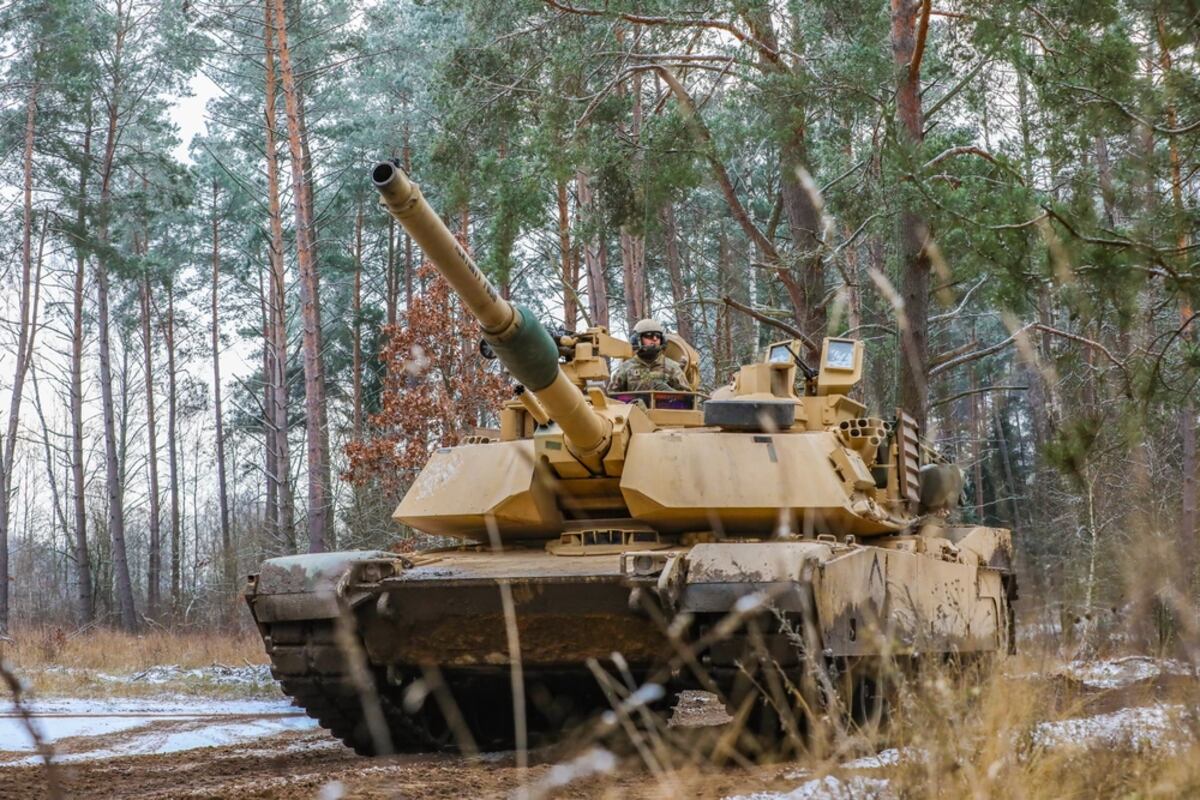
Ukraine has sidelined U.S.-provided Abrams M1A1 battle tanks for now in its fight against Russia, in part because Russian drone warfare has made it too difficult for them to operate without detection or coming under attack, two U.S. military officials told The Associated Press.
The U.S. agreed to send 31 Abrams to Ukraine in January 2023 after an aggressive monthslong campaign by Kyiv arguing that the tanks, which cost about $10 million apiece, were vital to its ability to breach Russian lines.
But the battlefield has changed substantially since then, notably by the ubiquitous use of Russian surveillance drones and hunter-killer drones . Those weapons have made it more difficult for Ukraine to protect the tanks when they are quickly detected and hunted by Russian drones or rounds.
Five of the 31 tanks have already been lost to Russian attacks.
The proliferation of drones on the Ukrainian battlefield means “there isn’t open ground that you can just drive across without fear of detection,” a senior defense official told reporters Thursday.
The official spoke on the condition of anonymity to provide an update on U.S. weapons support for Ukraine before Friday’s Ukraine Defense Contact Group meeting.
For now, the tanks have been moved from the front lines, and the U.S. will work with the Ukrainians to reset tactics, said Joint Chiefs of Staff Vice Chairman Adm. Christopher Grady and a third defense official who confirmed the move on the condition of anonymity.
“When you think about the way the fight has evolved, massed armor in an environment where unmanned aerial systems are ubiquitous can be at risk,” Grady told the AP in an interview this week, adding that tanks are still important.
“Now, there is a way to do it,” he said. “We’ll work with our Ukrainian partners, and other partners on the ground, to help them think through how they might use that, in that kind of changed environment now, where everything is seen immediately.”
News of the sidelined tanks comes as the U.S. marks the two-year anniversary of the Ukraine Defense Contact Group, a coalition of about 50 countries that meets monthly to assess Ukraine’s battlefield needs and identify where to find needed ammunition, weapons or maintenance to keep Ukraine’s troops equipped.
Recent aid packages, including the $1 billion military assistance package signed by President Joe Biden on Wednesday, also reflect a wider reset for Ukrainian forces in the evolving fight .
This week’s assistance emphasized counter-drone capabilities, including .50-caliber rounds specifically modified to counter drone systems; additional air defenses and ammunition; and a host of alternative, and cheaper, vehicles, including Humvees, Bradley Infantry Fighting Vehicles and Mine Resistant Ambush Protected Vehicles.
The U.S. also confirmed for the first time that it is providing long-range ballistic missiles known as ATACMs, which allow Ukraine to strike deep into Russian-occupied areas without having to advance and be further exposed to either drone detection or fortified Russian defenses.
While drones are a significant threat, the Ukrainians also have not adopted tactics that could have made the tanks more effective, one of the U.S. defense officials said.
After announcing it would provide Ukraine the Abrams tanks in January 2023, the U.S. began training Ukrainians at Grafenwoehr Army base in Germany that spring on how to maintain and operate them. They also taught the Ukrainians how to use them in combined arms warfare — where the tanks operate as part of a system of advancing armored forces, coordinating movements with overhead offensive fires, infantry troops and air assets.
As the spring progressed and Ukraine’s highly anticipated counteroffensive stalled, shifting from tank training in Germany to getting Abrams on the battlefield was seen as an imperative to breach fortified Russian lines. Ukrainian President Volodymyr Zelenskyy announced on his Telegram channel in September that the Abrams had arrived in Ukraine.
Since then, however, Ukraine has only employed them in a limited fashion and has not made combined arms warfare part of its operations, the defense official said.
During its recent withdrawal from Avdiivka , a city in eastern Ukraine that was the focus of intense fighting for months, several tanks were lost to Russian attacks, the official said.
A long delay by Congress in passing new funding for Ukraine meant its forces had to ration ammunition , and in some cases they were only able to shoot back once for every five or more times they were targeted by Russian forces.
In Avdiivka, Ukrainian forces were badly outgunned and fighting back against Russian glide bombs and hunter-killer drones with whatever ammunition they had left.
Tara Copp is a Pentagon correspondent for the Associated Press. She was previously Pentagon bureau chief for Sightline Media Group.
两名美国军方官员告诉美联社,乌克兰目前已将美国提供的M1A1艾布拉姆斯主战坦克搁置一边,用于对抗俄罗斯,部分原因是俄罗斯的无人机战争使得这些坦克很难在不被发现或遭到攻击的情况下作战。
经过基辅长达数月的积极游说,美国同意于 2023 年 1 月向乌克兰派遣 31 辆艾布拉姆斯坦克。基辅方面辩称,这些坦克每辆造价约 1000 万美元,对于乌克兰突破俄罗斯防线至关重要。
但自那时以来,战场形势已发生显著变化,尤其体现在俄罗斯侦察无人机和猎杀无人机的广泛使用上。这些武器使得乌克兰更难保护其坦克,因为坦克很容易被俄罗斯无人机或炮弹发现并遭到攻击。
31辆坦克中已有5辆在俄军的攻击中被击毁。
一位高级国防官员周四告诉记者,乌克兰战场上无人机的扩散意味着“没有一片开阔地带可以让你开车穿过而不担心被发现”。
这位官员在周五乌克兰防务联络小组会议召开前,匿名介绍了美国对乌克兰的武器支持的最新情况。
美军参谋长联席会议副主席克里斯托弗·格雷迪海军上将和另一位不愿透露姓名的国防官员证实,目前坦克已从前线撤离,美国将与乌克兰方面合作重新调整战术。
“考虑到战争的演变方式,在无人机系统无处不在的环境中,大量装甲部队可能会面临风险,”格雷迪本周在接受美联社采访时表示,并补充说坦克仍然很重要。
“现在,我们有办法了,”他说。“我们将与我们的乌克兰合作伙伴以及当地其他合作伙伴共同努力,帮助他们思考如何在如今这种一切都显而易见的环境中利用这项技术。”
就在美国庆祝乌克兰防务联络小组成立两周年之际,有关这些被搁置的坦克的消息传出。该小组是由大约 50 个国家组成的联盟,每月举行会议,评估乌克兰的战场需求,并确定在哪里可以找到所需的弹药、武器或维护,以保持乌克兰军队的装备。
最近的援助计划,包括乔·拜登总统周三签署的10亿美元军事援助计划,也反映出乌克兰军队在不断变化的战斗中进行了更广泛的调整。
本周的援助重点是反无人机能力,包括专门改装用于反无人机系统的 .50 口径弹药;额外的防空设备和弹药;以及一系列替代的、更便宜的车辆,包括悍马、布雷德利步兵战车和防地雷反伏击车。
美国还首次证实,它正在向乌克兰提供远程弹道导弹(ATACM),这种导弹可以让乌克兰深入俄罗斯占领区,而无需推进,从而避免进一步暴露于无人机探测或俄罗斯强化防御之下。
一位美国国防官员表示,虽然无人机构成重大威胁,但乌克兰方面也没有采取能够提高坦克作战效率的战术。
美国于2023年1月宣布将向乌克兰提供艾布拉姆斯坦克后,于同年春季开始在德国格拉芬沃尔陆军基地对乌克兰士兵进行维护和操作方面的培训。此外,美国还教授乌克兰士兵如何在诸兵种联合作战中使用艾布拉姆斯坦克——在这种作战体系中,坦克作为装甲部队推进系统的一部分,与空中火力、步兵和空中力量协调行动。
随着春季的推进,乌克兰备受期待的反攻陷入停滞,从在德国进行坦克训练转向将艾布拉姆斯坦克投入战场被视为突破俄军坚固防线的当务之急。乌克兰总统泽连斯基于9月在其Telegram频道上宣布,艾布拉姆斯坦克已抵达乌克兰。
但这位国防官员表示,自那以后,乌克兰只是有限地使用了这些武器,并没有将联合兵种作战纳入其作战行动中。
这位官员表示,在最近从乌克兰东部城市阿夫迪伊夫卡撤退的过程中,俄军损失了几辆坦克。阿夫迪伊夫卡曾是数月激烈战斗的中心。
由于国会迟迟未能通过对乌克兰的新拨款,乌克兰军队不得不实行弹药配给制,在某些情况下,他们每遭到俄罗斯军队五次或更多次攻击,才能还击一次。
在阿夫迪伊夫卡,乌克兰军队火力严重不足,只能用剩下的弹药与俄罗斯的滑翔炸弹和猎杀无人机进行反击。
塔拉·科普是美联社驻五角大楼记者。她此前曾担任Sightline媒体集团驻五角大楼分社社长。