The British Army Hoped This Rifle Could’ve Helped Halt The American Revolution英国军队曾希望这支步枪能够阻止美国独立战争。
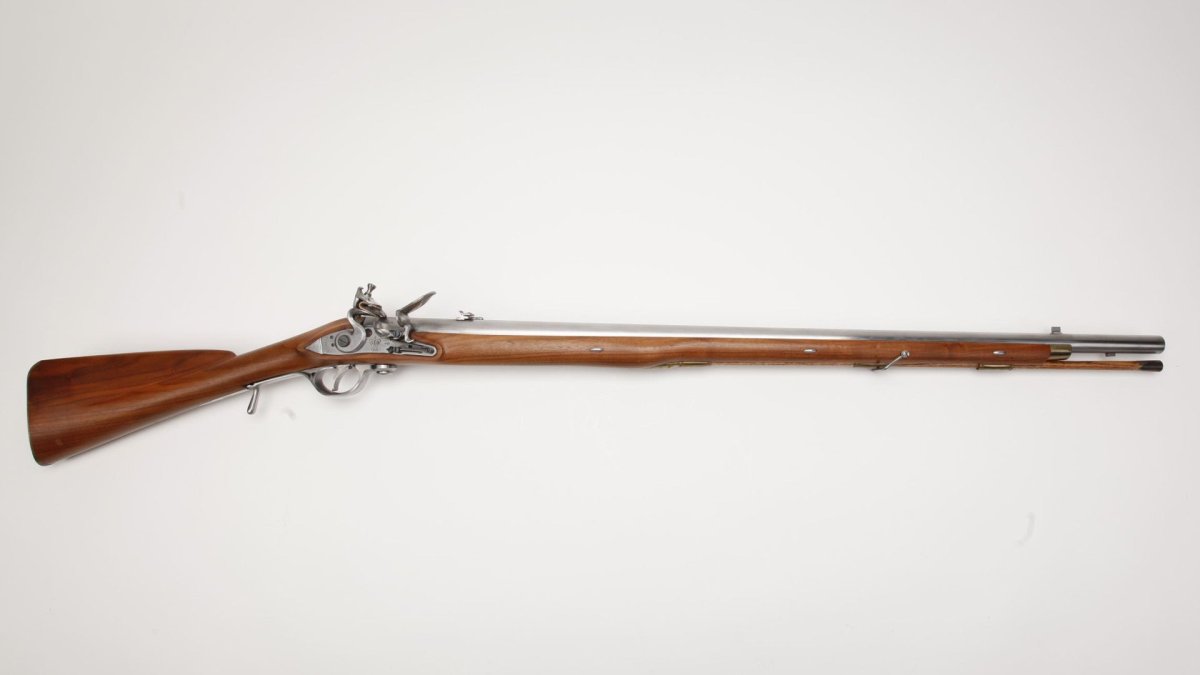
Ferguson's Ordnance Rifle didn't turn the tide of the war, but did help pave the way for developments in small arms and light infantry tactics.
新闻视频
By Joseph Trevithick
Published Jul 4, 2018 2:27 PM EDT
Since the United States has now been an independent country for more than 230 years, it might be hard for many Americans to remember that the success of the colonial uprising was hardly assured due to a host of political and military factors. The Revolutionary War, as is the case with most conflicts , was a proving ground of sorts of new technology, with the colonists and their allies notably using naval mines , and even an experimental submarine , to upend Britain’s near complete naval dominance. On land, though, one British Army officer was demonstrating a then state-of-the-art rifle in an attempt to help sway the course of the conflict in the other direction and may have even had General George Washington directly in his sights at one point.
By the time the Second Continental Congress issued the Declaration of Independence on July 4, 1776, Patrick Ferguson had already fought against the Holy Roman Empire in Europe during the Seven Years’ War and served more time in the British Army in the British Empire’s West Indies colonies . In 1772, the Scotsman had returned to the British Isles where he subsequently took part in then relatively unusual light infantry training and began work on what would become Ferguson’s Ordnance Rifle .
Through much of the 18th Century and into the 19th Century, the British Army relied heavily on the Land Pattern Musket , or variants and derivatives thereof. Nicknamed the “Brown Bess” for still unclear reasons, the gun was typical of its time. A muzzle-loading flintlock musket , it shot a .75 caliber round ball and had an effective range of between 50 and 100 yards. During the Revolutionary War, American forces used similar muzzling loading muskets, including captured British guns, as well as muzzling-loading rifles, such as the Kentucky Rifle .
With the Brown Bess, a well-trained soldier could manually load the powder charge and projectiles, ram them in place, set the priming compound under the flint, and then fire at a rate of between three and four shots per minute. Underscoring how lengthy and regimented the process was in the British Army, in 1764, Great Britain put out an official manual of arms for all military services that laid out 35 separate drills, many with multiple “motions,” for proper use of the muskets in combat and on the parade ground.
A standard Land Pattern Musket or “Brown Bess.”, Antique Military Rifles via Wikimedia
Ferguson proposed an alternative gun that troops would be able to load at the breach end and do so much more rapidly than before. It would be rifled for greater accuracy at range compared to the smooth-bore musket, too.
To be fair, Ferguson was hardly the first to come up with the idea of a breech loading flintlock firearm or a mechanism that allowed for rapid fire. The design of Ferguson’s Ordnance Rifle lifts many key design features from a sporting gun a Frenchman named Isaac de la Chaumette had developed decades earlier.
Part of an advertisement or manual for Ferguson’s Ordnance Rifle via National Park Service
But Ferguson’s rifle was a significant improvement over that earlier design. Instead of having to tediously unscrew the action, thanks to a more efficient series of grooves, the shooter only had to swing the trigger guard one full revolution to crank open up a cavity at the breech. Then they could drop the projectile into place along with the powder charge.
Closing the mechanism would force the powder charge into place and expel any excess in the process. The rest of the firing sequence was just like a typical flintlock rifle. You can watch the full sequence in the video below, which features a reproduction Ferguson rifle.
In addition, since the user wouldn’t have to prop the gun up in some way to tip the powder and ball into the muzzle, they could employ the rifle from a prone position. This could have allowed sharpshooters to better conceal themselves behind cover or while lying down in dense foliage or tall grass, something that snipers today probably take for granted.
In an initial demonstration for the British War Office and Board of Ordnance, Ferguson himself and 10 other trained soldiers were reportedly able to show a single rifle could put 15 balls on a target at 200 yards in just five minutes. This was as fast as shooting with the Brown Bess, but much more precise. The belief was that an infantry unit trained to effectively use the weapon could improve their rate of fire significantly.
The video below shows how fast it might have been possible for an especially well-trained soldier to operate the standard Brown Bess.
Despite support from British officials, Ferguson almost immediately found himself up against a host of obstacles in trying to get his rifle into widespread use. For one, the weapon had been developed with a not insignificant emphasis on enabling light infantry tactics that the British Army remained largely opposed to in basic concept.
To make up for the relative speed of fire and the limited range and accuracy of weapons such as the Brown Bess, at the time, the British Army and its contemporaries typically employed heavy or “line” infantry units standing in rows with limited maneuverability to maximize their firepower. Light infantry or “skirmishers,” would operate in smaller, more flexible elements – again relative for the time and not at all comparable to modern infantry tactics – either ahead of this line or along its flanks, operating in groups as small as a pair of soldiers and firing at will instead of using massed, officer-directed volleys.
In the years leading up to the Revolutionary War, the British had typically hired mercenaries or otherwise recruited irregulars, including colonial auxiliaries, to fill the role of light infantry. The British Army had an institutional aversion to the concept and routinely disbanded the units as soon as it no longer needed them. The demands of the Seven Years’ War, and its French and Indian War side-show in North America, led to actual British troops filling the ranks of some of these formations.
Historians credit Brigadier General Lord George Howe with finally beginning to break the British Army’s hostility toward light infantry when he formally proposed the creation of a full regiment trained in tactics similar to the ones he had observed among his French and Native American opponents. French forces killed Howe in 1758 near Lake George in what is now New York State.
A painting depicting France’s Louis-Joseph de Montcalm celebrating with his troops after the victory over the British, including forces under the command of Lord George Howe, at the Battle of Carillon during the French and Indian War. Seen behind him is an irregular wearing a coonskin cap, but the work does not show any of the significant numbers of Native Americans who fought for both sides during the battle., Henry Alexander Ogden/Public Domain
Ferguson, who trained in light infantry operations under Howe’s brother William, was a clear advocate for more flexibility on the battlefield and guns to go with it. And with some senior elements within the British Army taking an increasingly positive view of light infantry, as well as sharpshooters, he was able to quickly secure a contract, albeit for just 300 guns, and received a patent for the breech-loading mechanism in December 1776.
The far bigger issue was cost and complexity of manufacture. The British Army would’ve needed tens of thousands of Fergusons to replace the Land Pattern Musket and its cousins completely. The new rifles were four times more expensive than the Brown Bess and with just four gunsmiths building them, the guns were only reaching troops at a rate of less than 16 per month.
In 1777, King George III finally ordered that Ferguson simply establish an Experimental Rifle Corps attached to General William Howe’s forces in the North American colonies. Even then, this unit of 100 men struggled to obtain the appropriate number of rifles, with some of them using other guns alongside them, reducing the overall effectiveness of the concept.
The experimental formation took part in the massive Battle of Brandywine in September 1777, which occurred in present day Pennsylvania and lasted for approximately 11 hours, making the longest single-day engagement of the Revolutionary War. British troops backed by Hessian mercenaries inflicted heavy casualties on the colonial forces, including those under the command of George Washington.
A painting depicting Continental Army forces at the Battle of Brandywine., Howard Pyle via the Brandywine Museum
In what is likely an apocryphal story, Ferguson himself may have had the American commander in the sights of his own rifle, a shot that could have had serious ramifications for the conflict. As the story goes, he declined to shoot an enemy officer standing next to another individual in a hussar uniform since the individual’s back was turned. The suggestion was that this could have been Washington next to Count Casimir Pulaski , a Pole who had become a senior officer in the Continental Army and was also at the battle.
Whatever the truth of the matter, Ferguson was himself wounded in the engagement. Apparently, without a vocal advocate to extend the test of his experimental unit, the British Army disbanded it and put the rifles into storage in New York.
After returning to duty, Ferguson went on to command local loyalist irregular forces in the Carolinas and led a counter-insurgency campaign – an underappreciated component of the Revolutionary War as it occurred beyond the well known battlefields – in the region. He died in the Battle of Kings Mountain in what is today South Carolina after reportedly refusing to surrender to pro-independence American forces.
An 1863 engraving depicting then Major Patrick Ferguson getting shot off his horse during the Battle of Kings Mountain. This wound was apparently not fatal and he died in a subsequent skirmish as pro-independence forces attempted to capture him., via the Anne S. K. Brown Collection at Brown University
It’s not clear what happened to his rifles after the United States finally won its independence in 1783. There is some evidence that Ferguson may have found a way to get the guns out of storage in New York and delivered to his militias in the Carolinas. In something of a final irony, the North Carolina Militia reportedly sent forces into battle against the British armed with those same Fergusons during the War of 1812 , which cemented America’s status as an independent country.
Even though the British only made approximately 200 Ferguson rifles in total ever, these apparently remained in some level of limited service in North America through the American Civil War. The bulk of the original rifles now in museums and other collections were seized by Union Troops.
The rifles apparently had about as much impact on the outcome of that conflict as they did during the Revolutionary War. However, being the first breech-loading rifle to see real combat service officially with a standing military force, they did set the stage for future developments, both in regards to firearms and more mobile infantry tactics.
And as we celebrate the Fourth of July, we can be additionally grateful that the British did not find a way to exploit the full potential of Ferguson’s Ordnance Rifle and that the man himself missed the opportunity to potentially have shot George Washington in the back.
Contact the author: jtrevithickpr@gmail.com
Comments couldn’t be loaded. Please refresh the page.
作者:约瑟夫·特雷维西克
发布于美国东部时间2018年7月4日下午2:27
由于美国独立至今已超过230年,许多美国人或许很难想起,殖民地起义的成功并非唾手可得,而是受到诸多政治和军事因素的影响。如同大多数冲突一样,独立战争也成为了各种新技术的试验场。殖民地及其盟友尤其使用了水雷,甚至还有一艘实验性潜艇,试图颠覆英国近乎绝对的海上霸权。然而,在陆地上,一位英国陆军军官正在展示当时最先进的步枪,试图扭转战局,甚至一度将乔治·华盛顿将军置于枪口之下。
1776年7月4日,第二届大陆会议发表《独立宣言》时,帕特里克·弗格森已在七年战争期间在欧洲与神圣罗马帝国作战,并在英国西印度群岛殖民地的英国军队服役多年。1772年,这位苏格兰人返回不列颠群岛,随后参加了当时相对少见的轻步兵训练,并开始着手研发后来被称为弗格森步枪的武器。
在18世纪的大部分时间和19世纪初期,英国军队主要依赖陆军制式滑膛枪或其各种变型和衍生型号。这种枪因不明原因被昵称为“布朗贝斯”,是当时典型的武器。它是一种前装式燧发枪,发射0.75口径的圆球弹,有效射程在50到100码之间。美国独立战争期间,美军也使用了类似的前装式滑膛枪,包括缴获的英军枪支,以及肯塔基步枪等前装式步枪。
使用布朗贝斯步枪,训练有素的士兵可以手动装填火药和弹丸,将它们压入弹膛,在燧石下放置引火剂,然后以每分钟三到四发的射速射击。为了凸显英国军队装填过程的繁琐和严格,1764年,英国颁布了一部适用于所有军种的官方武器手册,其中详细列出了35项不同的操练,许多操练包含多个“动作”,旨在指导士兵在战斗和阅兵场上正确使用火枪。
标准的陆军制式滑膛枪,又称“布朗贝斯”,图片来自维基媒体的古董军用步枪
弗格森提出了一种替代火炮,士兵可以在炮尾装填弹药,速度比以前快得多。与滑膛枪相比,这种火炮还带有膛线,射程更远,精度更高。
平心而论,弗格森并非第一个提出后膛装填燧发枪或速射机制的人。弗格森军械步枪的设计借鉴了法国人伊萨克·德·拉·肖梅特几十年前开发的一种运动枪的许多关键设计特征。
这是国家公园管理局发布的弗格森军械步枪广告或手册的一部分。
但弗格森的步枪相比之前的设计有了显著的改进。由于采用了更高效的凹槽设计,射手无需再费力地拧开枪机,只需将扳机护圈旋转一整圈,即可打开枪膛内的空腔。然后,他们就可以将弹丸和发射药装入弹膛。
关闭机关会将火药压入到位,并将多余的火药排出。其余的射击过程与典型的燧发枪相同。您可以在下面的视频中观看完整的射击过程,视频中使用的是一支复刻版的弗格森步枪。
此外,由于使用者无需以任何方式支撑枪支来将火药和弹丸装入枪口,他们可以采用卧姿射击。这使得狙击手能够更好地隐藏在掩体后方或茂密的树叶或高草丛中,而如今的狙击手可能对此习以为常。
据报道,在为英国陆军部和军械委员会进行的一次初步演示中,弗格森本人和其他10名训练有素的士兵能够证明,一支步枪可以在短短五分钟内,在200码(约183米)的距离上,将15发子弹射中目标。这与使用布朗贝斯步枪的速度一样快,但精度却高得多。人们相信,一支经过训练能够有效使用这种武器的步兵部队,其射速将得到显著提升。
下面的视频展示了一名训练有素的士兵操作标准布朗贝斯手枪的速度可能有多快。
尽管得到了英国官员的支持,弗格森几乎立刻发现自己在推广其步枪的过程中遇到了诸多阻碍。首先,该武器的研发重点之一是支持轻步兵战术,而英国陆军在基本理念上仍然强烈反对这种战术。
为了弥补当时诸如布朗贝斯冲锋枪等武器射速相对较快、射程和精度有限的不足,英国陆军及其同时代军队通常采用重装步兵或“线列”步兵单位,这些单位以纵队形式排列,机动性有限,以最大限度地发挥火力。轻装步兵或“散兵”则以更小、更灵活的单位作战——当然,这在当时是相对而言的,与现代步兵战术截然不同——他们或部署在线列前方,或沿线侧翼作战,以两人一组的小组形式行动,并可自由射击,而非采用由军官指挥的密集齐射。
在独立战争爆发前的几年里,英国通常雇佣雇佣兵或招募非正规军(包括殖民地辅助部队)来担任轻步兵。英国陆军历来对这种做法持抵触态度,一旦不再需要这些部队,就会立即解散它们。然而,七年战争及其在北美引发的法印战争,使得一些此类部队开始由真正的英国军队填补空缺。
历史学家认为,准将乔治·豪勋爵正式提议组建一支完整的轻步兵团,并采用与他从法国和美洲原住民对手身上观察到的类似的战术,这最终打破了英国军队对轻步兵的敌意。1758年,豪勋爵在乔治湖附近(今纽约州境内)被法军击毙。
这幅画描绘了法国路易-约瑟夫·德·蒙卡尔姆在卡里隆战役中战胜英军后与士兵们庆祝的场景,其中包括乔治·豪勋爵指挥的部队。这场战役发生在法国印第安战争期间。在他身后可以看到一名戴着浣熊皮帽的非正规军士兵,但画中并未展现这场战役中为交战双方效力的众多美洲原住民。(亨利·亚历山大·奥格登/公共领域)
弗格森曾在豪将军的兄弟威廉·豪的麾下接受轻步兵作战训练,他明确主张战场上应更加灵活,并配备相应的火炮。随着英国陆军一些高级将领对轻步兵和神枪手的评价日益提高,弗格森很快便获得了一份合同,尽管只有300门火炮,但他在1776年12月获得了后膛装填机构的专利。
更大的问题在于成本和制造工艺的复杂性。英国陆军需要数万支弗格森步枪才能完全取代陆军制式滑膛枪及其同类步枪。这种新型步枪的造价是布朗贝斯步枪的四倍,而且由于只有四位枪匠负责制造,每月交付部队的数量不足16支。
1777年,乔治三世国王最终下令弗格森在北美殖民地建立一支隶属于威廉·豪将军麾下的实验步枪队。即便如此,这支百人部队仍然难以获得足够数量的步枪,部分士兵甚至不得不同时使用其他枪支,这大大降低了实验步枪队的整体效能。
这支实验部队参加了1777年9月发生在今宾夕法尼亚州的大规模白兰地酒战役,这场战役持续了约11个小时,是美国独立战争中单日战斗时间最长的战役。英军在黑森雇佣兵的支持下,给殖民地军队造成了重大伤亡,其中包括乔治·华盛顿指挥的部队。
一幅描绘大陆军在白兰地酒战役中的画作,霍华德·派尔作品,图片来自白兰地酒博物馆
据说,弗格森本人可能曾用步枪瞄准过美国指挥官,而这一枪本可能对战局产生重大影响。故事是这样的:他拒绝射杀一名站在另一名身穿骠骑兵制服的人旁边的敌军军官,因为那人背对着他。有人猜测,站在他旁边的可能是华盛顿,以及卡西米尔·普拉斯基伯爵——一位波兰人,他后来成为大陆军的高级军官,也参加了这场战役。
无论真相如何,弗格森本人在那场战斗中负伤。显然,由于缺乏一位积极倡导者来延长他那支实验部队的测试期限,英国陆军解散了这支部队,并将步枪存放在纽约的仓库里。
重返岗位后,弗格森继续指挥卡罗来纳州的效忠派地方武装,并在该地区领导了一场反叛乱战役——这场战役是美国独立战争中鲜为人知的一部分,因为它发生在众所周知的战场之外。据报道,他在拒绝向支持独立的美国军队投降后,在今天的南卡罗来纳州国王山战役中阵亡。
一幅1863年的版画描绘了当时的少校帕特里克·弗格森在国王山战役中被子弹击落马下的情景。这处伤口显然并非致命,他在随后的一次小规模冲突中丧生,当时支持独立的军队试图俘虏他。(图片来自布朗大学安妮·S·K·布朗收藏)
1783年美国最终赢得独立战争后,弗格森的步枪下落不明。有证据表明,弗格森可能找到了办法将这些枪支从纽约的仓库中取出,并运送给了他在卡罗来纳州的民兵。颇具讽刺意味的是,据报道,在1812年战争期间,北卡罗来纳州民兵正是用这些弗格森步枪与英军作战,这场战争巩固了美国作为独立国家的地位。
尽管英国总共只生产了大约200支弗格森步枪,但这些步枪显然在美国内战期间仍在北美以某种程度的有限形式服役。目前收藏于博物馆和其他机构的大部分原版步枪都是被联邦军队缴获的。
这些步枪对那场冲突结果的影响似乎与它们在独立战争中的影响大致相同。然而,作为第一种正式在正规军中投入实战的后膛装填步枪,它们确实为未来的发展奠定了基础,无论是在枪械方面,还是在更机动的步兵战术方面。
在我们庆祝七月四日之际,我们还可以庆幸英国人没有找到充分发挥弗格森军械步枪潜力的方法,而弗格森本人也错失了从背后射杀乔治·华盛顿的机会。
联系作者:jtrevithickpr@gmail.com
评论加载失败,请刷新页面。