PAP government does not believe in using higher pay to entice candidates into politics: PM Wong黄循财总理:人民行动党政府不赞成用高薪吸引候选人参政。
“No one should enter politics for the money,” says Prime Minister Lawrence Wong in the parliamentary debate about political salaries.
新闻视频
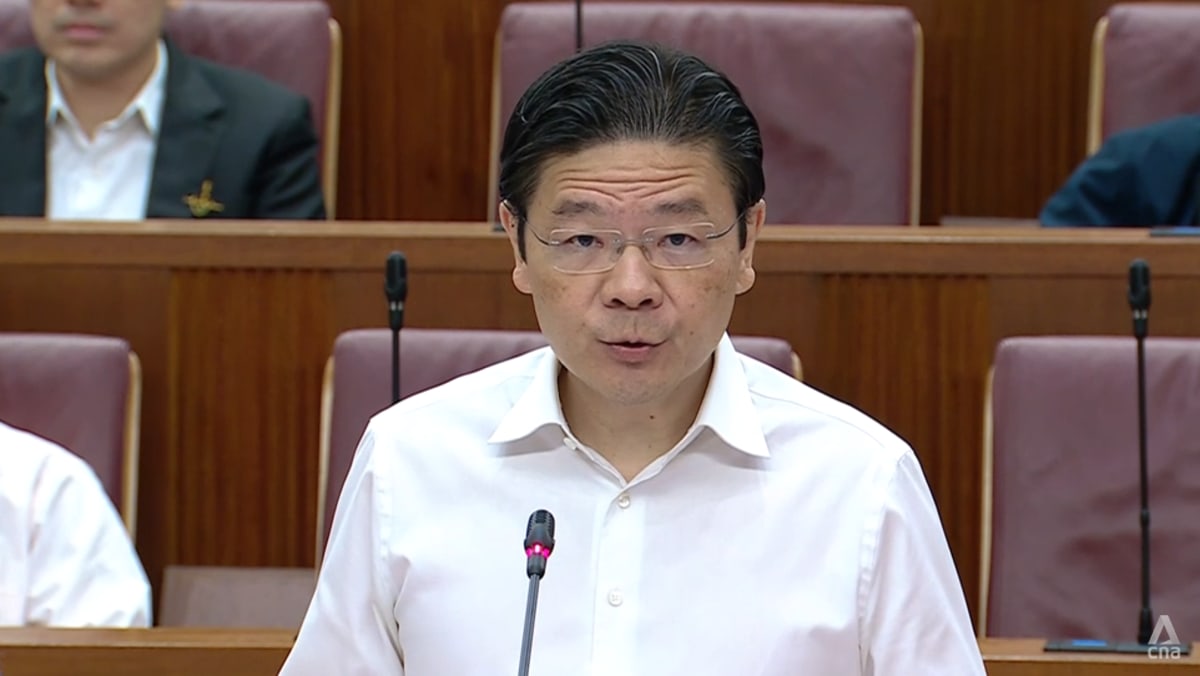
“No one should enter politics for the money,” says Prime Minister Lawrence Wong in the parliamentary debate about political salaries.
Prime Minister Lawrence Wong speaking in parliament on Sep 10, 2026 during the debate on political salaries.
This audio is generated by an AI tool.
SINGAPORE: The People’s Action Party (PAP) government does not believe in using higher pay to draw people into politics, but having competitive political salaries means that potential candidates don't have to "upend” financial responsibilities that they have taken up for their families, said Prime Minister Lawrence Wong on Thursday (Sep 10).
In his closing speech during the parliamentary debate on changes to Singapore’s political salary framework, Mr Wong added that “no one should enter politics for the money”.
While some have the "mistaken premise” that the purpose of the salary framework is to “entice people into politics with money", this is not the case, he added.
Instead, PAP candidates step forward because they want to serve Singapore and Singaporeans, and this is a key prerequisite for identifying candidates to be fielded in any election.
“To be very clear, the PAP, the PAP government – we do not believe in using higher pay as an incentive to draw people into politics,” said Mr Wong.
The prime minister also clarified that the donation of the full increase in his salary for the next five years will include any tax benefit arising from the donations, so he would not benefit financially from this salary change.
CNA Games Guess Word Crack the word, one row at a time Buzzword Create words using the given letters Mini Sudoku Tiny puzzle, mighty brain teaser Mini Crossword Small grid, big challenge Word Search Spot as many words as you can Show More Show Less
Mr Wong added that he would consider disclosing more details on ministerial salaries and that office holders would not automatically move to new salary benchmarks.
“Competitive salaries do not create the motivation to serve. But they can make it possible for someone who already has that motivation in the first place to step forward. In other words, motivation to serve, responding to the call, must come first,” he said.
“We have to persuade good people that Singapore needs them. That the work matters. That they can make a difference. Then, if someone is prepared to step forward, remuneration becomes a practical consideration.”
Mr Wong pointed out that individuals whom the government hopes to bring into political leadership would have built their lives around successful careers, and have mortgages to service, children to provide for, parents to support, and other commitments based on the incomes that they have been earning.
“Entering politics would already involve considerable disruption and sacrifice. We should not require them to completely upend the financial responsibilities that they have legitimately taken up for their families,” he said.
“So the purpose of the salary framework is to ensure that, on top of all the other sacrifices involved, we do not make the financial costs unnecessarily high for them.”
He added that it is a myth that civil servants joining politics enjoy a pay increase.
"That does not happen. There is no increase when civil servants join politics. Sometimes, it is even a pay cut, and when you look at the earnings over subsequent years for civil servants – if they had stayed on and done well, they would very likely have earned more in the civil service," Mr Wong said.
He also rejected the Workers' Party's (WP) call to abolish the office of mayor.
NEVER A “POLITICALLY CONVENIENT” TIME
On Tuesday, Mr Wong announced that Singapore’s political office holders will receive a salary increase of up to 9 per cent, taking the sum to about S$1.2 million (US$0.95 million) annually for a minister in the lowest MR4 grade.
The changes will kick in from Oct 15 this year, after the government accepted the recommendations by an independent review committee that was appointed in December last year.
It is the first time since 2011 that ministerial salaries have been changed.
Responding to concerns that it might not be the best time to make the salary adjustments, Mr Wong said there is never going to be a “politically convenient time” to do so.
He pointed out that the review committee was convened in December last year and the expectation was for its work to be done around March or April this year.
“Of course, the conflict in Iran erupted earlier in February. So we decided then that our immediate priority had to be managing the immediate consequences for Singapore arising from that conflict. And since then, we have rolled out two support packages to help businesses, households, and families,” he said.
“The conflict in the Middle East has not ended. It may not end any time soon. But our domestic economic situation has stabilised. And that's why I decided we should now deal with this issue rather than defer it yet again.”
Following up on his speech on Tuesday, Mr Wong said that he understands there is “greater interest” in the distribution of political office holders’ salaries and performance bonuses.
“So beyond what we have already shared, I will consider whether more information can be disclosed,” he said.
“But we should also be careful not to turn ministerial assessment into a public popularity contest – and then start comparing and ranking individuals year by year.
“That is not going to be productive, and that's not how I want the Cabinet to operate.”
Mr Wong reiterated that the government is accepting the proposed framework but moving towards it gradually.
“To sum up, our response to the committee's recommendations is a measured one.
“The new benchmark sets a framework for the longer term. But we are not moving ministers straight to the new figure. We are making a one-off adjustment now, and then allowing salaries to move gradually, in line with individual performance and responsibilities,” he said.
“And I believe this strikes the right balance. We keep the framework relevant for the future, without overcorrecting for the present. We address a gap that has been built up over many years, but we do so progressively and with restraint.
“This is fair. This is responsible – both to the office holders serving today, and to Singapore's need to continue recruiting capable people to serve in the years ahead.”
In his speech, WP chief Mr Singh raised the issue of mayors, saying that it remains unclear what their job scope is and why their pay needs to be linked to the political salary framework.
Responding, Mr Wong said that mayors and the Community Development Councils (CDCs) bring value to Singapore by mobilising a wider network of volunteers, responding to local needs and contributing to various initiatives such as the CDC vouchers and Jobs Nearby scheme.
“I would not want to give up any of these contributions. I am proud of all our mayors and what they do for Singapore. I want our mayors to keep strengthening our communities and build a more cohesive and caring Singapore,” Mr Wong said.
In his speech, the prime minister recalled his own experience when he joined politics in 2011 and resigned from the civil service.
“No one told me: ‘if you win, this is the position you will get, this is the remuneration package.’ No one, it was a complete leap of faith,” he said.
“Only when I resigned did I fully appreciate one consequence: I was just short of 15 years in the civil service. You need 15 years to keep your pension, I was just short – I lost my pension.”
Mr Wong said he did not regret the decision to move into politics.
“I valued my years in the civil service greatly. And I continue to have the highest regard for those who serve Singapore in that way,” he added.
“But political service is a different kind of responsibility. You are not just helping to carry out decisions or implement decisions, you have to make the difficult choices, set the strategic direction, bring people along, and ultimately take responsibility for the outcomes.
“That is why I chose this path. The same is true of my colleagues. We stepped forward – to do what we can for Singapore and to serve our fellow citizens.”
Get our pick of top stories and thought-provoking articles in your inbox
Stay updated with notifications for breaking news and our best stories
Join our channel for the top reads for the day on your preferred chat app
“任何人都不应该为了金钱而从政,”总理黄循财在国会关于政治薪酬的辩论中说道。
2026年9月10日,总理黄循财在国会就政治薪酬问题进行辩论时发表讲话。
这段音频是由人工智能工具生成的。
新加坡:人民行动党(PAP)政府不相信用高薪来吸引人们从政,但有竞争力的政治薪酬意味着潜在的候选人不必“颠覆”他们为家庭承担的经济责任,总理黄循财周四(9月10日)表示。
在新加坡议会就政治薪酬体系改革进行辩论的总结发言中,黄先生补充说,“任何人都不应该为了金钱而从政”。
他补充说,虽然有些人错误地认为薪酬框架的目的是“用金钱引诱人们从政”,但事实并非如此。
相反,人民行动党候选人挺身而出,是因为他们想为新加坡和新加坡人民服务,这是确定任何选举候选人的关键前提。
黄先生说:“需要非常明确的是,人民行动党,人民行动党政府——我们不相信用更高的薪酬作为吸引人们从政的激励手段。”
总理还澄清说,他未来五年工资增长的全部捐赠额将包括由此产生的任何税收优惠,因此他不会从这次工资变化中获得任何经济利益。
CNA游戏 猜词游戏 逐行破解单词 流行词游戏 用给定的字母组成单词 迷你数独 小小谜题,挑战你的大脑 迷你填字游戏 小方格,大挑战 单词搜索 尽可能多地找出单词 显示更多 显示更少
黄先生补充说,他会考虑披露更多关于部长薪酬的细节,并且部长们的薪酬标准不会自动调整到新的水平。
“有竞争力的薪酬并不能激发人们投身公共服务的动力。但它可以促使那些原本就有这种动力的人挺身而出。换句话说,投身公共服务的动力,响应号召的意愿,才是首要的,”他说道。
“我们必须让优秀的人才相信新加坡需要他们,让他们明白这项工作意义重大,他们能够有所作为。这样,如果有人愿意挺身而出,薪酬就成了实际需要考虑的问题。”
黄先生指出,政府希望提拔到政治领导岗位的人,他们的人生都是围绕着成功的事业而建立的,他们需要偿还房贷、养家糊口、赡养父母,以及其他基于他们收入而承担的责任。
他说:“投身政界本身就意味着相当大的生活变动和牺牲。我们不应该要求他们彻底颠覆他们合法承担起来的家庭经济责任。”
“因此,薪酬框架的目的是确保,除了其他所有牺牲之外,我们不会让他们承担过高的经济成本。”
他还补充说,公务员从政就能获得加薪的说法是无稽之谈。
“这种情况不会发生。公务员投身政界并不会提高收入。有时甚至还会减薪。如果你看看公务员之后几年的收入——如果他们留在公务员队伍中并且表现出色,他们很可能在公务员岗位上赚得更多,”黄先生说。
他还拒绝了工人党提出的废除市长职位的呼吁。
从来都不是“政治上方便”的时机
周二,黄循财先生宣布,新加坡的政治官员将获得高达 9% 的加薪,最低级别 MR4 部长的年薪将达到约 120 万新元(95 万美元)。
这些改革措施将于今年10月15日起生效,此前政府接受了去年12月成立的独立审查委员会的建议。
这是自2011年以来部长级薪酬首次调整。
针对有人担心现在可能不是调整薪资的最佳时机,黄先生表示,永远不会有“政治上合适的时机”来进行薪资调整。
他指出,审查委员会于去年12月成立,预计其工作将于今年3月或4月完成。
“当然,伊朗冲突是在二月初爆发的。因此,我们当时就决定,当务之急是应对这场冲突给新加坡带来的直接影响。从那时起,我们推出了两项援助计划,以帮助企业、家庭和居民,”他说道。
“中东冲突尚未结束,而且可能短期内不会结束。但我们的国内经济形势已经稳定下来。正因如此,我决定我们现在应该着手解决这个问题,而不是再次拖延。”
黄先生在周二的讲话之后表示,他了解到公众对政治官员薪金和绩效奖金的分配“更加关注”。
“因此,除了我们已经分享的信息之外,我将考虑是否可以披露更多信息,”他说。
“但我们也应该注意不要把部长评估变成一场公众人气竞赛——然后开始逐年比较和排名个人。
“那样做不会有任何成效,我也不希望内阁那样运作。”
黄先生重申,政府接受该框架提议,但会逐步推进。
总而言之,我们对委员会建议的回应是审慎的。
“新的基准为长期发展设定了框架。但我们不会立即将部长们的薪酬调整到新的水平。我们现在进行一次性调整,然后允许薪酬根据个人绩效和职责逐步调整,”他说。
“我认为这达到了恰当的平衡。我们既保持了框架的未来适用性,又避免了对现状的矫枉过正。我们着手解决多年来积累的差距,但我们采取的是循序渐进、谨慎克制的方式。”
“这很公平,也很负责任——既对现任官员负责,也对新加坡未来几年继续招募优秀人才的需求负责。”
工人党主席辛格先生在讲话中提出了市长问题,称目前还不清楚市长的职责范围是什么,以及为什么他们的薪酬需要与政治薪酬框架挂钩。
黄先生回应说,市长和社区发展理事会(CDC)通过动员更广泛的志愿者网络、响应当地需求以及为各种举措(如社区发展理事会代金券和“附近工作”计划)做出贡献,为新加坡带来价值。
“我不想放弃这些贡献中的任何一项。我为我们所有的市长以及他们为新加坡所做的一切感到自豪。我希望我们的市长们继续加强我们的社区建设,打造一个更加团结友爱的新加坡,”黄先生说。
总理在演讲中回顾了自己2011年投身政界并辞去公务员职务的经历。
“没有人告诉我:‘如果你赢了,你会得到什么职位,薪酬待遇如何。’没有人告诉我,这完全是一次冒险,”他说。
“直到我辞职后,我才真正意识到一个后果:我的公务员生涯还差15年。领取养老金需要15年工龄,我差一点——我失去了养老金。”
黄先生表示,他不后悔投身政界的决定。
“我非常珍惜我在公务员岗位上的那些年。而且,我始终对那些以这种方式为新加坡服务的人抱有最高的敬意,”他补充道。
“但是,政治服务是一种不同的责任。你不仅仅是帮助执行或落实决策,你还要做出艰难的选择,设定战略方向,团结众人,并最终对结果负责。”
“这就是我选择这条道路的原因。我的同事们也是如此。我们挺身而出——尽我们所能为新加坡服务,为我们的同胞奉献。”
订阅我们的邮件,即可获取精选热点新闻和引人深思的文章。
订阅通知,第一时间获取突发新闻和精彩报道。
加入我们的频道,即可在您常用的聊天应用上获取当日热门文章。