Artis forms Sentinel vehicle protection venture with UAE’s Bin HilalArtis与阿联酋的Bin Hilal公司成立了Sentinel车辆保护合资企业。
Artis and Bin Hilal Enterprises are setting up a joint venture to market the Virginia-based company's active protection system in the Middle East.
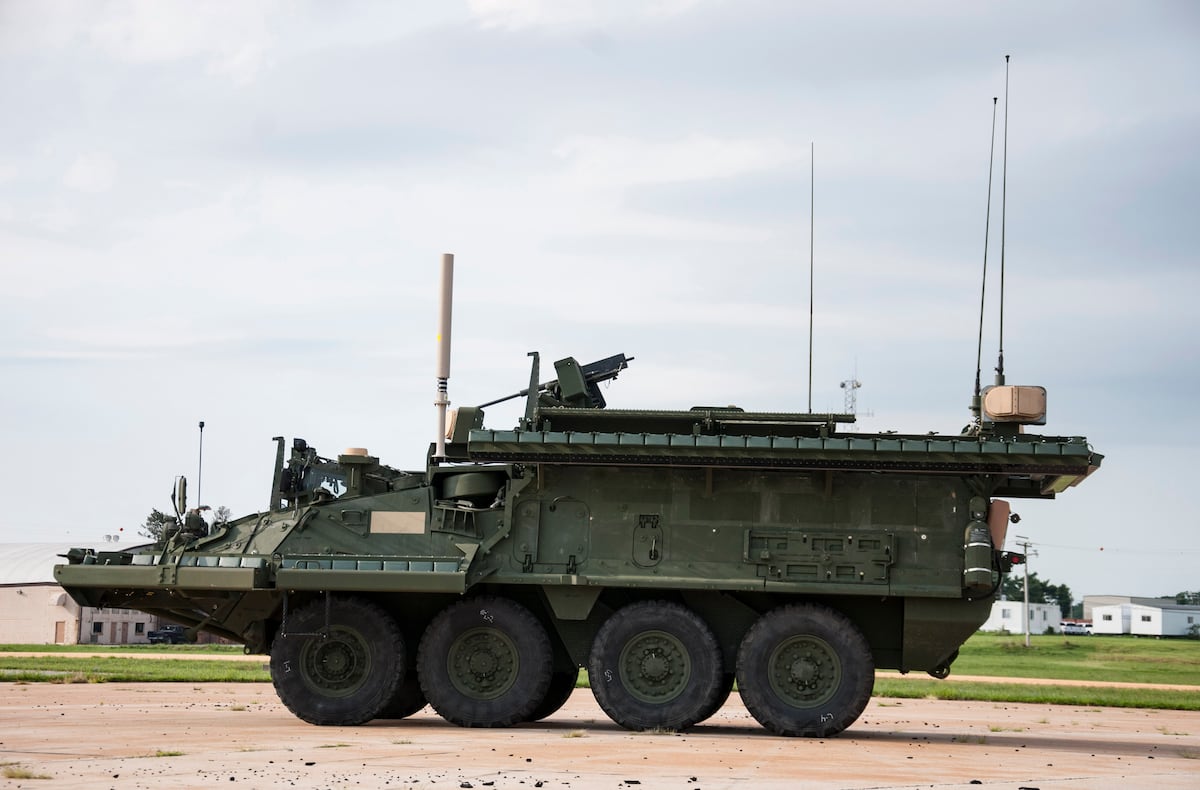
Virginia-based defense contractor Artis, with an active protection system it says is capable of defending vehicles from attacks from above, is forming a joint venture with the United Arab Emirates’ company Bin Hilal Enterprises to offer its system overseas.
Artis and BHE signed a memorandum of understanding the Eurosatory international defense conference in Paris on June 18.
Artis told Defense News in January that it had been demonstrating its Sentinel All-Threat Defeat System, formerly known as Improved Iron Curtain , at a West Virginia range. The system had international interest, particularly in the Middle East, it said.
“The JV will offer original equipment, manufacturing and engineering services, and will extend to lifecycle support, spare parts, field services, warranty support and training,” an Artis statement said, and “will meld the extensive active protection experience of Artis with the business and cultural acumen of BHE.”
The companies will immediately work to provide Sentinel to local and regional allies, the statement notes.
“This MOU represents a critical component of our international growth strategy and directly supports our commitment to the United Arab Emirates,” Artis CEO Keith Brendley said in the statement.
“Sentinel is a third-generation APS, and is the most advanced system in the world. It is the only active protection system that can protect against all threats, including providing top-attack protection from a swarm of drones,” he said. “Sentinel also mitigates sabot rounds and fuzed threats.”
Artis said previously it has demonstrated the Sentinel can protect vehicles and infrastructure from nearly all direct-fire threats, including tank-fired rounds, anti-tank guided missiles, rocket-propelled grenades and loitering munitions – otherwise known as exploding drones, which target vehicle and infantry alike, often with deadly effect.
The Virginia-based business has spent 20 years refining and expanding a capability versatile enough to handle nearly all threats to combat vehicles, including top-attack threats, long before the war in Ukraine and the use of loitering munitions highlighted the need for such robust protection .
The U.S. Army, years ago, evaluated the company’s Iron Curtain active protection system for combat vehicles but never adopted the technology.
The Army launched an effort in 2016 to rapidly field interim solutions to protect Abrams tanks, Stryker combat vehicles and the Bradley infantry fighting vehicles . The service pursued options through a demonstration phase.
The service had selected Iron Curtain as an interim protection system in 2017 for the Stryker but decided against fielding the system after the testing and demonstration phase in 2018. Service leaders said at the time that while Iron Curtain worked in concept, it would take too much time and money to mature the system.
Artis developed its first design for top-attack protection through a Defense Advanced Research Projects Agency around 2008, Brendley told Defense News. The company has since continued work on the design through investors. But Sentinel’s capability gained significant traction through a contract with the Army’s Rapid Capabilities and Critical Technologies Office, awarded shortly after the service rejected Iron Curtain for the Stryker, he explained. Artis concluded its work with the office in June 2023.
Artis has yet to acquire a first customer, but according to Brendley, “the APS market is like any other market. If you take a look at emerging markets, automobiles or smartphones, what have you, the markets are always there, but they didn’t materialize until the right product came along and we think we have the right product. I think the market is going to respond to that.”
Jen Judson is an award-winning journalist covering land warfare for Defense News. She has also worked for Politico and Inside Defense. She holds a Master of Science degree in journalism from Boston University and a Bachelor of Arts degree from Kenyon College.
总部位于弗吉尼亚州的国防承包商 Artis 公司拥有一种主动防护系统,该公司称该系统能够保护车辆免受来自空中的攻击。Artis 公司正与阿联酋的 Bin Hilal Enterprises 公司成立一家合资企业,向海外提供该系统。
6月18日,Artis和BHE在巴黎举行的欧洲防务国际会议上签署了一份谅解备忘录。
今年1月,Artis公司告诉《防务新闻》,该公司一直在西弗吉尼亚州的一个靶场演示其“哨兵全威胁防御系统”(Sentinel All-Threat Defeat System),该系统原名为“改进型铁幕”(Improved Iron Curtain)。该公司表示,该系统引起了国际社会的关注,尤其是在中东地区。
Artis 在一份声明中表示:“合资企业将提供原始设备、制造和工程服务,并将扩展到生命周期支持、备件、现场服务、保修支持和培训,并将 Artis 丰富的主动防护经验与 BHE 的商业和文化敏锐度相结合。”
声明指出,这些公司将立即着手向当地和区域合作伙伴提供 Sentinel 服务。
Artis 首席执行官 Keith Brendley 在声明中表示:“这份谅解备忘录是我们国际增长战略的重要组成部分,直接支持我们对阿拉伯联合酋长国的承诺。”
“哨兵”是第三代主动防护系统,也是世界上最先进的系统。它是唯一能够抵御所有威胁的主动防护系统,包括抵御无人机群的顶部攻击。“哨兵”还能有效应对脱壳穿甲弹和引信威胁。
Artis 此前表示,它已经证明 Sentinel 可以保护车辆和基础设施免受几乎所有直接火力威胁,包括坦克炮弹、反坦克导弹、火箭推进榴弹和巡飞弹(也称为爆炸无人机),这些武器会攻击车辆和步兵,通常会造成致命后果。
这家总部位于弗吉尼亚州的公司花了 20 年时间改进和扩展其多功能能力,足以应对几乎所有对作战车辆的威胁,包括顶部攻击威胁。早在乌克兰战争和巡飞弹的使用凸显出这种强大防护的必要性之前,该公司就已开始研发此类防护能力。
多年前,美国陆军曾对该公司研发的用于作战车辆的“铁幕”主动防护系统进行过评估,但最终并未采用该技术。
2016年,美国陆军启动了一项计划,旨在快速部署临时解决方案,以保护艾布拉姆斯坦克、斯特瑞克装甲车和布雷德利步兵战车。陆军通过示范阶段探索了各种方案。
该部门在 2017 年选择了“铁幕”作为“斯特瑞克”装甲车的临时防护系统,但在 2018 年的测试和演示阶段之后,决定不部署该系统。该部门领导人当时表示,虽然“铁幕”在概念上是可行的,但要使该系统成熟需要太多的时间和金钱。
据布伦德利向《防务新闻》透露,Artis公司于2008年左右通过美国国防高级研究计划局(DARPA)开发了首个顶部攻击防护设计。此后,该公司通过投资者继续推进该设计。他解释说,Sentinel系统真正取得重大进展,得益于陆军快速能力与关键技术办公室(Rapid Capabilities and Critical Technologies Office)的一份合同。这份合同是在陆军拒绝为“斯特瑞克”装甲车配备“铁幕”(Iron Curtain)系统后不久授予的。Artis公司于2023年6月结束了与该办公室的合作。
Artis目前尚未获得首位客户,但据Brendley称,“APS市场与其他市场并无二致。看看新兴市场、汽车或智能手机市场等等,市场一直存在,但直到合适的产品出现,它们才得以真正发展起来。我们认为我们拥有合适的产品。我相信市场会对此做出积极响应。”
珍·贾德森是一位屡获殊荣的记者,为《防务新闻》报道陆地战争。她也曾为《政治报》和《内幕防务》工作。她拥有波士顿大学新闻学硕士学位和凯尼恩学院文学学士学位。