France preps Europe’s fastest classified supercomputer for defense AI法国正准备将欧洲最快的机密超级计算机用于国防人工智能。
French defense leaders plan a leading role in mastering AI, considered to be a key differentiating factor among tomorrow's armed forces.
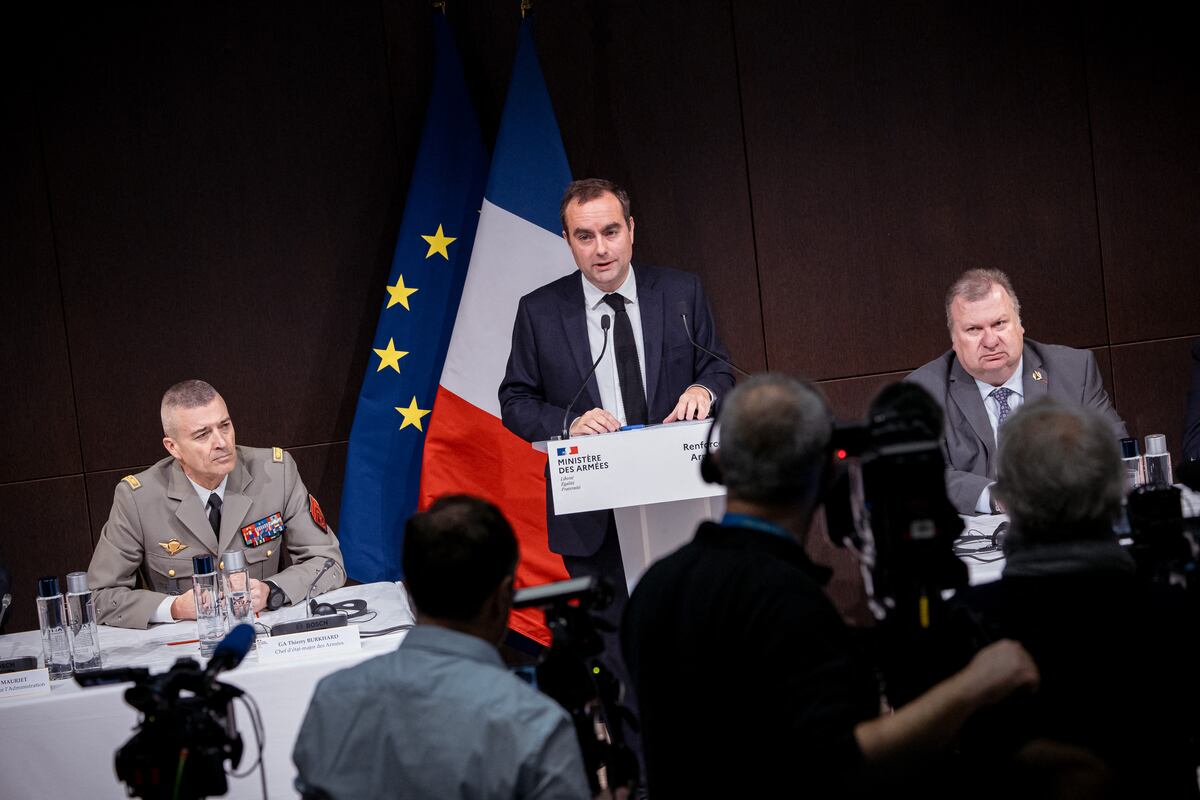
PARIS — France plans to build Europe’s most powerful classified supercomputer to take the lead in artificial intelligence for defense purposes, Armed Forces Minister Sébastien Lecornu announced at the Eurosatory defense show here.
The Armed Forces Ministry will make computing time available to the Higher Education Ministry and other government departments, and also allow French defense firms to run AI solutions in a secure and protected environment, according to Lecornu. Lecornu said he’s not providing details on the capacity of the super calculator for AI applications, which is planned for 2025.
France in March announced plans to reallocate €2 billion of funding from the 2024-2030 defense budget to artificial intelligence. Lecornu said AI will be a differentiating factor between countries, creating a break between those left behind and those who manage to hang on.
“The challenge for the French team is obviously to be among those that stand out in this field,” Lecornu said. “When it comes to military AI, we’ll be the European power that’s best prepared, that’s going to devote the most resources to it.”
France, with its army that deploys operationally, will be capable of developing “not theoretical AI but combat AI, and that fundamentally is going to change the game.”
Lecornu said the technology is already being used in the French Army “everywhere,” with the Caesar howitzer using AI to aid with target acquisition by drone, a development resulting from the needs of Ukrainian gunners in their war against Russia, while the Air Force uses artificial intelligence in pilot training.
In terms of capacity sharing with civilian applications, the ministry will use the same model as that used by the French Atomic Energy Commission in the 1960s, Lecornu said. The Armed Forces Ministry in March announced the creation of a ministerial agency for artificial intelligence in defense, known by its French acronym Amiad.
“It’s such a revolution, artificial intelligence, in many respects as profound as the atom in the aftermath of World War II,” Lecornu said. “The particularity of our business is that it’s unthinkable to run AI on potentially classified material in a network that isn’t completely secure.”
France isn’t the only country to have identified AI as a military priority. U.S. Department of Defense spending on AI nearly tripled in the one-year period ending in August 2023 to $557 million, according to analysis by the Brookings Institution published in March.
The fastest supercomputer in Europe is Finland’s LUMI, with a performance rating of 380 Petaflop/s, or 380 quadrillion floating-point operations per second, which puts it in fifth position globally, according to the Top500 ranking as of June. Two of the world’s most powerful supercomputers use architecture by Eviden, a unit of French company Atos: Leonardo in Italy and MareNostrum in Spain.
One challenge France faces is retaining skilled engineers, with competition from tech companies such as Google and Apple that offer better salaries, Lecornu said. Retaining talent is a question of sovereignty, and it’s an issue the AI agency will tackle, according to the minister, who didn’t provide details on how that might be achieved.
Rudy Ruitenberg is a Europe correspondent for Defense News. He started his career at Bloomberg News and has experience reporting on technology, commodity markets and politics.
巴黎——法国武装部队部长塞巴斯蒂安·勒科尔努在巴黎举行的欧洲防务展上宣布,法国计划建造欧洲最强大的机密超级计算机,以在国防人工智能领域占据领先地位。
据勒科尔努透露,武装部队部将向高等教育部和其他政府部门提供计算资源,并允许法国国防企业在安全可靠的环境下运行人工智能解决方案。勒科尔努表示,他不会透露计划于2025年投入使用的超级计算机的具体性能参数。
法国在三月份宣布计划将2024-2030年国防预算中的20亿欧元重新分配给人工智能。勒科尔努表示,人工智能将成为各国之间的差异化因素,拉开落后国家和能够跟上步伐的国家之间的差距。
勒科尔努表示:“法国团队面临的挑战显然是要成为该领域的佼佼者。在军事人工智能领域,我们将成为准备最充分、投入资源最多的欧洲强国。”
法国拥有一支可以进行作战部署的军队,将能够开发“不是理论上的人工智能,而是作战人工智能,这将从根本上改变游戏规则”。
勒科尔努表示,这项技术已经在法国陆军“各个领域”得到应用,凯撒榴弹炮利用人工智能辅助无人机获取目标,这是乌克兰炮兵在与俄罗斯的战争中需要的成果,而空军则在飞行员训练中使用人工智能。
勒科尔努表示,在与民用应用共享能力方面,国防部将采用与法国原子能委员会在20世纪60年代相同的模式。今年3月,法国武装部队部宣布成立一个国防人工智能部级机构,简称Amiad。
“人工智能是一场革命,在很多方面其意义之深远,堪比二战后原子能的发现,”莱科尔努说道。“我们业务的特殊之处在于,在不完全安全的网络中,对可能涉及机密信息的材料运行人工智能是不可想象的。”
法国并非唯一将人工智能列为军事优先事项的国家。布鲁金斯学会3月份发布的一份分析报告显示,截至2023年8月的一年内,美国国防部在人工智能方面的支出几乎增长了两倍,达到5.57亿美元。
欧洲最快的超级计算机是芬兰的LUMI,其性能评级为380 Petaflop/s,即每秒380千万亿次浮点运算,根据6月份的Top500排名,它在全球排名第五。世界上最强大的两台超级计算机均采用法国Atos公司旗下Eviden的架构:意大利的Leonardo和西班牙的MareNostrum。
法国面临的挑战之一是留住技术娴熟的工程师,因为谷歌和苹果等科技公司提供的薪酬更高,竞争激烈。勒科尔努表示,留住人才是一个关乎国家主权的问题,人工智能机构将着手解决这个问题,但他并未透露具体措施。
鲁迪·鲁伊滕贝格是《防务新闻》的欧洲记者。他的职业生涯始于彭博新闻社,拥有报道科技、大宗商品市场和政治方面的经验。