Pentagon’s contracting speed lane sometimes no faster, says watchdog监督机构称,五角大楼的缩减速度有时甚至更快。
The "middle-tier acquisition" pathway is running into some of the same issues affecting the Pentagon's regular contracting process, a report found.
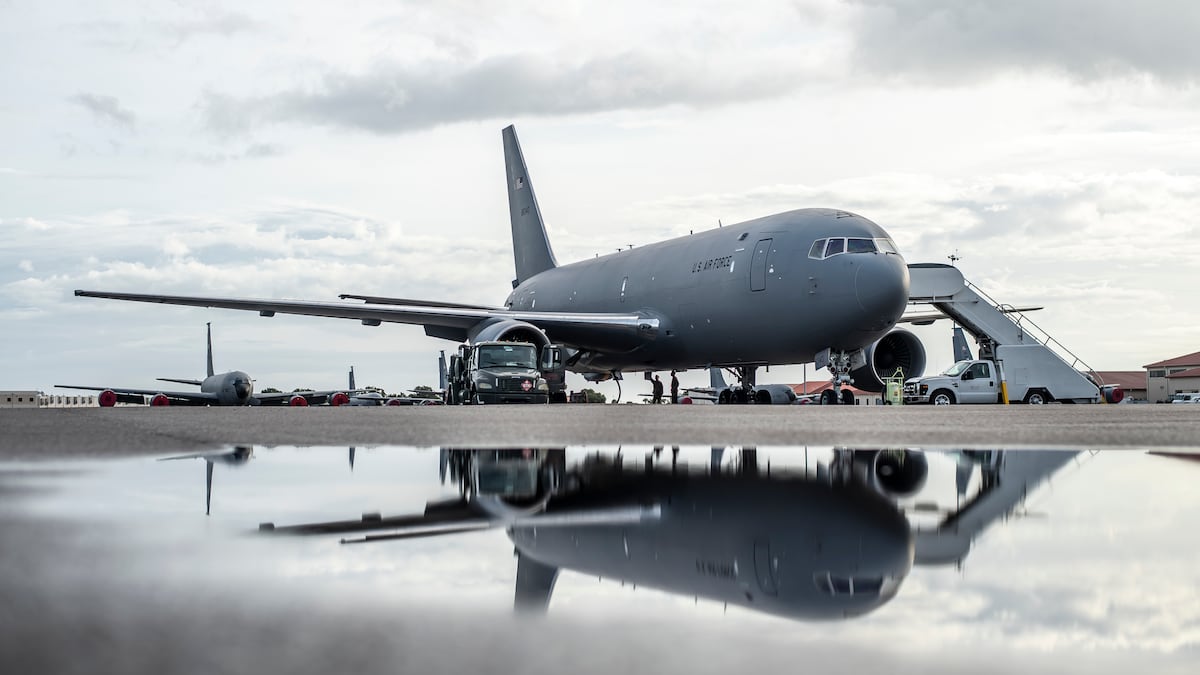
The Pentagon’s fast-track pathway for buying equipment often doesn’t move any faster than the normal process, according to a new report from the government’s watchdog agency.
The Government Accountability Office unveiled its annual report on the Defense Department’s buying practices, covering many of the largest items in the military’s shopping cart, from aircraft carriers to intercontinental ballistic missiles.
GAO studied more than 30 of the most expensive items on order, costing a little more than $1 trillion. The total cost of those fell by about $1.7 billion since the year before, due to changes in inflation and a drop in purchases.
Still, several of these big-ticket items are running above the contracted price. The estimated total may rise, the report warned, plus there are issues with speed.
For the largest weapons programs still awaiting delivery, it’s taking 10 years for the Pentagon to place an order and then receive the system. That’s longer than the average noted last year.
But for programs that have started delivering, the delays are even longer. The average time, the authors found, rose from 8 years to 11 years.
Alongside these major programs, GAO also studied some meant to be smaller and more nimble. These “middle-tier acquisitions,” or MTA, work like a toll road alongside a highway — a quicker route for weapons that the Pentagon needs more urgently.
The trouble is that the speed limit isn’t much faster, the report found.
“Although the MTA pathway was designed for speed, GAO found most MTA programs do not plan to implement leading practices to facilitate that speed,” it said.
These programs are meant to reach the field within five years, according to the Pentagon’s own guidance. However, GAO found some middle-tier programs are still following a “linear” process: five years for prototyping and another five for development.
“While the MTA pathway offers flexibilities to create efficiencies in the acquisition process, the warfighter may continue to wait years — if not more than a decade — for a solution that may ultimately no longer be relevant,” according to the report.
One of the core problems the Pentagon faces as it tries to buy weapons moving forward is purchasing software. Weapons, like technology more broadly, depend more on the lines of code that make them work. To avoid going obsolete, that software must stay up to date.
But the DOD struggles to buy this evergreen technology, and one of the reasons listed in the report is employees. The department doesn’t have enough people who understand software, the report argued. Instead, many of the most software-intense programs in the Pentagon require the expertise of contractors.
“DOD has taken initial steps to establish a cadre of personnel with software expertise, but its efforts are in early stages,” the report said. “While DOD expects to request more funding, as of March 2024, the cadre consisted of one federal employee with limited assistance.”
GAO offered three main recommendations: strategies to make MTA programs move faster, clearer guidance on the Pentagon’s software workforce, and the funding and goals needed for that workforce.
The top deputy for Pentagon acquisition and sustainment, who has since moved to a policy role, partially agreed with the recommendations and said some may be included in the DOD’s next update to its buying practices, expected this month.
Noah Robertson is the Pentagon reporter at Defense News. He previously covered national security for the Christian Science Monitor. He holds a bachelor’s degree in English and government from the College of William & Mary in his hometown of Williamsburg, Virginia.
根据政府监督机构的一份新报告,五角大楼采购设备的快速通道往往并不比正常流程更快。
美国政府问责局公布了国防部采购行为的年度报告,涵盖了军方采购清单中的许多最大件商品,从航空母舰到洲际弹道导弹。
美国政府问责局(GAO)研究了30多项最昂贵的订单商品,总价值略高于1万亿美元。由于通货膨胀变化和采购量下降,这些商品的总成本比上一年下降了约17亿美元。
然而,其中几项大宗商品的实际价格高于合同价格。报告警告称,预计总价可能会上涨,而且进度也存在问题。
对于目前仍待交付的最大型武器项目而言,五角大楼从下单到收到系统平均需要10年时间。这比去年的平均水平要长。
但对于已经开始交付的项目而言,延误时间更长。作者发现,平均交付时间从8年增加到11年。
除了这些大型项目之外,美国政府问责局(GAO)还研究了一些规模较小、更灵活的项目。这些“中级采购”(MTA)就像高速公路旁的收费公路——为五角大楼急需的武器提供了一条更快捷的途径。
报告发现,问题在于限速并没有快多少。
“尽管 MTA 途径的设计初衷是为了加快速度,但 GAO 发现大多数 MTA 项目并没有计划实施领先做法来加快速度,”报告称。
根据五角大楼自身的指导方针,这些项目旨在五年内投入实际应用。然而,美国政府问责局(GAO)发现,一些中等规模的项目仍然遵循“线性”流程:五年用于原型设计,再用五年时间进行开发。
报告指出:“虽然 MTA 途径提供了灵活性,可以提高采购流程的效率,但作战人员可能仍需等待数年(甚至超过十年)才能获得最终可能不再适用的解决方案。”
五角大楼在采购武器时面临的核心问题之一是软件采购。武器,如同更广泛的技术一样,更依赖于使其运行的代码。为了避免过时,这些软件必须保持更新。
但国防部在采购这项经久不衰的技术方面举步维艰,报告指出,原因之一是人员短缺。报告认为,国防部缺乏足够多的软件专家。因此,五角大楼许多软件密集型项目都需要外包人员的专业知识。
报告称:“国防部已采取初步措施,建立一支具备软件专业知识的人员队伍,但这项工作仍处于早期阶段。尽管国防部预计将申请更多资金,但截至2024年3月,这支队伍仅由一名联邦雇员组成,且获得的协助有限。”
美国政府问责局提出了三项主要建议:加快 MTA 项目的推进速度的策略、更清晰地指导五角大楼的软件人才队伍,以及该人才队伍所需的资金和目标。
五角大楼采购和保障部门的最高副手(现已调任政策部门)部分同意这些建议,并表示其中一些建议可能会被纳入国防部本月即将发布的采购惯例更新中。
诺亚·罗伯逊是《防务新闻》的五角大楼记者。他此前曾为《基督教科学箴言报》报道国家安全新闻。他拥有弗吉尼亚州威廉斯堡威廉与玛丽学院的英语和政治学学士学位。