France rethinks military light-drone acquisition as Army falls behind由于陆军落后,法国重新考虑军用轻型无人机采购。
French defense leaders seek ways to short-circuit the military-acquisition bureaucracy, as drones remake the battlefield in Ukraine.
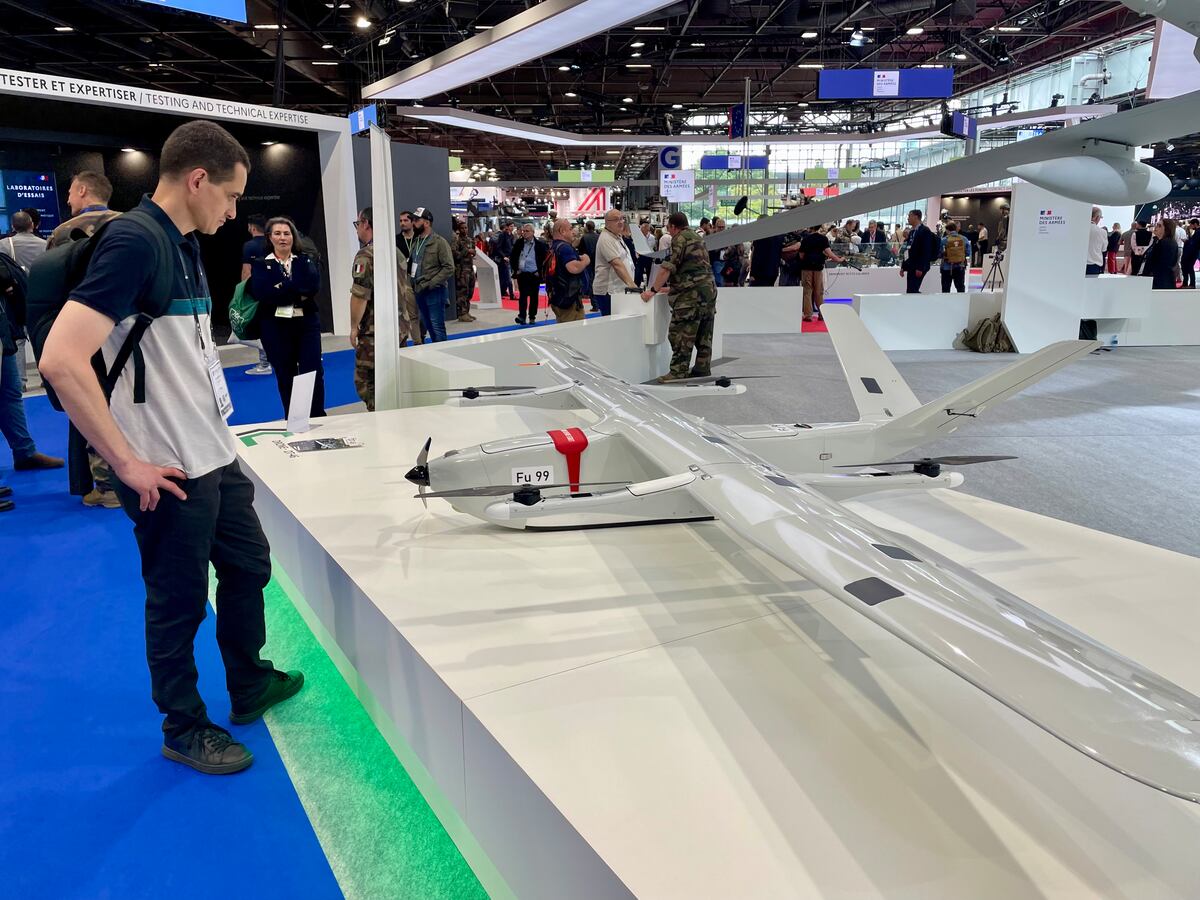
PARIS — France is changing its acquisition process for light military unmanned aerial vehicles to become more nimble and signed a pact with local drone makers as the country’s Army threatens to fall behind in a technology that military leaders say is remaking warfare .
French Armed Forces Minister Sebastian Lecornu signed a “defense UAV pact” at the Eurosatory defense show here on Monday that provides the basis for working with the nation’s industry on defense drones below 150 kg (331 lbs), French armament agency DGA said.
The country “may have run up a bit of a delay” in the area of drones, and rather than developing drones for the coming years, France will cooperate with UAV makers to make a technological jump to the next generation of drones for the early 2030s, Lecornu said in a speech at Eurosatory.
All aerial drones that France sold to Ukraine were developed in-house by manufacturers without development input from the French armed forces, retired Maj. Gen. Claude Chenuil, a fomer military-acquisition executive, said during a round table discussion at Eurosatory. He said the Ukrainian armed forces will be using 1 million drones this year, compared with a French Army target to buy “a few thousand drones.”
France is investing €5 billion ($5.4 billion) in drones through 2030 as part of its military programming law, with the stated goal of developing a French loitering-munitions industry by the end of this decade, as well as achieving swarm-flight capability. The defense budget law included a target for the Army to have 3,000 tactical drones by 2025.
Drones are changing combat, from loitering munitions to intelligence gathering, “and if we’ve fallen behind, it’s high time that we catch up,” said Maj. Gen. Erwan Salmon, the head of the ground combat management unit at DGA.
France needs to be able to acquire drones quickly and renew them as required by the pace of drone innovation, as well as be able to mass produce UAVs, “that’s the whole point of the defense drone pact,” Salmon said. That will require changing acquisition strategies to avoid ending up with drone systems “completely out of step with the innovations.”
French defense contracts often start from an armed forces requirement, after which the armament directorate drafts the specifications before organizing a contract, leading to programs that can take 10 years between the expression of a need and delivery, said Bastien Mancini, the CEO of French drone manufacturer Delair.
“Structurally, this is not possible with drones,” Mancini said. “Technologies are evolving fast. We need to be able to shorten lead times.”
The armament directorate will probably need to set up some financing to be able to quickly buy and test off-the-shelf products, to determine whether they should be acquired in larger numbers, Salmon said. The directorate’s acquisition service is looking into financing of technology bricks that could underpin the development of new systems, he said.
The defense UAV pact will be a useful forum for industry cooperation, including between smaller French drone makers and larger defense firms, according to Éric Lenseigne, vice president for drone warfare at Thales. Given the size of the French market, exports will be needed to reach critical size, and export commitments could be an area of further cooperation, Lenseigne said.
Thales estimates the global market for drones of less than 150kg to be worth more than €2.5 billion, with growth rates of 14% per year, according to Lenseigne, with the market expected to remain “dynamic” even in case of cessation of hostilities in Ukraine.
Four French drone makers – Parrot, Eos Technologie, Delair and Hexadrone – have delivered drones to Ukraine, where they seem to be doing “a good job,” Mancini said.
Still, the industry for military UAVs in France is fragile, with the development of an industrial-scale drone requiring an investment of €5 million to €10 million, compared with revenue for Delair of around €30 million this year, according to the CEO. “So consolidation is bound to come naturally.”
There will be a minimum threshold of buying required to allow the French drone industry to develop new solutions and payloads, according to Col. Hervé Mermod, program coherence officer with the French Armed Forces General Staff. France would need to finance a strategic reserve that would pay for maintaining an industrial capacity to scale up drone production in case of need, he said.
Rudy Ruitenberg is a Europe correspondent for Defense News. He started his career at Bloomberg News and has experience reporting on technology, commodity markets and politics.
巴黎——法国正在改变其轻型军用无人机的采购流程,使其更加灵活,并与当地无人机制造商签署了一项协议,因为该国陆军有可能在军事领导人所说的正在重塑战争的这项技术上落后。
法国国防部长塞巴斯蒂安·勒科尔努周一在巴黎举行的欧洲防务展上签署了一项“国防无人机协议”,该协议为与法国工业界合作研发重量低于 150 公斤(331 磅)的国防无人机奠定了基础,法国国防装备局 (DGA) 表示。
勒科尔努在Eurosatory的演讲中表示,法国在无人机领域“可能有些落后”,与其在未来几年开发无人机,法国将与无人机制造商合作,在2030年代初实现技术飞跃,研发出下一代无人机。
法国退役少将、前军事采购主管克劳德·舍努伊在欧洲防务展(Eurosatory)的圆桌会议上表示,法国出售给乌克兰的所有无人机都是制造商自主研发的,法国军方并未参与研发。他还指出,乌克兰军方今年将使用100万架无人机,而法国陆军的目标采购数量仅为“几千架”。
法国根据其军事规划法,计划在2030年前投资50亿欧元(约合54亿美元)用于无人机研发,其目标是在本十年末之前建立法国巡飞弹产业,并实现集群飞行能力。国防预算法还设定了陆军到2025年拥有3000架战术无人机的目标。
无人机正在改变战争,从巡飞弹到情报收集,“如果我们落后了,现在是时候迎头赶上了,”美国国防装备总局地面作战管理部门负责人埃尔万·萨尔蒙少将说。
萨尔蒙表示,法国需要能够快速采购无人机,并根据无人机创新步伐及时更新换代,同时还要具备大规模生产无人机的能力,“这正是国防无人机条约的意义所在”。这就需要改变采购策略,以避免最终拥有的无人机系统“与创新完全脱节”。
法国无人机制造商 Delair 的首席执行官 Bastien Mancini 表示,法国国防合同通常始于武装部队的需求,之后军备局会起草规格说明,然后再组织合同,这导致从提出需求到交付,整个项目可能需要 10 年时间。
曼奇尼说:“从结构上看,无人机无法做到这一点。技术发展日新月异,我们需要缩短交付周期。”
萨尔蒙表示,军备局可能需要筹集一些资金,以便能够快速采购和测试现成产品,从而确定是否应该大量采购。他还说,该局的采购部门正在研究为可能支撑新系统开发的底层技术提供资金。
泰雷兹公司无人机作战副总裁埃里克·伦塞涅表示,这项国防无人机协议将成为促进产业合作的有益平台,包括法国小型无人机制造商和大型国防企业之间的合作。伦塞涅指出,鉴于法国市场的规模,出口对于达到关键规模至关重要,而出口承诺可以成为进一步合作的领域。
据 Lenseigne 称,泰雷兹估计,重量小于 150 公斤的无人机的全球市场价值超过 25 亿欧元,年增长率达 14%,即使乌克兰停止敌对行动,该市场预计仍将保持“活力”。
曼奇尼表示,四家法国无人机制造商——Parrot、Eos Technologie、Delair 和 Hexadrone——已经向乌克兰交付了无人机,它们在那里似乎“表现出色”。
不过,法国军用无人机行业依然脆弱,据首席执行官称,开发一款工业级无人机需要500万至1000万欧元的投资,而Delair今年的收入约为3000万欧元。“因此,行业整合势在必行。”
法国武装部队总参谋部项目协调官员埃尔韦·梅尔莫上校表示,法国无人机产业需要达到一定的采购门槛,才能开发新的解决方案和有效载荷。他还指出,法国需要建立战略储备,用于维持工业产能,以便在必要时扩大无人机生产规模。
鲁迪·鲁伊滕贝格是《防务新闻》的欧洲记者。他的职业生涯始于彭博新闻社,拥有报道科技、大宗商品市场和政治方面的经验。