Super El Niño to torch Malaysia next March, MetMalaysia warns heat soaring past 40°C马来西亚气象局警告称,超级厄尔尼诺现象将于明年3月袭击马来西亚,气温将飙升至40摄氏度以上。
KUALA LUMPUR, Sept 10 — The Malaysian Meteorological Department (MetMalaysia) expects temperatures in several parts of the country to exceed 40 degrees Celsius next year, driven...
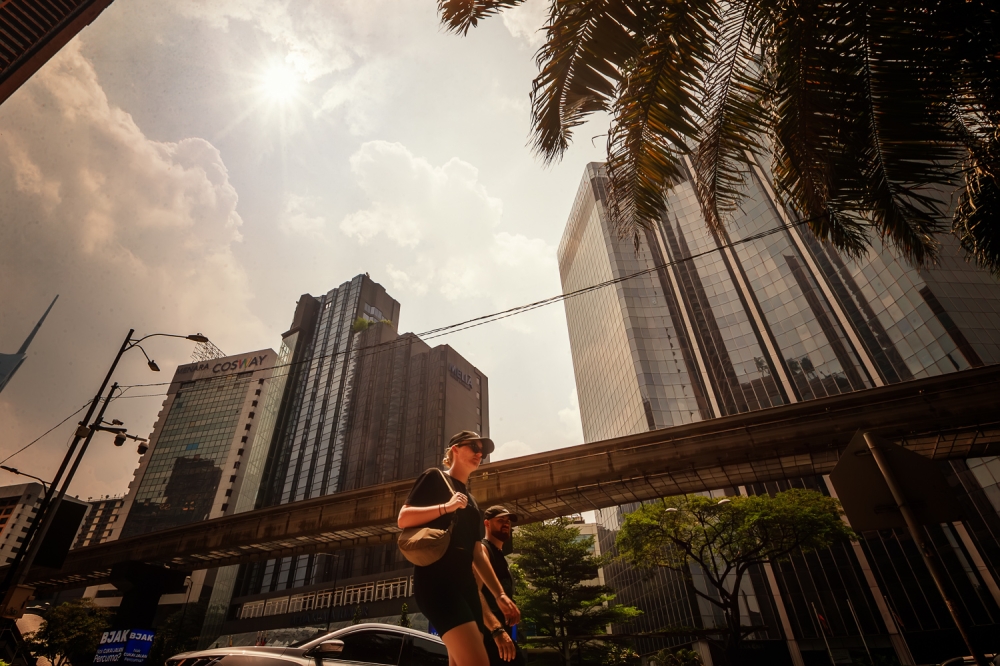
The Malaysian Meteorological Department anticipates temperatures exceeding 40 degrees Celsius in parts of Malaysia next year due to a forecasted Super El Niño of unprecedented intensity.
This phenomenon, expected to peak around March to April, could surpass the 40.1 degrees Celsius record set in 1997/1998, exacerbating existing dry conditions and water supply issues.
Director-General Dr. Mohd Hisham Mohd Anip advises caution in outdoor activities and stresses the importance of referring to official channels for accurate weather updates to mitigate health and safety risks during this period.
KUALA LUMPUR, Sept 10 — The Malaysian Meteorological Department (MetMalaysia) expects temperatures in several parts of the country to exceed 40 degrees Celsius next year, driven by a Super El Niño phenomenon forecast to reach its strongest intensity on record.
MetMalaysia director-general Dr Mohd Hisham Mohd Anip said the phenomenon’s impact would typically begin to be felt towards the end of the Northeast Monsoon, particularly in the northern states of the Peninsula.
He added that the peak of the extreme heat was expected to coincide with the equinox period around March to April next year, further driving temperatures to extreme levels.
“The highest daily temperature ever recorded in the country was 40.1 degrees Celsius in Chuping, Perlis, during the Super El Niño phenomenon of 1997/1998.
“Given that this phenomenon is forecast to be stronger than previous episodes, compounded by global warming, temperatures can surpass that record and reach 40.5 or even 41 degrees Celsius,” he said during an appearance on Bernama Radio’s Fokus 30 programme titled Super El Niño: Kesan Kepada Negara (Super El Niño: Impact on the Nation), today.
He added that Muslims are expected to fast and celebrate Hari Raya in very hot weather next year, and that visiting and outdoor pursuits should therefore be avoided for the sake of safety and health.
“The sun is directly overhead during the equinox, and without sufficient cloud cover due to the dry weather, direct exposure to heat can have adverse effects,” he cautioned.
Mohd Hisham said the current weather environment was still at the ordinary El Niño stage and would have to pass gradually through the weak, moderate and strong phases before developing into a very strong or Super El Niño by the end of this year.
He said Malaysia had faced three Super El Niño events before, in 1982/1983, 1997/1998 and 2015/2016, during which the country’s daily weather became extremely hot.
Mohd Hisham said the Super El Niño phenomenon generally occurs due to rising sea surface temperatures in the Pacific Ocean, which influence global atmospheric conditions, causing a significant reduction in rainfall and very dry weather, as well as raising the risk of high-intensity haze from open burning.
“Based on records, we have experienced continuous dry spells of up to 70 days in northern areas such as Langkawi and Alor Setar. This time, the phenomenon could cause a similarly prolonged dry spell,” he said, while also advising the public to make early preparations.
He therefore warned of the potential for a more serious water supply crisis next year, following the peak impact of the natural phenomenon.
This is because a significant delay in rainfall due to prolonged dry weather risks further depleting dam levels in several states that are already experiencing water supply disruptions.
“We are worried that when the peak of the Super El Niño arrives early next year, the situation will become more severe. Our experience during previous strong Super El Niño episodes saw dams in Melaka dry up completely,” he said.
Mohd Hisham also advised the public to always refer to valid weather information through official websites or MetMalaysia’s myCuaca app, and not to spread unverified information on social media. — Bernama
MACC to charge ex‑minister Monday over Tabung Haji RCI, probe assets in Saudi Arabia
Police record 12 witness statements after RM2.91m armed gang robbery at Jalan Ampang condo
Petronas-Petros deal could face ‘Tabung Haji’ reckoning in future, warns expert
马来西亚气象局预计,由于预计明年将出现强度空前的超级厄尔尼诺现象,马来西亚部分地区的气温将超过 40 摄氏度。
预计这一现象将在 3 月至 4 月达到高峰,气温可能会超过 1997/1998 年创下的 40.1 摄氏度的纪录,从而加剧现有的干旱状况和供水问题。
总干事莫哈末·希沙姆·莫哈末·阿尼普博士建议人们在户外活动时保持谨慎,并强调在此期间参考官方渠道获取准确天气预报的重要性,以降低健康和安全风险。
吉隆坡,9月10日讯——马来西亚气象局(MetMalaysia)预计,受超级厄尔尼诺现象的影响,明年该国多个地区的气温将超过40摄氏度,预计此次超级厄尔尼诺现象将达到有记录以来的最强强度。
马来西亚气象局局长莫哈末·希沙姆·莫哈末·阿尼普博士表示,这种现象的影响通常会在东北季风末期开始显现,尤其是在马来半岛北部各州。
他还补充说,极端高温的高峰预计将与明年3月至4月的春分或秋分时期重合,这将进一步推高气温至极端水平。
“该国历史上记录到的最高日气温是 1997/1998 年超级厄尔尼诺现象期间在玻璃市州朱平测得的 40.1 摄氏度。
“鉴于预计此次厄尔尼诺现象将比以往任何一次都更加强烈,再加上全球变暖的影响,气温可能会超过之前的纪录,达到 40.5 摄氏度甚至 41 摄氏度,”他今天在马新社电台的 Fokus 30 节目“超级厄尔尼诺:对国家的影响”中说道。
他还补充说,预计穆斯林明年将在非常炎热的天气中斋戒和庆祝开斋节,因此为了安全和健康,应该避免外出走访和进行户外活动。
他警告说:“春分时节,太阳直射头顶,由于天气干燥,云层覆盖不足,直接暴露在高温下可能会产生不利影响。”
莫哈末希沙姆表示,目前的气候环境仍处于普通厄尔尼诺阶段,必须逐步经历弱、中、强三个阶段,才能在今年年底发展成为非常强或超级厄尔尼诺现象。
他表示,马来西亚此前曾经历过三次超级厄尔尼诺现象,分别是 1982/1983 年、1997/1998 年和 2015/2016 年,期间该国每日气温异常炎热。
莫哈末·希沙姆表示,超级厄尔尼诺现象通常是由于太平洋海面温度上升引起的,这会影响全球大气状况,导致降雨量大幅减少和天气非常干燥,并增加露天焚烧造成高强度烟雾的风险。
“根据记录,兰卡威和亚罗士打等北部地区曾出现过长达70天的持续干旱。这一次,这种现象可能会导致类似的长期干旱,”他说道,同时建议公众尽早做好准备。
因此,他警告说,在自然现象的影响达到顶峰之后,明年可能会出现更严重的供水危机。
这是因为持续干旱天气导致降雨严重延迟,可能会进一步降低几个已经面临供水中断的州的堤坝水位。
他说:“我们担心,明年年初超级厄尔尼诺现象高峰期到来时,情况会更加严峻。根据以往强超级厄尔尼诺现象的经验,马六甲的水坝曾完全干涸。”
莫哈末希沙姆也建议公众始终通过官方网站或马来西亚气象局的myCuaca应用程序获取有效天气信息,不要在社交媒体上传播未经核实的信息。——马新社
马来西亚反贪污委员会将于周一就朝圣基金局(Tabung Haji RCI)相关事宜起诉前部长,并调查其在沙特阿拉伯的资产。
警方在安邦路公寓发生291万令吉武装团伙抢劫案后,记录了12份证人证词。
专家警告:Petronas-Petros交易未来或将面临“朝圣基金局”(Tabung Haji)的审查。