There’s One Place In The World Where AC-47 Spooky Gunships Still Fly世界上有一个地方,AC-47“幽灵”炮艇机仍然在飞行。
Veterans of the country’s counterinsurgency campaigns, the Colombian Air Force’s antique Fantasma gunships are still going strong.
新闻视频
Updated Feb 12, 2021 1:27 PM EST
The AC-47 Spooky gunship , the forerunner of today’s AC-130s , which first went to war over Vietnam in the mid-1960s, is still in frontline service with just a single air arm. Based on the venerable World War II-era C-47 transport , the AC-47, which was dubbed “Puff the Magic Dragon” during its operations in Southeast Asia, survives now, albeit in a significantly upgraded form, only over the jungles of South America, in the hands of the Colombian Air Force . These aircraft, named Fantasmas, or ghosts in Spanish, still pack a punch, even though some of the airframes were originally built more than 60 years ago — indeed, one of them is even a veteran of the D-Day invasion.
The Colombian Air Force currently has around six AC-47T Fantasma gunships in its inventory, although not all of these are active at any one time. They are flown by a single unit, based at Palanquero Air Base in the heart of the country, although in the past they have also been deployed at other airfields depending on operational requirements. The upgraded AC-47T version was first introduced in 1994, replacing the original AC-47 that had been converted as a gunship from the mid-1980s.
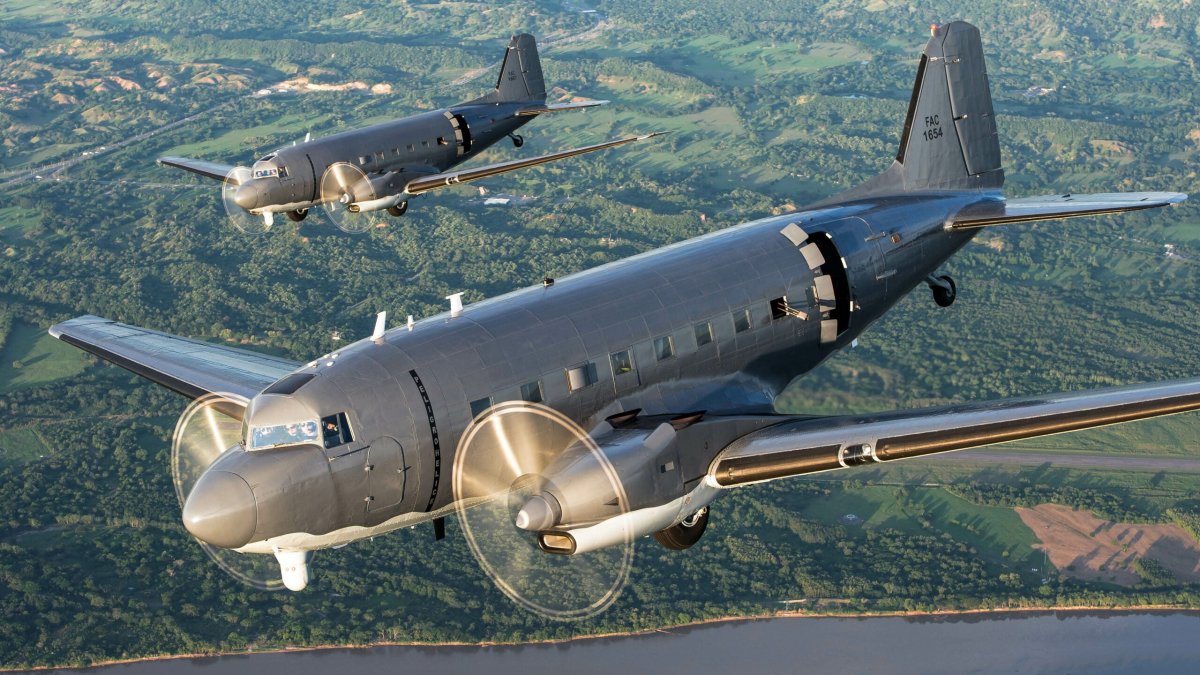
A pair of Colombian Air Force AC-47T Fantasma aircraft., Cees-Jan van der Ende and Cristobal Soto Pino
Colombia’s Fantasmas entered service more than two decades after the U.S. Air Force’s very first AC-47 gunships arrived at Tan Son Nhut Air Base in what was then South Vietnam in late 1965. These aircraft were equipped with three rapid-firing 7.62mm Miniguns firing through windows along the port side of the cabin. Once there, these aircraft quickly began to prove out the fixed-wing gunship concept. Before long, the AC-47s were supplanted by more capable AC-130 and AC-119 gunships , which packed heavier armament, as well as improved sensors and defensive capabilities. Today, the U.S. Air Force continues to operate highly-modified AC-130W Stinger II and AC-130J Ghostrider gunships.
A U.S. Air Force AC-47 from the 4th Special Operations Squadron, probably at Nha Trang, South Vietnam, in 1968., U.S. Air Force
A handful of operators in Southeast Asia, Latin America, and Africa continued to fly AC-47s in various configurations even after the type had been completely phased out of U.S. Air Force service. The last of these aircraft that remain active today is the Fantasma of the Colombian Air Force’s Escuadrón de Combate Táctico 113 — or 113th Tactical Combat Squadron.
Colombia’s history with the AC-47 dates back to the mid-1980s when the country was waging an internal counterinsurgency campaign against guerrillas, chiefly the Fuerzas Armadas Revolucionarias de Colombia, or FARC. To provide additional, more flexible firepower to take on these threats, the Colombian Air Force turned to its surviving C-47 transports. Dozens of these aircraft, variants of the DC-3 airliner, had been delivered to the country beginning in the 1940s and they remained highly prized, above all, for their ability to operate from poorly prepared jungle airstrips.
The video below shows DC-3s, which remain in service with airlines and charter services in Colombia, taking off and landing from an austere airstrip of the kind found in many parts of the country.
Beginning in 1987, some of the C-47s were converted to gunships, inspired by the Vietnam-era AC-47. With support from the United States, these aircraft were fitted with three 0.5-inch caliber Browning machine guns, plus additional navigation and communications equipment. The configuration with three .50-caliber weapons was specifically developed for U.S. Air Force units based in Latin America in the 1960s and came about due to the perpetual shortage of the Miniguns used on the Spooky in Southeast Asia. It then quickly became one of the more popular configurations for foreign users in both Southeast Asia and Latin America.
Since the Colombian AC-47 aircraft have always operated almost exclusively at night, they were also fitted with flare launchers to illuminate the battlefield. While flares were necessary during the days before night-vision equipment became available, they had the disadvantage of revealing the aircraft’s position to the enemy below. Meanwhile, the pilot’s window was equipped with a sight borrowed from a Lockheed T-33 jet trainer to help aim the weapons . Five aircraft were originally modified in this way, but one was lost in an accident in 1988.
The cockpit of the AC-47T Fantasma., Cees-Jan van der Ende and Cristobal Soto Pino
Despite the promise showed by the AC-47s in Colombia’s counterinsurgency campaigns, the aircraft was dogged by its veteran Pratt & Whitney Twin Wasp radial engines. These struggled in high-altitude environments and, during intensive operations, engine failures became more commonplace. The aging AC-47s were then provided with a new lease of life, once the U.S. firm Basler offered its BT-67 conversion. This involved swapping out the old radial engines for Pratty & Whitney PT6A-67R turboprops, each rated at over 1,400 horsepower, driving new five-bladed Hartzell propellers. At the same time, the forward fuselage was lengthened by just over three feet, moving the pilots forward of the propellers and preserving the center of gravity.
As well as the fuselage stretch and the new engines, these aircraft were fitted with a Star SAFIRE forward-looking infrared (FLIR) turret below the nose, meaning the illumination flares no longer needed to be used. Additional communications equipment was provided, to maintain contact with ground forces, as well as for communications within the aircraft.
The first three aircraft sent for conversion arrived at Basler facility in Wisconsin in 1993 and a total of nine aircraft were eventually modified to the AC-47T standard. Three have since been lost in accidents.
The aircraft are typically flown by two pilots, a navigator (also responsible for operating the FLIR and communications), a mechanic, and three armorers responsible for the guns. Since 1997, the crews have also been provided with night-vision goggles.
For anti-guerrilla missions, the AC-47T can also serve as an airborne forward air controller (FAC-A) or airborne command post, with the navigator coordinating the operation below. With an endurance of up to 10 hours, the Fantasma is ideal for this role. In some anti-FARC missions, as many as 40 aircraft have been involved — including Kfir fighter jets and A-37 Dragonfly and A-29B Super Tucano light attack aircraft, as well as various helicopters — all directed by a Fantasma in the command post role.
The navigator’s station in the Fantasma includes the controls for the FLIR turret. , Cees-Jan van der Ende and Cristobal Soto Pino
The aircraft’s firepower has also been given a boost, with the single-barrel Brownings having been replaced by three-barreled .50-caliber GAU-19/A Gatling-type machine guns. These guns offer a more rapid rate of fire and don’t suffer from overheating issues that plagued the Brownings. As an option, one of the GAU-19A/s can be replaced with a French-made 20mm-caliber GIAT M621 cannon, used to defeat hardened targets.
Firing the GAU-19/A Minigun., Cees-Jan van der Ende and Cristobal Soto Pino
Since the guns are fixed, aiming them relies on the pilot’s careful control inputs. One of the pilots of the Fantasma squadron explained this in more detail in an interview with Combat Aircraft Monthly magazine:
The wind, speed, height, and banking all affect the trajectory of fire. With each burst, you adjust the aiming. When I fly I watch the sight, the ground, and my screen to see what the navigator is watching on the FLIR. The key is to work well between the navigator and the pilot. A good navigator must have the capacity to identify the guerrillas; they hide in the trees, walk like animals — they have tactics. The FLIR has a laser and I only have to aim where the laser is. The navigator gives me the azimuth. By day it’s more difficult; I can’t see the laser and it’s more difficult to see the light of the sight.
Other improvements have also been made to the Fantasma, including chaff and flare dispensers to defeat the guerillas’ shoulder-launched surface-to-air missiles, also known as man-portable air defense systems, or MANPADS . The FLIR turret has been updated, with a BRITE Star II offering improved definition, and the communications suite now includes satellite communications and GPS.
Cees-Jan van der Ende and Cristobal Soto Pino
Exactly how many of the AC-47Ts remain active in Colombia is unclear. As of 2014, six were reportedly in service. By 2020, three were confirmed as being active — one of these airframes is a former British Royal Air Force aircraft dating back to the 1940s. Another is a D-Day veteran that flew over Normandy in 1944 with the U.S. Army Air Force. However, the aircraft, in general, are fairly easy to maintain and non-airworthy aircraft could potentially be returned to service. Spares are not a particular problem, either, as Colombia is also home to a significant fleet of C-47s in commercial service.
Age, perhaps, is not the biggest concern for the future of the Fantasma. Since the historic 2016 peace agreement between the Colombian government and FARC brought an end to more than 50 years of conflict, the Air Force has no longer faced the same level of threat from what was perhaps the most powerful guerrilla group in the continent. Similar peace deals have been negotiated with other rebel groups, too, including Quintin Lamé, the M-19, and the Ejercito Popular de Liberación, or EPL.
AC-47Ts release infrared countermeasures for self-defense., Cees-Jan van der Ende and Cristobal Soto Pino
However, the peace deal with FARC proved to be fairly fragile and attacks on civilians, as well as assassinations of local leaders and former guerrillas, continued. Since Colombian President Ivan Duque took office in 2018, the situation has only worsened, with rural areas, in particular, seeing increases in violence . Meanwhile, another leftist guerrilla group, the Ejército de Liberación Nacional, or ELN, remains active, and only yesterday the group denied that it was planning a possible attack in Bogota, the Colombian capital.
In addition, Colombia continues to grapple with smaller groups primarily linked to drug trafficking, as well as illegal mining, and a counterinsurgency capability remains a priority. The years of experience gained in successful operations with the AC-47T likely means that the Air Force will continue to fly these firebreathing antiques for the foreseeable future.
Contact the author: thomas@thedrive.com
Comments couldn’t be loaded. Please refresh the page.
更新于美国东部时间2021年2月12日下午1:27。
AC-47“幽灵”炮艇机是如今AC-130的前身,它于20世纪60年代中期首次投入越南战争,至今仍在一线服役,仅由一个空军部队使用。AC-47以二战时期久经考验的C-47运输机为基础,在东南亚作战期间被戏称为“魔法龙帕夫”。如今,尽管经过大幅升级,AC-47依然活跃在南美洲的丛林上空,由哥伦比亚空军使用。这些被命名为“Fantasmas”(西班牙语意为“幽灵”)的飞机,即使有些机体已经制造了60多年,依然威力十足——事实上,其中一架甚至参加过诺曼底登陆。
哥伦比亚空军目前拥有约六架AC-47T“幽灵”炮艇机,但并非所有飞机都处于现役状态。这些飞机由驻扎在哥伦比亚中部帕兰克罗空军基地的单一部队操控,不过过去也曾根据作战需要部署到其他机场。升级后的AC-47T于1994年首次投入使用,取代了自20世纪80年代中期开始改装为炮艇机的原版AC-47。
两架哥伦比亚空军AC-47T“幽灵”攻击机,Cees-Jan van der Ende和Cristobal Soto Pino
哥伦比亚的“幽灵”(Fantasmas)武装直升机服役比美国空军首批AC-47炮艇机晚了二十多年。AC-47于1965年末抵达当时的南越新山一空军基地。这些飞机配备了三挺7.62毫米速射迷你机枪,通过机舱左侧的舷窗进行射击。抵达后,这些飞机迅速验证了固定翼炮艇机的概念。不久之后,性能更强大的AC-130和AC-119炮艇机取代了AC-47,后者配备了更强大的武器、更先进的传感器和防御能力。如今,美国空军仍在服役经过高度改装的AC-130W“毒刺II”(Stinger II)和AC-130J“幽灵骑士”(Ghostrider)炮艇机。
一架隶属于美国空军第4特种作战中队的AC-47攻击机,可能于1968年在南越芽庄拍摄。
在AC-47从美国空军完全退役后,东南亚、拉丁美洲和非洲的一些运营商仍然继续使用各种配置的AC-47。如今仍在服役的最后一架AC-47是哥伦比亚空军第113战术战斗机中队的“幽灵”(Fantasma)。
哥伦比亚与AC-47的历史可以追溯到20世纪80年代中期,当时该国正开展一场针对游击队的国内反叛乱行动,主要目标是哥伦比亚革命武装力量(FARC)。为了提供更灵活、更强大的火力来应对这些威胁,哥伦比亚空军启用了其幸存的C-47运输机。这些飞机是DC-3客机的衍生机型,自20世纪40年代起陆续交付给哥伦比亚,它们一直备受青睐,尤其值得一提的是,它们能够在简陋的丛林简易机场起降。
下面的视频显示,哥伦比亚的航空公司和包机服务公司仍在使用的 DC-3 飞机,正在该国许多地区都能找到的那种简陋的简易机场上起降。
自1987年起,部分C-47运输机被改装成武装直升机,其灵感源自越战时期的AC-47。在美国的支持下,这些飞机加装了三挺0.5英寸口径的勃朗宁机枪,以及额外的导航和通信设备。这种配备三挺0.50口径机枪的配置是专门为20世纪60年代驻扎在拉丁美洲的美国空军部队开发的,其出现是由于东南亚地区“幽灵”(Spooky)运输机所使用的迷你机枪长期短缺。随后,这种配置迅速成为东南亚和拉丁美洲外国用户最常用的配置之一。
由于哥伦比亚的AC-47飞机几乎一直只在夜间作战,因此它们也加装了照明弹发射器来照亮战场。在夜视设备普及之前,照明弹是必要的,但其缺点是会暴露飞机的位置,使下方的敌人有机可乘。同时,飞行员的舷窗上还安装了一个从洛克希德T-33喷气式教练机上借用的瞄准镜,以辅助瞄准武器。最初有五架飞机进行了这样的改装,但其中一架在1988年的一次事故中坠毁。
AC-47T“幽灵”攻击机的驾驶舱。Cees-Jan van der Ende 和 Cristobal Soto Pino
尽管AC-47在哥伦比亚的反叛乱行动中展现出了不俗的潜力,但其老旧的普惠双黄蜂星型发动机却始终是其发展的绊脚石。这些发动机在高海拔环境下表现不佳,在高强度作战行动中,发动机故障更是屡见不鲜。后来,美国巴斯勒公司推出了BT-67改装方案,为老旧的AC-47带来了新的生机。该方案将原有的星型发动机更换为普惠PT6A-67R涡轮螺旋桨发动机,每台发动机的额定功率超过1400马力,并驱动新型的五叶哈泽尔螺旋桨。与此同时,机身前部也加长了三英尺多,使飞行员的位置移至螺旋桨前方,从而保持了飞机的重心位置。
除了加长机身和更换新发动机外,这些飞机还在机头下方加装了星牌SAFIRE前视红外(FLIR)转塔,这意味着不再需要使用照明弹。此外,还配备了额外的通信设备,用于与地面部队保持联系以及机内通信。
首批三架送往改装的飞机于1993年抵达威斯康星州的巴斯勒工厂,最终共有九架飞机改装成AC-47T标准。其中三架后来在事故中损毁。
这些飞机通常由两名飞行员、一名领航员(同时负责操作前视红外系统和通信设备)、一名机械师和三名负责机枪的军械员驾驶。自1997年以来,机组人员还配备了夜视镜。
在反游击作战中,AC-47T 也可作为空中前线空中管制员 (FAC-A) 或空中指挥所,由导航员协调地面作战行动。凭借长达 10 小时的续航能力,AC-47T 非常适合执行此类任务。在一些反哥伦比亚革命武装力量 (FARC) 的行动中,曾有多达 40 架飞机参与作战,包括“幼狮”战斗机、A-37“蜻蜓”和 A-29B“超级巨嘴鸟”轻型攻击机以及各种直升机,所有飞机均由一架担任指挥所的 AC-47T 进行指挥。
“幽灵”号上的导航员工作站包括前视红外炮塔的控制装置。——Cees-Jan van der Ende 和 Cristobal Soto Pino
该机的火力也得到了提升,单管勃朗宁机枪被三管.50口径GAU-19/A加特林式机枪取代。这些机枪射速更快,而且没有勃朗宁机枪常见的过热问题。此外,还可以选择将其中一挺GAU-19/A机枪替换为法国制造的20毫米口径GIAT M621机炮,用于打击加固目标。
发射 GAU-19/A 转轮机枪。Cees-Jan van der Ende 和 Cristobal Soto Pino
由于机炮是固定的,瞄准完全依赖于飞行员精准的操控。幻影中队的一名飞行员在接受《战斗机月刊》采访时对此进行了更详细的解释:
风向、风速、高度和倾斜角度都会影响射击轨迹。每次射击后,都需要调整瞄准点。飞行时,我会观察瞄准镜、地面和我的屏幕,看看导航员在FLIR(前视红外)上看到什么。关键在于导航员和飞行员之间要配合默契。优秀的导航员必须能够识别游击队员;他们藏身树丛,行动如同野兽——他们有自己的战术。FLIR配备激光指示器,我只需瞄准激光照射的方向即可。导航员会告诉我方位角。白天就比较困难了;我看不到激光,也很难看清瞄准镜的光线。
“幽灵”导弹系统还进行了其他改进,包括加装箔条和干扰弹投放器,以拦截游击队肩扛式地对空导弹(也称便携式防空导弹系统,简称MANPADS)。前视红外(FLIR)转塔也进行了升级,采用分辨率更高的BRITE Star II型红外探测器,通信系统也新增了卫星通信和全球定位系统(GPS)。
Cees-Jan van der Ende 和 Cristobal Soto Pino
目前尚不清楚哥伦比亚究竟还有多少架AC-47T仍在服役。据报道,截至2014年,有6架仍在服役。到2020年,确认有3架仍在服役——其中一架是英国皇家空军20世纪40年代的飞机,另一架是参加过诺曼底登陆的美国陆军航空兵老兵,曾于1944年飞越诺曼底。不过,这些飞机总体来说维护起来比较容易,即使有些飞机已经无法飞行,也有可能重新投入使用。备件供应也不成问题,因为哥伦比亚还有相当数量的C-47飞机在商业运营。
或许,空军的年龄并非其未来面临的最大隐患。自2016年哥伦比亚政府与哥伦比亚革命武装力量(FARC)签署历史性和平协议,结束了长达50余年的冲突以来,空军不再面临来自这支曾是南美洲最强大的游击队的同等威胁。类似的和平协议也已与其他反叛组织达成,包括昆廷·拉梅(Quintin Lamé)、M-19和解放人民军(Ejercito Popular de Liberación,简称EPL)。
AC-47T 释放红外对抗措施用于自卫。——Cees-Jan van der Ende 和 Cristobal Soto Pino
然而,与哥伦比亚革命武装力量(FARC)达成的和平协议十分脆弱,针对平民的袭击以及对地方领导人和前游击队员的暗杀仍在继续。自哥伦比亚总统伊万·杜克2018年上任以来,局势进一步恶化,尤其是在农村地区,暴力事件激增。与此同时,另一个左翼游击队组织——民族解放军(ELN)仍然活跃,就在昨天,该组织否认计划在哥伦比亚首都波哥大发动袭击。
此外,哥伦比亚仍在与主要从事毒品走私和非法采矿的小股团伙作斗争,因此反叛乱能力仍然是其优先事项。AC-47T在多年成功作战中积累的经验可能意味着,在可预见的未来,空军将继续使用这些老式火炮。
联系作者:thomas@thedrive.com
评论加载失败,请刷新页面。