Government’s approach is to raise political salaries ‘progressively and with restraint’: PM Wong黄循序渐进地提高政治人物薪酬:总理黄之锋
The Government considered several options but chose a balanced approach to avoid abrupt changes, said Wong. Read more at straitstimes.com.
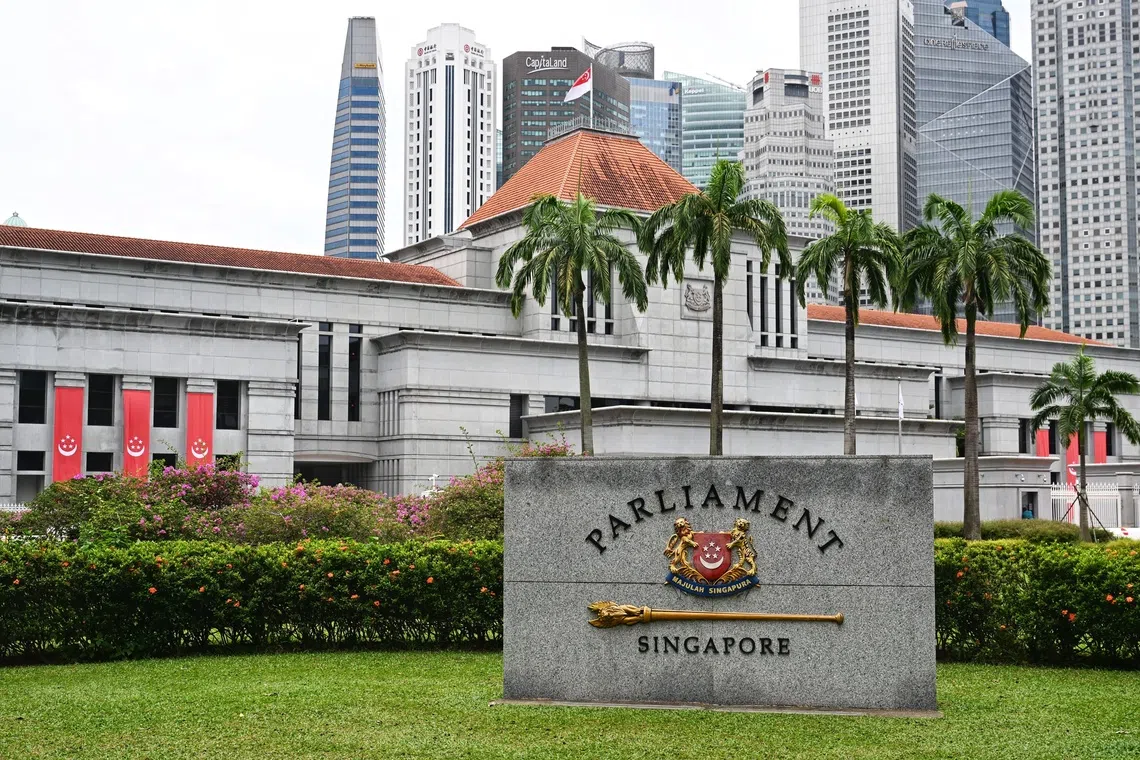
The Government’s approach to raise ministerial salaries by up to 9 per cent in October thus strikes the balance between keeping the salary framework relevant for the future without over-correcting for the present, said the prime minister.
ST PHOTO: CHONG JUN LIANG
Published Sep 10, 2026, 08:40 PM
Updated Sep 10, 2026, 08:42 PM
Prime Minister Lawrence Wong explained the 9% ministerial salary increase as a gradual, restrained move to address a longstanding pay gap while keeping salaries competitive and fair.
The government considered several options but chose a balanced approach to avoid abrupt changes, aiming for ministers to earn about $1.35 million by this term's end.
MPs suggested improvements like higher variable pay and more support for private sector candidates. Wong said the Government is open to ongoing reviews and adjustments over time.
SINGAPORE - The one-off adjustment to political pay addresses a gap that has built up over the years, but does so progressively and with restraint, said Prime Minister Lawrence Wong on Sept 10.
At the parliamentary debate on changes to political salaries, PM Wong noted that there was considerable common ground among MPs from both sides of the aisle and the Nominated MPs that ministerial salaries should be competitive while reflecting the ethos of service.
He noted that the 13 MPs and NMPs who spoke during the 4.5 hour debate essentially affirmed the need for political service to be competitively remunerated, and that the differences were over how the framework should be calibrated and implemented.
The prime minister said there were several ways the Government could have responded to the recommendations by the review committee formed in Dec 2025 to look at political salaries.
A key recommendation by the committee was to update the benchmark salary of a minister at entry-level grade MR4 - which has been at $1.1 million since 2011 - to $1.8 million.
One way would have been to move all serving officeholders to the new benchmark immediately, but that would not be right as they were at different salary points and grades, said PM Wong.
But neither was it reasonable to leave their salaries unchanged indefinitely, he added, noting that the Government had held back from adjusting salaries in 2017 and had deferred the review in 2023.
The prime minister noted that MPs had said it was not a good time to adjust political salaries, reflecting sentiments from workers and their constituents. “I understand the concerns. But there is never going to be a politically convenient time to adjust political salaries,” he said.
A third option was to ignore the formula and choose a lower benchmark. But that would mean arbitrarily changing the conclusion of an independent committee because the $1.8 million number was politically awkward, he noted.
Instead, the Government accepted the framework, but will move towards it gradually, with an MR4 minister expected to earn about $1.35 million by the end of this term of government.
During the debate, WP chief Pritam Singh said his party supported the increase in allowances for MPs in view of inflation, and agreed with the prime minister’s decision not to increase ministers’ salaries beyond 9 per cent.
While it agreed with the broad principles laid out by the committee on competitive and transparent ministerial pay while reflecting that political service is a calling, Singh said the WP’s view remains that the preferred formula is one that is a multiple of an MP’s salary pegged to that of a senior public servant’s wage.
He said that this approach, which the WP had proposed in 2012, would lead to more modest increases in ministers’ salaries over time.
PM Wong countered that despite the different formulas, the outcome was a similar salary figure for ministers in this term of government, given the Government’s gradual and restrained approach in implementing the updated salary benchmark.
He noted that an inflation adjustment approach, as used for MPs’ allowances, would have brought the average minister’s salary to $1.5 million. The Government’s decision was in fact to take longer to catch up to the benchmark, said Wong.
“For all intent and purposes, within this term of government, we agree on the implementation approach,” he said. “Beyond that, we will have to consider the circumstances then. And five years from now, there will be another independent review.”
Noting that Singh had said money was not the key to recruiting MPs for the WP, PM Wong made clear that the PAP government did not believe in using higher pay as an incentive to draw people into politics.
“Competitive salaries do not create the motivation to serve. But they can make it possible for someone who already has that motivation in the first place to step forward.”
“To be very clear, the PAP, the PAP government – we do not believe in using higher pay as an incentive to draw people into politics,” said PM Wong.
He noted that if every officeholder received the full one-time adjustment of 9 per cent, the additional public expenditure would be $5 million. The actual amount will be lower as the adjustment will be differentiated.
Currently, the salaries for all political officeholders cost around $55 million. This figure varies from year to year depending on the number of officeholders appointed, promoted and the national bonus paid out.
As a share of the GDP, salary expenditure is lower today than it was 10 years ago and has been stable in recent years, he added.
“In recent years, the overall salary bill (as a share of GDP) has been stable. And I intend to keep it broadly at this level going forward, said Wong.
The debate saw a number of NMPs seek clarifications and propose tweaks to the salary framework.
For instance, businessman Azhar Othman suggested having a larger variable component in the overall salary package so that it would be less a bonus but “a genuine reflection of the social contract between the governed and those who govern”.
While a minister’s salary current has a 35 per cent variable that takes into account Singapore’s economic performance, national outcomes, and individual performance, Azhar proposed that this component be increased to 55 per cent.
Academic Terence Ho suggested tweaks to encourage more private sector candidates to contest elections, such as a transitional arrangement for those taking especially large pay cuts.
Meanwhile, fellow academic Kenneth Poon asked for broader social progress to be considered in the proposed quality of life measure in the national bonus framework.
PM Wong said the MPs had raised many useful suggestions during the debate, and that the Government will study all of them carefully.
The Government does not claim that the present formula is perfect, which is why there will continue to be regular independent reviews in the coming years, he added.
“There may well be further ideas beyond this debate, as we reflect on the framework and gain more experience over time,” he said. “The Government remains open to suggestions.”
He further noted that some MPs had asked why political salaries should go up further when other countries achieve good governance outcomes while paying their ministers less.
While this was a fair question, international comparisons of political salaries have to be treated with care. For instance, some countries distribute responsibilities across national, regional and local governments.
But Singapore, as a city-state, has a single national government that is responsible for economic, social, security and municipal issues.
Unlike in other countries, ministers in Singapore also cannot just preside over their ministries like a non-executive chairman, but have to set the tone and direction and make the big decisions, he added.
“In Singapore, we expect our ministers to be effective politicians, effective executives, and effective leaders. That is how we have operated our system, and that is how we have achieved exceptional results,” he said.
“I am not saying that our model is better, or that others should follow us. Every country must develop arrangements that work in its own circumstances.”
The prime minister emphasised that the issue when it came to political pay was ultimately not about him or the present Cabinet, nor even the PAP government of today.
“We cannot know which party will form the Government many years from now. But whoever governs Singapore will face the same challenge – to persuade good people to step forward, and to assemble the strongest possible team for our country,” he said.
“So whatever our differences, all of us have an interest in ensuring that Singapore continues to be well governed.”
Singapore politicians
Singapore Parliament
首相表示,政府计划在10月份将部长级官员的薪水提高至多9%,这样既能保持薪酬体系对未来的适用性,又不会对当前形势进行过度调整,从而实现了两者之间的平衡。
《海峡时报》照片:梁崇俊
发布于2026年9月10日晚上8:40
更新于2026年9月10日晚上8:42
总理黄循财解释说,部长级薪酬上涨9%是一项循序渐进、克制的举措,旨在解决长期存在的薪酬差距问题,同时保持薪酬的竞争力和公平性。
政府考虑了多种方案,但选择了一种平衡的方法,以避免突然的变化,目标是让部长们在本届任期结束时获得约 135 万美元的收入。
议员们建议提高浮动薪酬,并为私营部门求职者提供更多支持。黄英贤表示,政府对持续评估和调整持开放态度。
新加坡——总理黄循财9月10日表示,对政治人物薪酬的一次性调整旨在解决多年来积累的薪酬差距,但调整过程将循序渐进且保持克制。
在国会就政治薪酬改革进行辩论时,黄英贤总理指出,两党议员和委任议员在部长薪酬应具有竞争力并体现服务精神方面存在相当大的共识。
他指出,在长达 4.5 小时的辩论中发言的 13 位国会议员和非国会议员基本上都肯定了政治服务需要有竞争力的报酬,而分歧在于如何调整和实施这一框架。
首相表示,政府本可以采取多种方式来回应2025年12月成立的审查委员会提出的关于政治薪酬的建议。
委员会的一项关键建议是将入门级 MR4 级部长的基准工资(自 2011 年以来一直为 110 万美元)更新为 180 万美元。
黄总理表示,一种方法是立即将所有在职官员调整到新的基准水平,但这并不合适,因为他们的薪级和级别各不相同。
但他补充说,无限期地维持工资不变也是不合理的,并指出政府在 2017 年没有调整工资,并将审查推迟到 2023 年。
首相指出,议员们表示现在并非调整政治薪酬的合适时机,这反映了工薪阶层及其选民的意愿。“我理解大家的担忧。但调整政治薪酬永远不会有政治上的合适时机,”他说道。
第三种选择是忽略公式,选择一个较低的基准值。但他指出,这样做就意味着随意改变独立委员会的结论,因为180万美元这个数字在政治上很尴尬。
相反,政府接受了这一框架,但将逐步推进,预计到本届政府任期结束时,MR4部长将获得约135万美元的收入。
在辩论中,工人党主席毕丹星表示,鉴于通货膨胀,他的政党支持提高议员津贴,并同意总理关于部长薪资涨幅不超过9%的决定。
辛格表示,工人党虽然同意委员会提出的关于部长薪酬具有竞争力和透明度的总体原则,并认为政治服务是一种使命,但工人党仍然认为,最佳方案是议员薪酬与高级公务员工资挂钩的倍数。
他表示,工人党在 2012 年提出的这一方案,将使部长们的薪水随着时间的推移而逐步温和增长。
黄总理反驳说,尽管计算公式不同,但考虑到政府在实施更新后的薪酬基准时采取了循序渐进、克制谨慎的态度,本届政府部长们的薪酬最终结果还是相近的。
他指出,如果采用与议员津贴相同的通胀调整方法,部长们的平均年薪将达到150万美元。黄说,政府的决定实际上是想延长达到基准水平所需的时间。
他说:“就本届政府的任期而言,我们在实施方案上基本达成一致。之后,我们将视具体情况而定。五年后,还将进行另一次独立审查。”
黄英贤总理指出,辛格曾表示金钱不是工人党招募议员的关键,并明确表示人民行动党政府不相信用高薪作为吸引人们从政的激励手段。
“有竞争力的薪酬并不能激发人们的奉献精神,但它可以使那些原本就有奉献精神的人挺身而出。”
黄英贤总理明确表示:“人民行动党,人民行动党政府——我们不相信用高薪作为吸引人们从政的激励手段。”
他指出,如果每位公职人员都获得9%的一次性调整,则额外公共支出将为500万美元。由于调整幅度会有所不同,实际金额会更低。
目前,所有政治官员的薪酬总额约为5500万美元。这一数字每年都会有所变化,具体取决于官员的任命、晋升人数以及发放的国家奖金。
他补充说,工资支出占GDP的比例,目前低于10年前的水平,并且近年来一直保持稳定。
黄先生表示:“近年来,整体工资支出(占GDP的比例)一直保持稳定。我打算今后大致维持在这个水平。”
辩论中,一些非选区议员寻求澄清,并提出对薪酬框架的调整建议。
例如,商人阿扎尔·奥斯曼建议在整体薪酬方案中增加可变部分,这样它就不仅仅是奖金,而是“被统治者与统治者之间社会契约的真正体现”。
虽然部长薪酬中目前有 35% 的变量,该变量考虑了新加坡的经济表现、国家成果和个人表现,但阿兹哈尔提议将这一部分提高到 55%。
学者何德伦建议进行一些调整,以鼓励更多私营部门候选人参加选举,例如为那些接受特别大幅度减薪的人制定过渡安排。
与此同时,另一位学者 Kenneth Poon 要求在国家奖金框架中提出的衡量生活质量的指标中考虑更广泛的社会进步。
黄总理表示,议员们在辩论中提出了许多有益的建议,政府将认真研究所有这些建议。
他补充说,政府并不认为目前的方案是完美的,因此在未来几年将继续进行定期的独立审查。
他说:“随着我们对这一框架的反思和经验的积累,或许还会有更多想法涌现。政府始终对各种建议持开放态度。”
他还指出,一些议员质疑,其他国家在支付部长薪酬较低的情况下也能取得良好的治理成果,为什么政治人物的薪酬还要进一步上涨。
虽然这个问题本身很合理,但对政治人物薪酬进行国际比较时必须谨慎。例如,一些国家会将职责分配给国家、地区和地方各级政府。
但新加坡作为一个城邦国家,只有一个负责经济、社会、安全和市政事务的中央政府。
他补充说,与其他国家不同,新加坡的部长不能仅仅像非执行主席那样主持各自部门的工作,而是必须定下基调和方向,并做出重大决策。
他说:“在新加坡,我们期望我们的部长们既是高效的政治家,又是高效的行政官员,也是高效的领导者。我们就是这样运作我们的体制,也正是这样取得了卓越的成果。”
我并不是说我们的模式更好,也不是说其他国家应该效仿我们。每个国家都必须根据自身情况制定合适的方案。
总理强调,政治薪酬问题最终与他本人、现任内阁,甚至与今天的PAP政府都无关。
“我们无法预知多年后哪个政党会组建政府。但无论谁执政新加坡,都将面临同样的挑战——说服优秀人才挺身而出,为我们的国家组建最强大的团队,”他说道。
“所以无论我们之间存在什么分歧,我们都希望确保新加坡继续保持良好的治理。”
新加坡政治家
新加坡国会