How to maintain Israel’s qualitative military edge in a changing Middle East如何在不断变化的中东地区保持以色列的军事优势
An updated and balanced bilateral policy can enable Israel’s new peace partners to benefit from the diplomatic process they have entered, while minimizing erosion of Israel’s QME.
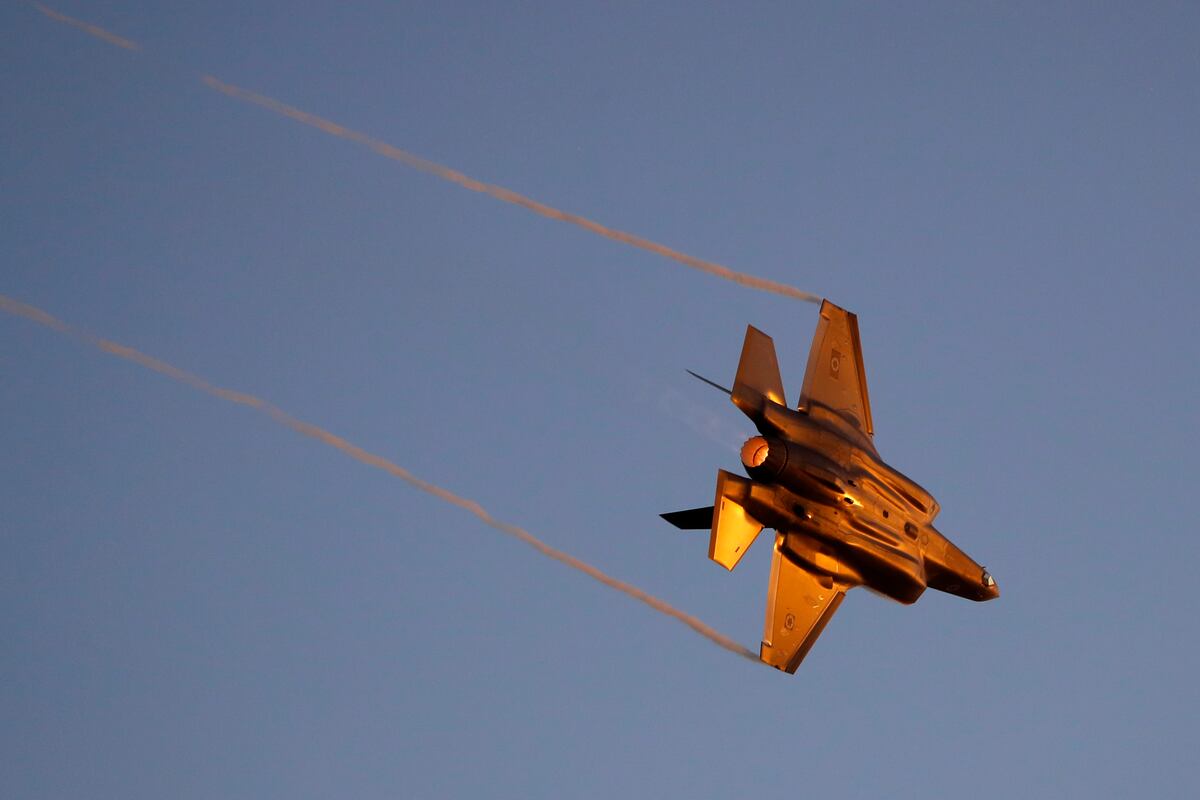
The United States’ long-standing commitment to maintaining Israel’s qualitative military edge , or QME, forms a central pillar of Israel’s security strategy.
The U.S. commitment reflects the bipartisan support for Israel that has been expressed by all recent U.S. administrations and Capitol Hill. It encompasses multiyear military financial assistance made available to Israel for procuring weapons systems, as part of the U.S.-Israel Memorandum of Understanding ; the joint development and production of missile defense systems; the sharing of intelligence information and missile alerts; and the holding of joint military exercises. American support also takes the form of pre-positioning U.S. military equipment on Israeli territory.
In order to ensure that this cooperation remains sturdy into the foreseeable future, both Israel and the U.S. will need to address several emerging challenges. Chief among them is Iran, whose hegemonic ambition in the Middle East is sparking a broader arms race between the Iranian-led Shiite axis and Arab Sunni states. This arms race jeopardizes Israel’s QME.
An additional challenge is the sheer volume of defense deals undertaken in the Middle East since the beginning of the 21st century, totaling hundreds of billions of dollars.
A third factor in considering threats to Israel’s QME is the fact that while the U.S. remains the main supplier of weapons systems in the region, European, Russian and even Chinese defense industries are becoming more prominent suppliers to Middle Eastern states.
The systems sold by these counties range from items that the U.S. has refused to sell (sometimes due to Israeli objections), such as armed drones, ballistic missiles, main battle tanks, armored personnel carriers, air defense batteries and more.
In light of the above, there are Middle Eastern states — the Gulf petrodollar nations — with deep pockets that could easily afford to buy significant maritime and/or airborne fleets that are out of Israel’s economic reach. The higher the cost of platforms, the more the trend is pronounced.
At the same time, the Middle East is undergoing rapid changes, with three Arab countries — two of them Gulf states — signing historic normalization treaties with Israel, creating a different environment when compared to just a decade ago.
Israel’s core strategy of enhancing, strengthening and deepening its ties with Gulf states relies on a common mutual interest based on a view of Iran as a strategic enemy. With both Israel and the Gulf states facing a similar threat from Iran and its proxies, it remains unclear how wise a policy it is to object to Gulf countries procuring modern weapons systems from the U.S.
Blocking such procurements could push the United Arab Emirates to purchase Russia’s Su-57 stealth fighter jet instead of the U.S. F-35 aircraft , and it is not clear how such a scenario would better serve the mutual interests of the U.S. and Israel. The question of whether such an attitude would cause harm to the newly tightened Israeli-Gulf strategic relationship remains relevant.
No policy is free from built-in risks, and it is necessary for Israel to identify these in the pursuit of its QME in the new geopolitical environment, and to manage them appropriately.
Two of the most disturbing risks are long-term regime instability and the slippery slope potential of other countries achieving advanced defense technology.
In terms of regional instability, regional political history has witnessed multiple regime changes in recent years, and governments that are pragmatic today could become hostile tomorrow. Well-known examples include the Muslim Brotherhood’s takeover of Egypt , or the conversion of Turkey from an ally of Israel to a bitter opponent. Iran itself underwent the most drastic of changes, going from a close partner to the U.S. and Israel until 1979, when it became a sworn adversary after the Islamic Revolution.
The slippery slope risk means if the U.S. were to sell, with Israel’s approval, state-of-the-art technologies to country A, preventing country B from acquiring the same technology or platform would become highly complex and difficult.
In order to navigate these risks with minimum negative impacts to Israel’s qualitative military edge, establishing win-win strategies is an advisable path. This can include technological differentiation, which is based on the idea that not all platforms are the same and that the U.S. can keep some of its naval and airborne platform software packages to itself. Opening new technological routes for upgrading Israeli-American mutual cooperation, and increasing the volume and diversity of American pre-positioning of military equipment in Israel, would also further such strategies, as would deepening cooperation in missile defense; intelligence, surveillance and reconnaissance; and cooperation in space.
With Israel’s resources limited in the wake of the coronavirus pandemic, an additional route to promoting its QME is through a U.S. government commercial loan, guaranteed against the funds provided by the 10-year Memorandum of Understanding.
At the same time, since Israel is also a defense technology and weapons supplier in its own right , bilateral cooperation between the U.S. and Israel on arms sales to the region could pave the way forward to a trilateral and more healthy relationship: the U.S., the Gulf and Israel.
Ultimately, American and Israeli policies for maintaining Israel’s QME, in place since the 1960s, are due for an update. Tectonic changes in the region require fresh policies from both Washington and Jerusalem. An updated and balanced bilateral policy can enable Israel’s new peace partners to benefit from the diplomatic process they have entered, while minimizing erosion of Israel’s QME.
Yair Ramati is a publishing expert at the MirYam Institute. He is a former director for the development, production and delivery of missile defense systems with Israel’s Defense Ministry.
美国长期以来致力于维护以色列的军事质量优势(QME),这构成了以色列安全战略的核心支柱。
美国的承诺体现了历届美国政府和国会山对以色列的两党支持。这包括根据《美以谅解备忘录》向以色列提供多年军事财政援助,用于采购武器系统;联合研发和生产导弹防御系统;共享情报信息和导弹预警;以及举行联合军事演习。美国的支持还体现在预先在以色列领土部署美军装备上。
为了确保这种合作在可预见的未来保持稳固,以色列和美国都需要应对一些新出现的挑战。其中最主要的挑战是伊朗,其在中东的霸权野心正在引发伊朗领导的什叶派轴心与阿拉伯逊尼派国家之间更广泛的军备竞赛。这场军备竞赛危及以色列的“合格中东伙伴关系”(QME)。
另一个挑战是,自 21 世纪初以来,中东地区达成的国防交易数量庞大,总额达数千亿美元。
考虑以色列的QME所面临的威胁的第三个因素是,虽然美国仍然是该地区武器系统的主要供应商,但欧洲、俄罗斯甚至中国的国防工业正在成为中东国家越来越重要的供应商。
这些国家出售的系统包括美国拒绝出售的物品(有时是由于以色列的反对),例如武装无人机、弹道导弹、主战坦克、装甲运兵车、防空炮等等。
鉴于上述情况,一些财力雄厚的中东国家——海湾石油美元国家——完全有能力购买以色列无力承担的庞大海上和/或空中力量。平台成本越高,这种趋势就越明显。
与此同时,中东正在经历快速变化,三个阿拉伯国家(其中两个是海湾国家)与以色列签署了历史性的关系正常化条约,与十年前相比,这里已经发生了翻天覆地的变化。
以色列加强、巩固和深化与海湾国家关系的战略核心,是基于将伊朗视为战略敌人的共同利益。鉴于以色列和海湾国家都面临着来自伊朗及其代理人的类似威胁,反对海湾国家从美国采购现代化武器系统的政策是否明智,目前尚不明朗。
阻止此类采购可能会迫使阿联酋购买俄罗斯的苏-57隐形战斗机而非美国的F-35战机,而这种情况究竟如何才能更好地符合美国和以色列的共同利益,目前尚不明确。这种态度是否会对新近加强的以色列-海湾战略关系造成损害,仍然是一个值得探讨的问题。
任何政策都不可能完全没有内在风险,以色列在新地缘政治环境下追求其质量、合理和有效(QME)的过程中,必须识别出这些风险,并对其进行适当的管理。
最令人担忧的两个风险是政权长期不稳定和其他国家获得先进国防技术可能带来的滑坡效应。
就地区不稳定而言,近年来该地区政治历史见证了多次政权更迭,如今务实的政府明天可能就会变得敌对。众所周知的例子包括穆斯林兄弟会接管埃及,以及土耳其从以色列的盟友转变为其死敌。伊朗自身经历了最为剧烈的变化,在1979年伊斯兰革命之前,它一直是美国和以色列的亲密伙伴,但在革命后却成为了它们的死敌。
滑坡效应的风险在于,如果美国在以色列的批准下向 A 国出售最先进的技术,那么阻止 B 国获得相同的技术或平台将变得非常复杂和困难。
为了在最大限度减少对以色列军事优势负面影响的前提下应对这些风险,制定双赢战略是明智之举。这包括技术差异化,其理念在于并非所有平台都相同,美国可以保留部分海空平台软件。开辟新的技术途径以提升以美互利合作,增加美国在以色列预先部署的军事装备的数量和种类,以及深化在导弹防御、情报、监视和侦察以及太空领域的合作,都将有助于推进此类战略。
由于新冠疫情的影响,以色列的资源有限,促进其QME发展的另一条途径是通过美国政府的商业贷款,该贷款以10年期谅解备忘录提供的资金为担保。
与此同时,由于以色列本身也是一个国防技术和武器供应国,美国和以色列在向该地区出售武器方面的双边合作,可以为建立美国、海湾国家和以色列之间更加健康的三边关系铺平道路。
归根结底,自20世纪60年代以来美国和以色列为维护以色列的“合格军事利益”(QME)而制定的政策亟需更新。该地区格局的剧变要求华盛顿和耶路撒冷都采取新的政策。一项更新且平衡的双边政策,既能让以色列的新和平伙伴从已启动的外交进程中受益,又能最大限度地减少对以色列“合格军事利益”的侵蚀。
亚伊尔·拉马蒂是米尔亚姆研究所的出版专家。他曾任以色列国防部导弹防御系统研发、生产和交付部门主管。