Iran likely to reverse-engineer captured US underwater drone伊朗或将对缴获的美国水下无人机进行逆向工程
Iran will almost certainly try to pry open the captured drone’s hardware, but the platform's software does carry built-in defenses, analysts say.
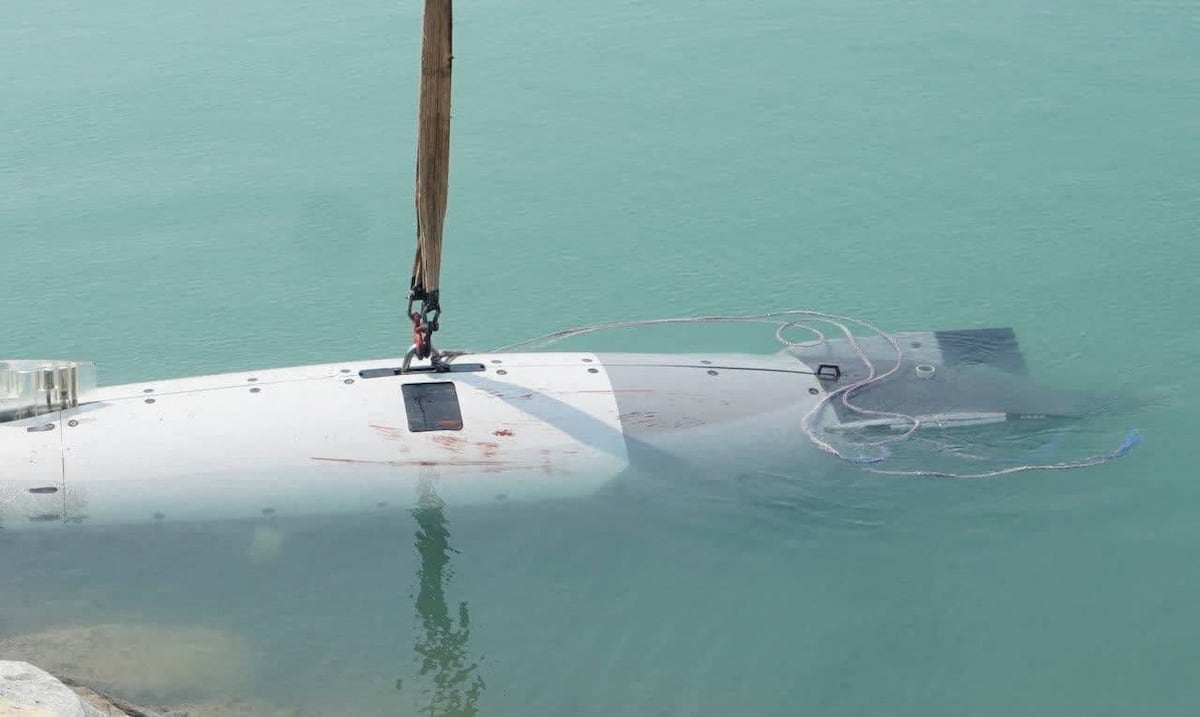
Iran’s capture of a U.S. military underwater drone gives Tehran an opportunity to study and potentially reverse-engineer the vessel, delivering a setback for the Pentagon and drone maker Anduril .
The U.S. military and Anduril have downplayed the significance of the drone falling into Iranian hands. The vessel, a Dive-LD autonomous underwater vehicle designed for long-range surveillance and other undersea missions, is among a new generation of military drones intended to operate for days with little human intervention. Washington has previously treated the loss of advanced drones to Iran as a serious matter.
After Iran captured an RQ-170 Sentinel stealth reconnaissance drone in 2011, then-President Barack Obama publicly asked Tehran to return the aircraft. Iran later claimed it had reverse-engineered the drone and subsequently unveiled domestically produced models that appeared to draw heavily on its design.
More recently, the U.S. military moved swiftly to prevent Iranian forces from taking possession of uncrewed maritime technology. In 2022, a U.S. Navy patrol ship and MH-60S Seahawk helicopter were deployed after an Iranian naval vessel attempted to tow away a Saildrone surface vessel in the Gulf, according to the Navy.
Analysts say Iran is unlikely to gain a decisive military advantage from the captured drone, but the episode nonetheless represents a propaganda victory for Tehran and an awkward setback for Washington’s efforts to project technological superiority.
Iranian embassies around the world have mocked the U.S. for losing its drone. Iran’s embassy in Ghana, in a post on X, boasted about picking the submersible up in “a strait controlled by people who can hear a shrimp sneeze,” adding that, “Our guys picked it up like a plastic bottle in a fishing net. Fully intact. Still blinking like an idiot. Condolences to whoever was holding the joystick.”
U.S. Navy Capt. Tim Hawkins of U.S. Central Command said the “defective drone was an older model that neither collected sensitive data nor carried any classified sonar or radar equipment.” Anduril did not immediately respond to a request for comment.
“Of course Iran will take every opportunity as a propaganda win,” said Farzin Nadimi, a senior fellow at the Washington Institute for Near East Policy. “It can help the (Islamic Revolutionary Guard Corps) make better versions of their own designs.”
Iran will almost certainly try to pry open the drone’s hardware, but the drone’s software carries built-in defenses, said Bryan Clark, a senior fellow and director of the Center for Defense Concepts and Technology at the Hudson Institute. Iranian engineers “could definitely reverse-engineer the mechanical systems,” he said, pointing to Tehran’s track record with captured American aircraft.
“Unboxing ceremony by our reverse engineers, tomorrow morning!” Iran’s embassy in Hyderabad wrote on X.
The incident has also highlighted a disconnect between the messaging of Anduril and its customer, the U.S. Navy.
Navy officials said the Dive-LD was an older-model vehicle that suffered a malfunction and was recovered by Iranian forces after being left “dead in the water.”
Anduril has promoted the Dive-LD as “the most reliable and flexible” large autonomous underwater vehicle available, saying it is capable of operating for up to 10 days in demanding conditions. In addition to its use by the U.S. Navy, the Dive-LD was the testbed vehicle for the development of Australia’s new Ghost Shark large underwater drone.
“This is something that Iran has proven very adept at exploiting for its own benefit in terms of seeking to frame the narrative as one of U.S., in this case, ineptitude and their ability to sort of retain control over the Strait of Hormuz,” said Mona Yacoubian, director of the Middle East program at the Center for Strategic and International Studies.
伊朗捕获了一架美国军用水下无人机,这让德黑兰有机会研究并可能对该无人机进行逆向工程,这对五角大楼和无人机制造商安杜里尔公司来说是一个挫折。
美国军方和安杜里尔公司淡化了无人机落入伊朗手中的重要性。这架无人机是Dive-LD型自主水下航行器,设计用于远程监视和其他水下任务,属于新一代军用无人机,可在极少人工干预的情况下连续运行数天。此前,华盛顿一直将先进无人机落入伊朗手中视为严肃事件。
2011年,伊朗缴获了一架RQ-170“哨兵”隐形侦察无人机后,时任美国总统奥巴马公开要求德黑兰归还该无人机。伊朗随后声称已对该无人机进行了逆向工程,并随后推出了国产机型,这些机型似乎大量借鉴了RQ-170的设计。
最近,美军迅速采取行动,阻止伊朗军队获取无人海上技术。据美国海军称,2022年,一艘伊朗海军舰艇试图在波斯湾拖走一艘Saildrone水面航行器后,美国海军部署了一艘巡逻舰和一架MH-60S“海鹰”直升机。
分析人士表示,伊朗不太可能从缴获的无人机中获得决定性的军事优势,但这一事件仍然代表着德黑兰的一次宣传胜利,以及华盛顿试图展现技术优势的努力的一次尴尬挫折。
世界各地的伊朗大使馆都对美国丢失无人机一事进行了嘲讽。伊朗驻加纳大使馆在X网站上发帖吹嘘,称他们在“一个连虾打喷嚏都能听见的海峡”里找到了这架无人机,并补充道:“我们的人像用渔网捞塑料瓶一样把它捞了上来。完好无损。它还在像个傻子一样眨着眼睛。向当时握着操纵杆的人表示慰问。”
美国中央司令部海军上校蒂姆·霍金斯表示,“这架故障无人机是老款机型,既没有收集敏感数据,也没有携带任何机密声呐或雷达设备。”安杜里尔公司尚未对此事作出回应。
“伊朗当然会把每一次机会都当作宣传上的胜利,”华盛顿近东政策研究所高级研究员法尔津·纳迪米说。“这有助于(伊斯兰革命卫队)改进他们自己的设计。”
哈德逊研究所国防概念与技术中心高级研究员兼主任布莱恩·克拉克表示,伊朗几乎肯定会试图撬开无人机的硬件,但无人机的软件内置了防御机制。他指出,鉴于德黑兰以往对缴获的美国飞机的改造记录,伊朗工程师“绝对有能力对机械系统进行逆向工程”。
“明天上午,我们的逆向工程师将举行开箱仪式!”伊朗驻海得拉巴大使馆在X上写道。
该事件也凸显了 Anduril 与其客户美国海军在信息传递方面存在脱节。
海军官员表示,Dive-LD 是一款较老型号的潜水艇,发生故障后被遗弃在水中,后被伊朗军队回收。
Anduril公司将Dive-LD宣传为“最可靠、最灵活”的大型自主水下航行器,称其能够在严苛条件下连续作业长达10天。除了被美国海军使用外,Dive-LD还是澳大利亚新型大型水下无人机“幽灵鲨”(Ghost Shark)研发的测试平台。
“伊朗已经证明自己非常擅长利用这一点来为自己谋利,试图将叙事塑造成美国的无能,以及他们有能力继续控制霍尔木兹海峡,”战略与国际研究中心中东项目主任莫娜·雅库比安说。