C-17 Pilot Who Made That Intense Takeoff From Portland Explains The Maneuver从波特兰起飞的C-17飞行员解释了那次惊险起飞的机动动作
When operating from a small airstrip surrounded by hostile forces, there is a good way to get into the air and survive to land once again.
新闻视频
Published Jul 28, 2021 8:31 PM EDT
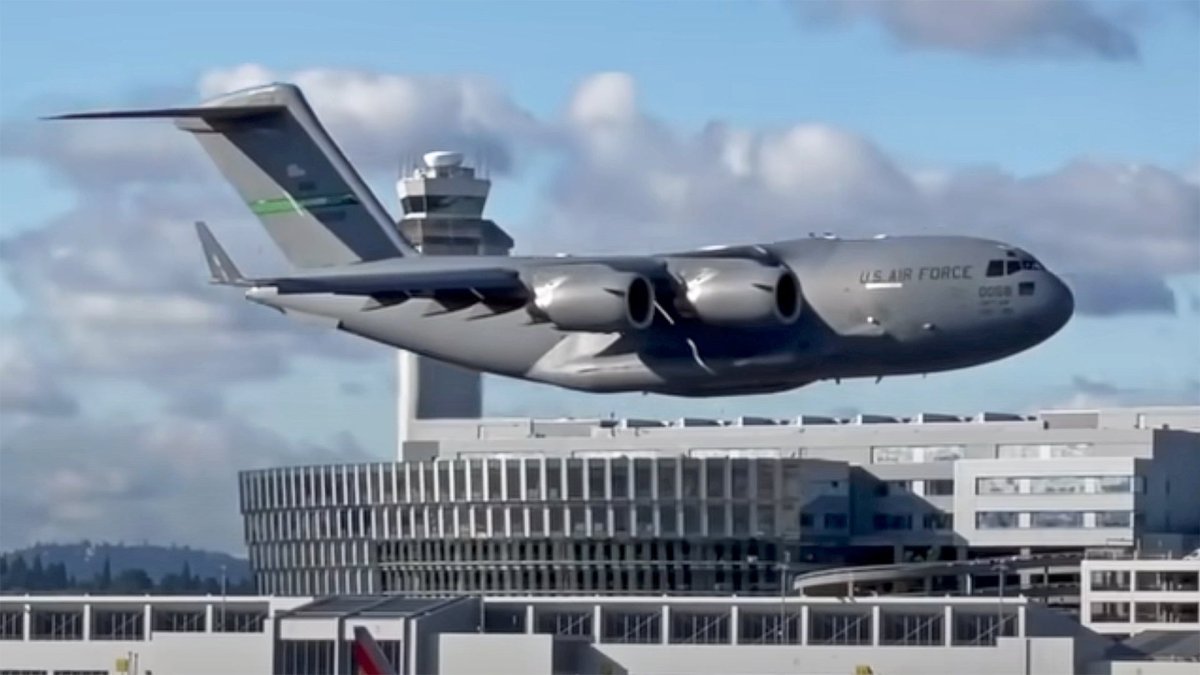
Last week we posted a story about a video showing a C-17A Globemaster III making a uniquely impressive departure from Portland International Airport before being chased down by resident 123rd Fighter Squadron
alert F-15s for training. The video came to us from our friend @big_seans_aviation and drew a lot of interest. At the time we speculated that the crazy-looking takeoff was practice for executing short-field tactical departures in hostile areas. Now the pilot who was actually at the controls has given us unique insights into exactly what we are seeing in the dramatic video.
Lt. Col. Bruce Cohn, a C-17 Instructor Pilot with the 97th Airlift Squadron out of McChord Field, located just outside of Tacoma, Washington, told The War Zone the following about the high-performance takeoff in question:
In the video you’re seeing a combination of two takeoff capabilities of the C-17. First, you’ll notice that the aircraft rotates well before the A3 taxiway on runway 28R, resulting in a takeoff distance of less than 2500 feet – demonstrating the short field takeoff capability of the C-17. Secondly, you can see that we level off just above the runway, accelerate and then initiate a short but steep climb prior to the departure end. This is a demonstration of a low altitude tactical departure, used for negating a small arms threat near an airfield. This is one of several types of tactical departures C-17 pilots are trained to perform. The type of tactical departure used is dependent upon the threat the crew is defending against. Tactical departures such as this one were used regularly in Afghanistan and Iraq. Like most flight events, there is a training currency associated with this one. C-17 pilots must log a minimum of 2 tactical departures every 6 months.
In the video you’re seeing a combination of two takeoff capabilities of the C-17. First, you’ll notice that the aircraft rotates well before the A3 taxiway on runway 28R, resulting in a takeoff distance of less than 2500 feet – demonstrating the short field takeoff capability of the C-17. Secondly, you can see that we level off just above the runway, accelerate and then initiate a short but steep climb prior to the departure end. This is a demonstration of a low altitude tactical departure, used for negating a small arms threat near an airfield. This is one of several types of tactical departures C-17 pilots are trained to perform. The type of tactical departure used is dependent upon the threat the crew is defending against. Tactical departures such as this one were used regularly in Afghanistan and Iraq.
Like most flight events, there is a training currency associated with this one. C-17 pilots must log a minimum of 2 tactical departures every 6 months.
It sounds like our original assessment was pretty spot on, but this adds a lot of great detail.
Cohn also described the unique relationship between his unit at McChord and Portland’s Eagle squadron, as well as what it’s like being intercepted by them for training:
The partnership between the Redhawks (123rd Fighter Squadron) and the three Reserve C-17 squadrons (446th Operations Group) at McChord is a home-grown collaboration that has been superb. The F-15s have a multitude of training requirements that go with their alert commitment and with the C-17 we are able to provide a platform that can mimic various targets of interest for them. On our end, the ability to take part in tactical scenarios with friendly escorts (Blue Air) and be targeted by hostile fighters (Red Air) is invaluable to our training and preparation for future encounters. The proximity and capabilities of our squadrons make this partnership something we plan to continue and build upon. The Redhawks are outstanding hosts! Obviously flying and mixing it up with the F-15s is great training but it’s also a lot of fun too. So, if you live in the Portland area don’t be surprised to see a McChord C-17 show up from time to time.
The partnership between the Redhawks (123rd Fighter Squadron) and the three Reserve C-17 squadrons (446th Operations Group) at McChord is a home-grown collaboration that has been superb. The F-15s have a multitude of training requirements that go with their alert commitment and with the C-17 we are able to provide a platform that can mimic various targets of interest for them.
On our end, the ability to take part in tactical scenarios with friendly escorts (Blue Air) and be targeted by hostile fighters (Red Air) is invaluable to our training and preparation for future encounters. The proximity and capabilities of our squadrons make this partnership something we plan to continue and build upon.
The Redhawks are outstanding hosts! Obviously flying and mixing it up with the F-15s is great training but it’s also a lot of fun too. So, if you live in the Portland area don’t be surprised to see a McChord C-17 show up from time to time.
So there you have it, straight from the C-17 Instructor Pilot’s mouth!
Author’s note: A big thanks to Lt. Col. Cohn for explaining things!
Contact the author: Tyler@thedrive.com
Comments couldn’t be loaded. Please refresh the page.
发布于美国东部时间2021年7月28日晚上8:31
上周我们发布了一段视频,视频显示一架C-17A“环球霸王III”运输机从波特兰国际机场以令人印象深刻的方式起飞,随后被驻扎在那里的第123战斗机中队追击。
紧急召集F-15战机进行训练。这段视频来自我们的朋友@big_seans_aviation,引起了广泛关注。当时我们猜测,这段看似疯狂的起飞视频是在敌对区域进行短场战术起飞演练。现在,当时驾驶战机的飞行员为我们提供了独特的见解,让我们得以了解这段惊险视频背后的真相。
驻扎在华盛顿州塔科马市郊外麦克乔德机场的第97空运中队C-17教官飞行员布鲁斯·科恩中校向《战区》栏目讲述了有关此次高性能起飞的以下情况:
视频中展示了C-17的两种起飞能力。首先,你会注意到飞机在28R跑道A3滑行道前就已开始抬轮,起飞距离不到2500英尺——这体现了C-17的短场起飞能力。其次,你可以看到飞机在跑道上方保持水平飞行,加速后在离场前进行一段短暂但陡峭的爬升。这是低空战术离场的演示,用于消除机场附近的小型武器威胁。这是C-17飞行员接受训练的几种战术离场方式之一。所使用的战术离场方式取决于机组人员所防御的威胁类型。此类战术离场在阿富汗和伊拉克经常使用。与大多数飞行训练一样,这种战术离场也需要达到一定的训练要求。C-17飞行员必须每6个月至少完成两次战术离场。
视频中展示了C-17的两种起飞能力。首先,你会注意到飞机在28R跑道A3滑行道前就已开始抬轮,起飞距离不到2500英尺——这体现了C-17的短场起飞能力。其次,你可以看到飞机在跑道上方保持水平飞行,加速后,在离场前进行一段短暂但陡峭的爬升。这是低空战术离场的演示,用于消除机场附近的小型武器威胁。这是C-17飞行员接受训练的几种战术离场方式之一。所使用的战术离场方式取决于机组人员所防御的威胁类型。像这样的战术离场在阿富汗和伊拉克经常使用。
与大多数飞行活动一样,这项活动也有相应的训练资格要求。C-17飞行员必须每6个月至少完成2次战术起飞。
听起来我们最初的评估相当准确,但这份报告补充了很多重要的细节。
科恩还描述了他所在的麦克乔德空军基地部队与波特兰鹰中队之间独特的联系,以及被他们拦截进行训练的感受:
红鹰中队(第123战斗机中队)与麦克乔德空军基地的三个预备役C-17中队(第446作战大队)之间的合作堪称典范,堪称本土合作的典范。F-15战斗机需要履行其高度戒备的职责,因此训练需求繁多,而C-17运输机恰好能为他们提供一个模拟各种目标的平台。对我们而言,能够与友军护航(蓝方)进行战术演练,并接受敌方战斗机(红方)的打击,对于我们的训练和未来遭遇战的准备至关重要。两中队的地理位置和作战能力使我们计划继续深化并拓展这一合作关系。红鹰中队是出色的东道主!与F-15战斗机一起飞行和进行对抗训练固然是极好的训练方式,但也充满乐趣。所以,如果您住在波特兰地区,偶尔看到麦克乔德空军基地的C-17运输机出现也不要感到惊讶。
驻扎在麦克乔德空军基地的“红鹰”战斗机中队(第123战斗机中队)与三个预备役C-17运输机中队(第446作战大队)之间的合作堪称典范,堪称本土合作的典范。F-15战斗机在履行其警戒任务的同时,也需要进行大量的训练,而C-17运输机则能够为其提供一个可以模拟各种目标的平台。
对我们而言,能够与友军护航(蓝军)进行战术演练,并接受敌方战斗机(红军)的攻击,对我们的训练和未来遭遇战的准备至关重要。我们双方中队的地理位置和作战能力,使我们计划继续并深化这种伙伴关系。
红鹰飞行表演队真是非常棒的东道主!和F-15战机一起飞行训练固然很好,但也乐趣无穷。所以,如果你住在波特兰地区,时不时看到麦克乔德空军基地的C-17运输机出现也不要感到惊讶。
以上就是C-17教官飞行员的亲口讲述!
作者注:非常感谢科恩中校的讲解!
联系作者:Tyler@thedrive.com
评论加载失败,请刷新页面。