Ukraine war prompts new US air tactics in Europe乌克兰战争促使美国在欧洲采取新的空中战术
Countering anti-access, area-denial capabilities has become U.S. Air Forces in Europe boss Gen. James Hecker's top priority.
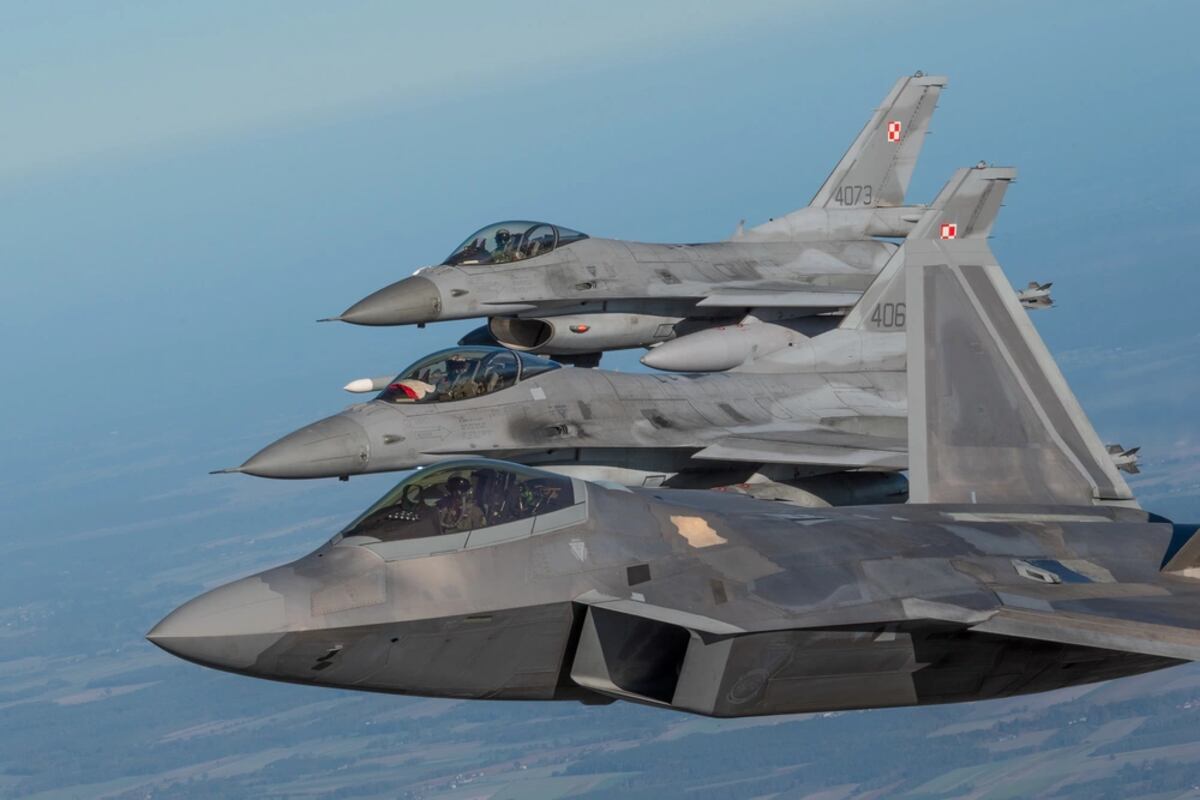
Nineteen months into Russia’s war on Ukraine , its lessons are shaping how the U.S. Air Force thinks about combat over Europe.
The conflict is pushing the Pentagon to focus on tactics instead of the strategic-level chess moves that have defined the U.S.-Russia military relationship in Europe since the end of the Cold War, Gen. James Hecker, the Air Force’s top officer in Europe , told Air Force Times in a recent interview.
No longer are allied air forces passively circling over Europe for the sake of visibility. U.S. pilots and their counterparts now use air policing missions to practice offensive and defensive maneuvers along NATO’s eastern border.
Struck by Russia’s inability to control Ukrainian airspace and Ukraine’s inability to fully secure it, NATO has begun working through the details of how it would maintain ownership of its own skies while breaking through enemy defenses to secure more airspace.
Hecker said his top priority has become figuring out how to counter air and missile defenses, electronic jamming and other anti-access, area-denial (A2/AD) capabilities, as they are known in military parlance, that would keep the U.S. out of Russian territory.
And it’s a main focus of U.S. and allied discussions at NATO’s highest levels.
A revamp of NATO’s regional security plans led by Army Gen. Christopher Cavoli, the head of U.S. European Command and one of the transatlantic alliance’s two strategic commanders, has spurred a new look at how member militaries would fight future wars if deterrence fails.
Those are “geographically specific plans that describe how we will defend key and relevant places in our alliance” against Russia and terror groups, Royal Netherlands Navy Adm. Rob Bauer, chairman of NATO’s military committee, said in May.
To the greatest extent seen since the end of the Cold War, he said, the alliance is setting goals to develop the capabilities it needs to thwart specific threats, like hypersonic weapons and unmanned vehicles.
“Together this family of plans will significantly improve our ability and readiness to deter and defend against any threats, including on short or no notice, and ensure timely reinforcement of all allies,” NATO said in a statement at its July 11 summit in Lithuania. “We have committed to fully resource and regularly exercise these plans to be prepared for high-intensity and multi-domain collective defense.”
For the allied air forces, that requires a closer look at how to defend their own airspace and gain access into an enemy’s. Delegates from each member nation began answering that question at NATO’s first weapons and tactics conference, or “WEPTAC,” at Ramstein Air Base, Germany, July 17-28.
Officials discussed the aircraft and weapons that the alliance would need for the counter-A2/AD mission in Europe, and hashed out techniques airmen would use in the field, Hecker said.
U.S. Air Force officials have pointed to unmanned aircraft, stealthy and long-range assets, and electronic weapons as options to distract or destroy defensive systems and clear the way for more traditional combat aircraft.
“We did a lot of the tactical-level planning for that kind of mission,” Hecker said. “We will use that planning to actually do rehearsals and practices as we continue our enhanced air policing on [NATO’s] eastern border.”
U.S. airmen have begun honing those moves in training sorties with European aircraft on the eastern flank, he said. It’s one example of how allied airpower has evolved alongside the conflict across NATO’s border.
After Russia launched its full-scale invasion of Ukraine in February 2022, armed NATO jets flew around-the-clock air patrols to discourage the conflict from spilling into other European nations. That kept Russian forces at bay but arguably left NATO airmen less ready for conflict, Hecker said.
“If you just do circles with missiles on board, you’re not actually practicing what you’re going to do in combat,” he said.
Once leaders were convinced that the alliance’s airspace was safe, airmen changed tack. Now pilots on patrol also take part in anti-access training along NATO’s border — pairing the deterrent value of an air patrol with the tactical value of real-world practice.
NATO will also put those tactics to the test at a major new training exercise, Ramstein Flag, in Greece at the end of 2024, Hecker said.
“We don’t want to go to war with Russia, and I don’t think they want to go to war with us either,” he said. “But we need to make sure that we have the forces capable of deterring them, so that nothing bad will happen.”
NATO will look for other opportunities to try out new tactics in large exercises, particularly those that combine multiple types of aircraft for more realism, Hecker said.
Those events could include Ukrainian pilots at the end of their training to fly the U.S.-built F-16 Fighting Falcon, he added.
POLITICO reported Aug. 4 that eight Ukrainians who are fluent in English are ready to learn to operate the fighter jet once a syllabus is created by a coalition of European countries and approved by the United States. It’s unclear when that might come to fruition.
Ahead of Ramstein Flag, U.S. Air Forces in Europe will continue trying to reform the classification rules that hinder how it shares combat data with others in NATO, from satellite imagery to targeting information collected by the F-35 Lightning II fighter jet .
“There’s things that we could share when it comes to A2/AD that would make us more integrated … and we could do the mission better, if they knew the capabilities that different countries had,” Hecker said. “We’re getting through some of those barriers and we’re able to brief certain folks on some of those capabilities, so we can fight better … as a team.”
Hecker also wants to ensure the alliance could carry out its combat objectives even if its communications are disrupted. And U.S. airmen can learn from Ukraine’s success at keeping its military aircraft from being targeted on the ground, by continually moving and maintaining a light footprint, he said.
The growing catalog of training events are part of a new era on NATO’s path to grow national investments in the alliance’s mutual defense since 2014.
Asked whether the U.S. should commit additional air squadrons to Europe, Hecker instead pointed to another sign of those investments: the rising number of European countries that have signed onto the F-35 Joint Strike Fighter program.
Within the next 10 years, Hecker said, more than 600 F-35s will be spread across the continent — only 54 of which are slated to be American.
“The European NATO allies are really stepping up to the plate and taking it seriously,” Hecker said. “I think you’re going to see, over the next several years, better tactics, better integration, and all that means better deterrence.”
That growing commitment can ensure a strong military presence in Europe without relying too heavily on the Pentagon, whose top priority is sending forces to deter Chinese aggression in the Pacific.
“You’re never going to have as many forces as you want … but I think we’re sitting in a pretty good position right now,” Hecker said of U.S. airmen in Europe. “I think everyone understands where we are with the National Defense Strategy, and it doesn’t get very heated during those discussions.”
Rachel Cohen is the editor of Air Force Times. She joined the publication as its senior reporter in March 2021. Her work has appeared in the Washington Post, the Frederick News-Post (Md.), Air and Space Forces Magazine, Inside Defense, Inside Health Policy and elsewhere.
俄罗斯对乌克兰发动战争19个月后,这场战争的经验教训正在影响美国空军对欧洲上空作战的看法。
美国空军驻欧洲最高指挥官詹姆斯·赫克尔将军在最近接受《空军时报》采访时表示,这场冲突正迫使五角大楼将重点放在战术上,而不是冷战结束以来一直主导美俄在欧洲军事关系的战略层面博弈上。
盟军空军不再仅仅为了观察情况而被动地在欧洲上空盘旋。美国飞行员及其同行现在利用空中警戒任务,在北约东部边界沿线进行进攻和防御演练。
由于俄罗斯无法控制乌克兰领空,而乌克兰也无法完全确保其安全,北约开始着手研究如何在保持自身领空控制权的同时,突破敌方防御,夺取更多领空。
赫克尔表示,他的首要任务是弄清楚如何应对防空和导弹防御系统、电子干扰以及其他反介入/区域拒止 (A2/AD) 能力(用军事术语来说),这些能力会阻止美国进入俄罗斯领土。
这也是美国及其盟国在北约最高层进行讨论的主要焦点。
由美国欧洲司令部司令、北约两位战略司令之一的陆军上将克里斯托弗·卡沃利领导的北约地区安全计划改革,促使人们重新审视如果威慑失败,成员国军队将如何进行未来的战争。
北约军事委员会主席、荷兰皇家海军上将罗布·鲍尔在5月份表示,这些是“具有地域针对性的计划,描述了我们将如何保卫联盟中的关键和相关地点”,以抵御俄罗斯和恐怖组织。
他表示,自冷战结束以来,该联盟在最大程度上正在制定目标,以发展应对特定威胁(如高超音速武器和无人飞行器)所需的能力。
北约在7月11日于立陶宛举行的峰会上发表声明称:“这一系列计划将显著提升我们威慑和防御任何威胁的能力和准备水平,包括应对突发或突发威胁,并确保及时增援所有盟国。我们承诺为这些计划提供充足的资源,并定期进行演练,以做好应对高强度、多域集体防御的准备。”
对于盟军空军而言,这就需要更深入地研究如何保卫己方领空以及如何进入敌方领空。来自各成员国的代表在7月17日至28日于德国拉姆施泰因空军基地举行的北约首届武器战术会议(简称“WEPTAC”)上开始探讨这个问题。
赫克尔说,官员们讨论了联盟在欧洲执行反A2/AD任务所需的飞机和武器,并仔细研究了飞行员将在战场上使用的技术。
美国空军官员指出,无人机、隐形远程武器和电子武器可以作为干扰或摧毁防御系统、为更传统的战斗机开辟道路的选项。
“我们为这类任务做了很多战术层面的规划,”赫克尔说。“我们将利用这些规划进行实际的演练和练习,继续加强我们在北约东部边界的空中警戒行动。”
他说,美国飞行员已经开始在东翼与欧洲战机进行联合训练,磨练这些战术。这体现了盟军空中力量如何随着北约边界冲突的推进而不断演变。
2022年2月俄罗斯全面入侵乌克兰后,北约武装战机全天候进行空中巡逻,以防止冲突蔓延到其他欧洲国家。赫克尔表示,这有效地阻止了俄罗斯军队的进攻,但也可能导致北约飞行员的战备水平有所下降。
他说:“如果你只是带着导弹绕圈飞行,你实际上并没有练习你在战斗中要做的事情。”
一旦领导人确信联盟空域安全,飞行员们就改变了策略。现在,巡逻飞行员也会参加北约边界沿线的反介入训练——将空中巡逻的威慑价值与实战演练的战术价值结合起来。
赫克尔表示,北约还将在 2024 年底于希腊举行的名为“拉姆施泰因旗帜”的大型新训练演习中检验这些战术。
他说:“我们不想和俄罗斯开战,我想他们也不想和我们开战。但我们需要确保我们拥有能够威慑他们的力量,这样才不会发生不好的事情。”
赫克尔表示,北约将寻找其他机会在大型演习中尝试新的战术,特别是那些结合多种类型飞机的演习,以提高真实性。
他还补充说,这些活动可能包括乌克兰飞行员完成驾驶美国制造的 F-16 战隼战斗机的训练。
据POLITICO 8月4日报道,八名英语流利的乌克兰人已准备好学习驾驶战斗机,前提是欧洲国家联盟制定出教学大纲并获得美国批准。目前尚不清楚何时能够实现。
在拉姆施泰因旗帜演习之前,驻欧美国空军将继续尝试改革分类规则,这些规则阻碍了其与北约其他成员国共享作战数据,包括卫星图像和F-35闪电II战斗机收集的目标信息。
“在反介入/区域拒止(A2/AD)方面,我们可以分享一些信息,这将使我们更加一体化……如果我们了解不同国家的能力,就能更好地完成任务,”赫克尔说。“我们正在克服一些障碍,并能够向某些人介绍这些能力,这样我们就能更好地协同作战。”
赫克尔还希望确保即使通信中断,联盟也能完成作战目标。他表示,美国空军可以借鉴乌克兰在保护其军用飞机免受地面攻击方面取得的成功经验,即通过不断转移和保持低调部署来降低风险。
自 2014 年以来,北约加大对联盟共同防御的国家投资,而不断增加的培训活动目录标志着北约进入了一个新时代。
当被问及美国是否应该向欧洲增派空军中队时,赫克尔反而指出了这些投资的另一个迹象:越来越多的欧洲国家签署了 F-35 联合攻击战斗机计划。
赫克尔表示,未来 10 年内,将有 600 多架 F-35 战斗机部署在整个北美大陆——其中只有 54 架是美国的。
“欧洲北约盟国确实正在积极行动,认真对待此事,”赫克尔说。“我认为在未来几年里,你会看到更好的战术、更好的一体化,所有这些都意味着更强的威慑力。”
这种日益增长的承诺可以确保在欧洲拥有强大的军事存在,而无需过度依赖五角大楼,因为五角大楼的首要任务是向太平洋地区派遣部队以遏制中国的侵略行为。
“你永远不可能拥有你想要的全部兵力……但我认为我们目前的处境相当不错,”赫克尔在谈到驻欧美军时说道。“我认为大家都明白我们在国防战略方面的立场,而且在相关讨论中,双方的争论并不激烈。”
瑞秋·科恩是《空军时报》的编辑。她于2021年3月加入该刊物,担任高级记者。她的作品曾发表在《华盛顿邮报》、《弗雷德里克新闻邮报》(马里兰州)、《空军与太空部队杂志》、《国防内幕》、《卫生政策内幕》等刊物上。