New Aggressor Squadron At Nellis Air Force Base Will Have Both F-16s And F-35s内利斯空军基地新成立的假想敌中队将同时配备F-16和F-35战斗机。
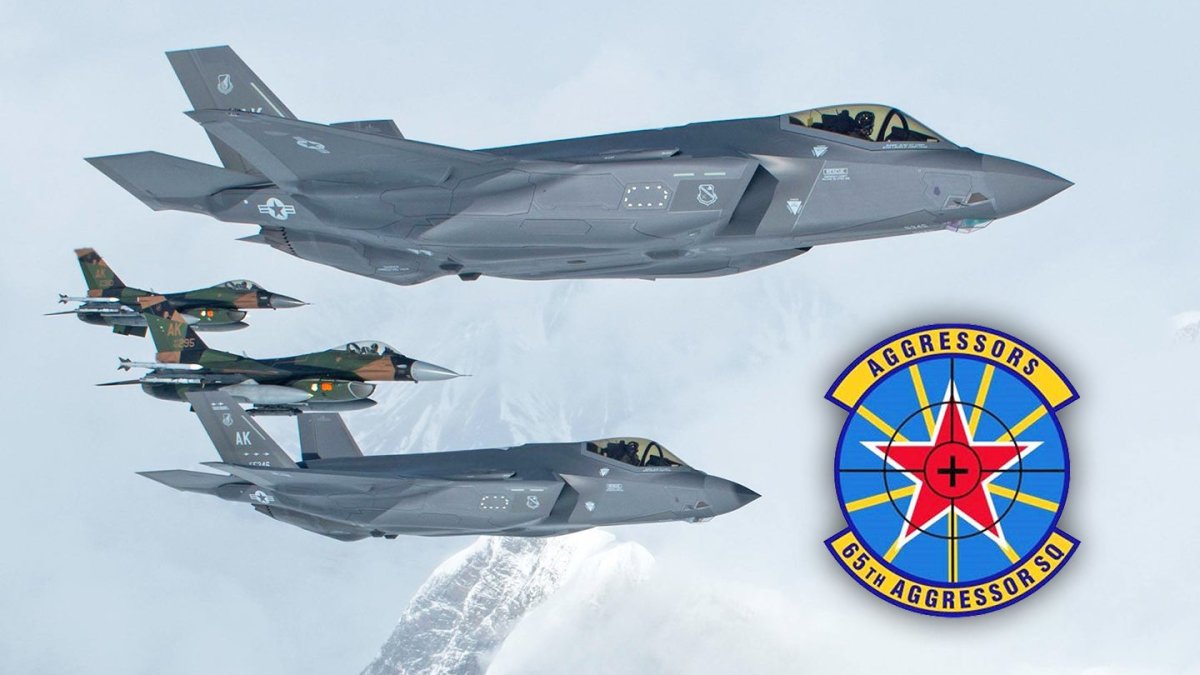
65th Aggressor Squadron will be re-established in 2021 and it will feature newer F-16s to complement its F-35s.
Updated Nov 27, 2020 6:15 PM EST
The U.S. Air Force is moving forward with plans to field an increased fleet of high-end aggressor aircraft at Nellis Air Force Base, Nevada. It plans to re-activate the 65th Aggressor Squadron (AGRS) next year to complement the existing 64th AGRS, which traditionally flies Block 25/32 F-16Cs. The additional unit is planned to fly a mix of more advanced Block 42 F-16C/D Vipers, as well as early block F-35A stealth fighters. This confirms USAF plans announced in 2019 to draft a batch of its earliest Lightning IIs into the aggressor role.
“The goal for the aggressors has always been where we are essentially matching the aggressiveness of our global competitors,” explains Lt Col Jan “Kuts” Stahl, an experienced aggressor pilot and deputy commander of the 57th Operations Group. “They are fielding technology at a rapid pace, and our goal has always been to match, and if possible exceed, that level of technological advancement. So, the threat that we are preparing the warfighter for locally exceeds anything that they’re ever likely to face in battle.”
The Nellis aggressor forces are heavily engaged with presenting realistic threats to aircrews in order to better prepare them for combat. The new set-up will far better enable the USAF to train “Blue Force” aviators on how to face the most modern enemy threats.
The reactivated 65th Aggressor Squadron will likely field up to a dozen F-35s , with their advanced software tailored to help accurately mimic specific advanced airborne threats. Combined with the skill of the aggressor pilots, it will represent a potent force with which to train both the latest Weapons School students, as well as aircrews visiting Nellis for high-end exercises, such as Red Flag . It will also help to properly tax the operational test community as it evaluates the latest combat air forces capabilities and tactics.
The aggressor F-35As will likely be drawn from the 58th Fighter Squadron at Eglin AFB., Jamie Hunter
In parallel with the addition of F-35s, internal USAF reorganization has resulted in a decision to close down the 24th Tactical Air Support Squadron [TASS], that flies Vipers at Nellis. The unit is currently a centralized location for training F-16 Close Air Support (CAS) instructors and for retaining a dedicated close air support knowledge base. This was conceived partially to help mitigate the possible retirement of the A-10 Thunderbolt II. You can read more about this arrangement in this past War Zone piece . However, with the A-10 now remaining in service and even getting major upgrades , the 24th TASS role is being dispersed to other units, which has presented an important opportunity to use these F-16s to plus-up the Nellis aggressors. “We currently have 19 pre-Block F-16s [Block 25 and 32] and the game plan is to take over an additional 11 Block 42 F-16s,” says Stahl.
“Initially, when the 24th TASS shuts down, the 64th AGRS is going to become a very large squadron, but there are efforts underway to reactivate the 65th AGRS — around the summer of 2021 — when we split those assets into two units to make them a bit more manageable,” Stahl explains.
On January 12, 2006, Lt Col Larry “Bo” Bruce took command of the 65th AGRS as it reformed at Nellis with F-15C/D Eagles, as part of a dramatic expansion of resident aggressor forces. However, extreme budget pressures led to the unit being axed in 2014 as part of an overall force reduction in the wake of sequestration . A handful of F-15C/Ds were initially retained under the 64th AGRS, but these were eventually dispersed to other units.
“Nellis needed aggressors more than ever at that time,” says Lt Col Stahl. “As a matter of fact, the F-35 footprint here at Nellis was just beginning to get spun up at that point, as well. We were going to need more aggressors, not less. The aggressors that we did have needed that next level of capability in order to provide a challenging sparring partner to the fifth-generation fighter pilots.” Stahl says that closing down the aggressor Eagle squadron was unavoidable at the time, but that it was a decision “we are now having to deal with the after-effects of.”
An F-15C of the 65th Aggressor Squadron (AGRS) flies alongside an F-16C of the 64th AGRS., Jamie Hunter
“The combined fielded aggressor forces we have here at Nellis [today] is barely able to fill 70 or so percent of our optimal demand for adversary forces. That’s what led the air force to look at alternative courses of action, such as contract aggressors , as well as inviting visiting units from elsewhere to come and help us out. Because of the demands that were put on the adversaries here at Nellis, it was clear from the get-go that we weren’t going to be able to shut down a unit like the 65th and immediately replace it with something equivalent. The fielding of contract aggressor forces was always intended to be a multi-year process in which initially we put jets on the line to fill more of the demand for quantity as opposed to the demand for quality,” Stahl explains.
While contract adversaries have taken some of the strain off the air force’s organic aggressor force, Stahl says that the organization is looking to stimulate companies to gradually build up to a point where they’re financially and operationally able to field airframes of higher capability. This will work in tandem with the upscaling of in-house resources.
The 2018 National Defense Strategy (NDS) directly highlighted a need to address near-peer threats. Concerns have been leveled that the USAF is losing ground in the technology battle; with a need to focus on high-end warfare, which has been eroded due to relentless combat deployments focused on counter-insurgency operations that have been such a taxing demand for squadrons.
The 64th AGRS will likely retain the earlier Block 25/32 aircraft, with the Block 42s flowing over to the 65th AGRS as that unit is reactivated. “That’s when it gets really interesting, because that’s when the early block F-35s start arriving here at Nellis and moving into the 65th AGRS, which then becomes a mixed F-35 and F-16 aggressor squadron,” Stahl adds. He says that plans are still in a state of flux, but the Nellis aggressor community expects to see the first F-35s for the mission arriving at the Nevada base sometime in the spring.
64th AGRS F-16Cs return from a mission supporting the USAF Weapons School., Jamie Hunter
Alongside the F-35s, the introduction of Block 42 F-16 Vipers will bring additional benefits for the aggressors. Their Link 16 data links will be an early boost for the USAF aggressors at Nellis. Some of the current F-16s with the 64th AGRS carry the SADL (Situational Awareness Data Link), which serves as an intra-flight link between the aggressors. Link 16 will enable the new 65th AGRS adversaries to make use of a full battlespace picture, and operate more independently as a coordinated team, instead of a more traditional approach of working with Ground Controlled Intercept (GCI) controllers at Nellis. It’s also worth noting that the F-35A has full link 16 capability, so it can receive information from the Vipers while remaining fully stealthy and it can share information, as well, with a bit more risk of being detected.
The Block 42 F-16 avionics architecture is also more readily able to support the fielding of new systems, such as the Angry Kitten pod, that was recently adopted by the 64th AGRS. This pod incorporates advanced radio frequency (RF) jamming technology that can counter increasingly sophisticated electronic warfare threats. The Operational Flight Program (OFP) in the later block F-16s is more frequently updated and readily able to accept enhancements that can help keep the aggressors relevant.
An Active Electronically Scanned Array (AESA) radar is another capability that the aggressor F-16s would benefit from, as increasing numbers of threat aircraft have these advanced sensors. The USAF is already fielding new Northrop Grumman AN/APG-83 AESA radars in its F-16 fleet, and Stahl says for the aggressors; “it’s a capability that has to happen sooner or later.”
Instead of targeting fleetwide capabilities, the aggressors are able to dip into new areas of technology to add small niche capabilities to help them replicate specific real-world threats. One of the 64th AGRS F-16s flew with a pod very similar to the Legion infrared search and track (IRST) pod in 2013, and Stahl says experimental work has also been undertaken with Litening and Sniper targeting pods to simulate IRST capability . “Fielding early F-35s will help us close that technology gap as well.”
An F-16C of the 64th AGRS at Nellis AFB., Jamie Hunter
The previous 57th Wing commander at Nellis AFB, Brig Gen Robert Novotny , first broke news of a possible aggressor mission for early batch F-35s in 2019. It was subsequently detailed that this would likely include some of the air force’s earliest Lightnings, which would be transferred from a training role with the 33rd Fighter Wing at Eglin Air Force Base, Florida. The F-35 will transform the USAF aggressors, which have in recent years relied on some of the oldest F-16s in the inventory to provide high-end threat replication.
The “mass” of contract aggressors, which are currently providing a quantity of “Red Air” to support the Nellis aggressors, is now being combined with a steady increase in capability to provide high-end threat replication like never before seen. The addition of both Block 42 F-16s and F-35s will see a transformational leap in the training offered by the Nellis aggressors.
With all this in mind, reforming the 65th Aggressor Squadron next year will arguably signal the biggest advance in USAF combat training since 2005. Pressing the F-35 into the adversary role will keep Nellis at the forefront of USAF training, and will cement its position as “The Home Of The Fighter Pilot.”
A full version of The War Zone’s fascinating interview with Lt Col Stahl will be published soon.
Contact the editor: Tyler@thedrive.com
Comments couldn’t be loaded. Please refresh the page.
更新于美国东部时间2020年11月27日下午6:15。
美国空军正推进一项计划,拟在内华达州内利斯空军基地部署一支规模更大的高端假想敌战机队。空军计划明年重新启用第65假想敌中队(AGRS),以补充现有的第64假想敌中队。第64假想敌中队传统上装备的是Block 25/32型F-16C战斗机。新增的部队计划装备更先进的Block 42型F-16C/D“蝰蛇”战斗机以及早期型号的F-35A隐形战斗机。这证实了美国空军在2019年宣布的计划,即把一批最早的F-35“闪电II”战斗机投入假想敌作战。
“假想敌部队的目标始终是与全球竞争对手的侵略性相匹配,”第57作战大队副指挥官、经验丰富的假想敌飞行员扬·“库茨”·斯塔尔中校解释道。“他们的技术部署速度非常快,而我们的目标始终是达到甚至超越他们的技术水平。因此,我们为作战人员在本地部署的威胁,远远超过他们在战场上可能遇到的任何威胁。”
内利斯空军基地的假想敌部队正积极参与模拟真实威胁的训练,以提升飞行员的作战准备。新的训练体系将极大地帮助美国空军训练“蓝军”飞行员应对最先进的敌方威胁。
重新组建的第65假想敌中队很可能将部署多达12架F-35战机,这些战机配备的先进软件能够精准模拟特定的先进空中威胁。结合假想敌飞行员的精湛技艺,这支部队将成为一支强大的力量,既可用于训练最新一批武器学校学员,也可用于训练前来内利斯空军基地参加高端演习(例如“红旗”军演)的机组人员。此外,它还将有助于对作战测试部队进行充分的考核,以评估最新的作战空军能力和战术。
假想敌的F-35A战斗机很可能来自埃格林空军基地的第58战斗机中队。——杰米·亨特
随着F-35战机的加入,美国空军内部重组导致驻扎在内利斯空军基地的第24战术空中支援中队(TASS)被关闭。该中队目前是F-16近距离空中支援(CAS)教官的集中训练基地,并负责维护专门的近距离空中支援知识库。此举的部分目的是为了应对A-10“雷电II”攻击机可能退役的影响。您可以在之前的《战区》文章中了解更多相关信息。然而,随着A-10继续服役甚至进行重大升级,第24战术空中支援中队的任务被分散到其他部队,这为利用这些F-16战机增强内利斯假想敌部队的实力提供了一个重要的机会。“我们目前拥有19架Block 25和Block 32之前的F-16战机,计划是接收另外11架Block 42的F-16战机,”斯塔尔说道。
“最初,当第 24 战术空中支援中队 (TASS) 关闭时,第 64 空中支援中队 (AGRS) 将成为一个非常庞大的中队,但目前正在努力重新激活第 65 空中支援中队 (AGRS)——大约在 2021 年夏季——届时我们将把这些资产分成两个单位,使它们更容易管理,”斯塔尔解释说。
2006年1月12日,拉里·“博”·布鲁斯中校接管了在内利斯空军基地重组的第65空中假想敌中队(65th AGRS),该中队装备了F-15C/D“鹰”式战斗机,这是驻扎假想敌部队大幅扩充计划的一部分。然而,由于预算压力巨大,该中队于2014年被裁撤,这是预算削减后整体兵力缩减计划的一部分。最初,少量F-15C/D战斗机被保留在第64空中假想敌中队(64th AGRS)旗下,但最终也被分配到其他部队。
“当时内利斯空军基地比以往任何时候都更需要假想敌部队,”斯塔尔中校说道。“事实上,当时F-35在内利斯的部署也才刚刚开始。我们需要的是更多的假想敌部队,而不是更少。我们现有的假想敌部队需要提升能力,才能为第五代战斗机飞行员提供具有挑战性的对抗训练。”斯塔尔表示,当时关闭假想敌“鹰”式战斗机中队是不可避免的,但“我们现在不得不面对这个决定带来的后果”。
第65假想敌中队(AGRS)的一架F-15C战斗机与第64假想敌中队的一架F-16C战斗机并排飞行。(杰米·亨特摄)
“我们目前在内利斯空军基地部署的假想敌部队,勉强能满足我们理想假想敌部队需求的70%左右。正因如此,空军才开始考虑其他方案,例如聘请合同假想敌部队,以及邀请其他地区的部队前来支援。由于内利斯基地对假想敌部队的需求很高,从一开始就很清楚,我们不可能解散像第65假想敌联队这样的部队,然后立即用同等规模的部队取而代之。聘请合同假想敌部队的部署一直是一个多年过程,最初我们投入战机主要是为了满足数量上的需求,而不是质量上的需求,”斯塔尔解释道。
斯塔尔表示,虽然合同假想敌减轻了空军自身假想敌部队的部分压力,但空军正寻求激励各公司逐步发展壮大,最终具备在财务和运营方面部署更高性能机型的能力。这将与空军内部资源的扩充同步进行。
2018 年《国防战略》明确强调了应对势均力敌对手威胁的必要性。有人担忧美国空军在技术竞争中处于劣势;由于持续不断的反叛乱作战部署对各中队造成了巨大压力,美国空军需要专注于高端战争,而高端战争的能力却因此受到削弱。
第64假想敌中队(64th AGRS)可能会继续使用早期的Block 25/32型战机,而Block 42型战机则会随着第65假想敌中队的重新组建而移交给该中队。“届时情况会变得非常有趣,因为早期Block 25型战机将开始抵达内利斯空军基地,并加入第65假想敌中队,届时该中队将成为一个F-35和F-16混合装备的假想敌中队,”斯塔尔补充道。他表示,计划仍在调整中,但内利斯空军基地的假想敌部队预计将在春季某个时候迎来首批执行任务的F-35战机抵达内华达州基地。
第64空中地面支援中队的F-16C战斗机完成支援美国空军武器学校的任务后返回。——杰米·亨特
除了F-35战机之外,Block 42型F-16“蝰蛇”战机的引入也将为假想敌部队带来更多优势。其配备的Link 16数据链将为驻扎在内利斯空军基地的美国空军假想敌部队提供早期助力。目前,第64假想敌中队的部分F-16战机配备了态势感知数据链(SADL),该数据链可作为假想敌战机之间的飞行内链路。Link 16数据链将使第65假想敌中队的新成员能够利用完整的战场态势图,并以协调团队的形式更加独立地行动,而无需像以往那样与内利斯空军基地的地面控制拦截(GCI)管制员合作。值得一提的是,F-35A战机也具备完整的Link 16数据链能力,因此它能够在保持完全隐身的同时接收来自“蝰蛇”战机的信息,并且还可以共享信息,只是被发现的风险略高一些。
Block 42 F-16 的航电架构也更容易支持新系统的部署,例如最近被第64空中地面支援中队(64th AGRS)采用的“愤怒小猫”(Angry Kitten)吊舱。该吊舱集成了先进的射频(RF)干扰技术,可以应对日益复杂的电子战威胁。后期批次的 F-16 的作战飞行计划(OFP)更新频率更高,能够更快地接受各种改进,从而保持其作战效能。
有源相控阵雷达(AESA)是假想敌F-16战机能够受益的另一项能力,因为越来越多的敌方战机都配备了这种先进传感器。美国空军已经在F-16机队中部署了诺斯罗普·格鲁曼公司新研制的AN/APG-83 AESA雷达,斯塔尔表示,对于假想敌来说,“这项能力迟早都要具备”。
假想敌部队并非着眼于提升整个舰队的能力,而是能够利用新兴技术领域,增加一些小众功能,以帮助他们模拟特定的现实威胁。2013年,第64空中地面侦察中队的一架F-16战斗机曾搭载过与“军团”(Legion)红外搜索与跟踪(IRST)吊舱非常相似的吊舱进行飞行测试。斯塔尔表示,他们还使用“闪电”(Litening)和“狙击手”(Sniper)瞄准吊舱开展了实验工作,以模拟IRST能力。“提前部署F-35战斗机也将有助于我们缩小这方面的技术差距。”
内利斯空军基地第64空中加油中队的一架F-16C战斗机。杰米·亨特
内利斯空军基地第57联队前任指挥官罗伯特·诺沃特尼准将早在2019年就率先披露了早期批次F-35战斗机可能执行假想敌任务的消息。随后有消息称,这很可能包括一些空军最早的F-35“闪电”战斗机,这些战机将从佛罗里达州埃格林空军基地的第33战斗机联队调往内利斯执行训练任务。F-35的加入将彻底改变美国空军假想敌部队的作战方式,近年来,该部队一直依赖一些库存中最老的F-16战斗机来进行高端威胁模拟。
目前,大量合同假想敌部队正为内利斯空军基地的假想敌部队提供“红方空中支援”,而随着其能力的稳步提升,这些部队将能够以前所未有的方式提供高端威胁模拟。Block 42型F-16和F-35战斗机的加入,将使内利斯空军基地假想敌部队的训练水平实现质的飞跃。
考虑到所有这些因素,明年重组第65假想敌中队无疑将标志着自2005年以来美国空军作战训练取得的最大进步。将F-35投入假想敌角色,将使内利斯空军基地继续处于美国空军训练的前沿,并巩固其作为“战斗机飞行员之家”的地位。
《战区》对斯塔尔中校的精彩采访完整版即将发布。
联系编辑:Tyler@thedrive.com
评论加载失败,请刷新页面。