Decades Ago The Navy Tested A Maritime Patrol U-2 Variant That Was Way Ahead Of Its Time几十年前,海军测试了一种U-2海上巡逻机的改进型,其技术远超时代。
A state-of-the-art EP-Xs never came to be, but the Navy didn't give up on the idea and it's finally becoming a reality via the MQ-4C Triton.
新闻视频
By Joseph Trevithick
Updated Jun 30, 2019 12:01 AM EDT
After more than six decades of service to the United States, the U-2 Dragon Lady has become an iconic design, with numerous variants acting as both a high-flying spy plane and test bed for first the Central Intelligence Agency, and then the U.S. Air Force and NASA. For a short time it looked as if another organization, the U.S. Navy, might join its short list of American operators, with aircraft Lockheed had configured as maritime surveillance platforms.
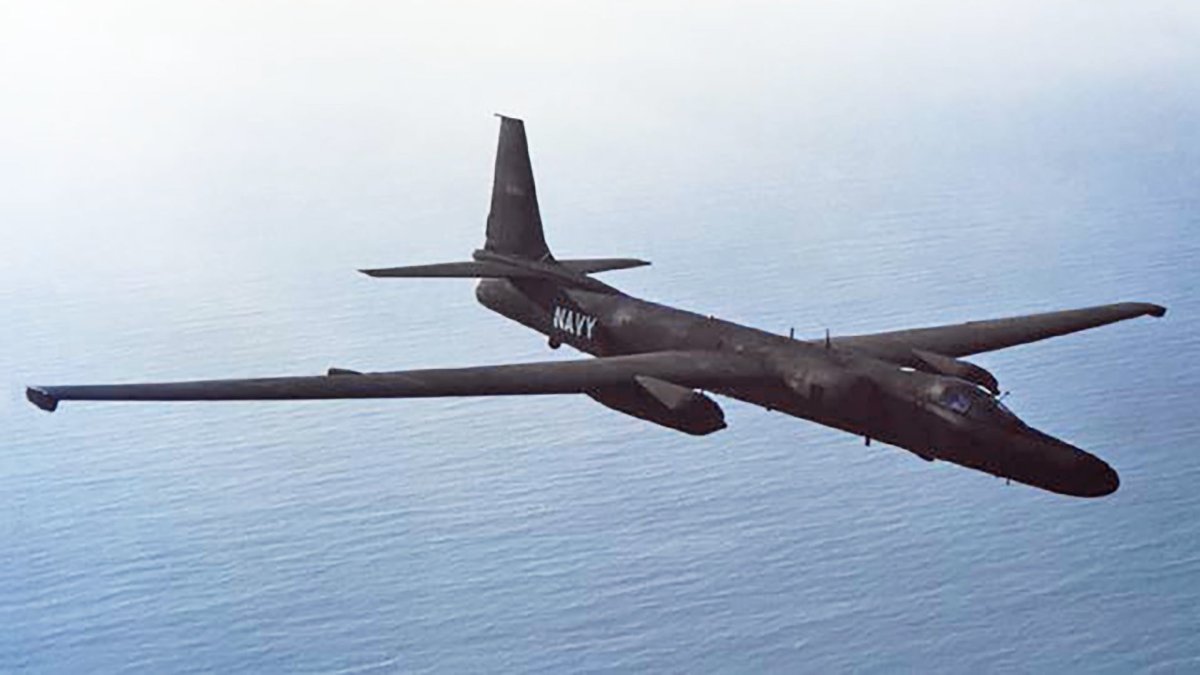
In 1972, the Navy obtained a single U-2R, known both as Article 061 and by its Air Force serial number 68-10330, as part of an experimental program called Project Highboy. In cooperation with the manufacturer Lockheed, the service made substantial modifications to the aircraft, configuring it for an all-new mission, tracking ships at sea.
The initial phase of the project cost $5.5 million at the time – more than $33 million in 2017 dollars – and lasted six months, according to Unlimited Horizons: Design and Development of the U-2 , an official NASA monograph by Peter Merlin. The Navy referred to its U-2R as the “EP-X.”
Though this was the only example it ever officially took ownership of, this was not the Navy’s first experience with the U-2. To help extend the range of the aircraft and get them into more remote areas, the service had helped train CIA pilots to fly off aircraft carriers using specially modified variants, the U-2G and U-2H.
That concept proved successful, but costly and the Navy became increasingly resistant to the idea owing to the amount of resources it had to pull away from other duties to support the flights. However, training for carrier operations using the larger and much more capable U-2Rs continued at least into the 1970s.
The Navy itself had expressed interest in joining the spy plane program as early as 1963, but the National Reconnaissance Office successfully blocked the purchase of any additional U-2s the next year in favor of more focus on spy satellites. The service’s separate plans to acquire the aircraft as airborne communications relays never came to fruition, either, according to Merlin’s monograph.
A US Air Force U-2C., USAF
The EP-X tests offered another opportunity, though, and also helped support the development of other then state-of-the-art technologies. The utility of an aircraft capable of broad maritime surveillance over a large area would have been particularly obvious to the Navy at the time.
The service had spent the better part of a decade attempting to track and monitor shipping to and from North Vietnam and interdict ships smuggling men and materiel into the South. At the same time, North Korean commandos had attempted to infiltrate into the South by sea on numerous occasions and that country’s naval forces routinely sortied out to harass allied and civilian boats . Just being able to spot and track the movements of Soviet warships and commercial vessels would have been a valuable intelligence tool, too.
The EP-X test aircraft seemed well suited to many of those requirements. The unique Dragon Lady variant had a new nose section and two equipment pods, one in the leading edge of each wing. Various specialized equipment went into the U-2R’s other modular payload bays .
The EP-X and its various systems., Lockheed via NASA
An X-band phased array AN/APS-116 radar went into the nose. Originally intended as a weather radar, the unit proved capable of performing a surface search function and it was sensitive enough to pick up submarine periscopes poking up above the water. The same system subsequently went into the EP-3E Aries intelligence, surveillance, and reconnaissance aircraft, the S-3A Viking submarine hunter , and later models of the SH-3 Sea King helicopter.
The equipment pod on the left wing held a so-called Return Beam Vidicon camera , or RBV, an early multi-spectral imaging sensor consisting of three video cameras each recording in only one spectral band – blue-green, yellow-red, and near infrared. The complete system would then merge the three sets of data into a single image. It could provide continuous, but relatively high-fidelity imagery without the need for film. The first three Landsat imaging satellites used a similar setup .
The video clip below describes the capability of Landsat 1, including its RBV sensor.
On the right side, there was an AN/ALQ-110 radar signal tracker linked to a T-35 camera, a combination that had been inside the nose of the standard U-2Rs. A communication relay went into the aircraft’s “Q-bay,” which normally held one of a number of different types of visual cameras.
Perhaps the most important piece of equipment sat in the plane’s “E-bay.” Earlier in 1972, as part of a program called Senior Dagger, the Air Force had developed a digital data link that would allow its own U-2R pilots to send radar data to a ground station in near real time.
The NASA monograph says there was only one aircraft bailed to the Navy for conversion to this EP-X configuration, but other sources suggest there was a second aircraft. It is possible that Lockheed made up a second example for its own test purposes. This confusion could be based on the proposed transfer of two ex-CIA U-2Rs to the Navy by way of the Air Force for further EP-X tests, which may or may not have occurred.
Regardless, with the full set of systems installed, the EP-X test bed could not only monitor a wide area both visually and via radar, but it could then feed that information straight to friendly ships or shore-based headquarters within its line of sight. In 1973, the aircraft proved it could do just that during a test flight off California in which it sent data to analysts at Lockheed’s facility in Sunnydale.
A US Air Force U-2., USAF
Between 1974 and 1975, the aircraft came back out for a series of tests called Outlaw Hawk. The primary goal of these experiments was to test an experimental ship-to-shore data link setup, called the Flag Command and Correlation Facility (FCCF), on board the aircraft carrier USS Kitty Hawk .
The FCCF could provide an “integrated war-room display” of all of the information flowing into the system, according to one 1978 technical report from the Naval Ocean Systems Center. This gave the ship greatly increased situation awareness, allowing it to monitor a number of friendly ships, and other unspecified “targets of opportunity” during the day and at night, according to a now declassified 1976 Office of Naval Research report .
During one of these tests, the EP-X, flying from Lockheed’s facilities at the U.S. Air Force’s Plant 42 in Palmdale, California, contributed to this overall picture. The crew of the Kitty Hawk received the information in near real time, even though the ship had departed from Pearl Harbor, Hawaii, and was sailing in the Pacific Ocean hundreds of miles away.
The benefits of the capability would have been obvious. A fleet of high-flying, long range EP-X aircraft could have provided invaluable information to carrier battle groups, surface task forces, and other naval assets during a conflict. With that data in hand, those commanders would have been able to better allocate their resources, perhaps taking up a more advantageous position respective to the enemy, staying out of range of their stand-off weapons, or avoiding a superior force altogether. The information could also be used to target the Navy’s own standoff weaponry. Even the ability to better target Russian task forces with nuclear weapons would have been an obvious benefit of the Cold War era.
The USS Kitty Hawk much later in life., USN
It could have had important peace time applications, as well, from monitoring shipping traffic to and from potential opponents to search and rescue missions. The aircraft could have patrolled for smugglers and enemy inflitrators in certain areas, as well, something that, as we previously noted, would have been particularly useful in and around the Korean Peninsula.
Unfortunately, a combination of factors ultimately scuttled any possibility of a fleet of EP-X aircraft. After the Vietnam War ended, the Pentagon’s budget had contracted dramatically, forcing all the services to trim back various programs.
On top of that, the National Reconnaissance Office continued promoting increasingly capable spy satellites as an alternative to the high-flying U-2s. In 1974, the CIA had ended its Dragon Lady operations, turning over its remaining aircraft to the Air Force. Around the same time, the Navy shelved the EP-X in favor of using a combination of EP-3E aircraft and satellites to conduct similar maritime surveillance functions.
It’s not clear whether or not the EP-X program had an influence on the wing-mounted “ superpods ” that the Air Force subsequently fitted on its U-2Rs and carried over to the still-in-service U-2S models. Those 24-foot long equipment pods can hold 800 pounds of gear, making them some three times larger than those of the Navy’s experimental version, according to the NASA monograph.
A U-2S with the superpods., Lockheed Martin
The EP-X concept itself, one of a long-range, high-flying, broad area maritime surveillance platform, never went away. In the early 2000s, the Navy crafted a requirement for an unmanned system with very similar requirements as part of the Broad Area Maritime Surveillance program, or BAMS.
The initial concept called for a drone that could fly at an altitude of at least 40,000 feet and would have an overall range between 1,000 and 3,000 miles, allowing it to provide persistent coverage of a wide area. The unmanned aircraft would complement the Multi-mission Maritime Aircraft, which subsequently became the Boeing P-8A Poseidon , and ship-based manned and unmanned aerial surveillance capabilities.
These requirements morphed into a more demanding rubric as the project proceeded. Northrop Grumman used a highly modified Gulfstream G-II test aircraft to prove the concept initially and to support further testing of the components associated with the BAMS initiative.
The almost grotesquely modified G-II BAMS test bed., NAVAIR
To test the plan in a more mature fashion, the Navy obtained a pair of Northrop Grumman RQ-4A Global Hawk drones fitted with an active electronically scanned synthetic aperture radar, a turret with electro-optical and infrared cameras, a receiver for signals from the Automatic Identification System , or AIS, and electronic support measures to detect and track enemy electronic emissions. The AIS is an unclassified maritime transponder system that both naval ships and commercial vessels use to broadcast their position to help avoid collisions and other accidents.
These BAMS demonstrators , or BAMS-D flew in support of exercises and actual operations, including counter-piracy missions in the Indian Ocean. In 2008, the Navy selected a purpose-built variant of the Global Hawk as the winner of the formal competition for the new drones. The RQ-4N beat shared efforts by Boeing and Gulfstream, who offered an unmanned aircraft based on the G550 bizjet , and Lockheed and General Atomics with a version of the MQ-9 Reaper .
One of the BAMS-D drones., USN
The maritime surveillance Global Hawk derivative, now known as the MQ-4C Triton , has reinforced wings and fuselage, improved de-icing features, and better resistance to lightning strikes compared to the earlier models. It features the same basic sensor package as the BAMS-Ds, with Northrop Grumman’s fully matured active electronically scanned AN/ZPY-3 Multi-Function Active Sensor (MFAS) radar at the core of its capabilities. You can read more about the Triton here .
That a variant of the Global Hawk won a competition for what is very much a spiritual successor to the U-2-based EP-X isn’t particularly surprising. The Air Force has itself gone back and forth about whether or not to replace its remaining Dragon Ladies with the RQ-4.
The U-2 continues to serve owing in no small part to the fact that it can fly at a higher altitude than the Global Hawk. Lockheed Martin had pitched an unmanned version to the Air Force as one possible alternative, as well as a new drone using some of the Dragon Lady’s components, called the TR-X . Neither of those aircraft has made an appearance publicly, though it is possible that Lockheed has produced or is in the process of developing a new, high altitude unmanned surveillance aircraft in the classified sphere .
The service expects to reach initial operational capability with the MQ-4C in 2018 and full operational capability five years after that. There is already work in progress to expand existing American bases around the world to accommodate the new aircraft.
Plans to expand the Triton’s sensor suite , to include a signals intelligence system among other equipment, could allow the drones to supplant the Navy’s aging EP-3Es. The service has also conducted tests to possibly integrate a similar capability onto the P-8A.
More than four decades after the EP-X effort came to an end, the Navy now looks set to get its long-range, persistent aerial maritime surveillance platform. If anything, that is a huge testament to the original visionaries behind the little known EP-X program from so long ago.
Contact the author: joe@thedrive.com
Comments couldn’t be loaded. Please refresh the page.
作者:约瑟夫·特雷维西克
更新于美国东部时间2019年6月30日凌晨12:01
U-2“龙夫人”侦察机为美国服役超过六十年,已成为一款标志性机型。其众多衍生型号既是高空侦察机,也是中央情报局、美国空军和美国国家航空航天局(NASA)的试验平台。曾有一段时间,美国海军似乎也有可能加入其美国用户行列,洛克希德公司曾将U-2改装为海上监视平台。
1972年,美国海军获得了一架U-2R侦察机,该机既被称为061号货号,也以其空军序列号68-10330为人所知,作为一项名为“高个子计划”(Project Highboy)的实验项目的一部分。海军与制造商洛克希德公司合作,对该机进行了大量改装,使其能够执行一项全新的任务:海上舰船跟踪。
据彼得·默林撰写的NASA官方专著《无限视野:U-2的设计与开发》记载,该项目的第一阶段耗资550万美元(按2017年美元计算超过3300万美元),历时六个月。海军将其U-2R称为“EP-X”。
虽然这是海军正式拥有的唯一一架 U-2 侦察机,但这并非海军第一次接触 U-2。为了帮助扩大 U-2 的航程并使其进入更偏远的地区,海军曾帮助训练中央情报局飞行员使用经过特殊改装的 U-2G 和 U-2H 型飞机从航空母舰上起飞。
这一理念最终取得了成功,但成本高昂,而且由于需要从其他任务中抽调大量资源来支持飞行,海军对这一想法的抵触情绪日益高涨。然而,使用更大、性能更强的U-2R进行航母作战训练的工作至少一直持续到20世纪70年代。
早在1963年,海军就曾表示有兴趣加入U-2侦察机项目,但国家侦察局在次年成功阻止了任何增购U-2飞机的计划,转而将重点放在间谍卫星上。据梅林的专著记载,海军另行计划采购U-2作为空中通信中继,最终也未能实现。
美国空军U-2C侦察机。
EP-X试验提供了另一个契机,同时也促进了当时其他尖端技术的研发。对于当时的美国海军而言,能够对大范围海域进行广泛海上监视的飞机的实用性显而易见。
该机构近十年来一直致力于追踪和监控往返北越的船只,并拦截向韩国走私人员和物资的船只。与此同时,朝鲜突击队多次试图从海上渗透到韩国,朝鲜海军也经常出动骚扰盟军和民用船只。即使只是能够发现和追踪苏联军舰和商船的动向,也将是一项宝贵的情报工具。
EP-X 测试飞机似乎非常符合其中许多要求。独特的“龙夫人”改型机采用了新的机头部分和两个设备吊舱,分别位于每侧机翼的前缘。各种专用设备则安装在 U-2R 的其他模块化有效载荷舱内。
EP-X及其各种系统。(洛克希德公司,图片来自NASA)
机头安装了一部X波段相控阵AN/APS-116雷达。该雷达最初设计为气象雷达,但后来证明其具备水面搜索能力,并且灵敏度极高,能够探测到露出水面的潜艇潜望镜。随后,同样的雷达系统也被应用于EP-3E“白羊座”情报、监视和侦察机、S-3A“维京”反潜巡逻机以及后期型号的SH-3“海王”直升机。
左翼的设备舱内装有一台所谓的回波束视频摄像机(RBV),这是一种早期的多光谱成像传感器,由三个视频摄像机组成,每个摄像机仅记录一个光谱波段——蓝绿波段、黄红波段和近红外波段。整个系统会将这三组数据合并成一幅图像。它无需胶片即可提供连续且相对高保真度的图像。前三颗陆地卫星成像卫星都采用了类似的装置。
下面的视频片段介绍了 Landsat 1 的功能,包括其 RBV 传感器。
右侧装有一台AN/ALQ-110雷达信号跟踪器,它与一台T-35摄像机相连,这套设备原本安装在标准U-2R的机头内。通信中继器连接到飞机的“Q舱”,该舱通常用于安装各种不同类型的目视摄像机。
或许最重要的设备就放在飞机的“E-bay”里。早在 1972 年,作为一项名为“高级匕首”(Senior Dagger)计划的一部分,美国空军就开发了一种数字数据链,可以让自己的 U-2R 飞行员将雷达数据近乎实时地发送到地面站。
美国宇航局的专著称,只有一架飞机被移交给海军进行EP-X改装,但其他资料显示还有第二架。洛克希德公司有可能为了自身测试目的伪造了第二架飞机。这种混淆可能源于两架原中央情报局的U-2R侦察机拟经由空军移交给海军用于进一步EP-X测试的计划,但该计划是否真的实施尚待商榷。
无论如何,在安装完所有系统后,EP-X试验机不仅能够通过目视和雷达监控大片区域,还能将这些信息直接传输给视线范围内的友军舰艇或岸基指挥部。1973年,该飞机在加利福尼亚州附近的一次试飞中证明了其具备这种能力,它将数据发送给了位于桑尼戴尔的洛克希德公司分析人员。
美国空军U-2侦察机。
1974年至1975年间,这架飞机再次进行一系列名为“亡命之鹰”(Outlaw Hawk)的测试。这些实验的主要目标是在“小鹰”号航空母舰上测试一种名为“旗舰指挥与关联设施”(Flag Command and Correlation Facility,FCCF)的实验性舰岸数据链装置。
根据海军海洋系统中心1978年的一份技术报告,FCCF可以提供一个“集成作战室显示”界面,显示流入系统的所有信息。根据一份现已解密的1976年海军研究办公室报告,这大大提高了舰艇的态势感知能力,使其能够在白天和夜间监视多艘友军舰艇和其他未指明的“机会目标”。
在其中一次测试中,从位于加利福尼亚州帕姆代尔美国空军42号工厂(洛克希德公司所在地)起飞的EP-X飞机为此次整体测绘提供了数据。尽管“小鹰”号航母已从夏威夷珍珠港出发,航行在数百英里外的太平洋上,但舰员们几乎实时接收到了这些信息。
这项能力的优势显而易见。一支高空远程EP-X侦察机队可以在冲突期间为航母战斗群、水面特遣部队和其他海军力量提供宝贵的情报。有了这些数据,指挥官们就能更好地分配资源,例如占据对敌方更有利的阵地,避开敌方远程武器的射程,或者干脆避开优势兵力。这些信息还可以用于瞄准海军自身的远程武器。即使是更精准地瞄准俄罗斯核特遣部队的能力,在冷战时期也是一项显而易见的优势。
“小鹰”号航空母舰在服役后期,美国海军
它在和平时期也可能发挥重要作用,例如监控往返潜在对手的航运,以及执行搜救任务。此外,该飞机还可以在特定区域巡逻,搜寻走私者和敌方渗透者,正如我们之前提到的,这在朝鲜半岛及其周边地区尤其有用。
遗憾的是,多种因素最终导致EP-X飞机机队的计划彻底破灭。越战结束后,五角大楼的预算大幅缩减,迫使各军种削减各种项目。
此外,国家侦察局继续推广性能日益强大的间谍卫星,以替代高空飞行的U-2侦察机。1974年,中央情报局结束了“龙夫人”行动,并将剩余的飞机移交给空军。大约在同一时期,海军搁置了EP-X项目,转而使用EP-3E飞机和卫星的组合来执行类似的海上监视任务。
目前尚不清楚EP-X计划是否对空军后来安装在U-2R侦察机上并沿用至仍在服役的U-2S机型的翼挂式“超级吊舱”产生了影响。根据NASA的专著,这些24英尺长的装备吊舱可承载800磅的装备,大约是海军实验型吊舱的三倍。
一架装有超级吊舱的U-2S侦察机,洛克希德·马丁公司
EP-X的概念本身,即远程、高空、广域海上监视平台,从未被摒弃。在21世纪初,海军制定了一项无人系统需求,其要求与EP-X非常相似,作为广域海上监视计划(BAMS)的一部分。
最初的设想是研制一种飞行高度至少达到40,000英尺、航程在1,000至3,000英里之间的无人机,使其能够对大范围区域进行持续监控。这种无人机将与多任务海上飞机(后来发展成为波音P-8A“海神”反潜巡逻机)以及舰载有人和无人空中监视能力形成互补。
随着项目的推进,这些要求逐渐演变为更为严格的标准。诺斯罗普·格鲁曼公司最初使用一架经过大幅改装的湾流G-II测试飞机来验证该概念,并支持对BAMS计划相关组件的进一步测试。
几乎被改造得面目全非的G-II BAMS测试平台,NAVAIR
为了更成熟地测试该计划,海军采购了两架诺斯罗普·格鲁曼公司生产的RQ-4A“全球鹰”无人机,这些无人机配备了主动电子扫描合成孔径雷达、带有光电和红外摄像机的炮塔、自动识别系统(AIS)信号接收器,以及用于探测和跟踪敌方电子信号的电子支援设备。AIS是一种非机密的海上应答器系统,海军舰艇和商船都使用它来广播自身位置,以帮助避免碰撞和其他事故。
这些BAMS演示机,或称BAMS-D,曾参与演习和实战行动,包括在印度洋执行反海盗任务。2008年,海军最终选定了一款专为海上作战设计的“全球鹰”无人机,作为新型无人机正式竞标的获胜方案。RQ-4N击败了波音和湾流联合推出的基于G550公务机的无人机,以及洛克希德·马丁和通用原子公司联合推出的MQ-9“死神”无人机。
美国海军BAMS-D无人机之一
这款海上监视“全球鹰”的衍生机型,现名为MQ-4C“海神”,与早期型号相比,拥有更坚固的机翼和机身、更出色的除冰性能以及更强的抗雷击能力。它与BAMS-D系列无人机采用相同的基本传感器组件,其核心性能是诺斯罗普·格鲁曼公司成熟的AN/ZPY-3多功能主动电子扫描雷达(MFAS)。您可以在这里阅读更多关于“海神”的信息。
全球鹰的某个衍生机型赢得了U-2原型机EP-X的竞标,这并不令人意外。空军自身也一直在犹豫是否用RQ-4取代剩余的“龙夫人”无人机。
U-2侦察机之所以能够继续服役,很大程度上是因为它的飞行高度比“全球鹰”无人机更高。洛克希德·马丁公司曾向空军提出过一种可能的替代方案,即U-2的无人版本,以及一款使用U-2部分部件的新型无人机TR-X。这两款飞机都未曾公开亮相,但洛克希德·马丁公司可能已经研发或正在秘密开发一种新型高空无人侦察机。
美国军方预计MQ-4C无人机将于2018年达到初始作战能力,并在五年后达到全面作战能力。目前,美军已开始在全球范围内扩建现有基地,以适应新型无人机的部署。
海军计划扩展“海神”无人机的传感器套件,包括加装信号情报系统等设备,这将使该型无人机能够取代海军老旧的EP-3E无人机。海军还进行了测试,以期将类似功能集成到P-8A反潜巡逻机上。
在EP-X项目结束四十多年后,海军如今似乎即将获得其远程、持久的空中海上监视平台。这无疑是对当年鲜为人知的EP-X项目背后的远见卓识者们的巨大肯定。
联系作者:joe@thedrive.com
评论加载失败,请刷新页面。