Change of plans: US Army embraces lessons learned from war in Ukraine计划有变:美军吸取乌克兰战争的教训
After watching drones destroy tanks in Ukraine and observing both sides struggle to maneuver tanks on the battlefield, the U.S. Army is taking a detour.
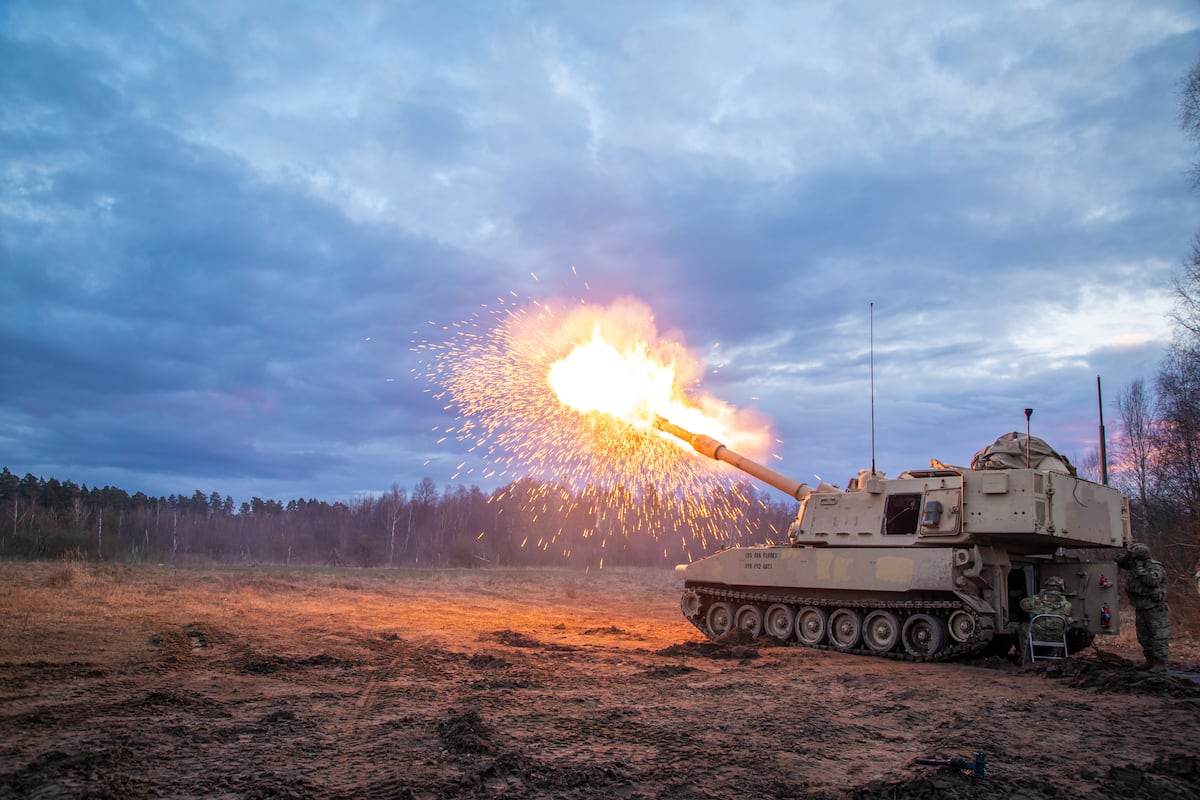
WASHINGTON — Expensive, massive tanks destroyed by small and cheap loitering munitions.
Drones helping artillery locate targets.
A battlefield so flooded with sensors that it’s impossible to stay hidden for long.
Since Russia invaded Ukraine in February 2022, the Army has carefully taken note of these trends. Now those changes are reshaping the service’s plans from acquisition to how to approach formations to reimagining logistics. Already, the Army has rethought its plans to modernize tanks and altering its strategies with drones.
“The character of war is changing,” Army Chief of Staff Gen. Randy George told Defense News in an interview ahead of the Association of the U.S. Army’s annual conference. “It’s changed more in the last couple of years because of the war in Ukraine. And I think it will continue to change at a very rapid pace and we have to have the mindset to change with it.”
Gen. James Rainey, who leads Army Futures Command, the service’s organization in charge of modernizing the force, said the service needs to adapt its artillery strategy based on both “what’s happening in Ukraine” as well as what U.S. Army Pacific requires from conventional fires.
“Everything we’re seeing in Ukraine [is] about the relevance of precision fires, all the emerging technology, but the big killer on the battlefield is conventional artillery, high-explosive artillery,” he said.
The U.S. Army plans to issue a new conventional fires strategy by the end of the year, he added.
Ukraine and Russia are locked in daily heavy artillery battles. The U.S. and its partners and allies have sent a wide variety of artillery weapons, including the High Mobility Artillery Rocket System , or HIMARS, and millions of rounds of ammunition to counter Russia’s firepower.
Ukrainian President Volodymyr Zelenskyy has credited HIMARS with making a “huge difference” in liberating critical areas of the country under Russian occupation.
The war in Ukraine has also made clear artillery is still critical, said retired Lt. Gen. Ben Hodges, who previously led U.S. Army Europe. A layered approach to artillery in formations — meaning using towed or mobile systems with different types of munitions that achieve different ranges — is required, he said.
A man walks on top of a damaged Russian tank in Dmytrivka, Ukraine. (Karl Ritter/AP)
The new artillery strategy will determine both the existing capability and capacity while also detailing future needs, Rainey said. The strategy will also consider new technology to enhance conventional fires on the battlefield, such as advances in propellant allowing midrange cannons to shoot as far as longer-range systems.
The document will also address the role of robotics, such as autoloaders for munitions. The Army has experimented with technology like autoloaders, which take a burden off of artillery operators and improve firing rates.
Army acquisition chief Doug Bush told Defense News in September the fires strategy will drive key decisions within his portfolio, including how to pursue the Extended Range Cannon Artillery requirement.
“The strategy is looking at a combination of factors,” Bush said. “Where do you need towed artillery versus perhaps tracked versus perhaps wheeled? What can you do with munitions to get range versus building new cannons?”
The Army is developing an Extended Range Cannon Artillery system that uses a service-built 58-caliber gun tube mounted on the chassis of a BAE Systems-made Paladin Integrated Management howitzer.
But the service in 2020 also assessed available 155mm mobile howitzers seeking improvements in range, rate of fire, and mobility over the artillery systems used within Stryker brigade combat teams. The Army evaluated at least four foreign companies’ offerings in a shoot-off, but ultimately did not move forward with a new capability.
A new artillery strategy could renew the push for rapid procurement of a field-proven 155mm mobile howitzer.
“Some of our NATO allies have some really good kit [and] capability that we’re interested in,” Rainey noted.
Bush recently visited 18th Airborne Corps, which consist of very light units and they “still value towed artillery, because they can move it around with helicopters. ... But other parts of the Army might want something different,” he said.
Taking a new look at an off-the-shelf mobile howitzer is a part of the strategy’s purview, he noted. “From an acquisition standpoint, if I get a requirement, we’ve got some options to go pretty fast, if it is acceptable, for example, to take a foreign system rather than building a new one from scratch,” Bush said.
“The broad lesson is that you still need artillery. It is the No. 1 killer on the battlefield, still in this conflict [in Ukraine],” he said.
A fresh take on tanks
The Army in September, after watching loitering munitions destroy tanks in Ukraine and observing both sides struggle to maneuver tanks on the battlefield, opted to scrap its upgrade plan for the M1 Abrams tank and instead pursue a new variant: the M1E3 .
The Abrams tank “can no longer grow its capabilities without adding weight, and we need to reduce its logistical footprint,” Maj. Gen. Glenn Dean, the Army’s program executive officer for ground combat systems, said in a statement at the time. “The war in Ukraine has highlighted a critical need for integrated protection for soldiers, built from within instead of adding on.”
The Abrams tank “with all its hood ornaments is already too heavy,” Hodges told Defense News. “Getting heavier is not the answer.”
Part of the new effort will take weight off the tank, increasing its mobility and sustainability. Today, if a tank breaks or gets hit in combat, it requires two recovery vehicles to pull it out of the fight. Reducing the tank’s weight would help, Dean said.
The new design is also intended to integrate active protection capability, including protection from attacks to the roof from loitering munitions and drones.
A Ukrainian soldier equips a drone with grenades in the Donetsk region on March 15, 2023. (Roman Chop/AP)
Dean told Defense News in a recent interview the new design will consider how to reduce the supply chain and make it easier to maintain the vehicle while on the battlefield. It will also improve reliability.
Ukraine has begun to receive its 31 M1 Abrams tanks from the U.S. military, and the U.S. Army is likely to soon learn more about how the tank holds up against the Russians, Dean said.
The tank “remains very, very relevant,” Army Secretary Christine Wormuth said at a recent think tank event. “The claims that we’re seeing the end of the value of tanks were a little bit premature.”
According to reports, in the first two months of the war, Russia lost well over 400 tanks, spurring a debate over whether tanks were too cumbersome for the modern battlefield.
Wormuth acknowledged munitions that can hit the top of armored vehicles and tanks remain a challenge and said “we are working to develop capabilities to defend against that.”
Dean, noting he could not discuss details, said the Army is working extensively on how to protect tanks and combat vehicles from loitering munitions. Loitering munitions regularly destroy tanks and combat vehicles on both the Ukrainian and Russian sides.
“We have got to get better at top-attack inbound defeat,” Rainey said at the AUSA Warfighter Summit in July. “It’s solvable.”
While the service has long focused on protecting combat vehicles from the side and has integrated Rafael’s Trophy active protection system on the M1 Abrams tank, the protection has decreased the tank’s mobility. The same problem applies to the APS kits, which provide protection from anti-tank weapons. The service has yet to field APS on either the Stryker combat vehicle or the Bradley infantry fighting vehicle.
The Army has long set up elaborate command posts on the battlefield, putting up climate-controlled tents equipped with generators. The service has said these tactical operations centers must get smaller, both in size and in electromagnetic signature.
But the war in Ukraine has put more pressure on the service to act.
“Gone are the days where you’re setting up a whole [tactical operations center]. And two hours is too much time,” George said. “We need to be able to move in minutes. We need to be able to command and control on the move.”
He noted the war has also proven the need for open architecture that is mobile and can be rapidly updated.
The Army “has to fix what it has and then pivot to what the C2 architecture is going to be in the future,” George added.
He told Defense News he was struck recently by watching a unit going through a large exercise and only relying on five Stryker combat vehicles and 35 people to provide command-and-control for the entire brigade combat team. The Strykers, equipped with commercial, off-the-shelf laptops, tablets and radios, never had to be together physically as they were connected through a network operating as one node, George said.
Wormuth also recalled a similar visit to a training rotation at Fort Johnson where a unit had designed its TOC to be “much more mobile” and could break down and set up within two hours.
“That’s definitely something that we’re going to be spending time on, developing the capabilities to do that,” she said.
Ukraine has taught the Army it is going to have to learn how to “fight under constant observation of commercially available space, the electromagnetic spectrum, social media,” Rainey said. “We are going to have to figure out how to fight when the enemy’s going to know where we are or prevent him; so concealment, deception, camouflage, constantly good tactics.”
Wormuth also noted the Army must be able to operate even if command posts are cut off due to failed signals or enemy jamming. The Army is experimenting in this type of environment regularly during events like Project Convergence, a large exercise focused on developing a modernized force.
The U.S. quickly faced a challenge early in the war in Ukraine. It was sending complex equipment to Ukraine — but without the experienced maintainers to fix it.
From a parking lot in Poland just months after the war began, the U.S. Army started answering the call for help, offering remote maintenance support. Army maintainers virtually demonstrated maintenance to their Ukrainian counterparts.
Since then, the Army has expanded its use of remote maintenance support to nearly every platform sent to Ukraine, including those of allies and partners. The service built a facility and a repair parts warehouse in Poland and began offering expertise through text message, prerecorded video or live stream.
This effort is now providing a road map for future logistics. George said at a recent event Ukraine is changing how the service “is looking at things on the logistics side,” citing virtual maintenance and 3D printing of parts.
U.S. soldiers offload M1A1 Abrams tanks needed for training Ukrainian forces at Grafenwoehr, Germany, on May 14, 2023. (Spc. Christian Carrillo/U.S. Army)
The Army now weighing how to apply tele-maintenance to the Indo-Pacific region, George told Defense News.
Additionally, the Army, watching Ukraine, is preparing for what it calls contested logistics, meaning its logistical efforts would be under constant attack.
“There’s been a theoretical recognition that logistics were going to be contested, but the Ukraine conflict, I think, has really made that very real to all of us,” Wormuth said at a recent event.
The Army has established a new cross-functional team for contested logistics under Army Futures Command focused on this challenge.
Preparing for the future
The war in Ukraine has, according to service leaders, validated many of the Army’s modernization priorities, laid out a little over five years ago.
The Army was already focused on countering unmanned aircraft systems because of operations in the Middle East and had set up a joint office at the Pentagon. The use of drones on the battlefield in Ukraine has accelerated efforts to come up with a layered approach to defeating the systems, both big and small.
“The scale of [drones on the battlefield] has been sort of astonishing and it has reinvigorated this focus on the lowest sort of short-range air defenses that would be needed for that,” Stacie Pettyjohn, a defense analyst at the Center for a New American Security, told Defense News.
Ukrainian servicemen fly a drone on the outskirts of Bakhmut, eastern Ukraine, on Dec. 30, 2022. (Sameer al-Doumy/AFP via Getty Images)
And not all technology used to defeat drones needs to be exquisite. While the Army is working on directed-energy and high power microwave capabilities to defend against drone swarms, “you’re seeing that the Ukrainians need things like a smart shooter, a sight that they can put on a rifle that allows them to use [artificial intelligence]. It’s still pretty advanced, but it’s this tech that improves existing guns and allow them to take out some of the smallest quadcopters,” Pettyjohn said.
Formations may also need to change, Wormuth said. The Army “need[s] to probably have organic air defense with our fires in our maneuver units so that they can protect against drones.”
Air and missile defense for threats beyond drones is also receiving new attention. Russia has shown it will use multimillion dollar rockets and missiles against apartment buildings, Hodges said.
Wormuth said the Army is beginning to grow the air and missile defense force. The service is in the process of building an additional Patriot battalion, but it’s not dedicated to a specific combatant command yet. The Army also wants to grow additional Indirect Fire Protection Capability units as well, she noted.
These new units will be able to defend against cruise missiles and drones along with rockets, artillery and mortars at fixed and semi-fixed sites. The Army is still developing prototypes.
Having the ability to see or sense as much as possible at all times, is another way the Army is changing because of Ukraine. “There’s a lot of interest in drones to be able to provide us with [persistent sensing],” Wormuth told Defense News. “But we’re going to have a layered approach to that ... we’re investing in the [High Accuracy Detection and Exploitation System], fixed-wing platform. ... I think you’ll see aerostats.”
Drawing from Ukraine, “there’s no shortage of observations that we should think about,” Rainey said. And the Army is “committed to turning those observations genuinely into lessons learned.”
Jen Judson is an award-winning journalist covering land warfare for Defense News. She has also worked for Politico and Inside Defense. She holds a Master of Science degree in journalism from Boston University and a Bachelor of Arts degree from Kenyon College.
华盛顿——昂贵的大型坦克被小型廉价的巡飞弹摧毁。
无人机协助火炮定位目标。
战场上传感器密布,长时间隐蔽是不可能的。
自2022年2月俄罗斯入侵乌克兰以来,美国陆军一直密切关注着这些趋势。如今,这些变化正在重塑陆军的各项计划,从装备采购到部队组建方式,再到后勤保障的重新构想,无一例外。陆军已经重新审视了坦克现代化计划,并调整了无人机战略。
“战争的性质正在发生变化,”陆军参谋长兰迪·乔治将军在美军协会年会召开前接受《防务新闻》采访时表示。“由于乌克兰战争,过去几年战争性质的变化尤为显著。我认为这种变化还会继续以非常快的速度持续下去,我们必须调整思维方式以适应这种变化。”
负责陆军现代化建设的陆军未来司令部司令詹姆斯·雷尼将军表示,陆军需要根据“乌克兰局势”以及美国太平洋陆军对常规火力的要求来调整其炮兵战略。
他说:“我们在乌克兰看到的一切都与精确火力、所有新兴技术的相关性有关,但战场上真正的杀手是常规火炮,高爆火炮。”
他还补充说,美国陆军计划在年底前发布新的常规火力战略。
乌克兰和俄罗斯每天都在进行激烈的炮战。美国及其伙伴和盟友已派遣包括高机动性火箭炮系统(HIMARS)在内的各种火炮武器以及数百万发炮弹,以对抗俄罗斯的火力。
乌克兰总统泽连斯基称赞 HIMARS 在解放被俄罗斯占领的该国关键地区方面发挥了“巨大作用”。
曾任美国陆军欧洲司令的退役中将本·霍奇斯表示,乌克兰战争也清楚地表明,炮兵仍然至关重要。他指出,必须采用分层炮兵作战方式——即使用牵引式或机动式炮兵系统,并配备不同射程的弹药。
在乌克兰德米特里夫卡,一名男子走在一辆受损的俄罗斯坦克上。(Karl Ritter/AP)
雷尼表示,新的炮兵战略将确定现有的能力和容量,并详细阐述未来的需求。该战略还将考虑利用新技术来增强战场上的常规火力,例如推进剂技术的进步,使中程火炮的射程能够与远程火炮相媲美。
该文件还将探讨机器人技术的作用,例如弹药自动装填机。陆军已经试验过自动装填机等技术,这些技术可以减轻炮兵操作员的负担并提高射速。
陆军采购主管道格·布什 (Doug Bush) 在 9 月份告诉《防务新闻》,火力战略将推动他负责领域内的关键决策,包括如何满足远程火炮的需求。
布什说:“这项战略考虑的是多种因素的综合考量。哪些地方需要牵引式火炮,哪些地方需要履带式火炮,哪些地方需要轮式火炮?如何利用现有弹药来增加射程,而不是建造新的火炮?”
陆军正在开发一种远程火炮系统,该系统使用军方制造的 58 倍径炮管,安装在 BAE 系统公司制造的 Paladin 综合管理榴弹炮的底盘上。
但陆军在2020年也对现有的155毫米机动榴弹炮进行了评估,寻求在射程、射速和机动性方面优于“斯特瑞克”旅级战斗队所用火炮系统的方案。陆军对至少四家外国公司的方案进行了比对,但最终并未采纳新的装备方案。
新的炮兵战略可能会再次推动快速采购经过实战检验的 155 毫米移动式榴弹炮。
“我们的一些北约盟国拥有一些我们很感兴趣的非常好的装备和能力,”雷尼指出。
布什最近视察了第18空降军,该军由一些轻型部队组成,他们“仍然重视牵引式火炮,因为他们可以用直升机进行运输……但陆军其他部门可能需要不同的装备,”他说。
他指出,重新审视现成的移动式榴弹炮是该战略的一部分。“从采购的角度来看,如果我收到需求,我们有一些可以快速推进的方案,例如,如果可以接受的话,采用外国系统而不是从头开始建造新的系统,”布什说。
他说:“最根本的教训是,你仍然需要火炮。在战场上,火炮仍然是头号杀手,在这场(乌克兰的)冲突中也是如此。”
坦克的新视角
9 月,陆军在目睹巡飞弹在乌克兰摧毁坦克,并观察到双方在战场上难以操控坦克后,决定放弃 M1 艾布拉姆斯坦克的升级计划,转而研发一种新的型号:M1E3。
“艾布拉姆斯坦克如果增加性能,就必须增加重量,我们需要减少其后勤保障需求,”陆军地面作战系统项目执行官格伦·迪恩少将当时在一份声明中表示。“乌克兰战争凸显了为士兵提供一体化防护的迫切需求,这种防护应该从内部构建,而不是简单地加装部件。”
霍奇斯告诉《防务新闻》:“艾布拉姆斯坦克加上所有装饰物已经太重了。增加重量并不是解决办法。”
新举措的一部分是减轻坦克重量,从而提高其机动性和续航能力。迪恩表示,目前,如果坦克在战斗中发生故障或被击中,需要两辆救援车辆才能将其拖出战场。减轻坦克重量将有助于解决这个问题。
新设计还旨在整合主动防护能力,包括防止巡飞弹和无人机对屋顶的攻击。
2023年3月15日,一名乌克兰士兵在顿涅茨克地区为一架无人机装载手榴弹。(Roman Chop/AP)
迪恩在最近接受《防务新闻》采访时表示,新设计将考虑如何缩短供应链,使车辆在战场上更容易维护,并提高可靠性。
迪恩表示,乌克兰已经开始从美国军方接收其31辆M1艾布拉姆斯坦克,美国陆军可能很快就会了解到这种坦克在对抗俄罗斯坦克时的表现如何。
陆军部长克里斯汀·沃姆斯在最近的一次智库活动上表示,坦克“仍然非常重要”。“认为坦克价值即将终结的说法还为时尚早。”
据报道,战争爆发后的头两个月,俄罗斯损失了 400 多辆坦克,引发了关于坦克是否过于笨重而无法适应现代战场的争论。
沃姆斯承认,能够击中装甲车和坦克顶部的弹药仍然是一个挑战,并表示“我们正在努力开发防御此类弹药的能力”。
迪恩表示他无法透露细节,但他指出陆军正在大力研究如何保护坦克和作战车辆免受巡飞弹的袭击。巡飞弹经常摧毁乌克兰和俄罗斯双方的坦克和作战车辆。
“我们必须提高应对正面进攻的防御能力,”雷尼在7月份的美国陆军协会作战人员峰会上说。“这是可以解决的。”
虽然美军长期以来一直致力于保护作战车辆的侧面,并在M1艾布拉姆斯坦克上集成了拉斐尔公司的“战利品”(Trophy)主动防护系统,但这种防护降低了坦克的机动性。同样的问题也存在于用于防御反坦克武器的主动防护系统(APS)套件中。美军尚未在“斯特瑞克”装甲车或“布雷德利”步兵战车上部署APS系统。
长期以来,陆军一直在战场上搭建复杂的指挥所,包括配备发电机和温控系统的帐篷。陆军表示,这些战术作战中心必须缩小规模,降低电磁干扰特征。
但乌克兰战争给军方带来了更大的行动压力。
“那种需要搭建整个战术作战中心的时代已经一去不复返了。两个小时也太长了,”乔治说。“我们需要能够在几分钟内完成部署。我们需要能够在移动中进行指挥和控制。”
他还指出,战争也证明了需要具有移动性和可快速更新的开放式架构。
乔治补充说,陆军“必须先解决现有问题,然后转向未来 C2 架构的发展方向”。
他告诉《防务新闻》,最近他亲眼目睹一个部队进行大规模演习,仅依靠五辆“斯特瑞克”装甲车和35名人员就为整个旅级战斗队提供指挥控制,这让他印象深刻。乔治说,这些“斯特瑞克”装甲车配备了商用现成的笔记本电脑、平板电脑和无线电设备,由于它们通过网络连接,作为一个节点运行,因此无需实际聚集在一起。
沃姆斯还回忆起在约翰逊堡的一次类似训练轮换访问,当时一个部队将其战术作战中心设计得“更加机动”,可以在两小时内拆卸和搭建。
“这绝对是我们要花时间去做的事情,我们要培养这方面的能力,”她说。
雷尼说,乌克兰战争让陆军意识到,他们必须学会如何在“商业可用空间、电磁频谱和社交媒体的持续监控下作战”。“我们必须想办法在敌人掌握我们位置的情况下作战,或者阻止敌人;所以,隐蔽、欺骗、伪装以及不断改进战术至关重要。”
沃姆斯还指出,即使指挥所因信号故障或敌方干扰而中断,陆军也必须具备作战能力。陆军经常在类似“融合计划”(Project Convergence)这样的大型演习中进行此类环境下的试验,该演习旨在打造一支现代化部队。
美国在乌克兰战争初期就面临一个挑战:它向乌克兰运送了复杂的装备,却缺乏经验丰富的维护人员进行维修。
战争爆发仅几个月后,美国陆军便在波兰的一个停车场响应援助请求,提供远程维护支持。陆军维护人员通过远程方式向乌克兰同行演示了维护操作。
此后,陆军已将远程维护支持的应用范围扩大到几乎所有派往乌克兰的平台,包括盟国和伙伴国的平台。陆军在波兰建立了一个设施和一个维修零件仓库,并开始通过短信、预录视频或直播提供技术支持。
这项工作如今正为未来的物流提供路线图。乔治在最近的一次活动中表示,乌克兰正在改变该部门“看待物流方面问题的方式”,并列举了虚拟维护和零部件3D打印等技术。
2023年5月14日,美军士兵在德国格拉芬沃尔卸载用于训练乌克兰军队的M1A1艾布拉姆斯主战坦克。(美国陆军下士克里斯蒂安·卡里略摄)
乔治告诉《防务新闻》,陆军目前正在考虑如何将远程维护应用于印太地区。
此外,密切关注乌克兰局势的美军正在为所谓的“后勤争夺”做准备,这意味着其后勤保障工作将受到持续攻击。
沃姆斯在最近的一次活动中表示:“人们在理论上已经认识到后勤保障将会受到挑战,但我认为,乌克兰冲突真正让这一点对我们所有人来说都变得非常现实。”
陆军已在陆军未来司令部下设立了一个新的跨职能团队,专门负责应对竞争性后勤挑战。
为未来做好准备
据军方领导人称,乌克兰战争验证了陆军五年前制定的许多现代化优先事项的正确性。
由于在中东的军事行动,陆军此前已将应对无人机系统作为重点,并在五角大楼设立了联合办公室。乌克兰战场上无人机的使用加速了制定多层次应对策略以击败各种规模无人机系统的进程。
“战场上无人机的规模令人震惊,这重新激发了人们对所需最低级短程防空能力的关注,”新美国安全中心的国防分析师斯泰西·佩蒂约翰告诉《防务新闻》。
2022年12月30日,乌克兰军人在乌克兰东部巴赫穆特郊区操控无人机。(图片来源:Sameer al-Doumy/AFP via Getty Images)
并非所有用于对抗无人机的技术都需要极其精密。虽然陆军正在研发定向能武器和高功率微波技术来防御无人机群,但佩蒂约翰表示:“乌克兰人需要的是智能射击器之类的东西,一种可以安装在步枪上的瞄准镜,让他们能够利用人工智能。这项技术目前还相当先进,但它能够改进现有枪支,使他们能够击落一些最小的四旋翼无人机。”
沃姆斯表示,部队编制可能也需要调整。陆军“或许需要在机动部队中建立自有防空火力,以便能够防御无人机攻击。”
针对无人机以外威胁的防空和导弹防御也受到了新的关注。霍奇斯说,俄罗斯已经表明,它将使用价值数百万美元的火箭和导弹攻击居民楼。
沃姆斯表示,陆军正在着手扩充防空和导弹防御力量。陆军正在组建一个新的“爱国者”导弹防御营,但该营尚未分配给任何特定的作战司令部。她还指出,陆军也希望扩充间接火力防护能力部队。
这些新型装备将能够防御巡航导弹、无人机以及火箭弹、火炮和迫击炮等攻击,适用于固定和半固定阵地。陆军目前仍在研发原型装备。
能够随时随地尽可能多地感知信息,是陆军因乌克兰局势而做出的另一项改变。“我们对无人机很感兴趣,希望它能为我们提供持续感知能力,”沃姆斯告诉《防务新闻》。“但我们将采取分层式方法……我们正在投资高精度探测与利用系统(HIADAS)和固定翼平台……我想你会看到系留气球。”
雷尼说,从乌克兰的经验来看,“我们有很多值得思考的问题”。陆军“致力于将这些观察结果真正转化为经验教训”。
珍·贾德森是一位屡获殊荣的记者,为《防务新闻》报道陆地战争。她也曾为《政治报》和《内幕防务》工作。她拥有波士顿大学新闻学硕士学位和凯尼恩学院文学学士学位。