Germany expands naval-surveillance push with eight SeaGuardian drones德国部署8架“海上卫士”无人机,扩大海上监视力度
The SeaGuardians will focus on maritime surveillance and anti-submarine warfare across the Baltic Sea and North Atlantic.
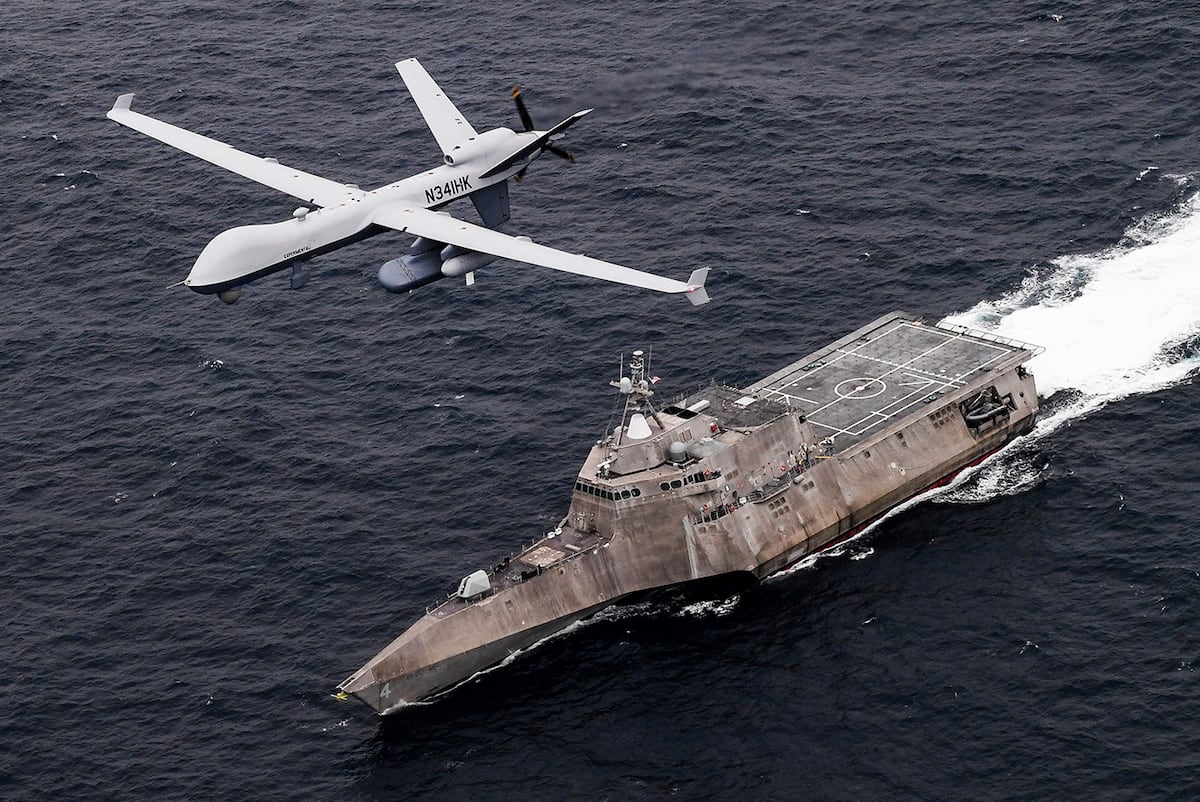
BERLIN — Germany has ordered eight MQ-9B SeaGuardian remotely piloted aircraft from General Atomics Aeronautical Systems in a €1.52 billion ($1.77 billion) contract executed through the NATO Support and Procurement Agency.
The procurement, approved by the parliamentary budget committee on Dec. 17 and announced on Monday, includes four complete systems − each comprising two aircraft − along with four “certifiable” ground control stations that will allow the aircraft to operate alongside civilian traffic. First deliveries are expected in 2028, with the German Navy’s Marineflieger planning to operate the platforms from Naval Air Wing 3 Graf Zeppelin in Nordholz.
The SeaGuardians will focus on maritime surveillance and anti-submarine warfare across the Baltic Sea and North Atlantic, missions that have gained urgency amid heightened concerns over Russian underwater activity and critical infrastructure security in European waters.
The drones will complement Germany’s fleet of eight P-8A Poseidon maritime patrol aircraft, the first of which arrived in Germany in November 2025. Together, they mark a notable shift in German focus toward maritime surveillance and counter-submarine warfare capabilities in recent years.
General Atomics markets the MQ-9B SeaGuardian as being capable of over 30 hours of endurance with a mission radius of 1,200 nautical miles, or over 2,000 kilometers. The platform features pole-to-pole satellite control, de-icing capability for cold-weather operations, and an integrated Detect and Avoid System designed to enable operations in unsegregated civilian airspace.
The aircraft can be equipped with maritime surveillance radars and configured with anti-submarine warfare mission kits capable of deploying up to 40 ‘A’-size or 80 ‘G’-size sonobuoys. Germany has indicated the systems will initially focus on reconnaissance missions.
“The proliferation of MQ-9B in Europe delivers commonality between NATO countries and for Germany, it will provide opportunities for interoperability with their fleet of P-8As,” said Linden Blue, CEO of General Atomics Aeronautical Systems.
Interoperability with allies was an important factor in the purchase decision, the German military said , adding that they would benefit from learning from British and Belgian experience with the aircraft type.
Poland will soon join the club, too, after signing a $310 million contract for MQ-9B SkyGuardian systems in December 2024.
Berlin’s new focus on maritime surveillance comes at a time of heightened presence of Russian naval assets, both military and ostensibly civilian, in the waters of the North and Baltic Seas near Germany. In July of last year, the government announced a new mission to put pressure on the Russian shadow fleet of tankers used to circumvent EU sanctions and continue financing the war in Ukraine.
“The more complete the picture, the sooner we can cooperate with our partner countries in the Baltic Sea region to take appropriate measures,” said German Transport Minister Patrick Schnieder at the time.
Linus Höller is Defense News' Europe correspondent and OSINT investigator. He reports on the arms deals, sanctions, and geopolitics shaping Europe and the world. He holds master’s degrees in WMD nonproliferation, terrorism studies, and international relations, and works in four languages: English, German, Russian, and Spanish.
柏林——德国已向通用原子航空系统公司订购了8架MQ-9B“海上卫士”遥控驾驶飞机,合同金额为15.2亿欧元(17.7亿美元),该合同通过北约支持和采购局执行。
该采购项目已于12月17日获得议会预算委员会批准,并于周一正式公布。项目包括四套完整的系统(每套系统包含两架飞机)以及四个“可认证”的地面控制站,这些控制站将使飞机能够与民用飞机一同运行。首批交付预计将于2028年进行,德国海军航空兵计划从位于诺德霍尔茨的“齐柏林伯爵”海军航空联队第3营部署这些平台。
“海上卫士”将专注于波罗的海和北大西洋的海上监视和反潜作战,随着人们对俄罗斯水下活动和欧洲水域关键基础设施安全的担忧日益加剧,这些任务变得更加紧迫。
这些无人机将与德国现有的八架 P-8A 海神海上巡逻机形成互补,其中第一架 P-8A 海神海上巡逻机于 2025 年 11 月抵达德国。它们共同标志着近年来德国在海上监视和反潜作战能力方面的重点发生了显著转变。
通用原子公司将MQ-9B“海上卫士”无人机宣传为续航时间超过30小时,任务半径达1200海里(超过2000公里)。该平台具备极地卫星控制能力、用于寒冷天气作业的除冰功能,以及旨在使其能够在非隔离民用空域执行任务的集成式探测与规避系统。
该飞机可配备海上监视雷达,并配置反潜作战任务套件,能够部署多达40个A型或80个G型声呐浮标。德国方面表示,该系统初期将主要用于侦察任务。
通用原子航空系统公司首席执行官林登·布鲁表示:“MQ-9B 在欧洲的普及为北约国家带来了通用性,对于德国而言,这将为其 P-8A 机队提供互操作性的机会。”
德国军方表示,与盟友的互操作性是此次采购决定中的一个重要因素,并补充说,他们将受益于英国和比利时在该机型方面的经验。
波兰也将很快加入这个行列,该国于 2024 年 12 月签署了一份价值 3.1 亿美元的 MQ-9B 天空卫士系统合同。
柏林方面将重心转向海上监视之际,正值俄罗斯海军力量(包括军用和表面上的民用力量)在德国附近北海和波罗的海海域的活动日益频繁。去年7月,德国政府宣布了一项新任务,旨在向俄罗斯用于规避欧盟制裁并继续资助乌克兰战争的“影子油轮舰队”施压。
“情况越全面,我们就能越早与波罗的海地区的伙伴国家合作,采取适当措施,”德国交通部长帕特里克·施耐德当时表示。
林努斯·霍勒是《防务新闻》的欧洲记者和开源情报调查员。他报道影响欧洲乃至全球的军火交易、制裁和地缘政治。他拥有大规模杀伤性武器不扩散、恐怖主义研究和国际关系三个硕士学位,并精通英语、德语、俄语和西班牙语四种语言。