Combat zone widens in Lebanon as Israel and Hezbollah escalate attacks随着以色列和真主党升级袭击,黎巴嫩的战区范围扩大。
Rather than trying to hold a defensive line, Hezbollah fighters have moved in to strike, then melted away in the hilly terrain they know well.
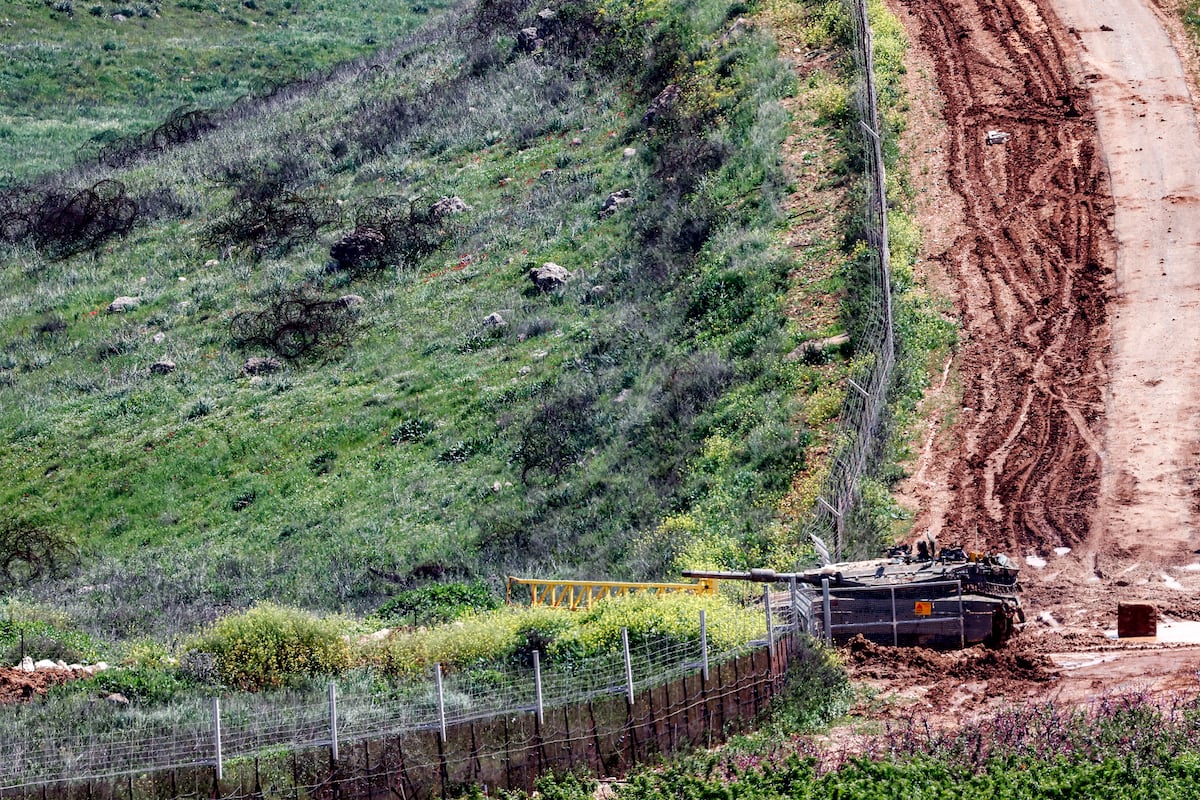
BEIRUT, Lebanon — Ukraine-style warfare came to Lebanon this week as Hezbollah started posting video taken from its suicide drones colliding with Israeli tanks rolling into the south of the country.
Israeli Defense Minister Israel Katz, for his part, promised to bring Israel’s Gaza modus operandi to Lebanon, as his country’s military, named the Israel Defense Forces, tries to carve out a “security zone” in the south.
The Israeli military will follow “the model of Rafah and Beit Hanoun,” he said, referring to two Gaza cities the IDF mostly destroyed.
The announcements promised a new type of warfare on an old battlefield: South Lebanon is now being invaded by Israel for the fifth time since 1978, this time in response to Hezbollah firing rockets into Israel on March 2 to protest the assassination of Iran’s supreme leader.
Katz has ordered the IDF to establish a “security zone” south of Lebanon’s Litani river — about 20 miles from the Israeli border — to stop Hezbollah firing rockets and missiles into northern Israel.
Meanwhile, Israel has pushed on with air strikes it says target Hezbollah officials and infrastructure and has ordered the zone evacuated, displacing 1.2 million people who have sought refuge further north.
The Iran-backed Hezbollah has meanwhile surprised Israel with the depth of its missile and rocket stocks as it continues to rain salvoes on northern Israel.
Smoke is released after an Israeli army self-propelled howitzer fires rounds from the upper Galilee in northern Israel near the border with southern Lebanon on March 27, 2026. (Jalaa Marey / AFP via Getty Images)
The IDF last entered Lebanon in 2024 after Hezbollah fired rockets to back Hamas in Gaza. Israel also killed Hezbollah leader Hassan Nasrallah in an airstrike and set off explosives it had smuggled into Hezbollah’s pagers, injuring 3,000.
Despite a ceasefire, Israel continued to bomb south Lebanon, targeting Hezbollah , yet on March 2, the Shia group appeared rearmed and ready to fight, prompting reports Iranian commanders had taken over training after Nasrallah’s death.
As Israeli tanks entered South Lebanon, the group adopted new guerilla tactics, operating in small cells which attacked Merkava tanks with Russian Kornet and Iranian Almas anti-tank weapons - the latter a reverse engineered version of the Israeli Spike.
Rather than trying to hold a defensive line, Hezbollah fighters have moved in to strike, then melted away in the hilly terrain they know well, hoping to claim Israeli casualties.
A bulldozer clears rubble from a street at the site of an Israeli airstrike in Beirut's southern suburbs on March 27, 2026. (AFP via Getty Images)
On Thursday Hezbollah said it had destroyed or disabled 20 tanks.
This week the group posted video taken from suicide drones hitting Merkavas, a technique copied from the Ukrainian military which appears designed to score a PR victory.
This week the IDF said Hezbollah had launched 600 rockets, missiles and drones in a 24-hour period, up from its previous daily average of 100 - with strikes against Israeli military in Lebanon as well as civilian targets in northern Israel.
The IDF advance nevertheless appeared underway on Friday, with reports of new villages taken, ever closer to the Litani.
Israel has reportedly launched over 7,000 drone, missile and air strikes into Lebanon since March 2, and has said it has killed 700 Hezbollah fighters in that time.
Not all missile damage has been in southern Lebanon. On Tuesday, missile fragments fell in the Jounieh area north of Beirut, far from the fighting.
In a statement, the Lebanese army said the fragments came from a “guided ballistic missile of the ‘Qadr-110′ type, of Iranian manufacture, approximately 16 meters long with a range of about 2,000 km, and it carried several small sub-munitions.”
The incident sparked concern since Lebanon has been spared Iranian missile attacks, unlike Gulf states, possibly because its regional ally Hezbollah is active in Lebanon.
People inspect the impact of a rocket strike from the previous day, leaving one man dead and one seriously injured, in Nahariya, Israel, on March 27, 2026, (Amir Levy/Getty Images)
But the army said the Iranian missile was not aimed at Lebanon.
“The missile exploded at a high altitude, which suggests that its intended target was outside Lebanese territory. As for the cause of the explosion, it may have been due to a technical malfunction or the result of an intercepting missile.”
That led to speculation the missile was headed to Cyprus, and was downed by a navy vessel, possibly American, in the Mediterranean.
When an Iranian drone struck the U.K. RAF Akrotiri air base in Cyprus on March 2, France, the U.K. and Italy all sent naval vessels to protect the island, which is part of the European Union.
Khaled Hamadi, a retired Lebanese army general, said he believed the missile had instead been aimed at the U.S. embassy in Lebanon, which is close to Jounieh. He noted that it was fired shortly after Lebanon announced it was expelling the Iranian ambassador to Lebanon, who is accused of liaising with Hezbollah.
“It could have been a response by Iran to the expelling of its ambassador,” Hamadi said.
He added that the altitude of the missile when it broke up did not necessarily mean it was heading out of Lebanon. “Ballistic missiles fall vertically to their targets, so the target could easily have been in Lebanon,” he said.
Tom Kington is the Italy correspondent for Defense News.
黎巴嫩贝鲁特——本周,乌克兰式的战争蔓延到了黎巴嫩,真主党开始发布从其自杀式无人机上拍摄的视频,视频显示,以色列坦克正开进该国南部。
以色列国防部长以色列·卡茨则承诺将以色列在加沙的行动模式带到黎巴嫩,因为以色列国防军正试图在南部地区建立一个“安全区”。
他表示,以色列军方将效仿“拉法和拜特哈嫩的模式”,他指的是以色列国防军几乎摧毁的加沙两座城市。
这些声明预示着在古老的战场上将出现一种新型战争:自 1978 年以来,以色列第五次入侵黎巴嫩南部,这次是为了回应真主党于 3 月 2 日向以色列发射火箭弹,以抗议伊朗最高领袖遇刺身亡。
卡茨已下令以色列国防军在黎巴嫩利塔尼河以南(距以色列边境约 20 英里)设立“安全区”,以阻止真主党向以色列北部发射火箭弹和导弹。
与此同时,以色列继续进行空袭,称其目标是真主党官员和基础设施,并下令疏散该地区的人员,导致 120 万人流离失所,他们向更北的地方寻求庇护。
与此同时,伊朗支持的真主党凭借其庞大的导弹和火箭储备,继续向以色列北部倾泻炮火,令以色列感到惊讶。
2026年3月27日,以色列军队一门自行榴弹炮在以色列北部靠近黎巴嫩南部边境的上加利利地区发射炮弹后,现场冒出浓烟。(Jalaa Marey / AFP via Getty Images)
2024年,真主党向加沙地带的哈马斯发射火箭弹后,以色列国防军上一次进入黎巴嫩。以色列还空袭炸死了真主党领导人哈桑·纳斯鲁拉,并引爆了事先藏在真主党寻呼机中的爆炸物,造成3000人受伤。
尽管达成了停火协议,以色列仍继续轰炸黎巴嫩南部,以真主党为目标。然而,3月2日,这个什叶派组织似乎重新武装,准备战斗,这引发了有关伊朗指挥官在纳斯鲁拉死后接管训练的报道。
当以色列坦克进入黎巴嫩南部时,该组织采取了新的游击战术,以小型小组的形式行动,使用俄罗斯的“短号”反坦克导弹和伊朗的“阿尔玛斯”反坦克武器攻击梅卡瓦坦克——后者是以色列“长钉”反坦克导弹的逆向工程版本。
真主党战士没有试图坚守防线,而是发动攻击,然后迅速撤入他们熟悉的丘陵地形中,希望造成以色列人员伤亡。
2026年3月27日,在贝鲁特南部郊区,一辆推土机正在清理以色列空袭现场街道上的瓦砾。(法新社/盖蒂图片社)
周四,真主党声称摧毁或瘫痪了20辆坦克。
本周,该组织发布了一段自杀式无人机袭击梅卡瓦坦克的视频,这种技术是从乌克兰军队那里模仿而来,似乎是为了赢得公关胜利。
本周,以色列国防军表示,真主党在 24 小时内发射了 600 枚火箭弹、导弹和无人机,高于此前的日均 100 枚——袭击目标包括黎巴嫩境内的以色列军队以及以色列北部的平民目标。
尽管如此,以色列国防军的推进似乎在周五已经开始,有报道称他们攻占了新的村庄,越来越接近利塔尼人。
据报道,自 3 月 2 日以来,以色列已对黎巴嫩发动了 7000 多次无人机、导弹和空袭,并称在此期间已造成 700 名真主党武装分子死亡。
并非所有导弹袭击都发生在黎巴嫩南部。周二,导弹碎片落在了贝鲁特以北的朱尼耶地区,那里远离战火中心。
黎巴嫩军方在一份声明中表示,这些碎片来自一枚“伊朗制造的‘Qadr-110’型制导弹道导弹,该导弹长约16米,射程约2000公里,并携带了数枚小型子弹药”。
该事件引发了人们的担忧,因为与海湾国家不同,黎巴嫩一直未遭受伊朗导弹袭击,这可能是因为伊朗的地区盟友真主党在黎巴嫩十分活跃。
2026年3月27日,在以色列纳哈里亚,人们正在查看前一天火箭弹袭击造成的后果,袭击造成一人死亡,一人重伤。(Amir Levy/Getty Images)
但军方表示,伊朗导弹的目标并非黎巴嫩。
“导弹在高空爆炸,这表明其预定目标位于黎巴嫩境外。至于爆炸原因,可能是技术故障,也可能是被拦截导弹击中。”
这引发了人们的猜测,认为这枚导弹的目标是塞浦路斯,并且可能在地中海被一艘海军舰艇(可能是美国海军舰艇)击落。
3月2日,一架伊朗无人机袭击了位于塞浦路斯的英国皇家空军阿克罗蒂里空军基地。法国、英国和意大利都派出海军舰艇保护这个欧盟成员国的岛屿。
黎巴嫩退役陆军将领哈立德·哈马迪表示,他认为这枚导弹的目标并非伊朗,而是位于朱尼耶附近的美国驻黎巴嫩大使馆。他指出,导弹发射不久前,黎巴嫩刚刚宣布驱逐被指控与真主党有联系的伊朗驻黎巴嫩大使。
哈马迪说:“这可能是伊朗对其大使被驱逐的回应。”
他补充说,导弹解体时的高度并不一定意味着它正飞出黎巴嫩。“弹道导弹垂直落向目标,所以目标很可能就在黎巴嫩境内,”他说。
汤姆·金顿是《防务新闻》驻意大利记者。