Thailand hailed as a haven for retirees and digital nomads but government fosters doubt and uncertainty泰国被誉为退休人士和数字游民的天堂,但政府却加剧了人们的疑虑和不确定性。
Thailand ranks third for digital nomads and fourth for retirees, yet its welcome is getting tougher. Visa rules are tightening, property ownership structures face scrutiny,… Read More ›
新闻视频
September 12, 2026 at 11:19 pm
in Economy , Living , Media , Politics , Thailand
Thailand is selling itself as a global haven for digital nomads and retirees, but the welcome now comes with sharper conditions. As Bangkok celebrates a top-four global ranking, foreign property structures face sweeping scrutiny, DTV rules are tightening, visa-free stays are being cut, deportation powers are expanding and anti-Israel street protests are adding to unease. The result is a striking policy collision: Thailand wants wealthy foreigners to stay longer and spend more, while simultaneously making long-term residency, property control and immigration status more closely regulated than before.
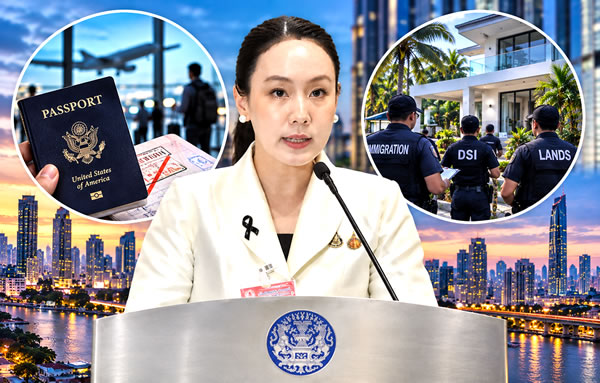
Deputy government spokeswoman Lalida Persvivatana hailed Thailand’s global appeal to retirees and digital nomads, saying: “The goal is not simply to make people around the world want to visit Thailand.” Yet tougher visas and property probes are raising doubts. ( Source: Government House )
Thailand has emerged as a leading global destination for digital nomads and foreign retirees, the Prime Minister’s Office declared Saturday. Deputy government spokeswoman Lalida Persvivatana highlighted Thailand’s strong showing in the Rumavi Global Relocation Index 2026. Thailand ranked third worldwide for digital nomads. Meanwhile, it took fourth place globally for retirees.
The index covered 192 countries and territories. Thailand scored 75.4 for digital nomads and 74.3 for retirees. For the government, the figures support an increasingly important economic strategy. Thailand wants more than millions of short-stay tourists. Instead, it wants wealthier foreigners living here and spending throughout the year.
Lalida highlighted accommodation, food, transport, healthcare and other services as major beneficiaries. “The goal is not simply to make people around the world want to visit Thailand,” Lalida said. The government instead wants foreigners with sufficient means to remain longer. As a result, officials hope longer stays will generate substantially greater economic value.
Thailand’s affordability and infrastructure drive its rise as a global haven for long-stay foreigners
Thailand ranked behind Malaysia and Portugal for digital nomads. Separately, Malaysia, Panama and Portugal took the top three retirement positions. Nevertheless, Thailand performed exceptionally strongly on affordability, scoring 96.9. Currency and banking received 91.8, while digital infrastructure scored 89.4. Healthcare quality and affordability each scored 78.
Those figures underline the government’s economic pitch. Digital nomads rent condominiums, buy food and use local services. Likewise, retirees require homes, private healthcare, transport and financial services. Their spending can also continue outside traditional tourism peaks. Accordingly, Thailand wants long-stay foreigners contributing throughout the year.
Prime Minister Anutin Charnvirakul has already stressed the wider ambition. Thailand wants international talent, longer-stay visitors and financially secure foreigners. In parallel, the government wants higher expenditure from each visitor. It also wants longer stays rather than concentrating entirely on arrival numbers.
Yet Saturday’s upbeat message comes during a much tougher period for foreigners establishing long-term roots. Notably, the same relocation assessment identified the rule of law among Thailand’s weaker areas. English-language accessibility and business opportunities were also identified for improvement.
Rule-of-law concerns collide with Thailand’s intensifying crackdown on foreign property ownership
The rule-of-law issue carries particular weight for long-term residents. A tourist taking a fortnight’s holiday carries relatively little financial exposure. By contrast, a retiree buying a home can commit millions of baht. Equally, digital workers can relocate savings, families and business arrangements to Thailand.
At the same time, Thailand is conducting a far-reaching crackdown on foreign-linked companies and property ownership. The campaign covers nominee shareholders, landholding companies and financial structures used by foreigners. It also reaches Thailand’s biggest foreign property markets.
Foreigners generally cannot own Thai land directly. Furthermore, Thai citizens cannot legally act as nominees concealing foreign ownership. Those restrictions are longstanding. However, enforcement has intensified dramatically during 2026.
Prime Minister Anutin ordered tougher scrutiny of nominee landholding nationwide earlier this year. Subsequently, the Interior Ministry issued an urgent circular on August 25. Provincial governors and land officials were instructed to investigate suspected nominee arrangements more closely.
Crucially, investigators are looking beyond names appearing on company documents. They can examine tax records, funding sources and financial transactions. In addition, they can investigate the economic position of Thai shareholders. Officials can therefore establish whether those shareholders genuinely invested their own money.
Investigators look behind company paperwork as foreign property structures face tougher scrutiny
As part of this, investigators can establish who actually controls a company. A structure appearing compliant on paper can therefore face extensive examination. Where illegal foreign landholding is established, officials can order disposal of the land. Criminal proceedings can follow.
The implications are substantial for Thailand’s foreign-facing property industry. For decades, foreigners have acquired villas and houses through Thai companies. Lawyers, developers and property agents routinely assisted buyers with such structures. Some companies represent genuine businesses with genuine Thai investment.
Others, however, primarily gave foreigners effective control over houses standing on Thai land. Such nominee arrangements were not made legal by becoming commonplace. Even so, their widespread use created a substantial property market around them. Thousands of foreigners bought homes believing those arrangements offered dependable long-term control.
Now, those structures face much harder examination. The numbers are huge. Commerce Ministry figures identified 36,277 foreign-invested companies holding 305,838 land plots. Together, the properties cover approximately 1.064 million rai.
On another front, 7,082 foreign-linked companies hold 76,840 condominium units. Those units cover more than 4.1 million square metres. Importantly, officials have not accused all these companies of wrongdoing. Many are legitimate businesses or genuine Thai-foreign joint ventures.
Foreign-linked companies and hundreds of thousands of properties fall under expanding national scrutiny
Still, the government is cross-checking shareholders, directors, capital, land records and company histories. Investigators are also following money trails. Consequently, corporate, personal, financial and property databases are increasingly being linked.
Koh Samui has become one major focus. Officials there reviewed 12,906 companies, including 8,254 with foreign shareholders. Of those, 875 were flagged for closer examination. The investigations covered 60 cases and 37 land plots worth approximately ฿1.2 billion.
Phuket has also faced sustained enforcement. More than 100 companies were examined during one major operation in August. Those businesses generated revenue exceeding ฿5 billion. Following those checks, 16 faced prosecution.
Pattaya has become another key target. On August 21, investigators raided three locations during a suspected Israeli-linked nominee investigation. The operation covered a law office, condominium company and hotel business.
The Department of Special Investigation has since pursued a wider inquiry. Investigators are tracing hotels, condominiums, companies and funding arrangements. Therefore, the property crackdown is no longer confined to isolated resort cases.
Nationally, around 14,000 foreign-linked companies have faced scrutiny alongside approximately 5,800 land plots. The properties involved have been valued at around ฿60 billion. Separately, officials have targeted about 1,500 companies suspected of illegal landholding arrangements.
Property enforcement widens as buyers face deeper checks and long lease structures come under pressure
The enforcement machinery is also widening. Commerce and Interior officials can examine corporate and land records. Meanwhile, police, the DSI and Anti-Money Laundering Office can become involved. Investigators can then follow capital, shareholders and financial flows.
For foreign property buyers, the environment has consequently changed substantially. Formal registration does not necessarily end official scrutiny. Investigators can examine how a structure was created, funded and controlled.
That affects existing owners and prospective buyers differently. Existing owners can face questions over arrangements created years earlier. New buyers, however, must assess structures against a much tougher enforcement environment.
The financial exposure can be considerable. A tourist can simply choose another destination. Conversely, a retiree with ฿10 million invested in property cannot move the asset. The exposure grows further with ฿20 million or more tied to a villa.
Another established property mechanism has also suffered a major legal setback. Long leases were frequently promoted to foreigners unable to own land. In particular, developers sometimes offered arrangements described as 30+30+30-year leases.
Under those structures, buyers received an initial 30-year lease with promises covering another 60 years. For years, such arrangements were marketed as providing something approaching permanent control. However, Supreme Court Decision 4655/2566 severely weakened that proposition.
Supreme Court lease ruling adds uncertainty as Thailand simultaneously courts long-stay foreign residents
The case involved a registered 30-year lease and contractual promises covering another 60 years. Moreover, rent for the additional periods had been paid in advance. The Supreme Court upheld the initial 30-year lease. It rejected the arrangement intended to guarantee the remaining 60 years.
The court found the additional arrangement attempted to circumvent Thailand’s statutory 30-year lease limit. Consequently, one long-used route marketed to foreign buyers carries substantially less protection than many purchasers expected.
The legal position itself requires an important distinction. Thailand has not suddenly prohibited foreign ownership of land that was previously unrestricted. Foreign land ownership restrictions have existed for decades. Likewise, widespread use never made unlawful nominee arrangements lawful.
What has changed is enforcement. Structures marketed, processed and routinely used for years now face intensive investigation. Simultaneously, the government is asking financially secure foreigners to establish longer-term lives in Thailand.
The same contradiction is appearing in immigration policy. Thailand introduced the Destination Thailand Visa as a flagship route for remote workers. The DTV quickly became particularly popular among Western digital nomads.
Its five-year validity was a major attraction. Additionally, the visa offered multiple entries and lengthy stays. Applicants generally needed to demonstrate at least ฿500,000 in financial resources. They also required evidence of remote employment, freelance work or another qualifying activity.
New DTV rules demand permanent residence and criminal checks from mobile digital nomad applicants
From August 31, however, Thailand significantly tightened the application process. Applicants must now prove permanent residence where their applications are lodged. Previously, they generally needed evidence establishing their current location.
For digital nomads, that distinction is substantial. Many remote workers are mobile by definition. Some spend months moving between Asian countries without establishing permanent residence there.
Previously, that mobility could still allow a Thai DTV application while travelling. Under the revised requirements, permanent residence must be demonstrated in the application jurisdiction. Moreover, applicants must provide a criminal-record clearance certificate.
Thai diplomatic missions across several countries have confirmed the changes. For British and Irish applicants, the Thai Embassy in London issued specific requirements. Applicants must prove permanent residence in Britain, Ireland or a British Overseas Territory. Police certificates must generally have been issued within six months.
The changes do not abolish the DTV. Nor do they remove its five-year validity. However, they eliminate part of the flexibility that originally made it attractive.
For highly mobile Western workers, that change is particularly significant. The affected group includes precisely the digital nomads highlighted by Saturday’s government announcement.
Digital nomads face closer checks as Thailand cuts visa-free stays from 60 days back to just 30 days
Concerns have consequently surfaced within digital-nomad communities. The permanent-residence requirement has attracted particular attention. Separately, reports have appeared of closer checks on whether DTV holders undertake their declared activities.
One Muay Thai operator reported receiving an Immigration call concerning a DTV holder. The officer was checking whether the visa holder attended the declared activity. That report does not establish a nationwide procedure. Nevertheless, it reflects a harder enforcement climate.
The wider visa regime is tightening as well. From September 15, Thailand will end the 60-day visa-exemption arrangement introduced in 2024. Most qualifying travellers will instead receive 30 days.
The revised scheme covers 60 countries and territories. Officials cite national security, economic interests, reciprocity and abuse of immigration privileges. In response, the government points travellers seeking longer stays towards Thailand’s electronic visa system.
Visitors entering before September 15 retain the permission already stamped into their passports. Yet the broader policy direction has clearly changed. Thailand dramatically liberalised entry during 2024. Two years later, one of those flagship concessions is being rolled back.
For retirees, the immediate visa picture is less dramatic. Thailand has not imposed a comparable wholesale rewrite of standard retirement-extension financial requirements. Applicants aged 50 and above generally continue using familiar thresholds.
Retirement rules stay broadly intact as anti-Israel street campaigns add to the pressure on foreigners
Those requirements include ฿800,000 in qualifying funds or ฿65,000 monthly income. Different retirement visa categories carry separate conditions. Non-Immigrant O-A applicants also face health insurance requirements.
Even so, retirement decisions extend beyond an annual immigration stamp. Property arrangements matter heavily. Banking, healthcare and taxation also affect long-term residents. Future immigration requirements remain another consideration.
Meanwhile, another foreigner-related issue has become highly visible. A growing street campaign has targeted Israeli visitors, Israeli-linked businesses and perceived foreign influence. Veteran protest leader Sondhi Limthongkul has placed those issues at the centre of his latest campaign.
On Thursday, hundreds of protesters gathered outside the Israeli Embassy in Bangkok. Demonstrators demanded tougher enforcement of Thai laws. They also raised foreign business activity, nominee ownership and landholding.
A day later, the campaign moved south. More than 500 protesters marched through Patong in Phuket towards Chabad House. Marchers carried anti-Israel signs and chanted “Free Palestine”.
Police deployed officers and controlled traffic around the demonstration. Subsequently, a major Rosh Hashanah gathering at Chabad House was cancelled amid security concerns.
The distinction between street pressure and government policy remains clear. The Thai government has not announced a campaign against Israeli tourists based on nationality. Its official enforcement drive targets illegal businesses, nominee structures and foreigners breaking Thai law.
Israeli-linked businesses face scrutiny as deportation proceedings put foreign residents under spotlight
Yet Israeli-linked business networks have received intense scrutiny. The DSI is investigating suspected Israeli nominee structures in Pattaya and Chon Buri. Investigators are examining hotels, condominiums and company funding.
Beyond Pattaya, Israeli-linked assets worth tens of billions of baht are under review nationwide. Areas receiving attention include Bangkok, Phuket, Pai, Koh Samui and Koh Pha Ngan.
Enforcement against individual foreigners has also become more visible. New deportation procedures took effect on August 28. The rules established procedures for deportation orders and appeals.
Soon afterwards, French businessman Kevin Dimino faced deportation proceedings on Koh Samui. Dimino is a co-owner of Samui Exotic Park in Mae Nam. Police summoned him on September 8 and informed him of the deportation action.
He was then held at Koh Samui Police Station. Officials cited complaints involving violence, knife threats, tourist confrontations, online posts and public nuisance. They also referred to a flight incident.
Israeli national Yaacov “Jacob” Ohayon separately faced deportation proceedings. He was held at Bo Phut Police Station. Earlier, he was convicted over threats, fined ฿5,000 and given a suspended 15-day sentence.
Elsewhere in the Gulf of Thailand, enforcement has reached foreign workers. Six foreign diving instructors were arrested on Koh Tao on August 20. Officials also examined 110 business entities during that operation.
Thailand courts wealthy foreigners while property probes, visa tightening and deportations gather pace
Taken together, the developments have changed the operating environment for foreigners. Property companies face investigation. Nominee shareholders face deeper financial checks. Visa privileges are tightening, while deportation powers are being used more visibly.
Yet Thailand is not closing its doors. Saturday’s Prime Minister’s Office announcement says precisely the opposite. The government actively wants financially secure foreigners.
It wants their spending flowing into Thai businesses. It also wants their skills, investment and year-round economic contribution. Retirees and digital workers fit directly into that model.
At the same time, the government is sending another clear message. Foreign residents face closer scrutiny. Company structures will be examined, while questionable property arrangements face investigation.
Visa privileges can also change quickly. Likewise, foreigners breaking Thai law face tougher enforcement. Thailand is therefore pursuing two major policy objectives at once.
It wants more high-value long-term foreign residents. At the same time, it is dismantling questionable arrangements used by some foreigners.
The property crackdown is particularly significant. Government agencies are examining tens of thousands of companies and hundreds of thousands of land plots. They are also looking behind corporate paperwork to establish who actually supplied the money.
Beneficial ownership checks deepen as tighter DTV rules collide with Thailand’s global relocation pitch
In many cases, the key issue is beneficial control. Thai shareholders appearing on company records may now have to explain their investment. Investigators can then compare those explanations with financial and tax records.
Long-established nominee structures are therefore directly in the government’s sights. Separately, another once-popular property mechanism has already suffered a significant Supreme Court setback.
For digital nomads, the picture is similarly mixed. Thailand ranks third globally and promotes that position heavily. Yet its flagship DTV has just become harder to obtain for mobile applicants.
At the same time, visa-free stays are being cut from 60 days to 30. The timing makes Saturday’s announcement particularly striking.
The Prime Minister’s Office is selling affordability, banking, digital infrastructure and healthcare. Those remain formidable Thai advantages. Still, Thailand is competing directly against other countries for the same foreigners.
Malaysia and Portugal already rank ahead of Thailand for digital nomads. Malaysia, Panama and Portugal also outrank Thailand for retirees. Consequently, the competition now extends well beyond tourism arrivals.
Thailand’s low costs and strong healthcare compete with tougher rules facing foreigners putting down roots
A digital nomad can choose Kuala Lumpur instead of Bangkok. Similarly, a retiree can examine Portugal, Malaysia or Panama before moving substantial savings overseas.
Thailand remains cheaper than many competitors. Its private healthcare sector remains another major attraction. Digital connectivity is strong, while the country has an established international community.
Those advantages help explain Saturday’s ranking. Yet attracting someone for three weeks differs fundamentally from securing a long-term resident.
Long-term residents need to understand their immigration requirements. Property buyers need to know exactly what they control. Investors need to know whether corporate structures can withstand official scrutiny.
Retirees need to understand how their homes can legally be held. Digital nomads need to know where they can apply. Above all, long-term residents must deal with whatever regulatory requirements are currently enforced.
That makes one weakness in the relocation assessment particularly significant. The index itself identifies the rule of law as an area where Thailand needs improvement.
The Prime Minister’s Office wants Thailand to become somewhere foreigners do not simply visit. It wants them to live, work, retire and spend here.
Yet the success of that strategy may ultimately depend on more than affordability, healthcare and fast internet. It will depend on whether the foreigners Thailand wants to attract believe they can safely put down roots.
Drive against foreign owned property and business on Koh Samui and Koh Phangan now targets leases
International reservations system used by hotels targeted in latest Koh Phangan swoop by ministers
Anutin visits Koh Phangan as nominee crackdown shows 68% of firms with foreign ownership links
Blitzkrieg on foreign firms and enterprises on Koh Phangan continues with French owned resort busted
35-year-old Frenchman arrested on Koh Phangan on Sunday for rape as island-wide swoop nets 6 suspects
Ten foreign Poker players arrested in a police swoop on a rented house in Koh Phangan on Tuesday night
Russian-Chinese Koh Phangan alliance to sell drugs to foreigners. Accused entered Thailand illegally
Sex, drugs, business and work abuses linked to expats targeted this week by police raids on Koh Phangan
Ten arrested and two illegal hostels shuttered on Koh Phangan as fierce crackdown continues on the island
Crackdown aimed at upending foreign business trade moves from Koh Phangan to Phuket. Four arrested
Crackdown to wipe out foreign business abuses and ownership on Koh Phangan & Koh Samui intensifies
Joseph Anthony is an expat from Ireland who has lived in Thailand for the last decade. He has worked extensively in the media including editorial positions in Ireland and Thailand. He is focused on economic and business stories in Thailand as well as the expat lifestyle.
All posts by Joseph O' Connor
Dutch man entered into a mediated settlement after assaulting a young Thai woman at a Koh Samui bar September 9, 2026 CCTV catches a Dutch man repeatedly striking a Thai
French man held at Koh Samui Police Station as deportation process begins. Israeli moved to Bo Phut September 9, 2026 Kevin Dimino is behind bars on Koh Samui after PM
Local government exam scandal hints at systemic nationwide corruption even extending to ministerial level September 8, 2026 Pakamon blows open a new front in Thailand’s exam
Government begins legal action against top Thai firms for 1.26 billion baht over key satellite concession September 8, 2026 Thailand races to pursue Thaicom and Gulf for
Indian tourist severely injured but coherent after early morning fall last Friday from his Pattaya hotel September 8, 2026 Indian tourist Abhishek Jagannath Kunjir, 42, suffers
Israeli detained for deportation as PM signs order to deport now missing French zoo owner Kevin Dimino September 7, 2026 Frenchman Kevin Dimino disappears as immigration
US servicemen left behind a financial windfall in Pattaya but also a spirit of optimism and generosity September 7, 2026 Farewell Pattaya! USS Abraham Lincoln sails after
PM Anutin laughs off what political pundits see as rising threats to the stability of his government September 7, 2026 Anutin faces a gathering storm as Sondhi threatens
UK Nigerian influencer wanted for drug trafficking died in Bangkok due to genital enlargement therapy September 6, 2026 Luxury Bangkok holiday ends in tragedy as Igho
Finance Minister Ekniti outlines the government’s economic plan but behind the buzzwords are risks September 6, 2026 Thailand’s economic reset faces an early reality
Motorist’s shocked horror after 6 million baht luxury car rolls across a motorway and into a deep irrigation canal September 5, 2026 Owner watches in horror as ฿6m luxury EV rolls
17 year old legal fight for schoolboy who is now a grown man against the Police finally ends in victory and pay day September 5, 2026 Wrongly arrested at 18, assaulted and pushed to
Turn Grey capital into White capital. Senator calls for 100% foreign owned firms to eliminate corruption September 5, 2026 Let foreigners own what they pay for, Senator Prathum
Ring of steel protects USS Abraham Lincoln as huge security operation polices US sailors on shore leave September 4, 2026 Security locks down coastal Chonburi as 5,000 USS
Widening Chinese trade gap cannot be ignored as it distorts economic data of an underlying GDP struggle September 4, 2026 Thai-Chinese businesses raise the alarm as
Fears grow for 33 year old single mother who is missing from her Kanchanaburi home since Friday August 28 September 4, 2026 Missing mother Ms Wichuda, 33, disappears after CCTV
Boss heir free to return to Thailand next year unless he gives himself up or is arrested by Interpol abroad September 4, 2026 The clock is running out on Red Bull heir Vorayuth
Thailand gets ready to enter the age of nuclear power with plans for two small modular reactors by 2037 September 9, 2026
Petrol and diesel rise as inflation for August comes in at 2.53%. However confidence is also seen rising September 9, 2026
Nationwide probe targeting over 36K foreigner linked firms with land and a further 7k which own condos September 8, 2026
Sex network boss arrested in shock police home raid on Sunday after probe exposed child porn racket September 8, 2026
Activist lawyer wants action on corruption which pilfers lottery revenue for the disabled for the rich September 8, 2026
Interior Ministry is now moving to enforce the law regarding Jewish burials and grave sites in Thailand September 7, 2026
Chaos still reigns at the NBTC as Chairman wins right to court review. Board members move to work on September 7, 2026
Vicious attack on UK man in Jomtien Pattaya leads to arrest of Thai man. 70 year old kicked in the face September 7, 2026
USS Abraham Lincoln departs Thailand after a special visit. Captain gave thanks for the very warm welcome September 6, 2026
Tourism sector starkly divided over 30 days visa from September 15th. Top tycoon says it’s a big mistake September 6, 2026
Missing Kanchanaburi mother found on southbound bus after 7 day northern stay shrouded in mystery September 6, 2026
Koh Samui Israeli expat the first to be deported under Prime Minister Anutin’s new deportation regime September 5, 2026
US Navy’s Pattaya visit is plain sailing with strong spending breeze. Chonburi governor hails it a success September 5, 2026
Paying AI users in Thailand had a nightmare week online just as the government waded into the market September 5, 2026
Malaysian online gambling boss arrested in Bangkok raid. 48 year old was a UFA network Master agent September 4, 2026
Crazed ex lover rams former girlfriend and her new boyfriend on a motorbike to their death with pickup September 4, 2026
Blunder over Indian visa policy saw Thailand lose tourists in August. Quick volte face to a 30 day visa September 4, 2026
Data centre projects on hold in Bangkok as officials scramble to examine the impact of the industry on resources September 3, 2026
HIV and AIDS still lurk behind the neon signs of Thailand’s sex industry especially as it moves online September 3, 2026
Younger brother kills sibling after finding him drinking as their mother fought for life in hospital September 3, 2026
Former PM Paetongtarn files police complaint over false social media post linking her with Israeli land September 2, 2026
People’s Party firebrand attacks flagship TH AI project launched this week with corruption agency filing of claims September 2, 2026
© 2026 Thai Examiner. All rights reserved.
2026年9月12日晚上11:19
经济、生活、媒体、政治、泰国
泰国一直标榜自己是全球数字游民和退休人士的天堂,但如今这份欢迎却伴随着更为严格的条件。曼谷在全球排名中跻身前四之际,外国房产结构正面临全面审查,数字电视规则日益收紧,免签停留期限缩短,驱逐出境的权力不断扩大,反以色列街头抗议活动也加剧了人们的不安。由此产生了一个引人注目的政策冲突:泰国一方面希望富裕的外国人停留更长时间、消费更多,另一方面却对长期居留、房产控制和移民身份的监管比以往更加严格。
泰国政府副发言人拉莉达·佩尔西瓦塔纳(Lalida Persvivatana)盛赞泰国对全球退休人士和数字游民的吸引力,并表示:“我们的目标不仅仅是让世界各地的人们都想来泰国旅游。”然而,更严格的签证政策和房产审查却引发了人们的质疑。(来源:泰国政府)
泰国总理府周六宣布,泰国已成为全球数字游民和外国退休人士的首选目的地。政府副发言人拉莉达·佩尔西瓦塔纳强调了泰国在2026年Rumavi全球移居指数中的出色表现。泰国在全球数字游民目的地排名中位列第三,在全球退休人士目的地排名中位列第四。
该指数涵盖了192个国家和地区。泰国在数字游民方面得分为75.4,在退休人员方面得分为74.3。对泰国政府而言,这些数据支持一项日益重要的经济战略。泰国需要的不仅仅是数百万短期游客,而是更希望吸引富裕的外国人常年在此居住和消费。
拉利达强调,住宿、餐饮、交通、医疗保健和其他服务将是主要受益者。“我们的目标不仅仅是吸引世界各地的人来泰国旅游,”拉利达说。政府更希望有经济能力的外国人能够延长停留时间。因此,官员们希望更长的停留时间能够带来更大的经济价值。
泰国物价低廉和基础设施完善,使其成为全球外国人长期居住的理想之地。
在数字游民方面,泰国排名马来西亚和葡萄牙之后。另一方面,马来西亚、巴拿马和葡萄牙位列退休目的地前三名。然而,泰国在生活成本方面表现异常出色,得分高达96.9分。货币和银行服务得分为91.8分,数字基础设施得分为89.4分。医疗保健质量和可负担性得分均为78分。
这些数据凸显了政府的经济策略。数字游民租住公寓、购买食物并使用当地服务。同样,退休人员也需要住房、私人医疗保健、交通和金融服务。他们的消费也可能在传统旅游旺季之外持续进行。因此,泰国希望长期居住的外国人全年都能为泰国经济做出贡献。
阿努廷·查恩维拉库尔总理已经强调了更宏大的目标。泰国希望吸引国际人才、延长游客停留时间,并吸引经济条件较好的外国人。与此同时,政府希望每位游客的消费额更高。此外,政府更希望游客能够延长停留时间,而不是仅仅关注入境人数。
然而,周六发布的这份乐观报告发布之际,正值外国人在泰国长期定居面临诸多挑战之时。值得注意的是,同一份移居评估报告指出,泰国的法治状况是其薄弱环节之一。此外,英语普及程度和商业机会也需要改进。
法治问题与泰国日益严厉打击外国人拥有房产的行为发生冲突。
对于长期居民而言,法治问题尤为重要。游客外出度假两周,经济风险相对较小。相比之下,退休人士购房可能涉及数百万泰铢。同样,数字工作者也可能将积蓄、家庭和业务安排转移到泰国。
与此同时,泰国正对涉外公司和房产所有权进行全面打击。此次行动涵盖了外国人使用的代理股东、土地控股公司和金融结构,并波及泰国最大的外国房地产市场。
外国人通常不能直接拥有泰国土地。此外,泰国公民也不能合法地作为代理人隐瞒外国所有权。这些限制由来已久,但自2026年起,执法力度显著加强。
今年早些时候,阿努廷总理下令加强对全国范围内代持土地的审查。随后,内政部于8月25日发布紧急通告,指示各省省长和土地官员对涉嫌代持土地的情况进行更深入的调查。
至关重要的是,调查人员的调查范围不仅限于公司文件上的名称。他们还可以审查税务记录、资金来源和财务交易。此外,他们还可以调查泰国股东的经济状况。因此,官员们可以确定这些股东是否真的投入了自己的资金。
调查人员深入审查公司文件,海外房地产结构面临更严格的审查
作为其中的一部分,调查人员可以确定谁实际控制着一家公司。因此,即使公司在纸面上看起来合规,也可能面临全面审查。如果查明存在非法海外土地持有行为,官员可以下令处置该土地,并可能提起刑事诉讼。
这对泰国面向外国市场的房地产行业影响巨大。几十年来,外国人一直通过泰国公司购买别墅和住宅。律师、开发商和房地产经纪人经常协助买家完成此类交易。其中一些公司代表着拥有泰国合法投资的正规企业。
然而,另一些安排则主要赋予外国人对泰国土地上房屋的实际控制权。这种代理人安排虽然普遍存在,但并未因此合法化。即便如此,它们的广泛使用也催生了一个庞大的房地产市场。成千上万的外国人购买房屋,相信这些安排能够提供可靠的长期控制权。
如今,这些机构面临着更为严格的审查。涉及的金额巨大。商务部的数据显示,共有36277家外商投资企业持有305838块土地。这些土地总面积约为106.4万莱(约106.4万公顷)。
另一方面,7082家外资关联公司持有76840套公寓单元,总建筑面积超过410万平方米。值得注意的是,官方并未指控所有这些公司存在不当行为。其中许多是合法企业或正规的泰外合资企业。
外资关联公司和数十万处房产正受到日益严格的国家审查。
尽管如此,政府仍在交叉核查股东、董事、资本、土地记录和公司历史。调查人员也在追踪资金流向。因此,公司、个人、金融和财产数据库之间的联系日益紧密。
苏梅岛已成为重点关注区域。当地官员审查了12906家公司,其中包括8254家拥有外国股东的公司。在这些公司中,有875家被列为重点调查对象。调查涉及60起案件和37块土地,总价值约12亿泰铢。
普吉岛也面临着持续的执法行动。8月份的一次大规模行动中,超过100家公司接受了检查。这些公司的总营业额超过50亿泰铢。检查结束后,其中16家公司被提起诉讼。
芭堤雅已成为另一个重点目标。8月21日,调查人员在对一名涉嫌与以色列有关联的提名人进行调查期间,突击搜查了三处地点。此次行动涉及一家律师事务所、一家公寓公司和一家酒店。
特别调查部门随后展开了更广泛的调查。调查人员正在追踪酒店、公寓、公司和资金来源。因此,此次房地产打击行动不再局限于个别度假村案件。
全国范围内,约有14000家外资关联公司和约5800块土地受到审查,涉及的资产价值约600亿泰铢。此外,官员们还对约1500家涉嫌非法持有土地的公司进行了调查。
随着买家面临更严格的审查,长期租赁结构也受到压力,房产执法范围扩大。
执法机制也在不断扩大。商务部和内政部官员可以审查公司和土地记录。同时,警方、特别调查局和反洗钱办公室也可以介入。调查人员随后可以追踪资本、股东和资金流动。
对于外国房产买家而言,环境已发生显著变化。正式登记并不意味着官方审查就此结束。调查人员可以审查房产结构的创建、资金来源和控制方式。
这会对现有业主和潜在买家产生不同的影响。现有业主可能会面临多年前达成的协议相关的质询。而新买家则必须在更为严格的执法环境下评估房产。
财务风险可能相当巨大。游客可以轻易选择其他目的地。但相反,一位投资1000万泰铢房产的退休人士却无法转移这笔资产。如果别墅的价值达到2000万泰铢甚至更高,风险则会进一步增加。
另一项既有的产权机制也遭遇了重大的法律挫折。长期租赁经常被推销给无法拥有土地的外国人。特别是,开发商有时会提供所谓的“30+30+30年”租赁安排。
在这些结构下,买方最初获得一份为期30年的租赁合同,并承诺再续租60年。多年来,此类安排被宣传为能够提供接近永久控制权的保障。然而,最高法院第4655/2023号判决严重削弱了这一说法。
泰国最高法院的租赁裁决加剧了不确定性,因为泰国同时正在起诉长期居留的外国居民。
该案涉及一份已登记的30年租赁合同,以及涵盖另外60年的合同承诺。此外,额外60年的租金已预先支付。最高法院维持了最初的30年租赁合同,但驳回了旨在保障剩余60年租期的安排。
法院认定,该附加安排试图规避泰国法定的30年租赁期限限制。因此,一条长期以来被推向外国买家的租赁路线,其保障力度远低于许多买家的预期。
法律立场本身需要进行一项重要的区分。泰国并非突然禁止外国人拥有此前不受限制的土地。对外国人拥有土地的限制已经存在了几十年。同样,广泛使用也从未使非法代理人安排合法化。
改变的是执法力度。多年来一直被销售、加工和常规使用的各种建筑结构现在面临着严格的调查。与此同时,政府正在鼓励经济条件允许的外国人长期在泰国定居。
同样的矛盾也出现在移民政策中。泰国推出了目的地泰国签证(Destination Thailand Visa),作为远程工作者的旗舰签证途径。该签证迅速在西方数字游民中流行起来。
五年有效期是其一大吸引力。此外,该签证允许多次入境和长期停留。申请人通常需要证明至少拥有50万泰铢的经济资源,并需提供远程工作、自由职业或其他符合条件的活动的证明。
新的数字电视规则要求对移动数字游民申请人进行永久居留权和犯罪记录审查。
然而,自8月31日起,泰国大幅收紧了申请流程。申请人现在必须证明其永久居住地为递交申请的地点。此前,他们通常只需要提供证明其当前居住地的证据即可。
对于数字游民而言,这种区别至关重要。许多远程工作者从定义上来说就是流动性很强的。他们有时会在亚洲各国之间辗转数月,却不在那里定居。
此前,这种流动性允许申请人在旅行期间申请泰国数字电视签证。根据修订后的要求,申请人必须证明其在申请管辖区拥有永久居留权。此外,申请人还必须提供无犯罪记录证明。
泰国驻多个国家的外交机构已确认了这些变更。泰国驻伦敦大使馆针对英国和爱尔兰的申请人发布了具体要求。申请人必须证明其在英国、爱尔兰或英国海外领土拥有永久居留权。无犯罪记录证明通常必须在六个月内签发。
这些变更并未废除数字电视许可证,也未取消其五年有效期。然而,它们确实削弱了数字电视许可证最初吸引人的部分灵活性。
对于流动性极强的西方劳动者而言,这一变化尤为显著。受影响的群体恰好包括周六政府公告中重点提及的数字游民。
泰国将免签停留期限从60天缩短至30天,数字游民面临更严格的审查。
因此,数字游民群体中出现了一些担忧。永久居留权要求尤其引人关注。此外,还有报道称,有关部门正在加强对数字电视许可证持有者是否从事其申报活动的审查。
一位泰拳教练报告称,他接到移民局的电话,询问一名持有数字旅游签证(DTV)的人员是否参加了申报的活动。该官员正在核实签证持有人是否参加了申报的活动。虽然该报告并不代表全国范围内的普遍做法,但它反映出执法力度正在加大。
更广泛的签证政策也在收紧。自9月15日起,泰国将终止2024年推出的60天免签政策。大多数符合条件的旅客将改为获得30天的免签停留期。
修订后的方案涵盖60个国家和地区。官员们援引国家安全、经济利益、互惠原则以及滥用移民特权等理由进行解释。作为回应,泰国政府建议寻求长期停留的旅客使用泰国的电子签证系统。
9月15日之前入境的游客仍可保留护照上已盖章的入境许可。然而,整体政策方向显然已经改变。泰国曾宣布将于2024年大幅放宽入境限制。两年后,其中一项标志性优惠政策却被取消。
对于退休人士而言,目前的签证形势并不那么严峻。泰国并未对退休延期申请的财务要求进行大规模的调整。50岁及以上的申请人通常仍适用以往的门槛。
退休规则基本保持不变,而反以色列街头运动则加大了外国人面临的压力。
这些要求包括80万泰铢的合格资金或每月6.5万泰铢的收入。不同类型的退休签证有不同的条件。非移民OA申请人还需满足健康保险要求。
即便如此,退休决策远不止于每年的移民签证。房产安排至关重要。银行、医疗保健和税收也会影响长期居民。未来的移民要求也是需要考虑的因素。
与此同时,另一个与外国人相关的问题也变得尤为引人注目。一场日益高涨的街头运动将矛头指向以色列游客、与以色列有关联的企业以及他们认为的外国影响力。资深抗议领袖桑迪·林通库尔已将这些问题置于其最新运动的核心位置。
周四,数百名抗议者聚集在曼谷的以色列大使馆外。示威者要求泰国政府更严格地执行法律,并就外国商业活动、名义所有权和土地持有等问题提出抗议。
一天后,抗议活动南下。超过500名抗议者游行穿过普吉岛芭东海滩,前往查巴德中心。游行者举着反以色列标语,高喊“解放巴勒斯坦”。
警方在示威活动现场周围部署警力并管制交通。随后,出于安全考虑,原定在查巴德中心举行的大型犹太新年集会被取消。
街头抗议与政府政策之间的区别依然清晰。泰国政府并未宣布针对以色列游客的国籍歧视行动。其官方执法行动的目标是非法企业、名义公司以及违反泰国法律的外国人。
随着遣返程序将外国居民置于聚光灯下,与以色列有关联的企业也面临审查。
然而,与以色列有关联的商业网络受到了严密审查。泰国特别调查局(DSI)正在调查芭堤雅和春武里府涉嫌存在的以色列代理人机构。调查人员正在审查酒店、公寓和公司融资情况。
除了芭堤雅之外,全国范围内与以色列有关联的价值数百亿泰铢的资产也在接受审查。重点关注的地区包括曼谷、普吉岛、拜县、苏梅岛和帕岸岛。
针对外国人的执法行动也变得更加公开透明。新的驱逐出境程序于8月28日生效。这些规定确立了驱逐令及上诉程序。
不久之后,法国商人凯文·迪米诺在苏梅岛面临遣返程序。迪米诺是湄南镇苏梅岛异域公园的共同所有人。警方于9月8日传唤他,并告知他将被遣返。
随后他被拘留在苏梅岛警察局。警方称,接到的投诉涉及暴力、持刀威胁、与游客发生冲突、发布网络帖子以及扰乱公共秩序等问题。他们还提到了一起航班事件。
以色列公民雅科夫·“雅各布”·奥哈永面临单独遣返程序。他被关押在波普警察局。此前,他因威胁罪被判有罪,罚款5000泰铢,并被判处15天缓刑。
在泰国湾其他地区,执法行动也波及到了外籍劳工。8月20日,六名外籍潜水教练在涛岛被捕。执法人员还在那次行动中检查了110家企业。
泰国在加大对外国富裕人士的房产调查、签证收紧和驱逐出境力度的同时,积极吸引外国富裕人士。
总而言之,这些事态发展改变了外国人的经营环境。房地产公司面临调查。代理股东面临更严格的财务审查。签证优惠政策收紧,而驱逐出境的权力也更加公开透明地行使。
然而,泰国并未关闭大门。总理府周六发布的声明恰恰相反。政府积极欢迎经济条件良好的外国人。
它希望他们的消费流入泰国企业,也希望他们贡献技能、投资和全年经济效益。退休人员和数字工作者恰好符合这一模式。
与此同时,政府发出了另一个明确的信号:外国居民将面临更严格的审查。公司结构将被审查,可疑的财产安排也将受到调查。
签证优惠政策也可能迅速变化。同样,外国人违反泰国法律将面临更严厉的执法。因此,泰国同时追求两大政策目标。
它希望吸引更多高价值的长期外国居民。与此同时,它也在取缔一些外国人使用的可疑安排。
此次房地产查处行动意义重大。政府机构正在审查数万家公司和数十万块土地。他们还在深入调查公司文件,以确定资金的实际来源。
随着更严格的数字电视规则与泰国的全球搬迁计划发生冲突,受益所有权审查力度加大。
在许多情况下,关键问题在于实际控制权。出现在公司记录中的泰国股东现在可能需要解释他们的投资。调查人员随后可以将这些解释与财务和税务记录进行比对。
因此,长期存在的代持财产结构直接成为政府的打击目标。此外,另一种曾经广受欢迎的财产管理机制也已在最高法院遭遇重大挫折。
对于数字游民来说,情况同样喜忧参半。泰国在全球排名第三,并大力宣传这一地位。然而,其旗舰数字电视(DTV)的申请难度却对移动用户而言越来越大。
与此同时,免签停留期限从60天缩短至30天。这一时机使得周六的公告显得尤为引人注目。
总理办公室大力宣传泰国的物价优势、银行服务、数字基础设施和医疗保健。这些仍然是泰国的强大优势。然而,泰国仍然要与其他国家直接争夺同一批外国游客。
马来西亚和葡萄牙在数字游民方面已经领先于泰国。马来西亚、巴拿马和葡萄牙在退休人员方面也优于泰国。因此,竞争范围已远远超出旅游入境人数。
泰国的低廉生活成本和强大的医疗保健体系,与外国人定居泰国所面临的更为严格的规定形成竞争。
数字游民可以选择吉隆坡而不是曼谷。同样,退休人士在将大笔积蓄转移到海外之前,可以考虑葡萄牙、马来西亚或巴拿马。
泰国的物价仍然比许多竞争对手低。其私营医疗保健行业也是一大优势。泰国的数字化程度很高,并且拥有成熟的国际社会。
这些优势有助于解释周六的排名。然而,吸引某人短期居住三周与确保长期居住者有着本质区别。
长期居民需要了解他们的移民要求。购房者需要清楚自己能控制哪些资产。投资者需要了解公司架构是否能经受住官方审查。
退休人士需要了解如何合法持有房产。数字游民需要知道在哪里可以申请。最重要的是,长期居民必须遵守现行的所有监管要求。
这使得搬迁评估中的一个缺陷显得尤为重要。该指数本身就指出,法治是泰国需要改进的领域。
总理办公室希望泰国不仅成为外国人旅游的地方,更成为他们生活、工作、退休和消费的场所。
然而,这项战略能否成功,最终可能不仅仅取决于生活成本、医疗保健和高速互联网。它还取决于泰国希望吸引的外国人是否相信他们能够安全地在泰国扎根。
针对苏梅岛和帕岸岛外国所有房产和企业的打击行动,现在重点针对租赁合同。
部长们最近突击检查帕岸岛酒店时,目标酒店使用的国际预订系统
阿努廷访问帕岸岛,与此同时,打击代理人犯罪的行动显示,68%的公司与外国所有权有关联。
对帕岸岛外国公司和企业的闪电战仍在继续,一家法国拥有的度假村被查封。
周日,一名35岁的法国男子在帕岸岛因涉嫌强奸被捕,全岛范围的突击行动共抓获6名嫌疑人。
周二晚间,警方突袭帕岸岛一处出租屋,逮捕了十名外国扑克玩家。
俄罗斯与中国在帕岸岛结盟,向外国人贩卖毒品。被告非法入境泰国。
本周,警方突击搜查了帕岸岛上的外籍人士,调查内容涉及性侵、毒品、商业和工作方面的侵权行为。
帕岸岛持续开展严厉打击行动,十人被捕,两家非法旅馆被查封。
打击行动旨在扰乱从帕岸岛到普吉岛的外国商业贸易活动。四人被捕。
严厉打击在帕岸岛和苏梅岛非法经营和侵占外国企业的行动力度加大
约瑟夫·安东尼是一位来自爱尔兰的侨民,过去十年一直居住在泰国。他曾在爱尔兰和泰国的媒体行业担任过编辑职务,拥有丰富的媒体从业经验。他主要关注泰国的经济和商业新闻,以及侨民的生活方式。
约瑟夫·奥康纳的所有帖子
2026年9月9日,一名荷兰男子在苏梅岛一家酒吧殴打一名年轻的泰国女子后,经调解达成和解。监控录像显示,该荷兰男子多次殴打一名泰国女子。
一名法国男子被关押在苏梅岛警察局,遣返程序即将开始。一名以色列男子于2026年9月9日被转移到波普特。凯文·迪米诺在首相下台后被关押在苏梅岛。
地方政府考试丑闻暗示全国范围内存在系统性腐败,甚至蔓延至部长级 2026年9月8日 帕卡蒙揭露泰国考试丑闻新篇章
泰国政府于2026年9月8日对泰国主要公司提起诉讼,追讨12.6亿泰铢的卫星特许经营权欠款。泰国正加紧追究Thaicom和Gulf公司的责任。
2026年9月8日,上周五清晨,一名印度游客从芭堤雅的酒店坠落,身受重伤但意识清醒。这名印度游客名叫阿比舍克·贾甘纳特·昆吉尔,42岁。
以色列人因涉嫌移民问题被拘留,等待遣返;总理签署命令遣返目前失踪的法国动物园园主凯文·迪米诺(2026年9月7日);法国人凯文·迪米诺在移民局的调查中失踪
美国军人在芭堤雅留下了一笔意外之财,同时也留下了乐观和慷慨的精神。2026年9月7日,再见了,芭堤雅!“亚伯拉罕·林肯”号航空母舰启航
2026年9月7日,阿努廷总理对政治评论员认为对其政府稳定日益增长的威胁一笑置之。桑迪的威胁让阿努廷面临一场风暴。
一名因涉嫌贩毒而被英国通缉的尼日利亚裔网红于2026年9月6日在曼谷因接受生殖器增大疗法而死亡。这名网红的曼谷豪华假期最终以悲剧收场。
财政部长埃克尼蒂概述了政府的经济计划,但华丽的辞藻背后隐藏着风险 2026年9月6日 泰国经济重置计划或将提前面临现实
2026年9月5日,一辆价值600万泰铢的豪华轿车在高速公路上翻滚坠入深水渠,车主惊恐万分。车主眼睁睁地看着这辆价值600万泰铢的豪华电动车翻滚。
一名17岁少年(现已成年)与警方进行了一场旷日持久的法律诉讼,最终以胜诉和赔偿告终。2026年9月5日,这名少年18岁时被错误逮捕,遭到殴打和推搡。
将灰色资本转化为白色资本。参议员呼吁允许外资100%控股企业以消除腐败。2026年9月5日,参议员普拉图姆表示:“让外国人拥有他们出资购买的东西。”
2026年9月4日,美国海军“亚伯拉罕·林肯”号航空母舰在严密安保下安全航行,5000名美国海军水兵在岸上休假。与此同时,春武里府沿海地区也实施了封锁。
不断扩大的中国贸易逆差不容忽视,因为它扭曲了经济数据,掩盖了泰国GDP面临的潜在困境。2026年9月4日,泰中企业发出警告。
一名33岁的单身母亲自2026年8月28日星期五起在北碧府失踪,人们越来越担心她的安危。9月4日,失踪母亲维楚达女士(33岁)的监控录像显示她失踪。
红牛继承人沃拉育明年即可自由返回泰国,除非他主动投案或被国际刑警组织在海外逮捕。2026年9月4日,沃拉育的命运岌岌可危。
泰国准备进入核电时代,计划在2037年前建成两座小型模块化反应堆(2026年9月9日)
受8月份通胀率2.53%的影响,汽油和柴油价格上涨。然而,市场信心预计在2026年9月9日也会上升。
全国范围内的调查目标是超过3.6万家与外国人有关联的土地公司和另外7000家拥有公寓的公司 2026年9月8日
2026年9月8日,一名性交易网络头目因涉嫌儿童色情犯罪活动于周日被警方突袭逮捕。
维权律师呼吁对挪用残疾人彩票收入、为富人谋利的腐败行为采取行动 2026年9月8日
泰国内政部将于2026年9月7日开始执行有关犹太人葬礼和墓地的法律。
国家广播电视和电信委员会(NBTC)内部依然混乱,主席赢得诉诸法庭的权利。委员会成员将于2026年9月7日开始工作。
一名英国男子在芭堤雅中天区遭到恶性袭击,一名泰国男子被捕。一名70岁老人于2026年9月7日被踢中面部。
“亚伯拉罕·林肯”号航空母舰结束对泰国的特别访问后离开。舰长对泰国的热情接待表示感谢。2026年9月6日
旅游业对9月15日起实施的30天签证政策存在严重分歧。一位顶级大亨称此举是一个巨大的错误。(2026年9月6日)
2026年9月6日,一名失踪的北碧府母亲在北部逗留7天后,在一辆南行巴士上被发现,失踪原因至今成谜。
2026年9月5日,苏梅岛一名以色列侨民成为总理阿努廷新驱逐制度下首位被驱逐出境者。
美国海军芭堤雅之行进展顺利,消费强劲。春武里府府尹称此行圆满成功。2026年9月5日
就在泰国政府于2026年9月5日正式介入人工智能市场之际,泰国的付费人工智能用户经历了噩梦般的一周。
马来西亚网络赌博头目在曼谷突袭行动中被捕。这名48岁的男子是UFA网络的高级代理人。2026年9月4日
2026年9月4日,一名疯狂的前男友驾驶皮卡撞向骑摩托车的前女友及其新男友,致其死亡。
由于印度签证政策失误,泰国8月份流失了大量游客。2026年9月4日,泰国迅速调整政策,改为30天签证。
曼谷数据中心项目暂停,官员们正紧急评估该行业对资源的影响 2026年9月3日
艾滋病毒和艾滋病仍然潜伏在泰国色情行业的霓虹灯招牌背后,尤其是在其转向线上之后。(2026年9月3日)
2026年9月3日,弟弟发现哥哥酗酒后将其杀害,当时他们的母亲正在医院与死神搏斗。
前总理佩通坦就社交媒体上有关她与以色列土地有关联的虚假帖子向警方报案 2026年9月2日
人民党激进派人士抨击本周启动的旗舰人工智能项目TH AI,并向反腐机构提交索赔申请(2026年9月2日)
© 2026 Thai Examiner。版权所有。