Prime Minister scrambles to get data centre sector back on track after energy and regulatory hiatus能源和监管停滞后,首相紧急采取措施,使数据中心行业重回正轨
Thailand’s data centre boom hits a regulatory wall as Anutin orders new rules within a month. Some 166 projects face review while Bangkok weighs higher… Read More ›
新闻视频
September 13, 2026 at 1:02 am
in Economy , Living , Media , Politics , Thailand
Thailand has put one of its biggest foreign investment engines under urgent review after Prime Minister Anutin Charnvirakul ordered new data centre rules within one month. Some 166 projects are caught in the regulatory reset, including 49 already under construction, as Government House examines electricity, water, safety and locations. Higher power charges, clean-energy requirements and tighter scrutiny of Bangkok sites are now on the table. Yet the government cannot afford to choke a sector underpinning cloud computing, artificial intelligence and Thailand’s regional digital ambitions. Deputy Prime Minister Ekniti Nitithanprapas is coordinating the economic response as hundreds of billions of baht in investment hang on rules still being written by officials and committees.
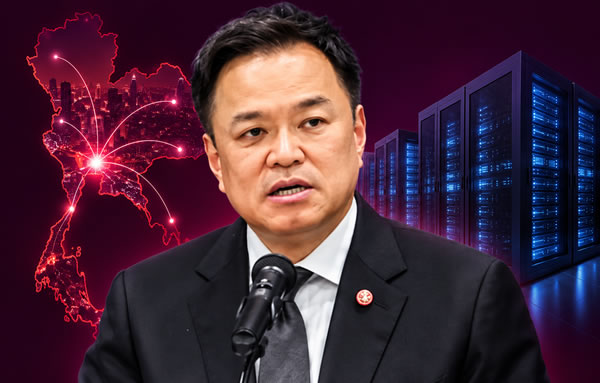
Prime Minister Anutin Charnvirakul orders new data centre rules within a month as 166 projects face review and higher power charges amid a vast investment boom. ( Source: Government House )
Prime Minister Anutin Charnvirakul on Friday ordered minimum standards for Thailand’s booming data centre industry within one month. The intervention comes as 166 projects face a government review covering electricity, water, locations, safety and economic returns. Deputy Prime Minister and Finance Minister Ekniti Nitithanprapas is coordinating a central part of the regulatory reset. Notably, the government is acting after data centres became one of Thailand’s biggest sources of headline inward investment.
Mr Anutin gave the order after returning to Government House from Parliament on September 11. The Senate had approved the draft Budget Act for Fiscal Year 2027. Earlier, the House of Representatives had passed the legislation.
Mr Anutin thanked senators before travelling back with Mr Ekniti. As their car passed reporters, Mr Anutin lowered his window and pointed towards the waiting media. He then drew Mr Ekniti’s attention towards them before waving.
Government House brings key ministries together as Ekniti sets a one-month deadline for new data rules
By then, another important meeting was already taking shape inside Government House. Energy Minister Ekanat Promphan was waiting before the Prime Minister arrived. Budget Bureau Director Anan Kaewkamnerd also attended.
In parallel, NESDC Secretary-General Danucha Pichayanan joined the discussions. Natural Resources and Environment Permanent Secretary Raveewan Phuridej was present. Digital Economy and Society Permanent Secretary Pachara Anantasilsin also attended.
The meeting brought together officials controlling almost every major element affecting data centre development. More importantly, it followed growing government concern over the industry’s rapid expansion. Thailand still wants the investment. However, Government House now wants tighter conditions surrounding its economic, environmental and infrastructure impact. The task is complicated by the huge investment pipeline already moving through Thailand.
At 4.40 pm, Mr Ekniti emerged and outlined the work underway. He said officials were integrating information gathered across government. As part of this, subcommittees must establish minimum standards covering economic, social and environmental issues. The work should be completed within one month. An economic panel will examine the entire system and calculate the benefits received by Thailand.
Energy, environment and infrastructure rules take shape as Thailand weighs higher data centre power costs
Separately, environmental requirements will be established around Environmental Impact Assessment standards and Codes of Practice. Infrastructure will receive its own examination. Location and security will also become distinct parts of the framework. Energy Minister Ekanat will oversee the infrastructure element. Significantly, higher electricity charges for data centres are already being considered.
Mr Ekniti said additional electricity costs should reduce the burden placed on the wider public. In addition, future investment conditions will examine requirements involving clean energy.
Electricity has become one of the biggest issues surrounding Thailand’s data centre expansion. Large facilities require continuous and exceptionally reliable power. Hyperscale campuses can consume electricity on an industrial scale. At the same time, cooling systems add heavily to their energy requirements.
Water consumption is another issue under examination. Some cooling systems can require substantial supplies. Consequently, officials are examining water alongside electricity when assessing infrastructure demands. Environmental requirements will add another layer to future approvals. The government is therefore examining the full infrastructure cost of supporting enormous computing facilities.
Bangkok locations face tougher scrutiny as officials review safety, infrastructure and 166 projects
On another front, location has become an immediate concern. Mr Ekniti said data centres should not be situated in city centres. Another subcommittee will examine appropriate locations. Security and public safety will also form part of those decisions. The comments place particular attention on Bangkok, where large facilities already operate inside a densely populated metropolis.
Bangkok remains Thailand’s dominant digital and commercial centre. Yet its density creates concerns surrounding substations, generators, fuel storage and emergency planning. Large facilities also require substantial electricity infrastructure.
Mr Ekniti said the government was completely reorganising the system. He said previous arrangements contained weaknesses which data centre developments had exploited. Currently, only three Bangkok data centres have received Board of Investment promotion, according to the Finance Minister.
The government’s urgency is difficult to miss. Some 166 projects have become caught in the wider review. Around 49 are already under construction. Another 117 or more remain at different stages awaiting government decisions. However, stopping projects already under construction is not straightforward. NESDC Secretary-General Danucha Pichayanan has acknowledged that problem.
Regulatory hiatus leaves investors exposed as Thailand races to reset rules around a vast project pipeline
As a result, projects continuing under existing arrangements could later encounter requirements created under the new framework. Thailand therefore faces a regulatory hiatus surrounding one of its fastest-growing investment sectors.
Nevertheless, Government House has imposed a tight timetable for resolving it. The one-month deadline puts immediate pressure on the subcommittees. Investors, meanwhile, remain exposed to rules still being written.
The scale of the investment explains the pressure. Data centres have become an extraordinary component of Thailand’s inward investment figures. Indeed, only months ago, Government House was promoting the sector as a major investment success. In July, the government highlighted 34 data centre and hosting projects approved between 2025 and March 2026. Together, those projects represented ฿715.295 billion in investment.
At that point, officials presented the figures as evidence of strong international confidence. Thailand’s geographical position was cited as one advantage. Likewise, officials highlighted telecommunications infrastructure and expanding digital capabilities.
The sector became increasingly important to Thailand’s campaign for regional digital-hub status. The BOI subsequently reported 36 data centre applications during 2025 alone. Collectively, those applications represented more than ฿728 billion in investment.
TikTok’s ฿842 billion expansion highlights the huge scale of Thailand’s data centre investment surge
Then came a project of an entirely different scale. In May, the BOI approved an ฿842 billion infrastructure expansion by a Thai unit of TikTok. The investment was valued at approximately US$25 billion. Crucially, the planned infrastructure stretches across Bangkok, Samut Prakan and Chachoengsao. The servers and processing systems involved make it one of Thailand’s largest digital infrastructure commitments.
Data centres have therefore become impossible to separate from Thailand’s foreign investment performance. Their capital requirements help produce enormous investment figures. However, the projects do not necessarily create comparable numbers of permanent jobs. A large data centre requires massive expenditure before operations begin. Land must first be secured and specialised buildings constructed.
Operators then require servers, cooling systems and extensive electrical equipment. Furthermore, high-capacity telecommunications connections are essential. Substations can represent another major investment. Backup electricity systems must also be installed. Beyond that, operators need sophisticated security and fire protection. Large campuses consequently require substantial spending beyond the computers inside them.
Staffing requirements are very different from traditional manufacturing. A hyperscale facility can involve billions of baht while employing relatively few permanent workers. By comparison, a major automotive factory can require thousands of employees. That difference now sits near the centre of the government’s economic examination. Mr Anutin and Mr Ekniti want officials to establish what Thailand receives from these projects.
Government shifts focus from headline investment to jobs, technology transfer and wider economic returns
Declared investment value alone will no longer answer that question. Employment will form part of the assessment. Technology transfer will also be examined. Additionally, clean-energy use and greenhouse-gas reductions will feature in the emerging framework.
Officials have also considered wider access to cloud and artificial intelligence capacity. Thai businesses could therefore become another element in calculations surrounding economic benefits.
Despite the tougher approach, Mr Anutin still regards data centres as strategic infrastructure. Earlier this month, he described them as essential infrastructure supporting the digital economy. He also said Thailand should use them to attract associated industries. Technology transfer is another stated objective. Similarly, developing Thai workers forms part of government policy. Mr Anutin also wants a broader digital ecosystem built around the investment.
That wider role distinguishes data centres from conventional factories. Cloud computing depends upon them. Artificial intelligence requires even greater computing and processing capacity.
Meanwhile, banks and financial technology businesses increasingly depend upon secure digital infrastructure. E-commerce companies also require extensive storage and processing capacity. Digital payments and cybersecurity systems depend on the same infrastructure.
Data centres underpin cloud, AI and finance as Thailand weighs their strategic economic importance
Streaming services are another major user. Multinational companies increasingly depend upon cloud systems for daily operations. The BOI has also identified activity surrounding hardware suppliers. Construction provides another economic effect.
After completion, facility management generates continuing demand. Elsewhere, fintech, artificial intelligence and e-commerce can expand around large concentrations of computing capacity.
Thailand is therefore examining both sides of the investment equation. It wants the capital and strategic infrastructure. At the same time, officials are calculating the national resources required to support it. Electricity sits at the centre of that calculation. Data centres operate continuously and require exceptionally reliable supplies. Moreover, artificial intelligence is increasing computing requirements and power demand. Cooling equipment creates another significant load.
Against that background, Mr Ekniti confirmed that higher electricity charges are being examined. The government does not want other consumers carrying additional costs generated by the industry.
Accordingly, operators could face a different electricity cost structure. Clean energy is also moving towards the centre of investment policy. Future conditions could require operators to participate directly in cleaner power development.
Higher power charges and clean energy demands move to the centre of Thailand’s data centre policy reset
Meanwhile, environmental officials will examine the impact of individual projects. Water requirements will receive separate scrutiny. The result is a much broader test for investors than simply obtaining land and electricity. Projects will increasingly face examination of location, resources, environmental impact and their economic contribution.
Bangkok presents perhaps the most difficult location issue. The capital and metropolitan region form Thailand’s principal data centre cluster. There are strong commercial reasons for that concentration.
Above all, Bangkok dominates the country’s corporate and financial activity. The capital contains Thailand’s biggest concentration of corporate headquarters, banks and financial institutions.
Similarly, many major cloud customers operate across Greater Bangkok. That concentration generates substantial demand for nearby computing capacity. The metropolitan area also possesses dense fibre networks. Internet exchange infrastructure provides another attraction. For that reason, data centres close to Bangkok can connect quickly with customers and other facilities.
Bangkok’s fibre networks and customer base keep the capital central despite rising location concerns
Latency matters for some applications. Distance increases the time required for data to travel between servers and users. Although the differences can be tiny, some applications require extremely rapid responses. Financial services are one example. Cloud customers can also benefit from nearby computing capacity. Consequently, Bangkok retains strong commercial advantages despite the government’s concerns about city-centre development.
Six projects have sought permission from Bangkok city officials. Each requires approximately 9MW to 23MW of electricity. Three are already operating. The other three applications have been placed on hold. At the same time, the geography of Thailand’s largest projects is changing. Major developments are increasingly appearing beyond central Bangkok.
Samut Prakan has become particularly important because it remains immediately connected with the capital. Chachoengsao offers another nearby location. Further east, Chonburi and Rayong are attracting major hyperscale developments. Both provinces sit within Thailand’s Eastern Economic Corridor. They also possess extensive industrial infrastructure.
Three True IDC projects approved during 2026 have a combined capacity of 223MW. Those facilities are located in Chonburi and Samut Prakan. Meanwhile, two GSA developments totalling 120MW are planned for Rayong and Samut Prakan. Freyr projects are also planned for Rayong and Samut Prakan. Bangkok nevertheless continues attracting facilities requiring metropolitan connectivity.
Low latency keeps Bangkok attractive as major projects spread into Samut Prakan, Chonburi and Rayong
A 25MW Stellar facility is located in the capital. Thailand’s data centre geography is consequently divided between different development types. Bangkok remains the digital core. In contrast, giant power-intensive campuses are increasingly appearing around surrounding provinces and the eastern seaboard.
There are practical reasons for the shift. Hyperscale campuses require substantial land. Substations occupy significant space. Cooling equipment can also be extensive. In addition, backup generators, fuel storage and security infrastructure increase the physical footprint. Large sites outside central Bangkok can accommodate those requirements more easily.
Yet these campuses can remain connected through high-capacity fibre networks. Samut Prakan therefore offers access to Bangkok without a central-city location. Chachoengsao provides similar advantages. Chonburi and Rayong add established industrial infrastructure. Both also provide access to the Eastern Economic Corridor.
Chonburi possesses another important advantage. The Asia-America Gateway submarine cable lands at Si Racha. As a consequence, the eastern seaboard plays a direct role in Thailand’s international digital connectivity. Thailand is also expanding those international connections. Google’s TalayLink project will create another international subsea route.
The connection will support the country’s growing cloud and data centre infrastructure. International connectivity remains critical because regional competition is intense. Malaysia has become a major data centre investment destination. Indonesia is also expanding quickly. Singapore, meanwhile, remains Southeast Asia’s established premium digital hub.
Data centre growth spreads east as land, fibre and submarine cables strengthen locations beyond Bangkok
Vietnam is competing more aggressively for technology investment. Thus, international operators have several alternatives when selecting their next major computing campus. Thailand possesses significant advantages of its own. Domestic telecommunications infrastructure is extensive. Its electricity system is comparatively reliable. Equally important, Bangkok provides a huge concentration of corporate and digital customers.
Thailand nevertheless has fewer international submarine cable connections than some regional competitors. That can affect route diversity and international connectivity. New subsea infrastructure therefore forms another part of the country’s digital investment drive. Data centres themselves represent only one part of that infrastructure.
International gateways are also necessary. Fibre networks must connect facilities with customers. Internet exchanges, in turn, must handle increasing traffic volumes. Power generation must expand alongside computing demand. Renewable electricity is becoming increasingly important for international operators. Artificial intelligence is adding further pressure by increasing the computing capacity required.
Seen in that context, Friday’s Government House intervention reaches far beyond individual building permits. Officials are rewriting rules governing infrastructure underpinning Thailand’s wider digital economy. The public-facing government message has also become tougher. Data centres consume enormous amounts of electricity. Some facilities use substantial quantities of water.
Regional competition intensifies as Thailand expands digital links and faces weaker subsea connectivity
They can additionally require large generators, fuel storage and heavy electrical infrastructure. Mr Anutin has therefore placed public safety inside the new regulatory framework. Locations will face closer examination. Security requirements will also be considered. Environmental standards will become part of the minimum requirements.
The investment policy, however, remains intact. Thailand continues seeking hyperscale computing facilities and artificial intelligence infrastructure. International cloud providers remain important. The government also wants related industries to develop around those investments. The BOI has already adjusted incentives in response.
More advanced facilities can qualify for stronger tax privileges. Operators, however, must satisfy tougher efficiency and technical requirements. Projects seeking eight-year corporate income tax exemptions face stronger standards. Advanced computing capabilities also form part of those conditions. In return, applicants must explain how their projects contribute to Thailand’s economy.
At the regulatory level, another initiative points towards faster approvals. The NBTC Office has drafted a seven-working-day fast-track licensing route. It would apply to qualifying data centres submitting complete applications. Two policies are therefore moving simultaneously. Thailand is tightening minimum standards while trying to accelerate projects meeting those requirements.
Safety, incentives and faster licensing reshape Thailand’s approach to hyperscale data centre investment
The difficult period is the transition between the old and new systems. Data centre developments require years of planning. Electricity availability must be established before construction. Investors also need certainty about connection dates and future power prices. Water availability can determine site selection. Construction permits affect development schedules.
Similarly, BOI tax incentives can alter the financial viability of major investments. Environmental requirements must be understood before final designs are completed. A location change can also transform the economics of a project. For investors, regulatory details therefore affect decisions made years before servers begin operating.
This makes the speed of the government’s work important. Investors need to know which projects can proceed. They also need clarity about the conditions attached. Thailand is not competing for this investment alone. Malaysia, Singapore, Indonesia and Vietnam are seeking the same international capital. Data centre investment also remains highly mobile before construction begins.
Singapore has already faced similar resource pressures. It previously restricted data centre development because of electricity and environmental concerns. Subsequently, it reopened capacity under tighter conditions. Efficiency became central to that process. Cleaner power was another requirement. Wider economic contributions were also considered when allocating new capacity.
Investors face a difficult transition as Thailand rewrites power, planning and environmental requirements
Thailand is now building its own framework around similar pressures. The scale of its existing pipeline, however, adds urgency. Some 166 projects are already caught up in the review. A short regulatory pause can be absorbed into some development schedules. Prolonged uncertainty creates greater problems.
Investors require power allocations, connection dates, planning rules and environmental standards before committing enormous sums. They also need certainty surrounding investment incentives. For this reason, Friday’s one-month deadline carries considerable weight. Mr Anutin has not ordered an end to Thailand’s data centre expansion. Instead, he has ordered minimum conditions governing its next phase.
Electricity pricing will form part of that system. Clean-energy investment will also be considered. Alongside this, water consumption and environmental requirements will face greater scrutiny. Locations will be controlled more closely. Public safety and security will become formal considerations. Economic officials will simultaneously calculate the benefits Thailand receives from each project.
Investment value will remain significant. Employment and technology transfer will also enter the calculation. Broader economic contributions will become another factor. Bangkok remains central to those decisions. The government can restrict giant hyperscale campuses inside congested districts. The capital, however, remains Thailand’s dominant digital and commercial centre.
Thailand races to finish new rules as 166 projects remain caught in the government’s regulatory review
Bangkok contains customers, banks and corporate headquarters. Fibre networks and internet exchanges are concentrated across the metropolitan area. Some facilities therefore have strong commercial reasons for remaining nearby. Surrounding provinces provide room for the largest developments. Samut Prakan is already becoming a major data centre location.
Chachoengsao provides another option close to Bangkok. To the east, Chonburi and Rayong offer industrial infrastructure and Eastern Economic Corridor access. Their growing role is already visible in recently approved projects. The enormous TikTok-linked investment itself stretches across Bangkok, Samut Prakan and Chachoengsao.
Other major projects are concentrated around Samut Prakan, Chonburi and Rayong. Smaller facilities, meanwhile, continue operating within Bangkok. The new location standards will shape the next stage of that development. They will also determine how projects caught in the regulatory review can proceed.
For now, 166 projects remain inside a sector undergoing a rapid regulatory reset. Around 49 are already under construction. More than 117 others await decisions. Hundreds of billions of baht in declared investment are tied to the sector.
Bangkok stays central to Thailand’s data centre push as major developments spread into nearby provinces
The ฿715.295 billion highlighted in July demonstrates its scale. The ฿728 billion represented by 2025 applications reinforces that picture. Then came the ฿842 billion TikTok-linked expansion. That single commitment pushed Thailand’s digital infrastructure investment figures to another level.
Data centres have consequently become one of Thailand’s largest sources of headline inward investment. Their expansion, however, has moved faster than rules governing electricity, water and urban locations. Government House is now racing to close that gap. Mr Anutin’s Friday order places a one-month deadline on the work.
Mr Ekniti is coordinating the economic response. Mr Ekanat is handling the crucial energy component. NESDC is involved in assessing the wider economic framework. Elsewhere, environmental officials are establishing impact requirements. Digital economy officials are also involved. The Budget Bureau has joined the discussions.
The regulatory reset now reaches across central government. Its outcome will directly affect one of Thailand’s fastest-growing investment sectors. It will also determine how quickly the 166 projects caught in the current hiatus can move again.
Thailand spent recent years building its case as a regional digital hub. Data centres became a central component of that investment drive. Now, Government House is rewriting the rules governing the infrastructure behind it. On Friday, Mr Anutin ordered that work be accelerated. Mr Ekniti put the timetable at one month, while an enormous investment pipeline remains caught in the transition.
Huge investments in Thai data centres draw warning from leading industry leader about scarce resources
CP boss says Thailand must engage US and become Southeast Asia’s top data centre with cheap energy
Thailand’s obscure negotiation strategy with United States an outlier as PM promises a ‘secret deal’
2025 Growth could be just 0.7% warns Krungthai Bank as PM grills Tourism officials on falling numbers
Officials defend government. Moody’s downgrades Thailand’s outlook from stable to negative in new note
Central bank to lower rates as Thailand prepares for tariff crisis as it decides between US and China
Thaksin announces a change in trade and industrial policy. Sounded much like a pivot towards the United States
People’s Party MP Sirikanya asks if Thailand’s talks with the United States are postponed indefinitely
China warns Thailand not to ‘please’ the United States at its expense. US trade talks again postponed
Thai economy thrown into disarray by Trump’s tariffs. Exports and Tourism may both be far lower in 2025
Pichai’s team not to fly to the United States this week but next week as US-Chinese tensions escalate
Finance Minister to hold critical talk with Bank of Thailand Governor on US holding before he flies out
Thaksin does not rule out joining talks in US as Thai team finalises plans. They fly out on Thursday
Pichai holds US tariff talks with business. However, Thailand is unlikely to see 10% baseline retained
Trump’s remaking of World trade, if it works, will force Thailand to decide between the US and China
Joseph Anthony is an expat from Ireland who has lived in Thailand for the last decade. He has worked extensively in the media including editorial positions in Ireland and Thailand. He is focused on economic and business stories in Thailand as well as the expat lifestyle.
All posts by Joseph O' Connor
Dutch man entered into a mediated settlement after assaulting a young Thai woman at a Koh Samui bar September 9, 2026 CCTV catches a Dutch man repeatedly striking a Thai
French man held at Koh Samui Police Station as deportation process begins. Israeli moved to Bo Phut September 9, 2026 Kevin Dimino is behind bars on Koh Samui after PM
Local government exam scandal hints at systemic nationwide corruption even extending to ministerial level September 8, 2026 Pakamon blows open a new front in Thailand’s exam
Government begins legal action against top Thai firms for 1.26 billion baht over key satellite concession September 8, 2026 Thailand races to pursue Thaicom and Gulf for
Indian tourist severely injured but coherent after early morning fall last Friday from his Pattaya hotel September 8, 2026 Indian tourist Abhishek Jagannath Kunjir, 42, suffers
Israeli detained for deportation as PM signs order to deport now missing French zoo owner Kevin Dimino September 7, 2026 Frenchman Kevin Dimino disappears as immigration
US servicemen left behind a financial windfall in Pattaya but also a spirit of optimism and generosity September 7, 2026 Farewell Pattaya! USS Abraham Lincoln sails after
PM Anutin laughs off what political pundits see as rising threats to the stability of his government September 7, 2026 Anutin faces a gathering storm as Sondhi threatens
UK Nigerian influencer wanted for drug trafficking died in Bangkok due to genital enlargement therapy September 6, 2026 Luxury Bangkok holiday ends in tragedy as Igho
Finance Minister Ekniti outlines the government’s economic plan but behind the buzzwords are risks September 6, 2026 Thailand’s economic reset faces an early reality
Motorist’s shocked horror after 6 million baht luxury car rolls across a motorway and into a deep irrigation canal September 5, 2026 Owner watches in horror as ฿6m luxury EV rolls
17 year old legal fight for schoolboy who is now a grown man against the Police finally ends in victory and pay day September 5, 2026 Wrongly arrested at 18, assaulted and pushed to
Turn Grey capital into White capital. Senator calls for 100% foreign owned firms to eliminate corruption September 5, 2026 Let foreigners own what they pay for, Senator Prathum
Ring of steel protects USS Abraham Lincoln as huge security operation polices US sailors on shore leave September 4, 2026 Security locks down coastal Chonburi as 5,000 USS
Widening Chinese trade gap cannot be ignored as it distorts economic data of an underlying GDP struggle September 4, 2026 Thai-Chinese businesses raise the alarm as
Fears grow for 33 year old single mother who is missing from her Kanchanaburi home since Friday August 28 September 4, 2026 Missing mother Ms Wichuda, 33, disappears after CCTV
Boss heir free to return to Thailand next year unless he gives himself up or is arrested by Interpol abroad September 4, 2026 The clock is running out on Red Bull heir Vorayuth
Thailand gets ready to enter the age of nuclear power with plans for two small modular reactors by 2037 September 9, 2026
Petrol and diesel rise as inflation for August comes in at 2.53%. However confidence is also seen rising September 9, 2026
Nationwide probe targeting over 36K foreigner linked firms with land and a further 7k which own condos September 8, 2026
Sex network boss arrested in shock police home raid on Sunday after probe exposed child porn racket September 8, 2026
Activist lawyer wants action on corruption which pilfers lottery revenue for the disabled for the rich September 8, 2026
Interior Ministry is now moving to enforce the law regarding Jewish burials and grave sites in Thailand September 7, 2026
Chaos still reigns at the NBTC as Chairman wins right to court review. Board members move to work on September 7, 2026
Vicious attack on UK man in Jomtien Pattaya leads to arrest of Thai man. 70 year old kicked in the face September 7, 2026
USS Abraham Lincoln departs Thailand after a special visit. Captain gave thanks for the very warm welcome September 6, 2026
Tourism sector starkly divided over 30 days visa from September 15th. Top tycoon says it’s a big mistake September 6, 2026
Missing Kanchanaburi mother found on southbound bus after 7 day northern stay shrouded in mystery September 6, 2026
Koh Samui Israeli expat the first to be deported under Prime Minister Anutin’s new deportation regime September 5, 2026
US Navy’s Pattaya visit is plain sailing with strong spending breeze. Chonburi governor hails it a success September 5, 2026
Paying AI users in Thailand had a nightmare week online just as the government waded into the market September 5, 2026
Malaysian online gambling boss arrested in Bangkok raid. 48 year old was a UFA network Master agent September 4, 2026
Crazed ex lover rams former girlfriend and her new boyfriend on a motorbike to their death with pickup September 4, 2026
Blunder over Indian visa policy saw Thailand lose tourists in August. Quick volte face to a 30 day visa September 4, 2026
Data centre projects on hold in Bangkok as officials scramble to examine the impact of the industry on resources September 3, 2026
HIV and AIDS still lurk behind the neon signs of Thailand’s sex industry especially as it moves online September 3, 2026
Younger brother kills sibling after finding him drinking as their mother fought for life in hospital September 3, 2026
Former PM Paetongtarn files police complaint over false social media post linking her with Israeli land September 2, 2026
People’s Party firebrand attacks flagship TH AI project launched this week with corruption agency filing of claims September 2, 2026
© 2026 Thai Examiner. All rights reserved.
2026年9月13日凌晨1点02分
经济、生活、媒体、政治、泰国
泰国总理阿努廷·查恩维拉库尔下令在一个月内制定新的数据中心规则,泰国政府随即对该国最大的外商投资引擎之一——数据中心产业——进行紧急审查。此次监管调整涉及约166个项目,其中包括49个已在建设中的项目。政府正在审查电力、水资源、安全和选址等问题。提高电价、要求清洁能源以及加强对曼谷数据中心选址的审查等措施已被提上日程。然而,政府不能让支撑云计算、人工智能以及泰国区域数字化发展雄心的数据中心产业遭受重创。由于数千亿泰铢的投资仍悬于官员和委员会仍在制定的规则之上,副总理埃克尼提·尼提坦帕帕斯正在协调应对措施。
在投资热潮的背景下,166个数据中心项目面临审查,电力收费也将上涨,总理阿努廷·查恩维拉库尔下令在一个月内出台新的数据中心管理条例。(来源:总理府)
泰国总理阿努廷·查恩维拉库尔周五下令,在一个月内制定泰国蓬勃发展的数据中心行业的最低标准。此前,政府正在对166个项目进行审查,审查内容涵盖电力、用水、选址、安全和经济效益等方面。副总理兼财政部长埃克尼提·尼提坦帕帕斯正在协调此次监管改革的核心工作。值得注意的是,数据中心已成为泰国最大的外商投资来源之一,政府此举正是基于此。
阿努廷先生于9月11日从议会返回政府大楼后下达了这项命令。参议院此前已批准了2027财年预算草案。众议院此前也已通过了该法案。
阿努廷先生向各位参议员致谢后,与埃克尼蒂先生一同返回。当他们的车经过记者时,阿努廷先生摇下车窗,指向等候的媒体记者。随后,他示意埃克尼蒂先生也看向他们,并挥手致意。
州长官邸召集各关键部门官员开会,埃克尼蒂为新的数据规则设定了一个月的最后期限。
与此同时,另一场重要会议已在政府大楼内召开。能源部长埃卡纳特·普罗姆潘在总理抵达前等候。预算局局长阿南·凯坎内德也出席了会议。
与此同时,国家经济和社会发展委员会秘书长达努查·皮查亚南也参加了讨论。自然资源与环境部常务秘书拉维万·普里德杰出席了会议。数字经济与社会部常务秘书帕查拉·阿南塔西尔辛也参加了会议。
此次会议汇聚了几乎所有影响数据中心发展的关键环节的官员。更重要的是,此次会议是在政府日益关注该行业快速扩张之后召开的。泰国仍然欢迎投资,但政府现在希望对投资的经济、环境和基础设施影响附加更严格的条件。而目前泰国已有大量投资项目正在推进,这使得这项任务更加复杂。
下午4点40分,埃克尼蒂先生现身,概述了正在进行的工作。他表示,官员们正在整合政府各部门收集的信息。作为这项工作的一部分,各小组委员会必须制定涵盖经济、社会和环境问题的最低标准。这项工作应在一个月内完成。一个经济小组将审查整个系统,并计算泰国从中获得的收益。
随着泰国权衡数据中心电力成本上涨的问题,能源、环境和基础设施规则正在形成。
此外,环境要求将围绕环境影响评估标准和操作规范制定。基础设施也将接受单独审查。选址和安保也将成为该框架的独立组成部分。能源部长埃卡纳特将负责监督基础设施部分。值得注意的是,提高数据中心的电费已经在考虑之中。
埃克尼蒂先生表示,增加的电费应该会减轻广大公众的负担。此外,未来的投资环境将考虑与清洁能源相关的要求。
电力已成为泰国数据中心扩张面临的最大挑战之一。大型数据中心需要持续且极其可靠的电力供应。超大规模数据中心园区耗电量巨大,堪比工业规模。同时,冷却系统也大幅增加了其能源需求。
用水量是另一个正在研究的问题。一些冷却系统需要大量的水资源。因此,官员们在评估基础设施需求时,会将水资源与电力资源一并考虑。环境要求将为未来的审批流程增加新的考量因素。因此,政府正在评估支持庞大计算设施的全部基础设施成本。
曼谷的多个地点面临更严格的审查,官员们正在审查安全、基础设施和166个项目。
另一方面,选址已成为当务之急。埃克尼蒂先生表示,数据中心不应设在市中心。另一个小组委员会将负责审查合适的选址。安全和公共安全也将纳入决策考量。这些评论尤其关注曼谷,因为在人口稠密的大都市中,已经有一些大型数据中心在运营。
曼谷仍然是泰国最重要的数字和商业中心。然而,其人口密度也引发了人们对变电站、发电机、燃料储存和应急预案等方面的担忧。大型设施也需要大量的电力基础设施。
埃克尼提先生表示,政府正在对现有体系进行全面重组。他指出,此前的体系存在漏洞,而数据中心的发展恰恰利用了这些漏洞。据财政部长透露,目前曼谷仅有三家数据中心获得了投资促进委员会的批准。
政府的紧迫性显而易见。约有166个项目被纳入此次全面审查范围。其中约49个项目已在建设中,另有117个或更多项目处于不同阶段,等待政府决策。然而,叫停已在建设中的项目并非易事。国家工程和发展公司(NESDC)秘书长达努查·皮查亚南(Danucha Pichayanan)也承认了这一难题。
监管政策的停滞使投资者面临风险,因为泰国正加紧调整围绕庞大项目储备的监管规则。
因此,在现有安排下继续进行的项目,日后可能会遇到新框架下提出的新要求。泰国因此面临其增长最快的投资领域之一的监管空白期。
然而,政府为解决此问题设定了严格的时间表。一个月的期限给各小组委员会带来了直接压力。与此同时,投资者仍面临着规则尚未制定的风险。
投资规模之大解释了压力所在。数据中心已成为泰国吸引外资的重要组成部分。事实上,就在几个月前,泰国政府还在大力宣传该行业,称其为一项重大的投资成果。今年7月,政府重点介绍了2025年至2026年3月期间获批的34个数据中心和托管项目。这些项目总投资额达7152.95亿泰铢。
当时,官员们将这些数据作为国际社会对泰国充满信心的证据。泰国的地理位置被认为是其优势之一。此外,官员们还强调了泰国的电信基础设施和不断增强的数字能力。
该行业对泰国争取成为区域数字中心的重要性日益凸显。泰国投资促进委员会(BOI)随后报告称,仅在2025年就收到了36份数据中心申请。这些申请总计涉及超过7280亿泰铢的投资。
TikTok 8420亿泰铢的扩张计划凸显了泰国数据中心投资激增的巨大规模。
随后,一个规模截然不同的项目出现了。今年5月,泰国投资促进委员会(BOI)批准了TikTok泰国子公司一项价值8420亿泰铢的基础设施扩建项目。该投资约合250亿美元。至关重要的是,规划中的基础设施覆盖曼谷、北榄府和北柳府。涉及的服务器和处理系统使其成为泰国规模最大的数字基础设施项目之一。
因此,数据中心已与泰国的外国投资业绩密不可分。其所需的巨额资本促成了巨额投资。然而,这些项目并不一定能创造同等数量的永久性就业岗位。大型数据中心在投入运营前需要巨额投资。首先必须购置土地并建造专用建筑。
运营商需要服务器、冷却系统和大量的电气设备。此外,高容量的电信连接也至关重要。变电站可能又是一笔巨大的投资。备用电力系统也必须安装。除此之外,运营商还需要先进的安保和消防设施。因此,大型园区除了内部计算机之外,还需要大量的其他方面的投入。
超大规模工厂的人员配备需求与传统制造业截然不同。一个超大规模工厂可能涉及数十亿泰铢的投资,但所需的长期员工却相对较少。相比之下,一家大型汽车工厂可能需要数千名员工。这种差异如今已成为政府经济审查的核心议题之一。阿努廷先生和埃克尼蒂先生希望官员们能够明确泰国从这些项目中获得了哪些收益。
政府将重点从巨额投资转向就业、技术转让和更广泛的经济回报
仅凭申报的投资额已不足以回答这个问题。就业情况将纳入评估范围。技术转让也将被纳入考量。此外,清洁能源的使用和温室气体减排也将是新框架的重要组成部分。
官员们还考虑了更广泛地获取云计算和人工智能能力的问题。因此,泰国企业可能成为评估经济效益的另一个因素。
尽管采取了更为强硬的态度,阿努廷先生仍然将数据中心视为战略基础设施。本月初,他曾表示数据中心是支撑数字经济的关键基础设施。他还指出,泰国应该利用数据中心吸引相关产业。技术转让是政府明确提出的另一目标。同样,培养泰国劳动力也是政府政策的一部分。阿努廷先生还希望围绕这项投资构建一个更广泛的数字生态系统。
数据中心的这种更广泛的作用使其区别于传统工厂。云计算依赖于数据中心。人工智能则需要更强大的计算和处理能力。
与此同时,银行和金融科技企业越来越依赖安全可靠的数字基础设施。电子商务公司也需要庞大的存储和处理能力。数字支付和网络安全系统也依赖于同样的基础设施。
泰国正在权衡数据中心在云计算、人工智能和金融领域的战略经济重要性。
流媒体服务是另一大用户群体。跨国公司越来越依赖云系统开展日常运营。投资促进局(BOI)还注意到硬件供应商的相关活动。建筑业也带来了经济效益。
设施建成后,其管理需求将持续存在。此外,金融科技、人工智能和电子商务等领域也能围绕着计算能力高度集中的区域蓬勃发展。
因此,泰国正在权衡投资的利弊。它需要资金和战略基础设施。与此同时,官员们也在计算支持投资所需的国家资源。电力是这项计算的核心。数据中心需要持续运行,因此需要极其可靠的电力供应。此外,人工智能的快速发展也增加了计算需求和电力消耗。冷却设备也会产生巨大的电力负荷。
在此背景下,埃克尼蒂先生证实,政府正在研究提高电价的方案。政府不希望其他消费者承担工业发展带来的额外成本。
因此,运营商可能面临不同的电力成本结构。清洁能源也正成为投资政策的重点。未来形势可能要求运营商直接参与清洁能源的开发。
更高的电力收费和清洁能源需求成为泰国数据中心政策调整的核心。
与此同时,环保官员将审查各个项目的影响。用水需求将受到单独审查。这将使投资者面临比单纯获取土地和电力更为广泛的考验。项目将越来越多地受到选址、资源、环境影响及其经济贡献方面的审查。
曼谷的选址问题或许最为棘手。这座首都城市及其周边地区构成了泰国主要的数据中心集群。这种集中分布有着强有力的商业原因。
曼谷在泰国的商业和金融活动中占据主导地位。这座首都城市汇集了泰国最多的企业总部、银行和金融机构。
同样,许多大型云客户都在大曼谷地区运营。这种集中性对附近的计算能力产生了巨大的需求。该都市区还拥有密集的光纤网络。互联网交换基础设施也极具吸引力。因此,靠近曼谷的数据中心可以快速连接到客户和其他设施。
尽管人们对地理位置的担忧日益加剧,但曼谷的光纤网络和客户群仍然使这座首都保持着中心地位。
对于某些应用而言,延迟至关重要。距离会增加数据在服务器和用户之间传输所需的时间。尽管这种差异可能很小,但有些应用需要极快的响应速度。金融服务就是一个例子。云客户还可以受益于附近的计算能力。因此,尽管政府对市中心开发有所担忧,曼谷仍然保持着强大的商业优势。
六个项目已向曼谷市政府提交申请。每个项目大约需要9兆瓦至23兆瓦的电力。其中三个项目已投入运营,其余三个项目的申请已被搁置。与此同时,泰国大型项目的地理位置正在发生变化。大型开发项目越来越多地出现在曼谷市中心以外的地区。
由于与首都曼谷保持着直接的交通连接,北榄府的重要性日益凸显。北柳府也位于附近。再往东,春武里府和罗勇府正在吸引着大型超大规模开发项目。这两个府都位于泰国东部经济走廊内,并且拥有完善的工业基础设施。
2026年获批的三个True IDC项目总装机容量为223兆瓦,分别位于春武里府和北榄府。与此同时,罗勇府和北榄府计划建设两个总装机容量为120兆瓦的GSA项目。Freyr的项目也计划落户罗勇府和北榄府。尽管如此,曼谷仍然吸引着众多需要都市互联互通的设施。
低延迟使曼谷保持吸引力,大型项目也随之扩展到北榄府、春武里府和罗勇府。
曼谷拥有一座25兆瓦的Stellar数据中心。泰国的数据中心分布也因此呈现出不同的发展类型。曼谷仍然是数字中心。与之形成鲜明对比的是,耗电量巨大的数据中心园区正越来越多地出现在周边省份和东部沿海地区。
这种转变有其实际原因。超大规模园区需要大量土地。变电站占用空间巨大。冷却设备也可能非常庞大。此外,备用发电机、燃料储存和安保基础设施也会增加物理占地面积。曼谷市中心以外的大型园区更容易满足这些需求。
然而,这些园区可以通过高容量光纤网络保持连接。因此,北榄府无需位于市中心即可通往曼谷。北柳府也具有类似的优势。春武里府和罗勇府则拥有成熟的工业基础设施,并且均可通往东部经济走廊。
春武里府还拥有另一项重要优势。亚美海底光缆在是拉差港登陆。因此,泰国东部沿海地区在泰国的国际数字连接中发挥着直接作用。泰国也在不断拓展国际连接。谷歌的TalayLink项目将打造另一条国际海底光缆。
该连接将支持马来西亚日益增长的云计算和数据中心基础设施。由于区域竞争激烈,国际互联互通仍然至关重要。马来西亚已成为主要的数据中心投资目的地。印度尼西亚也在快速扩张。与此同时,新加坡仍然是东南亚首屈一指的成熟数字中心。
随着陆路、光纤和海底电缆的铺设,数据中心的发展正向曼谷以外的地区蔓延。
越南在吸引科技投资方面竞争日益激烈。因此,国际运营商在选择下一个大型计算园区时有多种选择。泰国自身也拥有显著优势。其国内电信基础设施完善,电力系统相对可靠。同样重要的是,曼谷聚集了大量的企业和数字客户。
尽管如此,泰国的国际海底光缆连接数量仍少于一些区域竞争对手。这可能会影响路由多样性和国际连通性。因此,新建海底基础设施是该国数字化投资战略的另一重要组成部分。数据中心本身只是该基础设施的一部分。
国际网关也必不可少。光纤网络必须连接各个设施和用户。反过来,互联网交换中心必须处理日益增长的流量。发电量必须随着计算需求的增长而扩大。可再生电力对国际运营商的重要性日益凸显。人工智能的出现进一步增加了计算能力的需求,从而加剧了这一压力。
从这个角度来看,周五政府的干预远不止于个别建筑许可证。官员们正在重写支撑泰国更广泛的数字经济的基础设施管理规则。政府面向公众的信息也变得更加强硬。数据中心消耗大量电力,一些设施还需大量用水。
随着泰国扩大数字连接并面临海底连接减弱的局面,区域竞争加剧。
此外,它们可能还需要大型发电机、燃料储存设施和庞大的电力基础设施。因此,阿努廷先生已将公共安全纳入新的监管框架。选址将受到更严格的审查。安保要求也将被纳入考量。环境标准将成为最低要求的一部分。
然而,投资政策保持不变。泰国继续寻求超大规模计算设施和人工智能基础设施。国际云服务提供商仍然至关重要。政府也希望围绕这些投资发展相关产业。泰国投资促进委员会(BOI)已据此调整了激励措施。
更先进的设施可享受更优惠的税收待遇。然而,运营商必须满足更严格的效率和技术要求。申请八年企业所得税豁免的项目面临更严格的标准。先进的计算能力也是这些条件的一部分。作为回报,申请者必须解释其项目如何为泰国经济做出贡献。
在监管层面,另一项举措旨在加快审批速度。泰国国家广播电视和电信委员会(NBTC)办公室已拟定一项七工作日快速审批许可方案,适用于提交完整申请的合格数据中心。因此,两项政策正在同步推进:泰国一方面收紧最低标准,另一方面努力加快符合这些要求的项目审批。
安全措施、激励机制和更快捷的审批流程重塑了泰国对超大规模数据中心投资的态度。
最困难的时期是新旧系统过渡期。数据中心建设需要数年规划。电力供应必须在施工前得到保障。投资者还需要确定并网日期和未来的电价。水资源供应情况会影响选址。施工许可证会影响开发进度。
同样,投资促进委员会(BOI)的税收优惠政策也会影响重大投资项目的财务可行性。在最终设计完成之前,必须充分了解环境要求。选址变更也会改变项目的经济效益。因此,对于投资者而言,监管细节会影响服务器开始运行前数年做出的决策。
这使得政府的工作效率至关重要。投资者需要了解哪些项目可以推进,也需要清楚了解附加条件。泰国并非唯一一家争夺投资的公司。马来西亚、新加坡、印度尼西亚和越南也在寻求同样的国际资本。此外,数据中心投资在动工前也具有很高的流动性。
新加坡此前也面临过类似的资源压力。由于电力和环境方面的担忧,新加坡曾限制数据中心的发展。随后,在更为严格的条件下重新开放了数据中心建设。效率成为这一过程的核心。清洁能源也是一项必要条件。在分配新增数据中心容量时,更广泛的经济贡献也被纳入考量。
泰国重写电力、规划和环境法规,投资者面临艰难的转型期。
泰国目前正围绕类似的压力构建自身的监管框架。然而,其现有项目规模之大,更凸显了紧迫性。目前已有约166个项目处于审查之中。短暂的监管暂停或许可以融入部分开发计划。但长期的不确定性会带来更大的问题。
投资者在投入巨额资金前,需要电力分配、并网日期、规划规则和环境标准等信息。他们还需要有关激励性投资的确定性。因此,周五设定的一个月最后期限意义重大。阿努廷先生并未下令停止泰国的数据中心扩张,而是下令制定下一阶段扩张的最低条件。
电力定价将纳入该体系。清洁能源投资也将被纳入考虑范围。与此同时,用水量和环境要求将受到更严格的审查。项目选址将受到更严格的控制。公共安全保障将成为正式的考量因素。经济官员将同时计算泰国从每个项目中获得的收益。
投资价值仍将十分可观。就业和技术转让也将纳入考量。更广泛的经济贡献也将成为另一个重要因素。曼谷在这些决策中仍然占据核心地位。政府可以限制在拥挤的地区建设超大规模的园区。然而,首都曼谷仍然是泰国最重要的数字和商业中心。
泰国正加紧制定新规,同时仍有166个项目处于政府监管审查阶段。
曼谷汇聚了众多客户、银行和企业总部。光纤网络和互联网交换中心也集中分布于整个都市区。因此,一些设施出于商业原因,有充分的理由留在附近。周边省份则为大型开发项目提供了空间。北榄府(Samut Prakan)正逐渐成为重要的数据中心所在地。
北柳府是曼谷附近另一个不错的选择。东部的春武里府和罗勇府拥有完善的工业基础设施,并可便捷通往东部经济走廊。它们日益增长的作用已在近期获批的项目中有所体现。与TikTok相关的巨额投资本身就横跨曼谷、北榄府和北柳府。
其他大型项目集中在北榄府、春武里府和罗勇府周边地区。与此同时,规模较小的设施则继续在曼谷运营。新的选址标准将塑造下一阶段的发展,也将决定那些正在接受监管审查的项目如何推进。
目前,该行业仍有166个项目处于快速监管调整之中。其中约49个项目已在建设中,另有117个项目仍在等待审批。该行业涉及数千亿泰铢的已申报投资。
随着大型数据中心项目向周边府蔓延,曼谷仍然是泰国数据中心建设的核心。
7月份公布的7152.95亿泰铢投资额凸显了其规模。2025年新增的7280亿泰铢投资额进一步印证了这一点。随后,TikTok相关的8420亿泰铢投资额的扩张更是将泰国的数字基础设施投资推向了新的高度。
因此,数据中心已成为泰国最大的外商投资来源之一。然而,数据中心的扩张速度远超电力、水资源和城市选址等方面的监管规定。泰国政府正加紧努力弥补这一差距。阿努廷总理周五发布的命令规定,相关工作必须在一个月内完成。
埃克尼蒂先生正在协调经济应对措施。埃卡纳特先生负责至关重要的能源部分。国家经济和社会发展公司(NESDC)参与评估更广泛的经济框架。此外,环境官员正在制定影响评估要求。数字经济官员也参与其中。预算局也加入了讨论。
此次监管改革已波及中央政府各部门。其结果将直接影响泰国增长最快的投资领域之一,同时也将决定目前停滞不前的166个项目能够以多快的速度重启。
近年来,泰国致力于打造区域数字中心,数据中心成为这一投资战略的核心组成部分。如今,泰国政府正在重写相关基础设施建设规则。上周五,阿努廷总理下令加快相关工作。埃克尼蒂总理则将时间表设定为一个月,而大量投资项目仍处于过渡期。
泰国数据中心的大规模投资引发了行业领军企业对资源稀缺性的警告。
正大集团总裁表示,泰国必须与美国合作,并凭借廉价能源成为东南亚顶级数据中心。
泰国与美国采取的神秘谈判策略显得格格不入,总理承诺达成“秘密协议”。
泰京银行警告称,2025年经济增长率可能仅为0.7%,与此同时,总理就游客数量下降问题质询了旅游官员。
官员为政府辩护。穆迪在新报告中将泰国评级展望从稳定下调至负面。
泰国央行将下调利率,以应对在中美之间摇摆不定而引发的关税危机。
他信宣布调整贸易和产业政策,听起来很像是转向美国。
人民党议员西里卡尼亚询问泰国与美国的会谈是否无限期推迟。
中国警告泰国不要为了讨好美国而损害中国利益。中泰贸易谈判再次推迟。
特朗普的关税政策使泰国经济陷入混乱。到2025年,出口和旅游业可能都会大幅下滑。
由于中美紧张局势升级,皮查伊的团队本周不会飞往美国,而是下周前往。
财政部长将在启程前与泰国央行行长就美国持股问题举行关键会谈
他信并未排除参加在美国举行的会谈的可能性,泰国代表团正在敲定相关计划。他们将于周四启程前往美国。
皮查伊与美国企业举行关税谈判。然而,泰国不太可能维持10%的基准关税。
如果特朗普重塑世界贸易体系的计划奏效,泰国将被迫在美国和中国之间做出选择。
约瑟夫·安东尼是一位来自爱尔兰的侨民,过去十年一直居住在泰国。他曾在爱尔兰和泰国的媒体行业担任过编辑职务,拥有丰富的媒体从业经验。他主要关注泰国的经济和商业新闻,以及侨民的生活方式。
约瑟夫·奥康纳的所有帖子
2026年9月9日,一名荷兰男子在苏梅岛一家酒吧殴打一名年轻的泰国女子后,经调解达成和解。监控录像显示,该荷兰男子多次殴打一名泰国女子。
一名法国男子被关押在苏梅岛警察局,遣返程序即将开始。一名以色列男子于2026年9月9日被转移到波普特。凯文·迪米诺在首相下台后被关押在苏梅岛。
地方政府考试丑闻暗示全国范围内存在系统性腐败,甚至蔓延至部长级 2026年9月8日 帕卡蒙揭露泰国考试丑闻新篇章
泰国政府于2026年9月8日对泰国主要公司提起诉讼,追讨12.6亿泰铢的卫星特许经营权欠款。泰国正加紧追究Thaicom和Gulf公司的责任。
2026年9月8日,上周五清晨,一名印度游客从芭堤雅的酒店坠落,身受重伤但意识清醒。这名印度游客名叫阿比舍克·贾甘纳特·昆吉尔,42岁。
以色列人因涉嫌移民问题被拘留,等待遣返;总理签署命令遣返目前失踪的法国动物园园主凯文·迪米诺(2026年9月7日);法国人凯文·迪米诺在移民局的调查中失踪
美国军人在芭堤雅留下了一笔意外之财,同时也留下了乐观和慷慨的精神。2026年9月7日,再见了,芭堤雅!“亚伯拉罕·林肯”号航空母舰启航
2026年9月7日,阿努廷总理对政治评论员认为对其政府稳定日益增长的威胁一笑置之。桑迪的威胁让阿努廷面临一场风暴。
一名因涉嫌贩毒而被英国通缉的尼日利亚裔网红于2026年9月6日在曼谷因接受生殖器增大疗法而死亡。这名网红的曼谷豪华假期最终以悲剧收场。
财政部长埃克尼蒂概述了政府的经济计划,但华丽的辞藻背后隐藏着风险 2026年9月6日 泰国经济重置计划或将提前面临现实
2026年9月5日,一辆价值600万泰铢的豪华轿车在高速公路上翻滚坠入深水渠,车主惊恐万分。车主眼睁睁地看着这辆价值600万泰铢的豪华电动车翻滚。
一名17岁少年(现已成年)与警方进行了一场旷日持久的法律诉讼,最终以胜诉和赔偿告终。2026年9月5日,这名少年18岁时被错误逮捕,遭到殴打和推搡。
将灰色资本转化为白色资本。参议员呼吁允许外资100%控股企业以消除腐败。2026年9月5日,参议员普拉图姆表示:“让外国人拥有他们出资购买的东西。”
2026年9月4日,美国海军“亚伯拉罕·林肯”号航空母舰在严密安保下安全航行,5000名美国海军水兵在岸上休假。与此同时,春武里府沿海地区也实施了封锁。
不断扩大的中国贸易逆差不容忽视,因为它扭曲了经济数据,掩盖了泰国GDP面临的潜在困境。2026年9月4日,泰中企业发出警告。
一名33岁的单身母亲自2026年8月28日星期五起在北碧府失踪,人们越来越担心她的安危。9月4日,失踪母亲维楚达女士(33岁)的监控录像显示她失踪。
红牛继承人沃拉育明年即可自由返回泰国,除非他主动投案或被国际刑警组织在海外逮捕。2026年9月4日,沃拉育的命运岌岌可危。
泰国准备进入核电时代,计划在2037年前建成两座小型模块化反应堆(2026年9月9日)
受8月份通胀率2.53%的影响,汽油和柴油价格上涨。然而,市场信心预计在2026年9月9日也会上升。
全国范围内的调查目标是超过3.6万家与外国人有关联的土地公司和另外7000家拥有公寓的公司 2026年9月8日
2026年9月8日,一名性交易网络头目因涉嫌儿童色情犯罪活动于周日被警方突袭逮捕。
维权律师呼吁对挪用残疾人彩票收入、为富人谋利的腐败行为采取行动 2026年9月8日
泰国内政部将于2026年9月7日开始执行有关犹太人葬礼和墓地的法律。
国家广播电视和电信委员会(NBTC)内部依然混乱,主席赢得诉诸法庭的权利。委员会成员将于2026年9月7日开始工作。
一名英国男子在芭堤雅中天区遭到恶性袭击,一名泰国男子被捕。一名70岁老人于2026年9月7日被踢中面部。
“亚伯拉罕·林肯”号航空母舰结束对泰国的特别访问后离开。舰长对泰国的热情接待表示感谢。2026年9月6日
旅游业对9月15日起实施的30天签证政策存在严重分歧。一位顶级大亨称此举是一个巨大的错误。(2026年9月6日)
2026年9月6日,一名失踪的北碧府母亲在北部逗留7天后,在一辆南行巴士上被发现,失踪原因至今成谜。
2026年9月5日,苏梅岛一名以色列侨民成为总理阿努廷新驱逐制度下首位被驱逐出境者。
美国海军芭堤雅之行进展顺利,消费强劲。春武里府府尹称此行圆满成功。2026年9月5日
就在泰国政府于2026年9月5日正式介入人工智能市场之际,泰国的付费人工智能用户经历了噩梦般的一周。
马来西亚网络赌博头目在曼谷突袭行动中被捕。这名48岁的男子是UFA网络的高级代理人。2026年9月4日
2026年9月4日,一名疯狂的前男友驾驶皮卡撞向骑摩托车的前女友及其新男友,致其死亡。
由于印度签证政策失误,泰国8月份流失了大量游客。2026年9月4日,泰国迅速调整政策,改为30天签证。
曼谷数据中心项目暂停,官员们正紧急评估该行业对资源的影响 2026年9月3日
艾滋病毒和艾滋病仍然潜伏在泰国色情行业的霓虹灯招牌背后,尤其是在其转向线上之后。(2026年9月3日)
2026年9月3日,弟弟发现哥哥酗酒后将其杀害,当时他们的母亲正在医院与死神搏斗。
前总理佩通坦就社交媒体上有关她与以色列土地有关联的虚假帖子向警方报案 2026年9月2日
人民党激进派人士抨击本周启动的旗舰人工智能项目TH AI,并向反腐机构提交索赔申请(2026年9月2日)
© 2026 Thai Examiner。版权所有。