UN peacekeeping forces prepare to leave Lebanon, but what comes next?联合国维和部队准备撤离黎巴嫩,但接下来会发生什么?
According to analysts, the UNIFIL withdrawal will have significant implications for southern Lebanon.
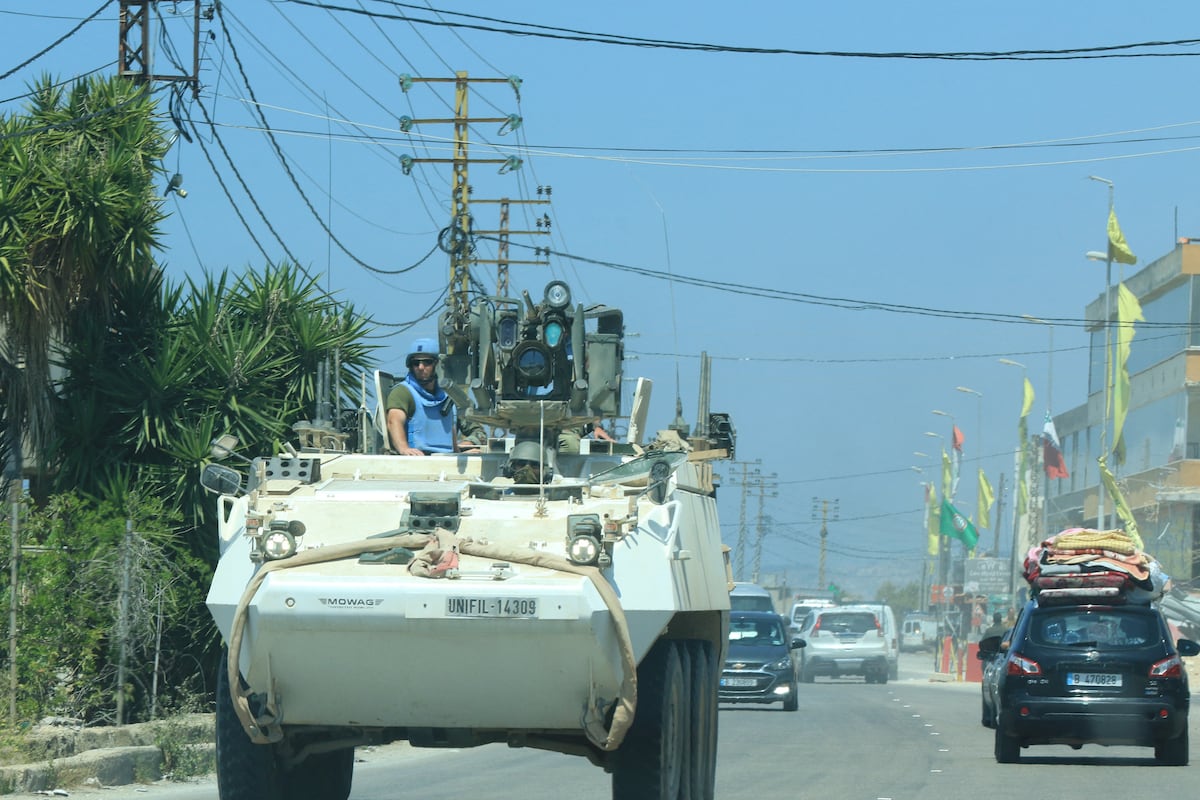
ROME — The mandate of the United Nations Interim Force in Lebanon (UNIFIL) is set to expire at the end of 2026, despite renewed violence in the country that has already claimed the lives of six peacekeepers.
After years of U.S. pressure, the decision was taken by the UN Security Council in August last year through the adoption of Resolution 2790. The decision also tasks the Secretary-General with presenting options by June 1 of this year for the future implementation of the resolutions currently overseen by UNIFIL, most notably Resolution 1701 (2006), which recalls a number of earlier ones.
Following the 2006 war between Israel and the armed group Hezbollah, Resolution 1701 ended the conflict and expanded the mission’s mandate to monitor the cessation of hostilities, ensure humanitarian access for civilians, and support the deployment of the Lebanese Armed Forces in southern Lebanon.
UNIFIL currently fields around 8,500 peacekeepers from nearly 50 troop-contributing countries. Established in 1978 to oversee Israel’s withdrawal from Lebanon and help restore peace and security, the mission operates exclusively on the Lebanese side of the border and also assists the Lebanese government in re-establishing its authority in the area.
The tenets of Resolution 1701 remains central to follow-on arrangements, as its implementation will technically continue beyond UNIFIL’s withdrawal. “This is why the Security Council asked the Secretary General to present options, in June, to implement Resolution 1701 when UNIFIL leaves,” UNIFIL spokesperson Kandice Ardiel told Defense News.
The Security Council has given no indication that it is revisiting the decision of ending the mission in southern Lebanon, and UNIFIL is not involved in the process of developing proposals.
The decision to end the mandate was largely driven by Washington, where leaders have argued the time had come for the Lebanese army to assume greater responsibility without the presence of UN peacekeepers.
Some analysts see the proposition as a contradiction in terms. Largely under-equipped, underfunded and understaffed, the Lebanese Armed Forces (LAF) are in no position either to forcibly disarm Hezbollah, a move that could also trigger internal sectarian strife, or to confront the Israeli military.
As part of the process of winding down the mission, UNIFIL has developed plans for the withdrawal of personnel and the disposal of bases and equipment.
“Based on other cases, facilities could become Lebanese state buildings where the Lebanese Armed Forces could potentially be stationed,” said Chiara Ruffa, professor in political science at the Centre for International Studies (CERI) at Sciences Po Paris. “Ultimately, however, it depends on Israel’s intentions. If the objective is to maintain an occupation, then these sites could be taken over by the Israeli forces.”
As the process remains ongoing, analysts describe potential scenarios. “The UN Security Council could choose to dismantle UNIFIL and assign a greater role to the military Observer Group Lebanon (OGL) which still is a UN-led mission, but much smaller than UNIFIL,” Ruffa explained.
“In any case, Resolution 1701, together with Resolution 1559, is likely to form the backbone of the future configuration in southern Lebanon,” said Raymond Murphy, former UNIFIL peacekeeper and professor at the Irish Centre for Human Rights at University of Galway. Both resolutions call on foreign forces to withdraw from Lebanon and on the disarmament of all armed groups in the country.
According to analysts, the UNIFIL withdrawal will have significant implications for southern Lebanon, particularly in terms of shedding light on potential war crimes, creating humanitarian corridors, and reducing civilian casualties and protection.
Other implications include the loss of coordination mechanisms, in particular the Tripartite series of military meetings organized by UNIFIL and held between 2006 and 2023, which brought together the Israeli and Lebanese armed forces and helped defuse minor tensions along the Blue Line.
UNIFIL’s withdrawal also is expected to have an economic impact on an area already neglected, as it has acted as “a financial lifeline for the area,” said Dina Arakji, a UAE-based analyst at Control Risks and non-resident fellow at the Middle East Institute. The mission has also provided employment opportunities for locals and worked with municipalities.
Overall, the result is a diminished role for the multilateral system and the United Nations in addressing conflicts worldwide, said Ruffa, the political science professor.
“Shutting down the mission suggests that the UN is not important in conflict resolution, which runs counter to the evidence, as research shows that, notwithstanding its limitations, the United Nations does reduce the number of killings and helps protect civilians,” she said.
Agnese Stracquadanio is a Middle East correspondent for Defense News. She has a background in writing and photojournalism, holds a master's degree in international relations, and previously worked for Reuters.
罗马——尽管黎巴嫩境内暴力事件再度爆发,已有六名维和人员丧生,但联合国驻黎巴嫩临时部队(联黎部队)的任务期限将于 2026 年底到期。
经过美国多年的施压,联合国安理会于去年8月通过第2790号决议,做出了这项决定。该决议还责成秘书长在今年6月1日前提出方案,以期未来落实目前由联合国驻黎巴嫩临时部队(联黎部队)监督执行的各项决议,其中最值得注意的是第1701(2006)号决议,该决议回顾了此前的一些决议。
2006 年以色列与真主党武装组织之间的战争结束后,第 1701 号决议结束了冲突,并扩大了特派团的任务范围,以监督停止敌对行动,确保平民获得人道主义援助,并支持黎巴嫩武装部队在黎巴嫩南部的部署。
联合国驻黎巴嫩临时部队(联黎部队)目前部署了来自近50个出兵国的约8500名维和人员。该部队成立于1978年,旨在监督以色列从黎巴嫩撤军并帮助恢复和平与安全。联黎部队的行动范围仅限于黎巴嫩一侧的边境地区,并协助黎巴嫩政府重建其在该地区的权威。
第1701号决议的各项原则仍然是后续安排的核心,因为从技术层面讲,其执行将在联黎部队撤离后继续进行。“正因如此,安全理事会要求秘书长在6月份提出在联黎部队撤离后执行第1701号决议的方案,”联黎部队发言人坎迪斯·阿尔迪尔告诉《防务新闻》。
安全理事会没有表示将重新考虑结束驻黎巴嫩南部特派团的决定,而联合国驻黎巴嫩临时部队也没有参与制定相关提案的过程。
结束这项任务的决定主要是由华盛顿推动的,华盛顿领导人认为,黎巴嫩军队应该在没有联合国维和部队的情况下承担更大的责任。
一些分析人士认为这一提议本身就是自相矛盾的。黎巴嫩武装部队装备不足、资金匮乏、人员不足,既无力强行解除真主党的武装(此举也可能引发内部教派冲突),也无力与以色列军队对抗。
作为结束任务进程的一部分,联黎部队制定了人员撤离和基地及设备处置计划。
“根据其他案例,这些设施可能会成为黎巴嫩政府大楼,黎巴嫩武装部队也可能驻扎其中,”巴黎政治学院国际研究中心(CERI)政治学教授基娅拉·鲁法表示。“但最终,这取决于以色列的意图。如果其目标是维持占领,那么这些地点可能会被以色列军队接管。”
由于相关进程仍在进行中,分析人士描述了各种可能的情况。“联合国安理会可以选择解散联黎部队,并赋予黎巴嫩军事观察组(OGL)更大的权力。黎巴嫩军事观察组仍然是一个联合国领导的任务,但规模远小于联黎部队,”鲁法解释说。
“无论如何,第1701号决议与第1559号决议很可能构成未来黎巴嫩南部局势格局的基石,”前联合国驻黎巴嫩临时部队维和人员、现任戈尔韦大学爱尔兰人权中心教授雷蒙德·墨菲表示。这两项决议均呼吁外国军队撤出黎巴嫩,并要求解除该国所有武装团体的武装。
分析人士认为,联合国驻黎巴嫩临时部队的撤离将对黎巴嫩南部产生重大影响,尤其是在揭露潜在的战争罪行、建立人道主义走廊以及减少平民伤亡和保护方面。
其他影响包括协调机制的丧失,特别是联合国驻黎巴嫩临时部队(联黎部队)在 2006 年至 2023 年间组织的三方军事会议,这些会议将以色列和黎巴嫩武装部队聚集在一起,并有助于缓和蓝线沿线的小规模紧张局势。
联合国驻黎巴嫩临时部队(联黎部队)的撤离预计也会对这个本已长期被忽视的地区产生经济影响,因为它一直是“该地区的经济生命线”,阿联酋风险控制公司分析师、中东研究所非常驻研究员迪娜·阿拉克吉表示。该部队还为当地居民提供了就业机会,并与市政当局开展了合作。
政治学教授鲁法表示,总体而言,其结果是多边体系和联合国在解决全球冲突方面的作用减弱。
“关闭该特派团表明联合国在解决冲突方面并不重要,这与事实相悖,因为研究表明,尽管联合国存在局限性,但它确实减少了杀戮人数,并有助于保护平民,”她说。
阿格尼斯·斯特拉夸达尼奥是《防务新闻》的中东记者。她拥有写作和摄影新闻背景,持有国际关系硕士学位,此前曾在路透社工作。