Italy rethinks EU defense-financing aid as arms spending falls out of fashion随着军费开支不再流行,意大利重新考虑欧盟国防融资援助
Prime Minister Giorgia Meloni wants to refocus the bloc's help on lowering the cost of living for Italians, as energy costs have soared amid the Iran war.
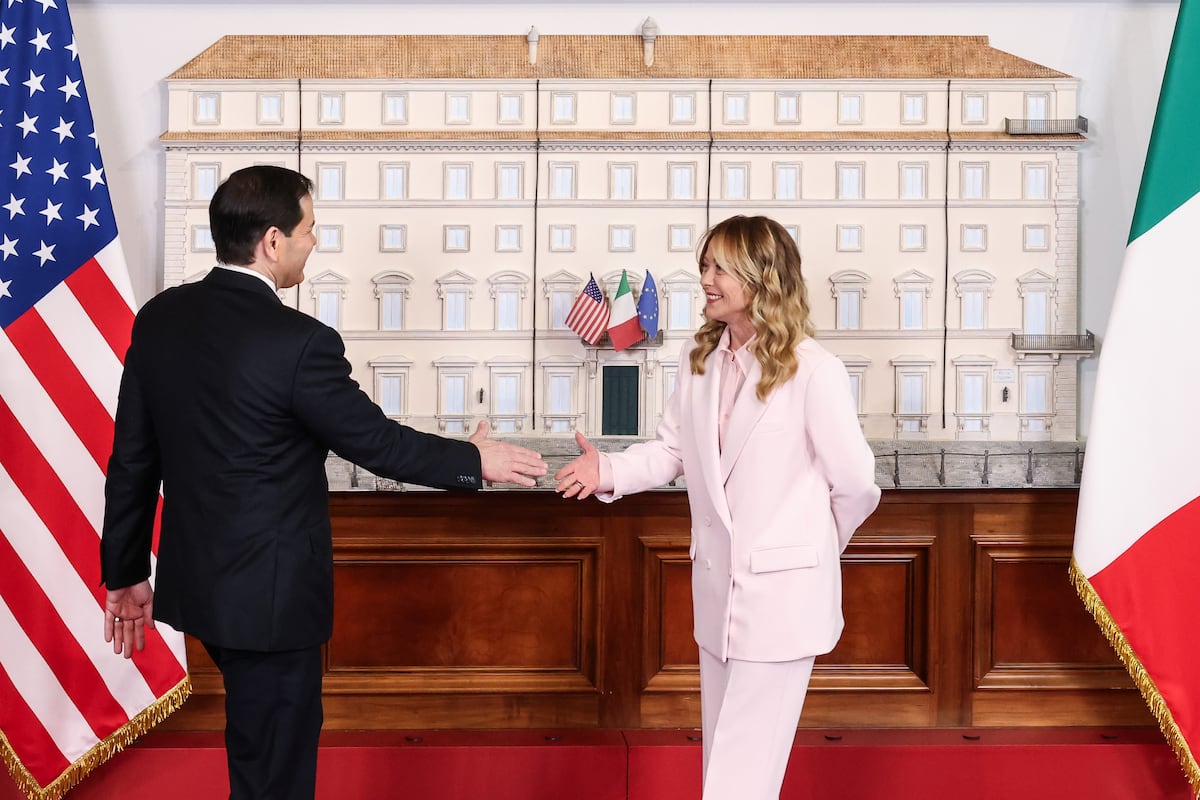
ROME — Italy is considering backing out of a second EU-supported boost to defense spending, taking to about €27 billion ($31 billion) the amount of rearmament cash it could forego as it focuses on tackling soaring energy costs.
Italian prime minister Giorgia Meloni has told EU Commission chief Ursula von der Leyen that Italy may pass on the offer of €14.9 billion in cheap, so-called SAFE loans from Brussels which could prove essential to pushing Italian defense spending towards NATO’s five percent of GDP target.
Italy’s defense minister Guido Crosetto said the final decision to use or not use SAFE loan needed to be taken by the end of May, and the last word needed to come from Italy’s finance ministry.
He said he had written twice to finance minister Giancarlo Giorgetti asking what Giorgetti planned to do, but had yet to receive a response.
The suggestion by Meloni is the second time in two months she has publicly mulled passing on an EU-driven way to push up spending.
In April she suggested Italy will not take advantage of an EU scheme allowing Rome to exempt a quantity of defense spending from calculations of annual deficit spending in order to allow extra arms purchases without breaking EU deficit rules.
The so-called National Escape Clause (NEC) would have boosted Italian defense spending by about €12 billion over three years if used.
Meloni’s government is now pushing the EU to allow it to use the NEC scheme for a different reason: to park extra spending on soaring energy costs outside the deficit calculation.
In a letter to Von der Leyen on Sunday, Meloni said it was imperative to use state cash to soften the blow of rising energy costs — and the consequent hike in the cost of living — caused by the current slowdown of oil supplies to Italy due to the blockage of the Strait of Hormuz.
“If we rightly consider defense a strategic priority that justifies the activation of the National Escape Clause, we must have the political courage to recognize that today energy security is also a European strategic priority,” Meloni wrote in the letter, which has been seen by Defense News.
Meloni argued that “helping companies and families confront energy costs will make the economy stronger and therefore better able to reinforce its defensive capacities.”
The prime minister said that was why she wanted the EU to allow the use of the NEC scheme for energy spending, and she added that if permission was not forthcoming, she would consider scrapping Italy’s application to obtain the SAFE loan.
She explained: Without the permission to alter the NEC scheme, “it would be very difficult for the Italian government to explain to the public any use of the SAFE program in the way it is currently set up.”
Last year Italy applied for SAFE loans from a €150 billion EU warchest and planned to spend the €14.9 billion it was allocated on programs including new armored fighting vehicles and tanks.
Meloni’s threat to do without defense spending which would flow from the use of the NEC scheme and the SAFE loans — totalling about €27 billion — comes as polling in Italy shows arms purchases are unpopular with voters, one year ahead of a national election.
Meloni has previously battled to beef up defense spending from the current two percent to hit five percent of GDP requested by NATO following pressure on European low spenders from President Trump.
But if Meloni originally sought to raise spending to avoid criticism from Trump, that motivation arguably no longer counts since Trump has already turned on the Italian leader over her decision not to assist the U.S. in its Iran campaign.
“I thought she had courage, but I was wrong,” Trump said of Meloni last month.
Meloni will nevertheless need to explain to NATO partners why she is considering passing on EU plans to boost defense spending at the next alliance summit in Turkey on July 7-8.
Tom Kington is the Italy correspondent for Defense News.
罗马——意大利正在考虑放弃欧盟支持的第二轮国防开支增长计划,这将使其可能放弃的重新武装资金达到约 270 亿欧元(310 亿美元),因为该国正集中精力应对飙升的能源成本。
意大利总理乔治娅·梅洛尼告诉欧盟委员会主席乌尔苏拉·冯德莱恩,意大利可能会拒绝布鲁塞尔提供的149亿欧元廉价SAFE贷款,而这笔贷款对于推动意大利国防开支达到北约GDP 5%的目标至关重要。
意大利国防部长圭多·克罗塞托表示,是否使用SAFE贷款的最终决定需要在5月底前做出,最终决定权在意大利财政部手中。
他说他曾两次写信给财政部长詹卡洛·乔尔杰蒂,询问乔尔杰蒂的计划,但至今仍未收到回复。
这是梅洛尼两个月内第二次公开考虑否决欧盟主导的增加支出方案。
今年四月,她表示意大利不会利用欧盟的一项计划,该计划允许罗马将一定数量的国防开支从年度赤字支出计算中豁免,以便在不违反欧盟赤字规则的情况下购买额外的武器。
所谓的“国家豁免条款”(NEC)如果被启用,将在三年内使意大利的国防开支增加约 120 亿欧元。
梅洛尼政府现在正敦促欧盟允许其出于另一个原因使用NEC计划:将不断上涨的能源成本的额外支出排除在赤字计算之外。
梅洛尼在周日写给冯德莱恩的一封信中表示,由于霍尔木兹海峡被封锁,意大利目前的石油供应放缓,导致能源成本上升,进而推高了生活成本,因此必须动用国家资金来缓解这一冲击。
“如果我们正确地将国防视为一项战略优先事项,并以此作为启动国家豁免条款的理由,那么我们必须有政治勇气承认,如今能源安全也是一项欧洲战略优先事项,”梅洛尼在信中写道,这封信已被《防务新闻》看到。
梅洛尼认为,“帮助企业和家庭应对能源成本将使经济更加强大,从而更好地加强其防御能力。”
首相表示,这就是她希望欧盟允许意大利使用NEC计划进行能源支出的原因,她还补充说,如果得不到许可,她将考虑取消意大利获得SAFE贷款的申请。
她解释说:如果没有获得修改NEC方案的许可,“意大利政府将很难向公众解释SAFE计划目前这种设置方式的任何用途。”
去年,意大利向欧盟1500亿欧元的战争基金申请了SAFE贷款,并计划将分配给它的149亿欧元用于包括新型装甲战车和坦克在内的项目。
梅洛尼威胁要取消国防开支,这笔开支原本可以通过NEC计划和SAFE贷款获得,总额约为270亿欧元。与此同时,意大利的民意调查显示,在全国大选前一年,购买武器不受选民欢迎。
此前,在特朗普总统向欧洲低支出国家施压后,梅洛尼曾努力将国防开支从目前的占GDP的2%提高到北约要求的占GDP的5%。
但如果梅洛尼最初寻求增加开支是为了避免受到特朗普的批评,那么这种动机可以说已经不再成立了,因为特朗普已经因为梅洛尼决定不协助美国开展伊朗行动而对她进行了抨击。
“我原以为她很有勇气,但我错了,”特朗普上个月谈到梅洛尼时说道。
不过,梅洛尼仍需向北约伙伴解释,为什么她考虑在 7 月 7 日至 8 日于土耳其举行的下一次北约峰会上否决欧盟增加国防开支的计划。
汤姆·金顿是《防务新闻》驻意大利记者。