This Massive Naval Exercise In 1989 Was The Pinnacle Of U.S. Cold War Maritime Might1989年的这次大规模海军演习是美国冷战时期海上力量的巅峰之作。
It was the largest gathering of allied warships since World War II and a month after the Berlin Wall would begin to crumble.
新闻视频
Updated Dec 1, 2019 7:09 AM EST
Just a month before the Berlin Wall would begin to fall, the U.S. Navy and its allies in the Pacific held a gargantuan set of naval drills dubbed Pacific Exercise 1989, or PACEX ’89 for short. It was the largest combined allied armada since the end of World War II and worked as a symbolic showcase of the Reagan military buildup that played a significant hand in breaking the Soviet Union.
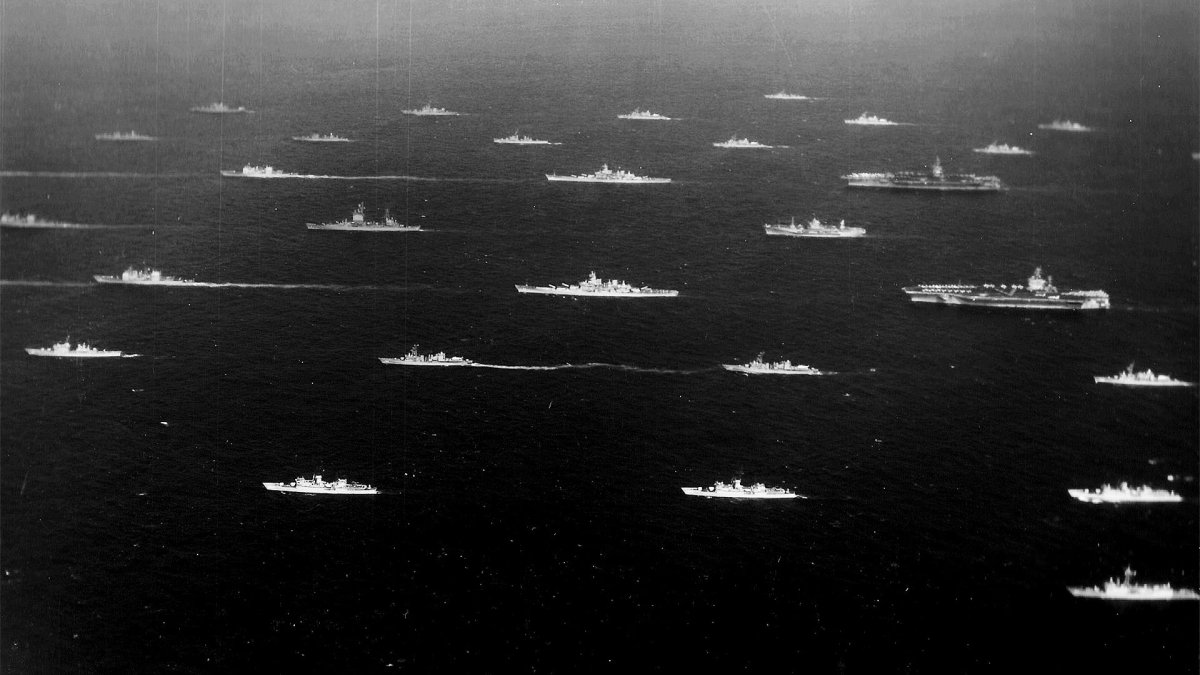
In total, some 54 vessels of U.S., Korean, Japanese, and Canadian origins—as well as a number of submarines that were never disclosed—combined forces to show just how outgunned Russia was in the Pacific and how they could operate together as a cohesive fighting force. On the last day of the drills, a photo exercise (PHOTOEX) was held that was so big, none of the images have all the ships in-frame.
Helicopter camera ships and F-14s equipped with Tactical Airborne Reconnaissance Pod Systems (TARPS) were launched to capture the historic gathering. The F-14 TARPS image, seen at the top of this article, is remarkably impressive not just for the size of the fleet shown, but for the powerhouse vessels that make up its central core.
These include the aircraft carriers USS Enterprise (CVN-65) and USS Carl Vinson (CVN-70) , the battleships USS New Jersey (BB-62) and USS Missouri (BB-63) , the nuclear-powered guided missile cruiser USS Long Beach (CGN-9) and the amphibious command and control ship USS Blue Ridge (LCC-19) . A number of the cutting-edge Ticonderoga class guided missile cruisers are also seen flanking the central lineup of capital ships.
Not only is this an incredibly impressive amount of firepower, but its origins span from World War II to the late 1980s, when the photo was taken. What’s even more amazing is that more ships, including with two additional carrier battle groups, those of the USS Constellation (CV-64) and USS Midway (CV-41), also took part in the exercise.
The battleships seen in these images, in particular, were pulled from retirement and regenerated as part of President Reagan’s ‘ 600 ship Navy ‘ initiative. In the end, the upgraded battleships would only serve a handful of years in front-line service before being put back into mothballs following their participation Operation Desert Storm and the demise of the Soviet Union. Five years later, the one of a kind and historic Long Beach would also be pulled from service, along with the rest of the nuclear-powered surface combatant force not long after.
PACEX ’89 was truly a unique moment in history that one can appreciate, but as current headlines frequently describe ever larger allied military drills in response to the rising threat posed by Russia and China, it really isn’t an era that one wants to repeat.
Contact the author: Tyler@thedrive.com
Comments couldn’t be loaded. Please refresh the page.
更新于美国东部时间2019年12月1日上午7:09
就在柏林墙开始倒塌前一个月,美国海军及其太平洋盟国举行了一场规模空前的联合海军演习,名为“1989年太平洋演习”(简称PACEX '89)。这是二战结束以来规模最大的盟军联合舰队,象征性地展示了里根政府的军事扩张战略,而这一战略在最终瓦解苏联的过程中发挥了重要作用。
总共约有54艘来自美国、韩国、日本和加拿大的舰艇——以及一些从未公开的潜艇——联合起来,向世人展示了俄罗斯在太平洋战场上的火力劣势,以及他们如何能够协同作战。演习最后一天举行了一场规模庞大的摄影演习(PHOTOEX),以至于没有一张照片能够将所有舰艇都纳入画面。
为了记录这一历史性的集会,直升机摄影机和配备战术空中侦察吊舱系统(TARPS)的F-14战斗机被派往现场。本文顶部的F-14 TARPS图像令人印象深刻,不仅因为图中显示的舰队规模庞大,更因为构成其核心的强大舰艇。
其中包括“企业”号航空母舰(CVN-65)和“卡尔·文森”号航空母舰(CVN-70),“新泽西”号战列舰(BB-62)和“密苏里”号战列舰(BB-63),“长滩”号核动力导弹巡洋舰(CGN-9)以及“蓝岭”号两栖指挥控制舰(LCC-19)。此外,还能看到多艘先进的“提康德罗加”级导弹巡洋舰在主力舰编队两侧列队。
这不仅展现了令人叹为观止的火力,而且其历史可以追溯到二战时期,一直延续到照片拍摄的20世纪80年代末。更令人惊叹的是,还有更多舰艇参与了此次演习,其中包括另外两个航母战斗群,分别是“星座”号(CV-64)和“中途岛”号(CV-41)航母战斗群。
这些图片中出现的战列舰,尤其是那些从退役状态重新启用并进行改造的战列舰,是里根总统“600艘舰艇海军”计划的一部分。最终,这些升级后的战列舰只在前线服役了几年,便在参与“沙漠风暴”行动和苏联解体后再次封存。五年后,独一无二、具有历史意义的“长滩”号战列舰也退役了,不久之后,其余的核动力水面作战舰艇也相继退役。
1989 年的 PACEX 军演的确是历史上一个值得铭记的独特时刻,但随着当前新闻头条频繁报道盟军为应对俄罗斯和中国日益增长的威胁而举行的规模越来越大的军事演习,这真的不是一个人们想要重演的时代。
联系作者:Tyler@thedrive.com
评论加载失败,请刷新页面。